Contenidos
We Will Rock You — Queen (1977)
Two stomps and a clap. With that, and with no instrument at all for almost the whole song, Queen wrote the thing you now hear in every stadium on earth.
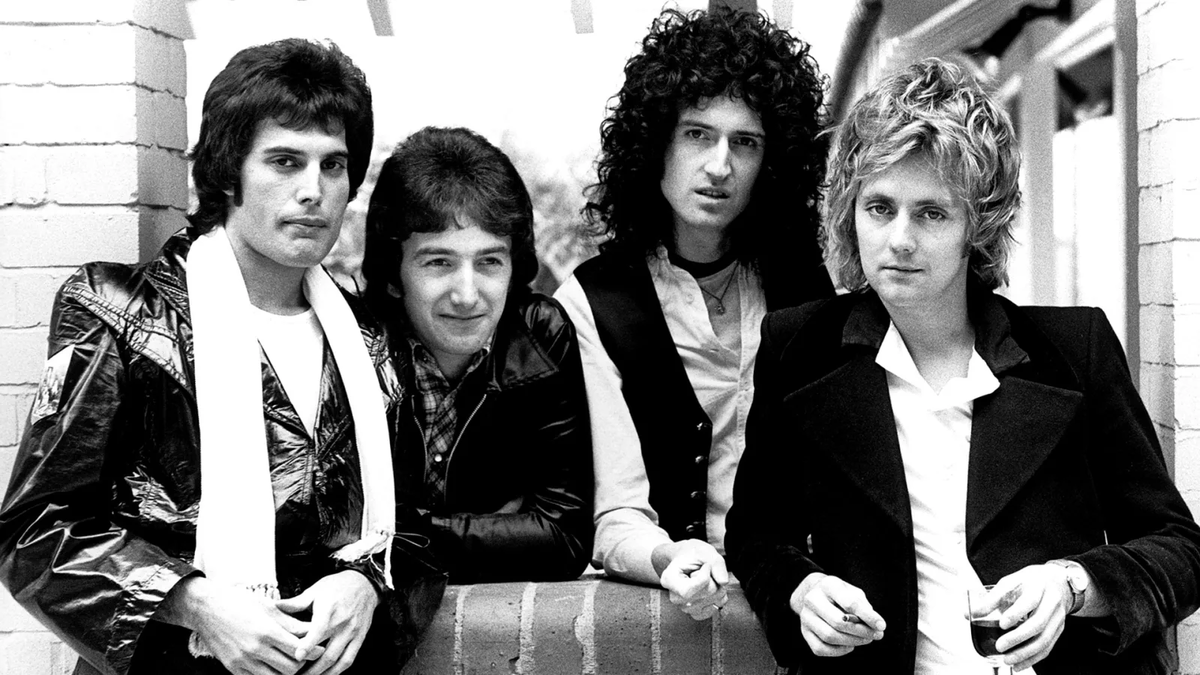
🏷️ Ficha musical
Why this song
Most songs are written to be listened to. This one was written to be performed — by the audience.
Brian May built it out of what a crowd can already do without rehearsing: stamp its feet and clap its hands. That is why there is no instrument here for almost two minutes. There are feet, hands and voices.
It is the one song in the course that a whole class can play on day one, before anybody opens a case.
Historical context
In 1977 Queen were coming off the A Day at the Races tour. At Bingley Hall in Stafford they played their encore and walked off. Instead of carrying on clapping, the crowd sang "You'll Never Walk Alone" back at them. May said it knocked them sideways, and that the chant in this song comes from that night.
They recorded it at Wessex Sound Studios in London, produced by Mike Stone and the band. Nobody was called in. The four of them climbed onto the drum riser and stamped and clapped, recording the same layer over and over.
Four people do not sound like a stadium, so the four had to be multiplied. Here is the trick May described: the echoes are not spaced evenly but in ratios of prime numbers, so no repeat ever lands on top of another. Even spacing would have sounded like a tunnel. Spaced this way, it sounds like people.
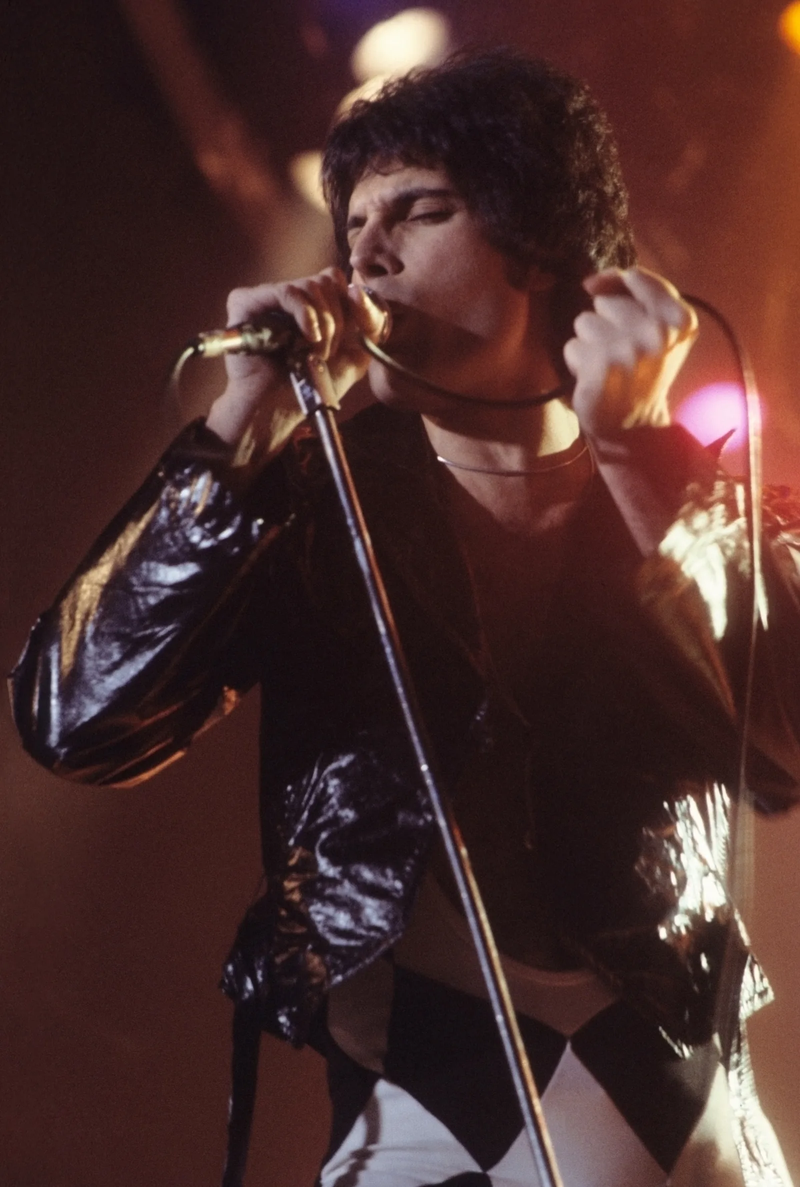
Foto: Carl Lender, CC BY-SA 3.0, vía Wikimedia Commons
Musical characteristics
Everything rests on a pattern of two hits and a gap.
Two quick stomps, one after the other, then a clap that arrives a little later. That gap between the stomps and the clap is what leaves you room to join in.
The clap does not land on beat 1: it lands on beats 2 and 4, the weak beats of the bar. Putting the strong hit where it does not belong is what makes the music push instead of march.
The pattern never changes, not once in the whole song. A rhythmic figure repeated like that, without variation, is an ostinato. And no instrument plays it: feet and hands do. That is body percussion.
On top of that floor there are only voices, with nothing accompanying them: a cappella singing. The chant melody barely moves, and everyone sings the same thing at the same time. That is why anyone can sing it first time.
Making four people sound like a crowd is the studio's work. They recorded their own stomp on top of their own stomp, many times over: each new layer on top of the previous ones is an overdub.
The first instrument shows up in the last thirty seconds, when Brian May's guitar comes in. It is also the first moment with a chord. One chord, A, and that is it.
Hard facts: A (a single chord), 4/4, 81 BPM, 2:02. The form is easy to follow: three verses, the same chant after each one, and the guitar solo at the end.
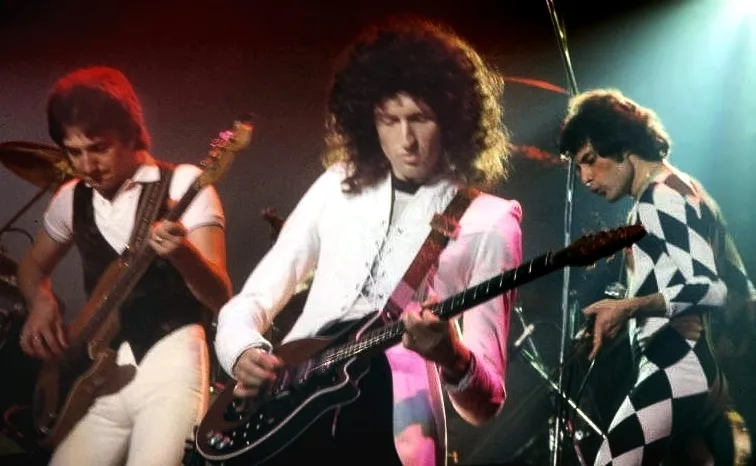
Foto: Carl Lender, CC BY-SA 3.0, vía Wikimedia Commons
Trivia and curiosities
- The echoes are spaced in ratios of prime numbers. What sounds like a spontaneous crowd is an arithmetic decision, taken so that no repeat would coincide with another.
- The phrase that closes the solo and repeats three times was not played three times. It is a tape loop. By 1977 the studio was an instrument in its own right, not just a room to record in.
- There is no bass and no drums on the record. Roger Taylor and John Deacon are credited with hand claps and foot stamping, exactly like the other two. What you do in a band is not decided by the instrument you carry.
- The video was shot in the garden of a house Roger Taylor had just bought in Surrey. The sale had not gone through, so they were not allowed indoors. It was freezing and they got it in three takes. In the video the band does exactly what the audience does.
- Broadcast Music Inc. reported it as the most played song at professional sports games in the United States across a whole season. The thing it was designed for — a crowd performing it — is still what it is used for.
Classroom activities
- Play it with no instrument, everybody at once. Stomp-stomp-clap, then silence in the gap. Split the class: one half only stomps, the other half only claps. The hard part is not the hit, it is respecting the gap.
- Play it with instruments, on top of that. One chord, A. Guitar and keyboard play the same thing, so both JamZone charts fit together. With the body percussion already standing, the band walks in without rehearsing anything else.
- Sing it. The chant is in unison and fits into very few notes. A good place to start the year with everyone singing the same line, no parts, no divisions.
- Analyse it. Two questions with numerical answers. How many times does the pattern repeat before the first instrument enters? Which beats of the bar does the clap land on? Answer with figures, not adjectives.
Key vocabulary
- Weak beat — parte débil: los tiempos 2 y 4 del compás
- Ostinato — ostinato: un dibujo que se repite sin cambiar
- Body percussion — percusión corporal
- A cappella — a cappella: cantar sin acompañamiento instrumental
- Overdub — sobregrabación: grabar una capa encima de otra ya grabada
Resources
In Year 3 — this song is also used in the units ¿Quién pagaba la música cuando nadie compraba entradas?, ¿Qué pasa cuando dejamos de cantar todos lo mismo?, ¿Cómo sabes por dónde vas en una música que oyes por primera vez?, from the theory and history book.
Where it is explained — this song is studied in the units ¿Por qué todo el mundo da la palmada en el mismo sitio?, Cuatro notas y un amplificador que no aguanta, ¿Quién toca la batería en esta canción?, from the modern music history book.
Official video
Guitar tutorial — Chris Berrow. Full lesson with tabs, riff and solo.
Keyboard tutorial — Sheet Music Boss, easy version. No narration, so it works in either language.
Drum tutorial — Drumiverse. Moves the stomp to the kick and the clap to the snare.
Body percussion tutorial — Musictip bcn, filmed for a 4.º ESO class. This is the version you can put together on day one.
- JamZone charts (Music Will) — https://jamzone.musicwill.org/songs/inthestyleof-wewillrockyou-by-queen
- Tab — attached below; the button opens it in Songsterr
Por dónde entrar
Bum-bum, pas. Ya lo tienes en el oído: es lo que hacen veinte mil personas a la vez sin haberse puesto de acuerdo en nada.
No es casualidad que lo sepa hacer todo el mundo. Brian May la escribió exactamente para eso: para que el público pudiera tocarla, no solo escucharla. Por eso durante casi dos minutos aquí no hay ningún instrumento. Hay pies, manos y voces.
Es la única canción del curso que la clase entera puede tocar el primer día, sin que nadie haya abierto un estuche.
Contexto histórico
En 1977 Queen venían de la gira de A Day at the Races. En Bingley Hall, en Stafford, tocaron los bises y se fueron del escenario. En vez de seguir aplaudiendo, el público se puso a cantarles «You'll Never Walk Alone». May contó que aquello les dejó tocados, y que los coros de esta canción vienen de ahí.
La grabaron en los estudios Wessex de Londres, con Mike Stone y la propia banda de productores. No llamaron a nadie: los cuatro se subieron a la tarima de la batería y estuvieron pisando y dando palmas, grabando la misma capa una vez tras otra.
Cuatro personas no suenan a estadio, así que había que multiplicarlas. Ahí está el truco que cuenta May: los ecos no están repartidos a distancias iguales, sino según números primos, para que ninguna repetición caiga encima de otra. Con distancias regulares aquello habría sonado a túnel. Repartido así suena a gente.
Foto: Carl Lender, CC BY-SA 3.0, vía Wikimedia Commons
Cómo suena
Todo se sostiene sobre un patrón de dos golpes y un hueco.
Dos pisadas rápidas, una detrás de otra, y luego una palmada que llega algo más tarde. Ese hueco entre las pisadas y la palmada es lo que te deja sitio para entrar.
La palmada tampoco cae en el tiempo 1: cae en los tiempos 2 y 4, las partes débiles del compás. Poner el golpe fuerte donde no toca es lo que hace que la música empuje en vez de marchar.
El patrón no cambia nunca, ni una sola vez en toda la canción. Un dibujo rítmico que se repite así, sin variar, es un ostinato. Y no lo toca ningún instrumento: lo tocan los pies y las manos. A eso se le llama percusión corporal.
Sobre ese suelo solo hay voces, sin nada que las acompañe: canto a cappella. La melodía del coro casi no se mueve, y todos cantan lo mismo a la vez. Por eso la puede cantar cualquiera a la primera.
Que cuatro personas suenen a multitud es cosa del estudio. Grabaron su propia pisada encima de su propia pisada, muchas veces: cada capa nueva sobre las anteriores es una sobregrabación.
El primer instrumento aparece en los últimos treinta segundos, cuando entra la guitarra de Brian May. Es también el primer momento en que hay un acorde. Uno solo, La, y se acabó.
Datos duros: La (un único acorde), 4/4, 81 BPM, 2:02. La forma es simple de seguir: tres estrofas, el mismo coro después de cada una, y el solo de guitarra al final.
Foto: Carl Lender, CC BY-SA 3.0, vía Wikimedia Commons
Curiosidades
- La canción no salió del escenario, salió de la sala. May escribió una pieza que el público pudiera ejecutar después de que un público se la ejecutara a ellos. El repertorio también puede venir de abajo.
- Los ecos están repartidos según números primos. Lo que suena a multitud espontánea es una decisión de cálculo, tomada para que ninguna repetición coincidiera con otra.
- La frase que cierra el solo y se repite tres veces no la tocó May tres veces: es un bucle de cinta. En 1977 el estudio ya era un instrumento más, no solo un sitio donde grabar.
- En el disco no hay ni bajo ni batería. Roger Taylor y John Deacon aparecen en los créditos dando palmas y pisando, igual que los otros dos. Tu papel en un grupo no lo decide el instrumento que llevas.
- El videoclip se rodó en el jardín de la casa que Roger Taylor acababa de comprar en Surrey. No podían entrar porque la venta no estaba cerrada, hacía un frío helador y lo resolvieron en tres tomas. En el vídeo la banda hace exactamente lo mismo que hace el público.
Para hacer en clase
- Tocar sin instrumento, todos a la vez. Pisada-pisada-palmada, y el hueco en silencio. Divide la clase: unos hacen solo las pisadas, otros solo las palmadas. Lo difícil no es el golpe, es respetar el hueco. El tutorial de percusión corporal de abajo está grabado para 4.º de la ESO.
- Tocar con instrumento, encima de lo anterior. Un solo acorde, La. Guitarra y teclado tocan lo mismo, así que los dos charts de JamZone se montan a la vez. Con la base de percusión corporal ya en pie, la banda entra sin ensayar nada más.
- Cantar. El coro va al unísono y cabe en muy pocas notas. Es buen sitio para empezar el curso con todo el mundo cantando lo mismo, sin dividir en voces.
- Analizar. Dos preguntas con respuesta numérica. ¿Cuántas veces se repite el patrón antes de que entre el primer instrumento? ¿En qué tiempos del compás cae la palmada? Contesta con cifras, no con adjetivos.
Vocabulario fundamental
- Parte débil — Los tiempos 2 y 4 del compás. Cuando el golpe más marcado cae ahí en vez de en el 1, la música empuja hacia delante; es la base del rock.
- Ostinato — Un dibujo rítmico o melódico que se repite sin cambiar. Aquí no varía ni una vez en dos minutos.
- Percusión corporal — Hacer música con el propio cuerpo: pies, manos, pecho, voz. En esta canción es el único instrumento durante casi todo el tiempo.
- A cappella — Cantar sin instrumentos que acompañen.
- Sobregrabación — Grabar una capa nueva encima de otra ya grabada. Es lo que convierte a cuatro personas en un estadio.
Recursos
En 3º de ESO — también se usa en las unidades ¿Quién pagaba la música cuando nadie compraba entradas?, ¿Qué pasa cuando dejamos de cantar todos lo mismo?, ¿Cómo sabes por dónde vas en una música que oyes por primera vez?, del libro de teoría e historia.
Dónde se explica — esta canción se estudia en las unidades ¿Por qué todo el mundo da la palmada en el mismo sitio?, Cuatro notas y un amplificador que no aguanta, ¿Quién toca la batería en esta canción?, del libro de historia de la música moderna.
Videoclip oficial
Tutorial de guitarra — Chris Berrow. Lección completa con tablatura, riff y solo.
Tutorial de teclado — Sheet Music Boss, versión fácil. Sin narración, así que sirve igual en los grupos bilingües.
Tutorial de batería — Drumiverse. Traslada la pisada al bombo y la palmada a la caja.
Tutorial de percusión corporal — Musictip bcn, grabado para 4.º de la ESO. Es la versión que se puede montar el primer día.
- Ficha y charts de JamZone (Music Will) — https://jamzone.musicwill.org/songs/inthestyleof-wewillrockyou-by-queen
- Tablatura — adjunta abajo; el botón la abre en Songsterr
Why this song
Most songs are written to be listened to. This one was written to be performed — by the audience.
Brian May built it out of what a crowd can already do without rehearsing: stamp its feet and clap its hands. That is why there is no instrument here for almost two minutes. There are feet, hands and voices.
It is the one song in the course that a whole class can play on day one, before anybody opens a case.
Historical context
In 1977 Queen were coming off the A Day at the Races tour. At Bingley Hall in Stafford they played their encore and walked off. Instead of carrying on clapping, the crowd sang "You'll Never Walk Alone" back at them. May said it knocked them sideways, and that the chant in this song comes from that night.
They recorded it at Wessex Sound Studios in London, produced by Mike Stone and the band. Nobody was called in. The four of them climbed onto the drum riser and stamped and clapped, recording the same layer over and over.
Four people do not sound like a stadium, so the four had to be multiplied. Here is the trick May described: the echoes are not spaced evenly but in ratios of prime numbers, so no repeat ever lands on top of another. Even spacing would have sounded like a tunnel. Spaced this way, it sounds like people.
Foto: Carl Lender, CC BY-SA 3.0, vía Wikimedia Commons
Musical characteristics
Everything rests on a pattern of two hits and a gap.
Two quick stomps, one after the other, then a clap that arrives a little later. That gap between the stomps and the clap is what leaves you room to join in.
The clap does not land on beat 1: it lands on beats 2 and 4, the weak beats of the bar. Putting the strong hit where it does not belong is what makes the music push instead of march.
The pattern never changes, not once in the whole song. A rhythmic figure repeated like that, without variation, is an ostinato. And no instrument plays it: feet and hands do. That is body percussion.
On top of that floor there are only voices, with nothing accompanying them: a cappella singing. The chant melody barely moves, and everyone sings the same thing at the same time. That is why anyone can sing it first time.
Making four people sound like a crowd is the studio's work. They recorded their own stomp on top of their own stomp, many times over: each new layer on top of the previous ones is an overdub.
The first instrument shows up in the last thirty seconds, when Brian May's guitar comes in. It is also the first moment with a chord. One chord, A, and that is it.
Hard facts: A (a single chord), 4/4, 81 BPM, 2:02. The form is easy to follow: three verses, the same chant after each one, and the guitar solo at the end.
Foto: Carl Lender, CC BY-SA 3.0, vía Wikimedia Commons
Trivia and curiosities
- The echoes are spaced in ratios of prime numbers. What sounds like a spontaneous crowd is an arithmetic decision, taken so that no repeat would coincide with another.
- The phrase that closes the solo and repeats three times was not played three times. It is a tape loop. By 1977 the studio was an instrument in its own right, not just a room to record in.
- There is no bass and no drums on the record. Roger Taylor and John Deacon are credited with hand claps and foot stamping, exactly like the other two. What you do in a band is not decided by the instrument you carry.
- The video was shot in the garden of a house Roger Taylor had just bought in Surrey. The sale had not gone through, so they were not allowed indoors. It was freezing and they got it in three takes. In the video the band does exactly what the audience does.
- Broadcast Music Inc. reported it as the most played song at professional sports games in the United States across a whole season. The thing it was designed for — a crowd performing it — is still what it is used for.
Classroom activities
- Play it with no instrument, everybody at once. Stomp-stomp-clap, then silence in the gap. Split the class: one half only stomps, the other half only claps. The hard part is not the hit, it is respecting the gap.
- Play it with instruments, on top of that. One chord, A. Guitar and keyboard play the same thing, so both JamZone charts fit together. With the body percussion already standing, the band walks in without rehearsing anything else.
- Sing it. The chant is in unison and fits into very few notes. A good place to start the year with everyone singing the same line, no parts, no divisions.
- Analyse it. Two questions with numerical answers. How many times does the pattern repeat before the first instrument enters? Which beats of the bar does the clap land on? Answer with figures, not adjectives.
Key vocabulary
- Weak beat — parte débil: los tiempos 2 y 4 del compás
- Ostinato — ostinato: un dibujo que se repite sin cambiar
- Body percussion — percusión corporal
- A cappella — a cappella: cantar sin acompañamiento instrumental
- Overdub — sobregrabación: grabar una capa encima de otra ya grabada
Resources
In Year 3 — this song is also used in the units ¿Quién pagaba la música cuando nadie compraba entradas?, ¿Qué pasa cuando dejamos de cantar todos lo mismo?, ¿Cómo sabes por dónde vas en una música que oyes por primera vez?, from the theory and history book.
Where it is explained — this song is studied in the units ¿Por qué todo el mundo da la palmada en el mismo sitio?, Cuatro notas y un amplificador que no aguanta, ¿Quién toca la batería en esta canción?, from the modern music history book.
Official video
Guitar tutorial — Chris Berrow. Full lesson with tabs, riff and solo.
Keyboard tutorial — Sheet Music Boss, easy version. No narration, so it works in either language.
Drum tutorial — Drumiverse. Moves the stomp to the kick and the clap to the snare.
Body percussion tutorial — Musictip bcn, filmed for a 4.º ESO class. This is the version you can put together on day one.
- JamZone charts (Music Will) — https://jamzone.musicwill.org/songs/inthestyleof-wewillrockyou-by-queen
- Tab — attached below; the button opens it in Songsterr