Contenidos
Chain of Fools — Aretha Franklin (1967)
Two minutes and forty-seven seconds on a single chord, and it never stops moving. All the energy comes from the rhythm and the voices.
🏷️ Ficha musical
Why this song
In School of Rock, one of the students sings a few bars of this to prove she can sing. Three words are enough: chain, chain, chain. Almost nobody who has heard them could name a single chord in the song.
There is a reason for that. There is only one, and it never changes.
Play the record and try to count the chord changes. You will finish on zero, with a full band playing, three distinct sections and an ending that leaves you with more energy than you started with.
Historical context
Don Covay wrote it as a teenager, singing gospel with his brothers and sisters. That origin is not biographical decoration: it explains the shape. In gospel one voice calls and the group answers, and that is exactly what the record does from the first second.
Years later the producer Jerry Wexler asked Covay for songs for Otis Redding. Covay recorded a demo of this one. Wexler listened and decided it was not for Redding at all — it was for Aretha Franklin. It came out as a single in November 1967 and went onto the album Lady Soul in January 1968.
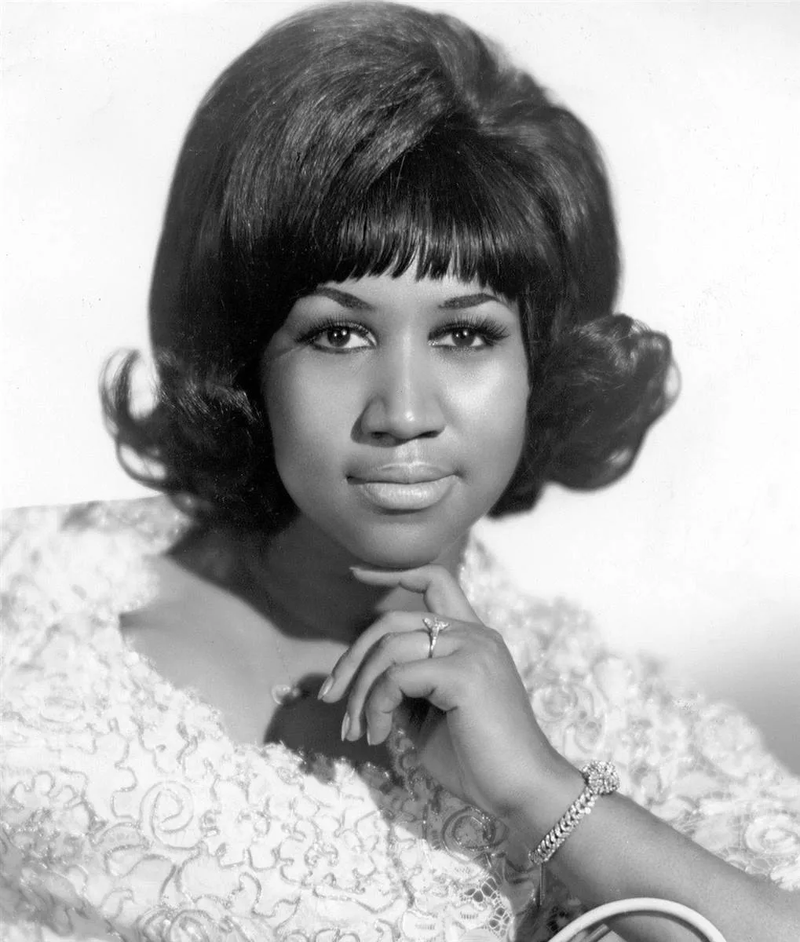
Atlantic Records publicity photo published in Billboard, 17 February 1968. Public domain, via Wikimedia Commons
The band behind her were the Muscle Shoals session players from Alabama: Jimmy Johnson on guitar, Spooner Oldham on electric piano, Tommy Cogbill on bass and Roger Hawkins on drums. Aretha plays piano as well. These were people who recorded together almost every day, and you can hear it: the fit between bass and drums is not one lucky afternoon.
The guitar at the start, though, came from outside that regular team. Joe South, a guitarist from Atlanta, who years later had hits of his own as a singer.
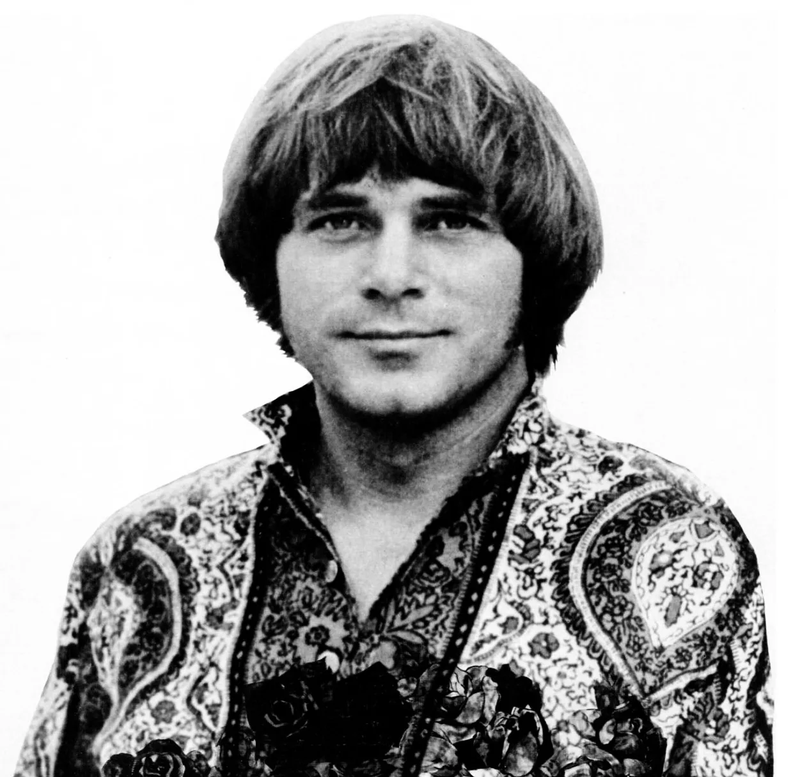
Joe South in a Capitol Records advertisement published in Billboard, 5 December 1970. Public domain, via Wikimedia Commons
Musical characteristics
The first thing you hear is an electric guitar on its own, and it already has a pulse. Its volume rises and falls by itself, over and over, as if someone were opening and closing a tap at a fixed speed. That effect is called tremolo, and it gives the song a rhythm before any drum has arrived.
Then the voices come in, and they work in turns: one throws a line, the others send back chain, chain, chain. This is not a choir accompanying a singer, it is a group answering. That is call and response, straight out of church.
Now listen only to Tommy Cogbill's bass. It almost never lands where you expect: he plays the note an eighth note before the strong beat, systematically. That is called anticipation, and the effect is that the music seems to push forward the whole time, as if it were about to trip and never did.
And now the drums. Roger Hawkins plays the squarest thing available: kick on one and three, snare on two and four, hi-hats in eighth notes. No decoration.
That is the whole trick. The drums hold the grid and the bass pulls at it from in front. That tension between one player running early and another who will not move is what we call groove, and it is why this song moves without changing chord once.
One strange thing is left in the harmony. The guitar insists on E natural while the voice uses E flat, so the song never quite sounds major or minor. That note stuck in between is a blue note. It is why some analyses prefer to talk about "C blues tonality" rather than C minor.
Hard facts: C minor, 4/4, 117 BPM, 2:47. Form: chorus, verse, chorus, verse, bridge, chorus. It opens with the chorus, not the verse — the song walks in through the most recognisable door it has.
Trivia and curiosities
- It reached number two on the pop chart, held off the top by Judy in Disguise (With Glasses). It was number one on the R&B chart for four weeks and won the Grammy. Charts measure the week, not what lasts.
- The original recording runs 4:03 and what was released runs 2:47. On a one-chord groove you can cut almost anywhere without the seam showing, because there is no chord progression left hanging.
- The rhythm section were house players who recorded together constantly. A groove this tight is a working habit, not inspiration on the day.
- The answering voices are the Sweet Inspirations — the group founded by Cissy Houston, Whitney Houston's mother — together with Carolyn and Erma Franklin, Aretha's sisters. That chain, chain, chain is professional vocal-group work, not a last-minute filler.
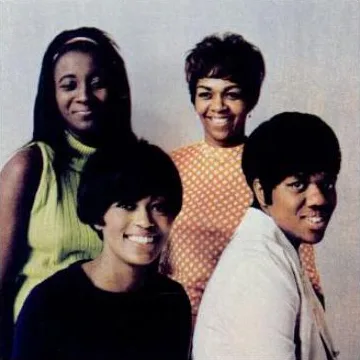
The Sweet Inspirations in an Atlantic Records publicity photo. Public domain, via Wikimedia Commons
Classroom activities
- Play: one chord. C minor, or E minor using the easier JamZone version. With one chord the whole class is playing from the first minute, so all the work goes to the part that is actually hard: holding the rhythm for twelve bars without speeding up.
- Sing: split the call and the response. One voice proposes, everyone else answers chain, chain, chain. The difficult part is not the note, it is coming in together.
- Analyse: a closed question. How many times does the chord change? Never. So make the list of what does change from start to finish — who is playing, who is singing, how many people — and count how many layers are sounding at the start and at the end.
- Create: one chord and sixteen bars. Decide who comes in on each bar and in what order. What you copy is the procedure, not the song.
Key vocabulary
- Tremolo — trémolo: el volumen que sube y baja solo, a velocidad fija
- Call and response — llamada y respuesta
- Anticipation — anticipación: tocar la nota justo antes del tiempo fuerte
- Groove — groove: la sensación de que la música avanza sola
- Blue note — nota blue: la que se queda entre el modo mayor y el menor
Resources
In Year 3 — this song is also used in the unit ¿Cuánto cuesta una canción cuando hay que copiarla a mano?, from the theory and history book.
Where it is explained — this song is studied in the units ¿Por qué todo el mundo da la palmada en el mismo sitio?, La sala donde suena esta canción no existe, ¿Por qué no te aburre una canción de un solo acorde?, from the modern music history book.
Official video — Aretha Franklin's official channel, with the released 2:47 version.
Guitar tutorial — Good Guitarist. Teaches the song with a single chord shape and, for anyone who cannot reach the barre, a simplification with a capo and A minor.
Piano tutorial — Christian Fuchs. A long lesson (almost fifty minutes), focused on the gospel-flavoured accompaniment.
Bass — Fusilli Jerry. No talking: he plays Tommy Cogbill's line with tab and standard notation on screen, which is exactly what you need to see the anticipations.
- Tab — attached below; the button opens it in Songsterr
- Drum tab — https://www.songsterr.com/a/wsa/aretha-franklin-chain-of-fools-drum-tab-s25744
- Chart and band parts — https://jamzone.musicwill.org/songs/inthestyleof-chainoffools-by-arethafranklin
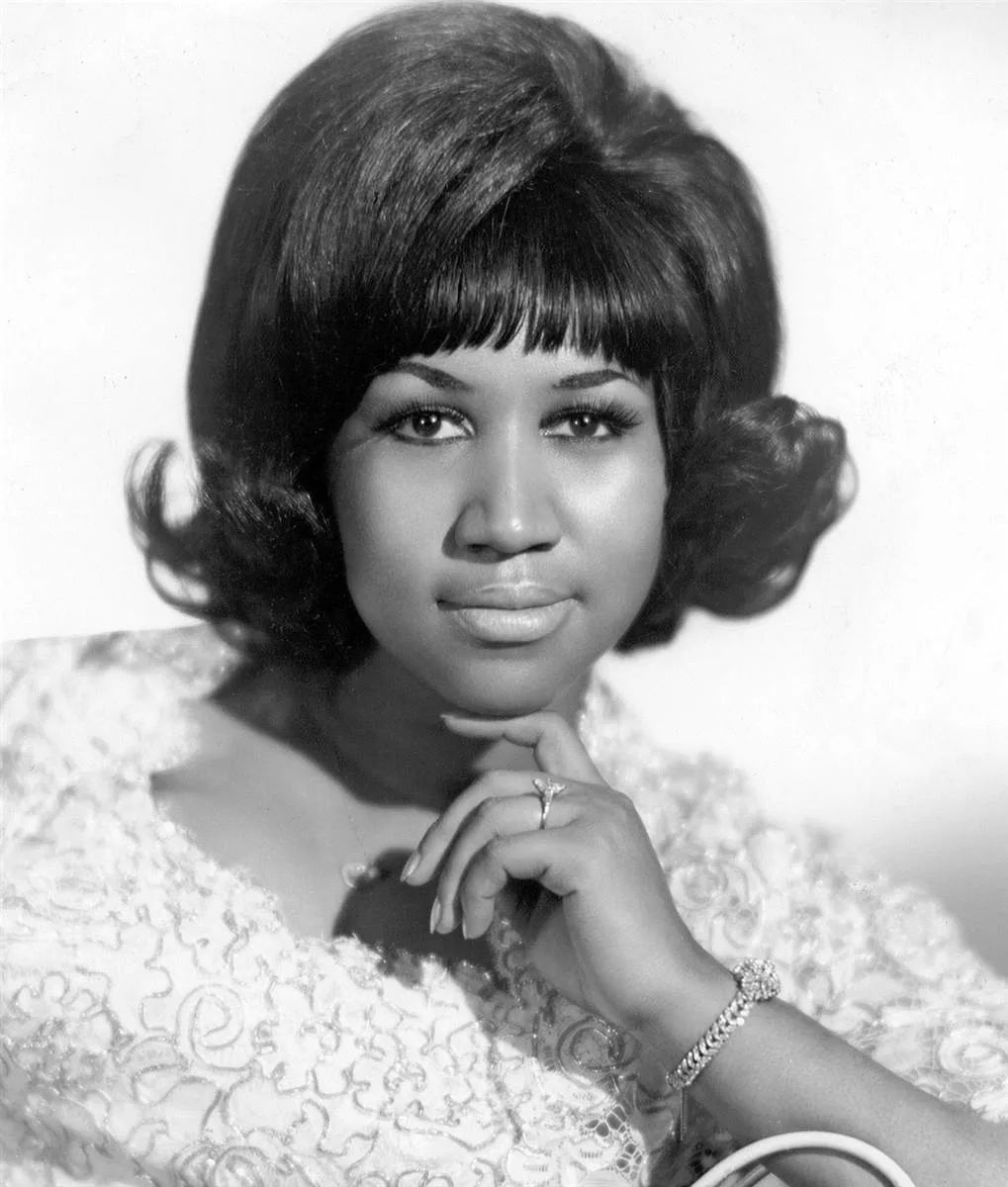
- Cover image — Atlantic Records publicity photo of Aretha Franklin published in Billboard, 17 February 1968. Public domain, via Wikimedia Commons
Por dónde entrar
Pon la canción y cuenta los cambios de acorde. Cuando llegues al final tendrás cero.
No es una exageración pedagógica: es el dato. Do menor de principio a fin, sin una sola desviación. Y sin embargo hay una banda entera tocando, tres bloques distintos de canción y un final que te deja con más energía de la que tenías.
Si alguien te ha dicho alguna vez que una canción difícil se reconoce por los acordes, esta es la respuesta.
Contexto histórico
La escribió Don Covay, de adolescente, cuando cantaba góspel con sus hermanos. Esa procedencia no es un adorno biográfico: explica la forma. En el góspel uno propone y el grupo contesta, y eso es exactamente lo que hace la canción desde el primer segundo.
Años después, el productor Jerry Wexler le pidió a Covay canciones para Otis Redding. Covay grabó una maqueta de esta. Wexler la escuchó y decidió que no era para Redding, sino para Aretha Franklin. Salió como single en noviembre de 1967 y entró en el álbum Lady Soul en enero de 1968.
Foto de promoción de Atlantic Records publicada en Billboard el 17 de febrero de 1968. Dominio público, vía Wikimedia Commons
Detrás tocaban los músicos de estudio de Muscle Shoals, en Alabama: Jimmy Johnson a la guitarra, Spooner Oldham al piano eléctrico, Tommy Cogbill al bajo y Roger Hawkins a la batería. Aretha además toca el piano. Eran gente que grababa junta casi a diario, y eso se oye: el encaje entre bajo y batería no es una casualidad de un día bueno.
A la guitarra del principio, sin embargo, la puso alguien de fuera del equipo habitual: Joe South, un guitarrista de Atlanta que años después tendría sus propios éxitos como cantante.
Joe South en un anuncio de Capitol Records publicado en Billboard el 5 de diciembre de 1970. Dominio público, vía Wikimedia Commons
Cómo suena
Lo primero que entra es una guitarra eléctrica sola, y ya viene con pulso. El volumen le sube y le baja solo, una y otra vez, como si alguien estuviera abriendo y cerrando un grifo a velocidad fija. Ese efecto se llama trémolo, y hace que la canción tenga ritmo antes de que haya llegado la batería.
Después entran las voces, y funcionan por turnos: una lanza y las demás devuelven «chain, chain, chain». No es un coro que acompaña, es un grupo que contesta. A eso se le llama llamada y respuesta, y viene directo de la iglesia.
Fíjate ahora solo en el bajo de Tommy Cogbill. Casi nunca cae donde esperas: toca la nota una corchea antes del tiempo fuerte, de manera sistemática. Es lo que se llama anticipación, y el efecto es que la música parece empujar hacia delante todo el rato, como si fuera a tropezar y nunca tropezara.
Y ahora la batería. Roger Hawkins hace lo más cuadrado que se puede hacer: bombo en el uno y el tres, caja en el dos y el cuatro, charles en corcheas. Sin adornos.
Ahí está el truco entero. La batería sostiene la cuadrícula y el bajo tira de ella por delante. Esa tensión entre uno que se adelanta y otro que no se mueve es lo que llamamos groove, y es el motivo por el que esta canción se mueve sin cambiar de acorde ni una vez.
Queda una cosa rara en la armonía. La guitarra insiste en el mi natural mientras la voz usa el mi bemol, así que la canción no acaba de sonar ni mayor ni menor. Esa nota que se queda en medio es una nota blue. Por eso hay análisis que prefieren hablar de «tonalidad de blues sobre Do» en vez de Do menor.
Datos duros: Do menor, 4/4, 117 BPM, 2:47. Forma: estribillo, estrofa, estribillo, estrofa, puente, estribillo. Empieza por el estribillo, no por la estrofa — la canción entra ya por lo más reconocible.
Curiosidades
- La canción no se escribió para Aretha Franklin ni se grabó pensando en ella: Covay se la ofreció a Wexler para Otis Redding. Una canción no es de quien la escribe, es de quien decide cómo suena.
- La grabación original dura 4:03 y lo que se publicó dura 2:47. Sobre un groove de un acorde puedes cortar casi por cualquier sitio sin que se note la costura, porque no hay una progresión armónica que quede a medias.
- Las voces de respuesta son las Sweet Inspirations —el grupo que fundó Cissy Houston, la madre de Whitney Houston— junto a Carolyn y Erma Franklin, hermanas de Aretha. Ese «chain, chain, chain» es trabajo de un grupo vocal profesional, no un relleno de última hora.
- Se quedó en el número dos de la lista pop, por detrás de Judy in Disguise (With Glasses). Fue número uno de R&B durante cuatro semanas y ganó el Grammy. Las listas miden la semana, no lo que aguanta.
Las Sweet Inspirations en una foto de promoción de Atlantic Records. Dominio público, vía Wikimedia Commons
Para hacer en clase
- Tocar: un acorde. Do menor, o Mi menor si se usa la versión fácil de JamZone. Con un acorde toca la clase entera desde el primer minuto, así que el trabajo se va íntegro a lo que de verdad cuesta: mantener el ritmo doce compases seguidos sin acelerar.
- Cantar: repartid la llamada y la respuesta. Una voz sola propone, el resto contesta «chain, chain, chain». Lo difícil no es la nota, es entrar todos a la vez.
- Analizar: pregunta cerrada. ¿Cuántas veces cambia el acorde? Ninguna. Entonces haced la lista de lo que sí cambia de principio a fin —quién toca, quién canta, cuánta gente hay— y contad cuántas capas suenan a la vez al empezar y al acabar.
- Crear: un acorde y dieciséis compases. Decidid quién entra en cada compás y en qué orden. Lo que se copia es el procedimiento, no la canción.
Vocabulario fundamental
- Trémolo — El volumen de un sonido subiendo y bajando solo, repetido a velocidad fija. Da pulso antes de que haya percusión.
- Llamada y respuesta — Uno propone una frase y el grupo contesta otra. Viene del góspel y organiza la canción entera.
- Anticipación — Tocar la nota justo antes de que caiga el tiempo fuerte. Empuja la música hacia delante.
- Groove — La sensación de que la música avanza sola. Sale de cómo encajan el bajo y la batería, no de los acordes.
- Nota blue — La nota que se queda a medio camino entre el modo mayor y el menor. Es lo que hace que esto no suene del todo a Do menor.
Recursos
En 3º de ESO — también se usa en la unidad ¿Cuánto cuesta una canción cuando hay que copiarla a mano?, del libro de teoría e historia.
Dónde se explica — esta canción se estudia en las unidades ¿Por qué todo el mundo da la palmada en el mismo sitio?, La sala donde suena esta canción no existe, ¿Por qué no te aburre una canción de un solo acorde?, del libro de historia de la música moderna.
Videoclip oficial — canal oficial de Aretha Franklin, con la versión publicada de 2:47.
Tutorial de guitarra — Good Guitarist. Enseña la canción con una sola forma de acorde y, para quien no llegue a la cejilla, una simplificación con capo y La menor.
Tutorial de piano — Christian Fuchs. Lección larga (casi cincuenta minutos), centrada en el acompañamiento con aire de góspel.
Bajo — Fusilli Jerry. No habla: toca la línea de Tommy Cogbill con la tablatura y la partitura en pantalla, que es justo lo que hace falta para ver las anticipaciones.
- Tablatura — adjunta abajo; el botón la abre en Songsterr
- Tablatura de batería — https://www.songsterr.com/a/wsa/aretha-franklin-chain-of-fools-drum-tab-s25744
- Ficha y partes de banda — https://jamzone.musicwill.org/songs/inthestyleof-chainoffools-by-arethafranklin
- Imagen de portada — Aretha Franklin en una foto de promoción de Atlantic Records publicada en Billboard el 17 de febrero de 1968. Dominio público, vía Wikimedia Commons
Why this song
In School of Rock, one of the students sings a few bars of this to prove she can sing. Three words are enough: chain, chain, chain. Almost nobody who has heard them could name a single chord in the song.
There is a reason for that. There is only one, and it never changes.
Play the record and try to count the chord changes. You will finish on zero, with a full band playing, three distinct sections and an ending that leaves you with more energy than you started with.
Historical context
Don Covay wrote it as a teenager, singing gospel with his brothers and sisters. That origin is not biographical decoration: it explains the shape. In gospel one voice calls and the group answers, and that is exactly what the record does from the first second.
Years later the producer Jerry Wexler asked Covay for songs for Otis Redding. Covay recorded a demo of this one. Wexler listened and decided it was not for Redding at all — it was for Aretha Franklin. It came out as a single in November 1967 and went onto the album Lady Soul in January 1968.
Atlantic Records publicity photo published in Billboard, 17 February 1968. Public domain, via Wikimedia Commons
The band behind her were the Muscle Shoals session players from Alabama: Jimmy Johnson on guitar, Spooner Oldham on electric piano, Tommy Cogbill on bass and Roger Hawkins on drums. Aretha plays piano as well. These were people who recorded together almost every day, and you can hear it: the fit between bass and drums is not one lucky afternoon.
The guitar at the start, though, came from outside that regular team. Joe South, a guitarist from Atlanta, who years later had hits of his own as a singer.
Joe South in a Capitol Records advertisement published in Billboard, 5 December 1970. Public domain, via Wikimedia Commons
Musical characteristics
The first thing you hear is an electric guitar on its own, and it already has a pulse. Its volume rises and falls by itself, over and over, as if someone were opening and closing a tap at a fixed speed. That effect is called tremolo, and it gives the song a rhythm before any drum has arrived.
Then the voices come in, and they work in turns: one throws a line, the others send back chain, chain, chain. This is not a choir accompanying a singer, it is a group answering. That is call and response, straight out of church.
Now listen only to Tommy Cogbill's bass. It almost never lands where you expect: he plays the note an eighth note before the strong beat, systematically. That is called anticipation, and the effect is that the music seems to push forward the whole time, as if it were about to trip and never did.
And now the drums. Roger Hawkins plays the squarest thing available: kick on one and three, snare on two and four, hi-hats in eighth notes. No decoration.
That is the whole trick. The drums hold the grid and the bass pulls at it from in front. That tension between one player running early and another who will not move is what we call groove, and it is why this song moves without changing chord once.
One strange thing is left in the harmony. The guitar insists on E natural while the voice uses E flat, so the song never quite sounds major or minor. That note stuck in between is a blue note. It is why some analyses prefer to talk about "C blues tonality" rather than C minor.
Hard facts: C minor, 4/4, 117 BPM, 2:47. Form: chorus, verse, chorus, verse, bridge, chorus. It opens with the chorus, not the verse — the song walks in through the most recognisable door it has.
Trivia and curiosities
- It reached number two on the pop chart, held off the top by Judy in Disguise (With Glasses). It was number one on the R&B chart for four weeks and won the Grammy. Charts measure the week, not what lasts.
- The original recording runs 4:03 and what was released runs 2:47. On a one-chord groove you can cut almost anywhere without the seam showing, because there is no chord progression left hanging.
- The rhythm section were house players who recorded together constantly. A groove this tight is a working habit, not inspiration on the day.
- The answering voices are the Sweet Inspirations — the group founded by Cissy Houston, Whitney Houston's mother — together with Carolyn and Erma Franklin, Aretha's sisters. That chain, chain, chain is professional vocal-group work, not a last-minute filler.
The Sweet Inspirations in an Atlantic Records publicity photo. Public domain, via Wikimedia Commons
Classroom activities
- Play: one chord. C minor, or E minor using the easier JamZone version. With one chord the whole class is playing from the first minute, so all the work goes to the part that is actually hard: holding the rhythm for twelve bars without speeding up.
- Sing: split the call and the response. One voice proposes, everyone else answers chain, chain, chain. The difficult part is not the note, it is coming in together.
- Analyse: a closed question. How many times does the chord change? Never. So make the list of what does change from start to finish — who is playing, who is singing, how many people — and count how many layers are sounding at the start and at the end.
- Create: one chord and sixteen bars. Decide who comes in on each bar and in what order. What you copy is the procedure, not the song.
Key vocabulary
- Tremolo — trémolo: el volumen que sube y baja solo, a velocidad fija
- Call and response — llamada y respuesta
- Anticipation — anticipación: tocar la nota justo antes del tiempo fuerte
- Groove — groove: la sensación de que la música avanza sola
- Blue note — nota blue: la que se queda entre el modo mayor y el menor
Resources
In Year 3 — this song is also used in the unit ¿Cuánto cuesta una canción cuando hay que copiarla a mano?, from the theory and history book.
Where it is explained — this song is studied in the units ¿Por qué todo el mundo da la palmada en el mismo sitio?, La sala donde suena esta canción no existe, ¿Por qué no te aburre una canción de un solo acorde?, from the modern music history book.
Official video — Aretha Franklin's official channel, with the released 2:47 version.
Guitar tutorial — Good Guitarist. Teaches the song with a single chord shape and, for anyone who cannot reach the barre, a simplification with a capo and A minor.
Piano tutorial — Christian Fuchs. A long lesson (almost fifty minutes), focused on the gospel-flavoured accompaniment.
Bass — Fusilli Jerry. No talking: he plays Tommy Cogbill's line with tab and standard notation on screen, which is exactly what you need to see the anticipations.
- Tab — attached below; the button opens it in Songsterr
- Drum tab — https://www.songsterr.com/a/wsa/aretha-franklin-chain-of-fools-drum-tab-s25744
- Chart and band parts — https://jamzone.musicwill.org/songs/inthestyleof-chainoffools-by-arethafranklin
- Cover image — Atlantic Records publicity photo of Aretha Franklin published in Billboard, 17 February 1968. Public domain, via Wikimedia Commons