Contenidos
¿De quién es la melodía que estás cantando?
A song released in 2022 has six credited writers, and three of them are Swedish musicians who were never in the room. This unit is about why they are on the list, and about the two different ways of making music out of music that already exists.
We ask ourselves
- If I take a piece of somebody else's record and put it in my song, is the song mine?
- Is copying the recording the same thing as playing the tune again?
- How can a two-and-a-half-minute song have eleven writers?
- When I recognise something in a new song, am I recognising it or being taught it?
- Can you steal a melody without noticing?
- If everything has been done already, what is left to do?
Don't answer yet. We come back to these at the end.
The fragment
Before playing any song all the way through, we sing. Twice, and with no instruments.
First, the class sings the chorus of Please Mr. Postman, The Marvelettes, 1961. Four long notes and a step down. Two run-throughs and it sticks.
Then, with that tune still warm, we sing the chorus of Feel It Still, 2017. Same line. The words are different, the chords underneath are different, the band is different, and the melody is the one from 1961.
Now the second fragment, and this one is whistled. The tune of Young Folks, Peter Bjorn and John, 2006: it fits inside one octave and moves to neighbouring notes. Anyone who cannot whistle in tune plays it on a recorder. Once it works, whistle the theme of I Ain't Worried, 2022. Same thing again.
That is the work done. Now both songs, all the way through, with nobody talking over them.
What changed
What you have just done — taking a piece of somebody's music and putting it somewhere else — is as old as music. What changed in the seventies is that people started doing it with recordings instead of scores.
On 11 August 1973, in a rec room at 1520 Sedgwick Avenue in the Bronx, a DJ called Kool Herc put two copies of the same record on two turntables. When the section arrived where the instruments drop out and only percussion is left — that is the break — he jumped to the second copy and played it again. Fifteen seconds became five minutes.
Nobody composed anything that night: a fragment was chosen and stretched. Choosing rather than inventing is the working method that runs all the way to here.
What changes in the ear is this: you start hearing two eras at once. A 1969 record keeps its hiss, its room and its way of sounding, and all of that travels whole into a song made now. It is not a quotation, it is the object itself. The smallest unit you build with stops being the note and becomes the piece of recording.
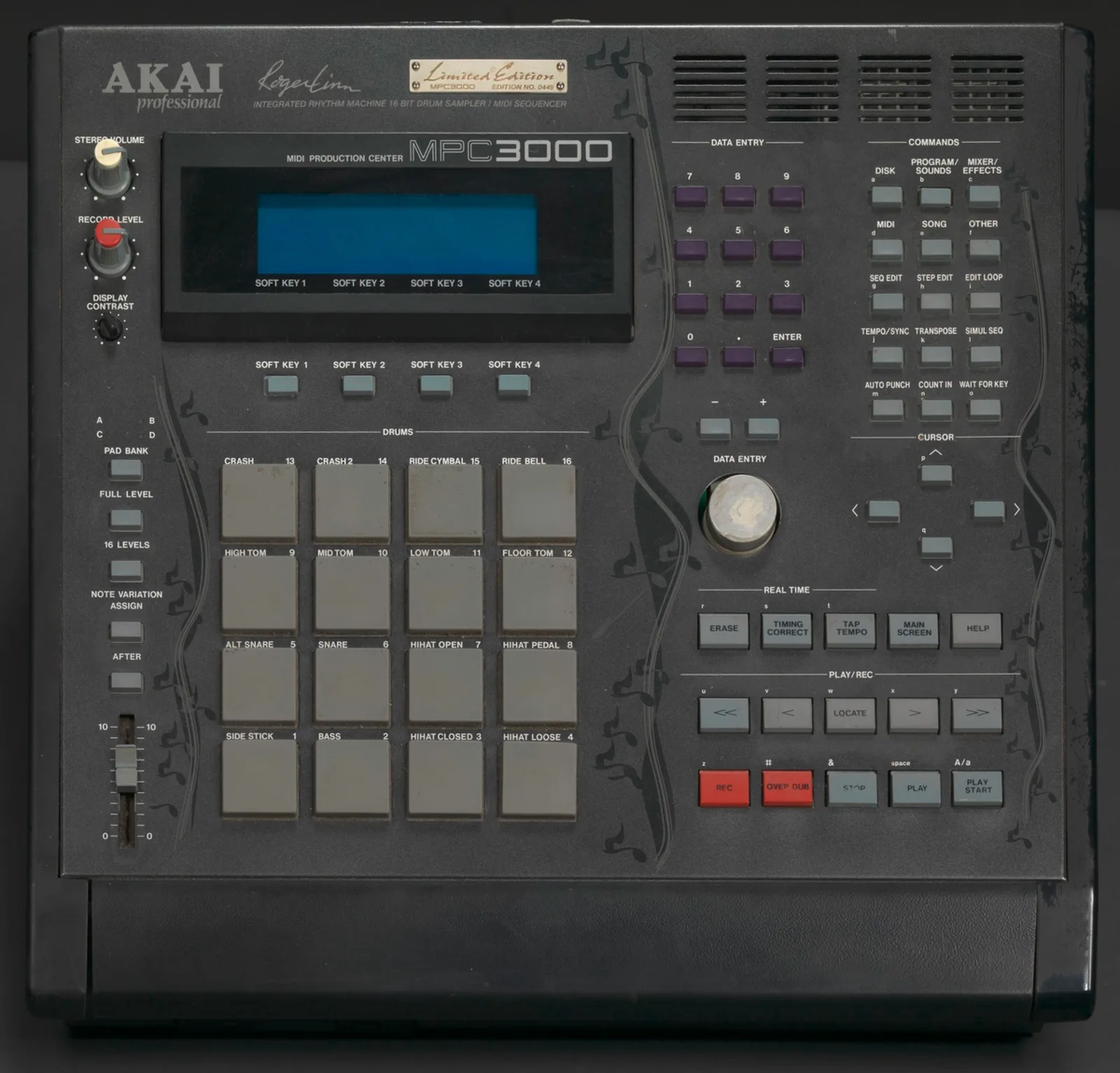
Once that fitted inside a machine, it got cheap. The E-mu SP-1200 arrived in 1987 with ten seconds of memory. The Akai MPC60 followed in December 1988, designed by Roger Linn, with thirteen seconds and a price of five thousand dollars. Thirteen seconds for a whole song forces you to choose the fragment very well. The photograph at the top shows the sixteen pads of one of those machines: one recorded fragment per square.
Here is the distinction this unit is named after. A sample means using the recording: the physical sound of the old record goes into the new song. An interpolation means playing the melody again: not one second of the old record is used, but the tune is the same one.
This is not a fine point, because a song has two separate owners. One owns the recording, usually the label. The other owns the composition — melody and lyrics — and that is the writers and their publisher. A sample needs permission from both. An interpolation needs it only from the second.
For a few years none of this was asked for. On 17 December 1991, a New York judge named Kevin Thomas Duffy decided Gilbert O'Sullivan's case against Biz Markie, who had used "Alone Again (Naturally)" without clearance. The ruling opens with three words: "Thou shalt not steal." From that day samples get negotiated before release, and replaying the melody becomes the cheap way out.
That is why both songs in this unit are interpolations and not samples. Nobody copied the Marvelettes' record for Feel It Still: John Gourley sang that melody from memory. Even so, three of the five 1961 writers — Robert Bateman, Freddie Gorman and Brian Holland — are among the ten names on the 2017 song.
I Ain't Worried works the same way: six writers, three of them the Swedes Peter Morén, Björn Yttling and John Eriksson, who never set foot in the studio.
My own view, and I will say it plainly: the credit list explains this better than any definition. It is a public statement of who has to be paid. If you want to know what one song took from another, don't read the encyclopedia entry — look at who gets the cheque.
Hard facts: the break stretched with two turntables, 1973. SP-1200, 1987, ten seconds. MPC60, December 1988, thirteen seconds, five thousand dollars. The 1991 ruling: samples get cleared before release. Feel It Still, 2017: ten writers, three of them from 1961. I Ain't Worried, 2022: six writers, three of them from 2006.
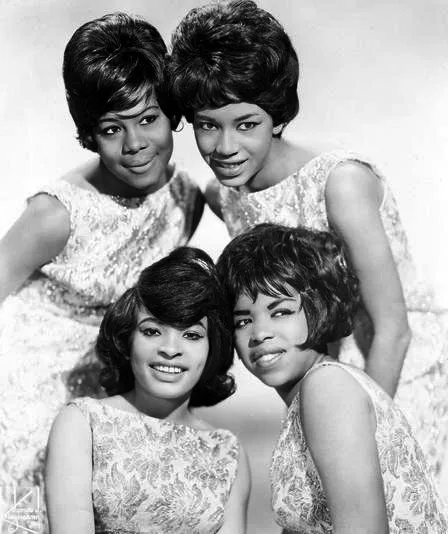
Foto: Motown/Tamla Records, James Kriegsmann (Nueva York), dominio público, vía Wikimedia Commons
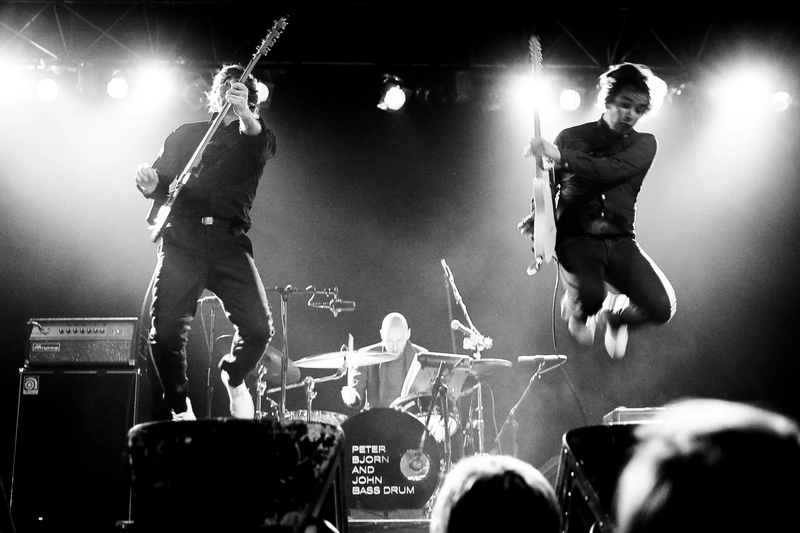
Foto: Davinic, CC BY-SA 3.0, vía Wikimedia Commons
The same device elsewhere
Reusing somebody else's material was not invented by hip hop, and it does not always need a machine. These three are worth hearing back to back:
- Uptown Funk (2015) — it contains both cases at once. It samples "All Gold Everything" by Trinidad James, cleared from the start. And in 2015, with the record already out and at the top of the charts, five more writers were added: the writers of the Gap Band's "Oops Up Side Your Head", 1979, because the chant is too close. Eleven writers in total. That song is in the library.
- The L'homme armé masses (15th and 16th centuries) — "L'homme armé" was a mid-fifteenth-century secular song anyone could sing. Composers put it inside the mass as a skeleton, in long notes, while the other voices moved around it. A borrowed melody used that way is called a cantus firmus. Over forty masses are known to be built on it, around thirty of them between 1450 and 1510, by Du Fay, Ockeghem, Josquin, Palestrina and the Spaniard Cristóbal de Morales. The same tune for two centuries, and nobody paid anyone.
- The Jamaican riddim — in Jamaica an instrumental backing is called a riddim, and it does not belong to one song: it belongs to every song built on top of it. In 1985 Wayne Smith recorded "Under Mi Sleng Teng" with producer King Jammy over a preset from a Casiotone MT-40 keyboard. More than five hundred different songs have been counted on that same backing. There it is not a legal exception, it is the normal way of working.
None is better than the others. All three do the same job: take something that already existed and build on top. The only thing that changes from case to case is who has to sign.
And here at home?
Late, and it is worth saying so. Hip hop is born in the Bronx in 1973; the first rap record released in Spain is a compilation called Madrid Hip Hop, from 1989. Sixteen years apart. Ariola put out another one the same year, Rapin' Madrid. Neither sold much, but between them they left a working scene in Madrid.
The record that actually founds Spanish rap arrives in 1994: Madrid Zona Bruta, by Club de los Poetas Violentos (CPV). It sold around two thousand copies, which at the time was a lot, and it turned a hobby into a job.
And in Zaragoza, in 1997, Violadores del Verso come together: Kase.O, Lírico and Sho-Hai on vocals, and R de Rumba — Rubén Cuevas — as DJ and producer. That fourth figure is the one this unit is about: the person who hunts down the records, picks the fragments and builds the tracks out of jazz and funk.
They release an EP in 1998, Genios in 1999, Vicios y Virtudes in 2001 and Vivir para contarlo in November 2006, mostly on the Zaragoza label Rap Solo.
The most interesting move comes later, and it runs this unit backwards. In 2011 Kase.O puts together Jazz Magnetism, a group with live musicians: Hugo Astudillo on saxophone, Juan Pablo Balcázar on bass, Dani Comas on guitar and Dani Domínguez on drums. Instead of lifting the jazz off a record, they play it. That is the step from sample to interpolation, made in Zaragoza, with no judge involved.
Classroom activities
- While Please Mr. Postman plays: half the class sings the chorus melody as it is, and the other half sings the Feel It Still words on top. At the same time, not one after the other. When it locks, nobody needs interpolation explained.
- While I Ain't Worried plays: everyone whistles the tune. The moment it ends, without stopping the music or discussing anything, put on Young Folks and keep whistling the same thing. Hands up at the exact point where it stops fitting.
- While Rapper's Delight plays: count how many times the bass pattern goes round before the first voice comes in. It is a loop played by people, not a record cued up twice.
- Play: we build Feel It Still with the band. The full-band chart and the tab are attached to its own article. Once it holds, sing the 1961 words over it and check that the band has to change nothing.
- Create: take a melody everybody knows and put different chords underneath it at a different tempo. That is an interpolation. Next to it, write the list of who would have to appear in your credits, and why.
Key vocabulary
- Break — el break: el trozo en que se callan casi todos los instrumentos y queda la percusión
- Sample — sample: un trozo de una grabación ajena usado dentro de una canción nueva
- Interpolation — interpolación: volver a tocar la melodía ajena en vez de copiar la grabación
- Cantus firmus — cantus firmus: melodía prestada, en notas largas, que sostiene una obra entera
- Riddim — riddim: en Jamaica, la base instrumental compartida por muchas canciones
Resources
The songs in this unit are in the library, each with its own article, full-band chart and tab: Feel It Still, I Ain't Worried.
The first song of the unit — Feel It Still, Portugal. The Man (2017). Its article, with the full-band chart and the tab, is in the library.
Where its melody comes from — Please Mr. Postman, The Marvelettes (1961).
The second song of the unit — I Ain't Worried, OneRepublic (2022). It also has its article in the library, with chart and tab.
Where its whistle comes from — Young Folks, Peter Bjorn and John (2006).
A backing played, not sampled — Rapper's Delight, Sugarhill Gang (1979). What you hear underneath is "Good Times" played again by session musicians.
The original — Good Times, Chic (1979). Nile Rodgers and Bernard Edwards ended up credited on the song above.
The borrowed melody of the fifteenth century — L'homme armé, by the Oxford Camerata. This is the tune that over forty masses come from.
The same melody inside a mass — Kyrie from Josquin's Missa L'homme armé super voces musicales, by The Tallis Scholars.
One backing for five hundred songs — Under Mi Sleng Teng, Wayne Smith (1985).
Jazz played instead of sampled — Kase.O Jazz Magnetism at The Furious Sessions. A note for the teacher: the lyrics are adult, so watch it first.
- More from this era — "1990s Grunge and Hip Hop", in the library.
- Both cases in one song — "Uptown Funk", Mark Ronson and Bruno Mars (2015), in the library.
Nos preguntamos
- Si cojo un trozo de un disco de otro y lo pongo en mi canción, ¿la canción es mía?
- ¿Es lo mismo copiar la grabación que volver a tocar la melodía?
- ¿Por qué una canción de dos minutos y medio puede tener once autores?
- Cuando reconozco algo en una canción nueva, ¿lo reconozco yo o me lo están enseñando?
- ¿Se puede robar una melodía sin darse cuenta?
- Si todo se ha hecho ya, ¿qué queda por hacer?
No las respondas todavía. Al final de la unidad volvemos a ellas.
El fragmento
Antes de poner ninguna canción entera, cantamos. Dos veces, y sin instrumentos.
Primero, la clase canta el estribillo de Please Mr. Postman, de The Marvelettes, 1961. Son cuatro notas largas y una bajada. Se aprende en dos vueltas.
Después, con esa melodía todavía caliente, cantamos el estribillo de Feel It Still, de 2017. Es la misma línea. Cambia el idioma de la letra, cambian los acordes de debajo, cambia el grupo, y la melodía es la de 1961.
Ahora el segundo fragmento, y este se silba. La melodía de Young Folks, de Peter Bjorn and John, 2006: cabe en una octava y se mueve por notas vecinas. El que no silbe afinado la toca con la flauta. Cuando salga, silbad el tema de I Ain't Worried, de 2022. Otra vez lo mismo.
Con eso ya está hecho el trabajo. Ahora sí, las dos canciones enteras y sin comentar por encima.
Qué cambió
Lo que acabas de hacer —coger un trozo de música de otro y ponerlo en otro sitio— es tan viejo como la música. Lo que cambió en los setenta es que empezó a hacerse con grabaciones, no con partituras.
El 11 de agosto de 1973, en una sala de fiestas del 1520 de Sedgwick Avenue, en el Bronx, un DJ llamado Kool Herc puso dos copias del mismo disco en dos platos. Cuando llegaba el trozo en el que se callan los instrumentos y solo queda la percusión —eso es el break—, saltaba a la segunda copia y lo repetía. Un trozo de quince segundos se convertía en cinco minutos.
Nadie compuso nada aquella noche: se eligió un fragmento y se alargó. Esa manera de trabajar, elegir antes que inventar, es la que llega hasta aquí.
Lo que cambia en el oído es esto: empiezas a escuchar dos épocas a la vez. Un disco de 1969 conserva su ruido, su reverberación y su manera de sonar, y todo eso viaja entero dentro de una canción de ahora. No es una cita, es el objeto. La unidad mínima con la que se compone deja de ser la nota y pasa a ser el trozo de grabación.
Cuando eso se pudo meter en una máquina, se abarató. La E-mu SP-1200 salió en 1987 con diez segundos de memoria. La Akai MPC60 llegó en diciembre de 1988, diseñada por Roger Linn, con trece segundos y un precio de cinco mil dólares. Trece segundos para una canción entera obliga a elegir muy bien el trozo. Lo que la foto de arriba muestra son los dieciséis pads de una de esas máquinas: cada cuadrado, un fragmento.
Y aquí aparece la distinción que da nombre a esta unidad. Un sample es usar la grabación: el sonido físico del disco original entra en la canción nueva. Una interpolación es volver a tocar la melodía: no entra ni un segundo del disco viejo, pero la melodía es la misma.
La diferencia no es de matiz, porque en una canción hay dos dueños distintos. Uno es el dueño de la grabación, normalmente la discográfica. El otro es el dueño de la composición —la melodía y la letra—, que son los autores y su editorial. El sample necesita permiso de los dos. La interpolación, solo del segundo.
Durante unos años esto se hizo sin pedir permiso a nadie. El 17 de diciembre de 1991, un juez de Nueva York llamado Kevin Thomas Duffy resolvió el caso de Gilbert O'Sullivan contra Biz Markie, que había usado su «Alone Again (Naturally)» sin autorización. La sentencia empieza con tres palabras: «No robarás». Desde ese día los samples se negocian antes de publicar, y volver a tocar la melodía se convierte en la salida barata.
Por eso las dos canciones de esta unidad son interpolaciones y no samples. En Feel It Still nadie copió el disco de las Marvelettes: John Gourley cantó esa melodía de memoria. Y aun así, tres de los cinco autores de 1961 —Robert Bateman, Freddie Gorman y Brian Holland— están entre los diez firmantes de 2017.
En I Ain't Worried pasa lo mismo: seis autores, y tres son los suecos Peter Morén, Björn Yttling y John Eriksson, que nunca pisaron el estudio.
Mi opinión, y aquí me mojo: el crédito de autoría explica esto mejor que cualquier definición. Es una lista pública de a quién hay que pagar. Si quieres saber qué se llevó una canción de otra, no mires la Wikipedia: mira quién cobra.
Datos duros: break alargado con dos platos, 1973. SP-1200, 1987, diez segundos. MPC60, diciembre de 1988, trece segundos, cinco mil dólares. Sentencia de 1991: los samples pasan a negociarse antes. Feel It Still, 2017: diez autores, tres de 1961. I Ain't Worried, 2022: seis autores, tres de 2006.
Foto: Motown/Tamla Records, James Kriegsmann (Nueva York), dominio público, vía Wikimedia Commons
Foto: Davinic, CC BY-SA 3.0, vía Wikimedia Commons
El mismo recurso en otros sitios
Reutilizar material ajeno no lo inventó el hip hop, y no siempre se hace con una máquina. Estos tres conviene oírlos seguidos:
- Uptown Funk (2015) — trae los dos casos en una sola canción. Samplea «All Gold Everything», de Trinidad James, con permiso y desde el principio. Y en 2015, ya publicada y en lo más alto de las listas, se le añadieron cinco autores más: los de «Oops Up Side Your Head», del Gap Band, 1979, porque el coro se parece demasiado. Once autores en total. Esa canción está en la biblioteca.
- Las misas sobre L'homme armé (siglos XV y XVI) — «L'homme armé» era una canción profana de mediados del siglo XV que cantaba cualquiera. Los compositores la metieron dentro de la misa como esqueleto, en notas largas, mientras las otras voces se movían alrededor. A esa melodía prestada que sostiene la obra se la llama cantus firmus. Se conocen más de cuarenta misas construidas así, unas treinta solo entre 1450 y 1510, firmadas por Du Fay, Ockeghem, Josquin, Palestrina o el sevillano Cristóbal de Morales. La misma melodía durante dos siglos, y nadie pagó nada.
- El riddim jamaicano — en Jamaica, una base instrumental se llama riddim y no pertenece a una canción: pertenece a todas las que se hagan encima. En 1985 Wayne Smith grabó «Under Mi Sleng Teng» con el productor King Jammy sobre un preset de un teclado Casiotone MT-40. Se han contado más de quinientas canciones distintas sobre esa misma base. Allí no es una excepción legal, es la manera normal de trabajar.
Ninguno es mejor que otro. Los tres hacen lo mismo: coger algo que ya existía y construir encima. Lo único que cambia de un caso a otro es quién tiene que firmar.
Y aquí, ¿qué?
Tarde, y conviene decirlo. El hip hop nace en el Bronx en 1973; el primer disco de rap publicado en España es un recopilatorio titulado Madrid Hip Hop, de 1989. Dieciséis años de diferencia. Ese mismo año Ariola sacó otro, Rapin' Madrid. Ninguno de los dos vendió gran cosa, pero dejaron una escena montada en Madrid.
El disco que de verdad funda el rap español llega en 1994: Madrid Zona Bruta, del Club de los Poetas Violentos (CPV). Vendió unas dos mil copias, que en aquel momento era mucho, y convirtió una afición en un oficio.
Y en Zaragoza, en 1997, se juntan Violadores del Verso: Kase.O, Lírico y Sho-Hai a las voces, y R de Rumba —Rubén Cuevas— como DJ y productor. Esa cuarta figura es la de esta unidad: el que busca los discos, elige los fragmentos y monta las bases, escarbando en jazz y en funk.
Publican un EP en 1998, Genios en 1999, Vicios y Virtudes en 2001 y Vivir para contarlo en noviembre de 2006, casi todo en el sello zaragozano Rap Solo.
El movimiento más interesante viene después, y es el de esta unidad al revés. En 2011 Kase.O monta Jazz Magnetism, un grupo con músicos en directo: Hugo Astudillo al saxo, Juan Pablo Balcázar al bajo, Dani Comas a la guitarra y Dani Domínguez a la batería. En vez de sacar el jazz de un disco, lo tocan. Es exactamente el paso del sample a la interpolación, hecho en Zaragoza y sin ningún juez de por medio.
Para hacer en clase
- Mientras suena Please Mr. Postman: media clase canta la melodía del estribillo tal cual, y la otra media canta encima la letra de Feel It Still. Se hace a la vez, no seguido. Cuando encaje, ya no hace falta explicar qué es una interpolación.
- Mientras suena I Ain't Worried: todos silban el tema. En cuanto termine, sin parar la música ni comentar nada, se pone Young Folks y se sigue silbando lo mismo. Levanta la mano quien note el momento exacto en que deja de encajar.
- Mientras suena Rapper's Delight: contad cuántas veces se repite el patrón de bajo antes de que entre la primera voz. Es un bucle tocado por personas, no un disco puesto dos veces.
- Tocar: montamos Feel It Still con la banda. El chart de banda y la tablatura están en su artículo. Cuando esté, cantad encima la letra de 1961 y comprobad que la banda no tiene que cambiar nada.
- Crear: coged una melodía que se sepa todo el mundo y ponedle acordes distintos debajo, con otro tempo. Eso es una interpolación. Escribid al lado la lista de quién tendría que aparecer en vuestros créditos y por qué.
Vocabulario fundamental
- Break — El trozo de una canción en el que se callan casi todos los instrumentos y queda la percusión. Es el fragmento que Kool Herc alargaba con dos copias del mismo disco.
- Sample — Un trozo de una grabación ajena usado dentro de una canción nueva. Entra el sonido original, con su ruido y su reverberación.
- Interpolación — Volver a tocar o cantar una melodía ajena en vez de copiar la grabación. No entra ni un segundo del disco viejo; la melodía sigue teniendo dueño.
- Cantus firmus — Una melodía prestada, en notas largas, sobre la que se construye una obra entera. Es como el Renacimiento hacía lo mismo que hace hoy un sample.
- Riddim — En Jamaica, una base instrumental que no pertenece a una canción sino a todas las que se graben encima.
Recursos
Las canciones de esta unidad están en la biblioteca, cada una con su artículo, su chart de banda y su tablatura: Feel It Still, I Ain't Worried.
La primera canción de la unidad — Feel It Still, Portugal. The Man (2017). El artículo, con su chart de banda y su tablatura, está en la biblioteca.
De dónde sale su melodía — Please Mr. Postman, The Marvelettes (1961).
La segunda canción de la unidad — I Ain't Worried, OneRepublic (2022). También tiene su artículo en la biblioteca, con chart y tablatura.
De dónde sale su silbido — Young Folks, Peter Bjorn and John (2006).
La base tocada, no sampleada — Rapper's Delight, Sugarhill Gang (1979). Lo que suena debajo es «Good Times» vuelta a tocar por músicos de estudio.
El original — Good Times, Chic (1979). Nile Rodgers y Bernard Edwards acabaron firmando la canción de arriba.
La melodía prestada del siglo XV — L'homme armé, por el Oxford Camerata. Es la canción de la que salen más de cuarenta misas.
La misma melodía dentro de una misa — Kyrie de la Missa L'homme armé super voces musicales de Josquin, por The Tallis Scholars.
Una base para quinientas canciones — Under Mi Sleng Teng, Wayne Smith (1985).
El jazz tocado en vez de sampleado — Kase.O Jazz Magnetism en The Furious Sessions. Para el profesor: la letra es de adulto, conviene verla antes.
- Más de esta época — «1990s Grunge and Hip Hop», en la biblioteca.
- Los dos casos en una sola canción — «Uptown Funk», Mark Ronson y Bruno Mars (2015), en la biblioteca.
We ask ourselves
- If I take a piece of somebody else's record and put it in my song, is the song mine?
- Is copying the recording the same thing as playing the tune again?
- How can a two-and-a-half-minute song have eleven writers?
- When I recognise something in a new song, am I recognising it or being taught it?
- Can you steal a melody without noticing?
- If everything has been done already, what is left to do?
Don't answer yet. We come back to these at the end.
The fragment
Before playing any song all the way through, we sing. Twice, and with no instruments.
First, the class sings the chorus of Please Mr. Postman, The Marvelettes, 1961. Four long notes and a step down. Two run-throughs and it sticks.
Then, with that tune still warm, we sing the chorus of Feel It Still, 2017. Same line. The words are different, the chords underneath are different, the band is different, and the melody is the one from 1961.
Now the second fragment, and this one is whistled. The tune of Young Folks, Peter Bjorn and John, 2006: it fits inside one octave and moves to neighbouring notes. Anyone who cannot whistle in tune plays it on a recorder. Once it works, whistle the theme of I Ain't Worried, 2022. Same thing again.
That is the work done. Now both songs, all the way through, with nobody talking over them.
What changed
What you have just done — taking a piece of somebody's music and putting it somewhere else — is as old as music. What changed in the seventies is that people started doing it with recordings instead of scores.
On 11 August 1973, in a rec room at 1520 Sedgwick Avenue in the Bronx, a DJ called Kool Herc put two copies of the same record on two turntables. When the section arrived where the instruments drop out and only percussion is left — that is the break — he jumped to the second copy and played it again. Fifteen seconds became five minutes.
Nobody composed anything that night: a fragment was chosen and stretched. Choosing rather than inventing is the working method that runs all the way to here.
What changes in the ear is this: you start hearing two eras at once. A 1969 record keeps its hiss, its room and its way of sounding, and all of that travels whole into a song made now. It is not a quotation, it is the object itself. The smallest unit you build with stops being the note and becomes the piece of recording.
Once that fitted inside a machine, it got cheap. The E-mu SP-1200 arrived in 1987 with ten seconds of memory. The Akai MPC60 followed in December 1988, designed by Roger Linn, with thirteen seconds and a price of five thousand dollars. Thirteen seconds for a whole song forces you to choose the fragment very well. The photograph at the top shows the sixteen pads of one of those machines: one recorded fragment per square.
Here is the distinction this unit is named after. A sample means using the recording: the physical sound of the old record goes into the new song. An interpolation means playing the melody again: not one second of the old record is used, but the tune is the same one.
This is not a fine point, because a song has two separate owners. One owns the recording, usually the label. The other owns the composition — melody and lyrics — and that is the writers and their publisher. A sample needs permission from both. An interpolation needs it only from the second.
For a few years none of this was asked for. On 17 December 1991, a New York judge named Kevin Thomas Duffy decided Gilbert O'Sullivan's case against Biz Markie, who had used "Alone Again (Naturally)" without clearance. The ruling opens with three words: "Thou shalt not steal." From that day samples get negotiated before release, and replaying the melody becomes the cheap way out.
That is why both songs in this unit are interpolations and not samples. Nobody copied the Marvelettes' record for Feel It Still: John Gourley sang that melody from memory. Even so, three of the five 1961 writers — Robert Bateman, Freddie Gorman and Brian Holland — are among the ten names on the 2017 song.
I Ain't Worried works the same way: six writers, three of them the Swedes Peter Morén, Björn Yttling and John Eriksson, who never set foot in the studio.
My own view, and I will say it plainly: the credit list explains this better than any definition. It is a public statement of who has to be paid. If you want to know what one song took from another, don't read the encyclopedia entry — look at who gets the cheque.
Hard facts: the break stretched with two turntables, 1973. SP-1200, 1987, ten seconds. MPC60, December 1988, thirteen seconds, five thousand dollars. The 1991 ruling: samples get cleared before release. Feel It Still, 2017: ten writers, three of them from 1961. I Ain't Worried, 2022: six writers, three of them from 2006.
Foto: Motown/Tamla Records, James Kriegsmann (Nueva York), dominio público, vía Wikimedia Commons
Foto: Davinic, CC BY-SA 3.0, vía Wikimedia Commons
The same device elsewhere
Reusing somebody else's material was not invented by hip hop, and it does not always need a machine. These three are worth hearing back to back:
- Uptown Funk (2015) — it contains both cases at once. It samples "All Gold Everything" by Trinidad James, cleared from the start. And in 2015, with the record already out and at the top of the charts, five more writers were added: the writers of the Gap Band's "Oops Up Side Your Head", 1979, because the chant is too close. Eleven writers in total. That song is in the library.
- The L'homme armé masses (15th and 16th centuries) — "L'homme armé" was a mid-fifteenth-century secular song anyone could sing. Composers put it inside the mass as a skeleton, in long notes, while the other voices moved around it. A borrowed melody used that way is called a cantus firmus. Over forty masses are known to be built on it, around thirty of them between 1450 and 1510, by Du Fay, Ockeghem, Josquin, Palestrina and the Spaniard Cristóbal de Morales. The same tune for two centuries, and nobody paid anyone.
- The Jamaican riddim — in Jamaica an instrumental backing is called a riddim, and it does not belong to one song: it belongs to every song built on top of it. In 1985 Wayne Smith recorded "Under Mi Sleng Teng" with producer King Jammy over a preset from a Casiotone MT-40 keyboard. More than five hundred different songs have been counted on that same backing. There it is not a legal exception, it is the normal way of working.
None is better than the others. All three do the same job: take something that already existed and build on top. The only thing that changes from case to case is who has to sign.
And here at home?
Late, and it is worth saying so. Hip hop is born in the Bronx in 1973; the first rap record released in Spain is a compilation called Madrid Hip Hop, from 1989. Sixteen years apart. Ariola put out another one the same year, Rapin' Madrid. Neither sold much, but between them they left a working scene in Madrid.
The record that actually founds Spanish rap arrives in 1994: Madrid Zona Bruta, by Club de los Poetas Violentos (CPV). It sold around two thousand copies, which at the time was a lot, and it turned a hobby into a job.
And in Zaragoza, in 1997, Violadores del Verso come together: Kase.O, Lírico and Sho-Hai on vocals, and R de Rumba — Rubén Cuevas — as DJ and producer. That fourth figure is the one this unit is about: the person who hunts down the records, picks the fragments and builds the tracks out of jazz and funk.
They release an EP in 1998, Genios in 1999, Vicios y Virtudes in 2001 and Vivir para contarlo in November 2006, mostly on the Zaragoza label Rap Solo.
The most interesting move comes later, and it runs this unit backwards. In 2011 Kase.O puts together Jazz Magnetism, a group with live musicians: Hugo Astudillo on saxophone, Juan Pablo Balcázar on bass, Dani Comas on guitar and Dani Domínguez on drums. Instead of lifting the jazz off a record, they play it. That is the step from sample to interpolation, made in Zaragoza, with no judge involved.
Classroom activities
- While Please Mr. Postman plays: half the class sings the chorus melody as it is, and the other half sings the Feel It Still words on top. At the same time, not one after the other. When it locks, nobody needs interpolation explained.
- While I Ain't Worried plays: everyone whistles the tune. The moment it ends, without stopping the music or discussing anything, put on Young Folks and keep whistling the same thing. Hands up at the exact point where it stops fitting.
- While Rapper's Delight plays: count how many times the bass pattern goes round before the first voice comes in. It is a loop played by people, not a record cued up twice.
- Play: we build Feel It Still with the band. The full-band chart and the tab are attached to its own article. Once it holds, sing the 1961 words over it and check that the band has to change nothing.
- Create: take a melody everybody knows and put different chords underneath it at a different tempo. That is an interpolation. Next to it, write the list of who would have to appear in your credits, and why.
Key vocabulary
- Break — el break: el trozo en que se callan casi todos los instrumentos y queda la percusión
- Sample — sample: un trozo de una grabación ajena usado dentro de una canción nueva
- Interpolation — interpolación: volver a tocar la melodía ajena en vez de copiar la grabación
- Cantus firmus — cantus firmus: melodía prestada, en notas largas, que sostiene una obra entera
- Riddim — riddim: en Jamaica, la base instrumental compartida por muchas canciones
Resources
The songs in this unit are in the library, each with its own article, full-band chart and tab: Feel It Still, I Ain't Worried.
The first song of the unit — Feel It Still, Portugal. The Man (2017). Its article, with the full-band chart and the tab, is in the library.
Where its melody comes from — Please Mr. Postman, The Marvelettes (1961).
The second song of the unit — I Ain't Worried, OneRepublic (2022). It also has its article in the library, with chart and tab.
Where its whistle comes from — Young Folks, Peter Bjorn and John (2006).
A backing played, not sampled — Rapper's Delight, Sugarhill Gang (1979). What you hear underneath is "Good Times" played again by session musicians.
The original — Good Times, Chic (1979). Nile Rodgers and Bernard Edwards ended up credited on the song above.
The borrowed melody of the fifteenth century — L'homme armé, by the Oxford Camerata. This is the tune that over forty masses come from.
The same melody inside a mass — Kyrie from Josquin's Missa L'homme armé super voces musicales, by The Tallis Scholars.
One backing for five hundred songs — Under Mi Sleng Teng, Wayne Smith (1985).
Jazz played instead of sampled — Kase.O Jazz Magnetism at The Furious Sessions. A note for the teacher: the lyrics are adult, so watch it first.
- More from this era — "1990s Grunge and Hip Hop", in the library.
- Both cases in one song — "Uptown Funk", Mark Ronson and Bruno Mars (2015), in the library.