Contenidos
My Girl — The Temptations (1964)
The bass starts on its own, and you already know which song this is. Here the bass stops backing and starts singing.
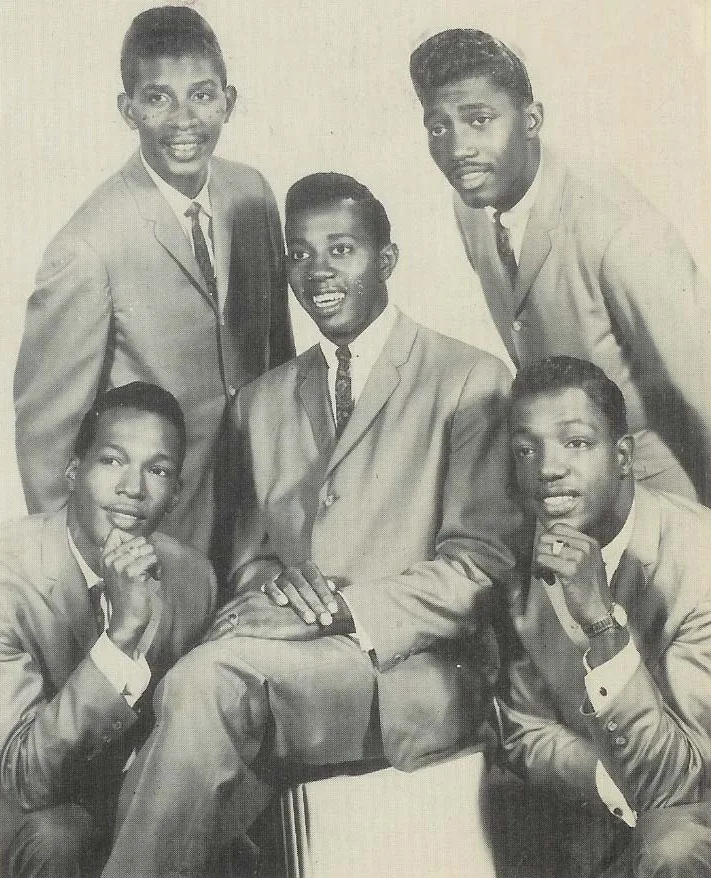
🏷️ Ficha musical
Why this song
Play the song and notice how long it takes for a voice to come in. Before that there is nothing but a bass and a guitar answering it.
And you still recognise the song from the first note. Smokey Robinson, who wrote it, says he can be in a country where nobody speaks English and the audience starts cheering before he sings a word: hearing that bass entrance is enough.
That almost never happens. A short figure that repeats and that you spot instantly is called a riff, and normally the guitar plays it. Here the riff is in the bass. If you play bass in class, this is your song.
Historical context
Motown was not a band or a style: it was a company. Berry Gordy set it up in 1959 in a house in Detroit with a sign over the door reading Hitsville U.S.A. In the basement was Studio A, a small room the musicians called "the Snakepit".

Foto: Michael Barera, CC BY-SA 4.0, vía Wikimedia Commons
Gordy did what a factory does: instead of hiring a different band for every record, he kept one band on the payroll. They called themselves the Funk Brothers.
They played on nearly every Motown recording between 1959 and 1972. Some combination of them is on the label's hundred-plus US rhythm and blues number ones and fifty-plus pop number ones from 1961 to 1972.
They were jazz musicians. They recorded in the basement by day and played Detroit clubs at night. They were paid far less than the singers, and their names were not on the sleeves: Motown did not credit its studio musicians until 1971. Twelve years playing the country's best-selling records without signing them.
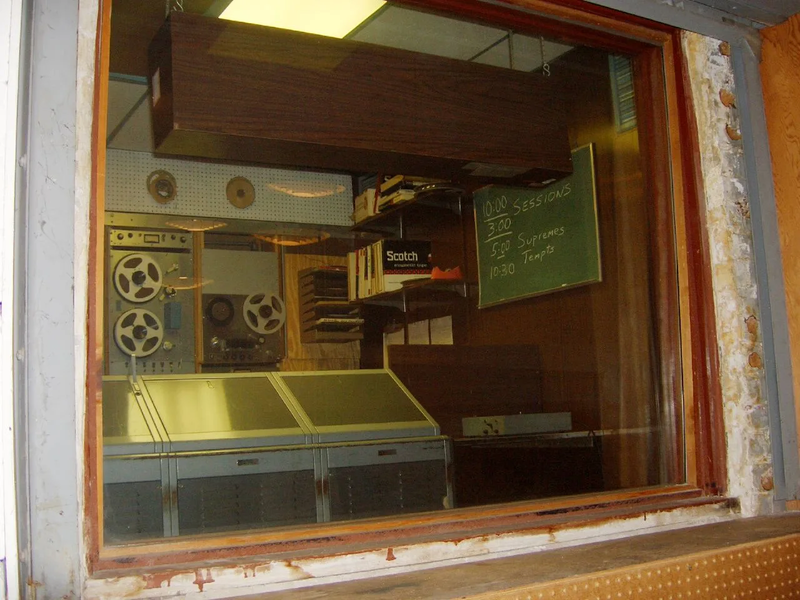
Foto: Global Reactions, CC BY 2.0, vía Wikimedia Commons
The song itself came out of a very corporate chain of decisions. Smokey Robinson wrote it thinking about his wife, Claudette, and his own group, the Miracles, were going to record it. He handed it to the Temptations because he had heard David Ruffin sing on tour and wanted a song for that voice. It was the group's first single with Ruffin on lead, and their first number one.
Musical characteristics
First you need to know what a bass normally does. When the band plays a C, the bass plays a C. When they move to F, it plays an F. That note, the one the chord is named after, is called the root, and playing nothing but roots is already good backing.
James Jamerson, the Funk Brothers' bass player, did something else. In a 1983 interview he put it like this: they gave him the chord sheet, and when somebody wrote his part out, it did not sound right. So he listened to the melody in the lyrics and built the bass line around it. He made it up, in other words, and he made it up as a second melody.
That is why the opening of My Girl is singable. It is not one long C under a chord: it is a figure that climbs, stops, and leaves room for Robert White's guitar to answer with another one. Two instruments talking, and nobody has sung yet.
The chords, meanwhile, are four and easy: C, Dm, F, G. Every chord in a key gets a number according to its position, and that number is its scale degree: C is I, Dm is ii, F is IV and G is V.
They do not all show up at once in My Girl. The opening and the verses sit mostly on I, and ii — the Dm — is the chord heard most in the chorus. You notice the section change because a chord turns up that was not there before.
One more thing happens at the end. The whole song moves up a tone: what was in C goes to D, and everyone plays the same chords one step higher. That is a modulation, and it is a cheap, effective way of making the last chorus sound higher without anyone singing louder.
Hard facts: C major (ending in D major), 4/4, 105 BPM, 2:45. The form is intro, verse, chorus, verse, chorus, bridge, chorus and final chorus.
Trivia and curiosities
- Jamerson played with a single right-hand finger, the index, resting the others on the instrument. He came from the double bass, where you play that way. His colleagues nicknamed that finger "the Hook".
- He never changed his strings unless one broke. The dirt, he said, is what keeps the funk. His bass, a 1962 Fender Precision, had the word FUNK carved into the wood by hand.
- His first credit on a major Motown release did not arrive until 1971, on Marvin Gaye's What's Going On, seven years after My Girl. It read: "the incomparable James Jamerson".
- Jamerson died in 1983 unable to find studio work. The Funk Brothers got their star on the Hollywood Walk of Fame in 2013, forty-nine years after this song. In 2020 Rolling Stone placed him first on its list of the fifty greatest bass players of all time.
Classroom activities
- Play: C, Dm, F, G on ukulele and guitar. Four chords and a comfortable tempo; a good place to start changing chords without dropping the pulse.
- The bass experiment: play the whole song twice. First time, the bass plays only the root of each chord, one note per bar. Second time, it plays the song's line. Everything else stays the same. Ask the class what changed, and who is in charge in each version.
- Analyse: a closed question. Which section does the Dm appear in? Listen to the intro, one verse and one chorus, and say which of the three has it.
- Create: take C–F, two chords, and write a four-bar bass line together that can be sung. If you cannot sing it, it does not count. That was Jamerson's test.
Key vocabulary
- Riff — riff: figura corta que se repite y reconoces enseguida
- Session musician — músico de sesión: el que graba y no sale en la portada
- Root — fundamental (la nota que da nombre al acorde)
- Scale degree — grado (el número del acorde dentro de la tonalidad)
- Modulation — modulación: subir la canción entera de tonalidad
Resources
In the theory and history book — this song fits ¿Quién pagaba la música cuando nadie compraba entradas? and ¿Cuánto cuesta una canción cuando hay que copiarla a mano?: who puts up the money, who does the work, and whose name ends up on it.
Official video — The Temptations' own channel. Nobody made music videos in 1964; this is the lyric video the group released.
The bass on its own — Jamerson's isolated track. Listen to it before you run the classroom experiment.
Ukulele tutorial — TenThumbs Productions, easy version, with the four chords.
Bass tutorial — Harry, with the tab on screen at normal speed.
Guitar tutorial — Jon MacLennan. He takes Robert White's riff apart note by note.
Drum tutorial — Super Easy Drums, for beginners, with the score scrolling on screen.
- Harmonic analysis — https://www.hooktheory.com/theorytab/view/the-temptations/my-girl
- Tab — the button opens it in Songsterr
Por dónde entrar
Pon la canción y fíjate en cuánto tarda en entrar una voz. Antes de eso no hay más que un bajo y una guitarra contestándole.
Y aun así reconoces la canción desde la primera nota. Smokey Robinson, que la escribió, cuenta que puede estar en un país donde nadie hable inglés y el público empieza a gritar antes de que él cante nada: les basta con oír esa entrada de bajo.
Eso no pasa casi nunca. Una figura corta que se repite y que identificas al vuelo se llama riff, y lo normal es que lo toque la guitarra. Aquí el riff está en el bajo. Si tocas el bajo en clase, esta es tu canción.
Contexto histórico
Motown no era un grupo ni un estilo: era una empresa. Berry Gordy la montó en 1959 en una casa de Detroit con un cartel encima de la puerta que ponía Hitsville U.S.A. En el sótano estaba el Studio A, una sala pequeña que los músicos llamaban «el foso de las serpientes».
Foto: Michael Barera, CC BY-SA 4.0, vía Wikimedia Commons
Gordy hizo lo que hace una fábrica: en vez de contratar una banda distinta para cada disco, tuvo una banda fija en plantilla. Se llamaban a sí mismos los Funk Brothers.
Tocaron en casi todas las grabaciones de Motown entre 1959 y 1972. Alguna combinación de ellos está en los más de cien números uno de rhythm and blues y en los más de cincuenta de pop que sacó el sello entre 1961 y 1972.
Eran músicos de jazz. Grababan de día en el sótano y por la noche se iban a tocar a los clubes de Detroit. Cobraban mucho menos que los cantantes, y sus nombres no salían en las portadas: Motown no acreditó a sus músicos de estudio hasta 1971. Doce años tocando los discos más vendidos del país sin firmarlos.
Foto: Global Reactions, CC BY 2.0, vía Wikimedia Commons
La canción, además, salió de una cadena de decisiones muy de empresa. Smokey Robinson la escribió pensando en su mujer, Claudette, e iba a grabarla su propio grupo, los Miracles. Se la cedió a los Temptations porque había oído cantar a David Ruffin en una gira y quería una canción para esa voz. Fue el primer single del grupo con Ruffin de solista, y su primer número uno.
Cómo suena
Lo primero que hay que entender es qué hace normalmente un bajo. Cuando el grupo toca un Do, el bajo toca un do. Cuando cambia a Fa, toca un fa. A esa nota, la que da nombre al acorde, se la llama fundamental, y con tocar solo fundamentales ya estás acompañando bien.
James Jamerson, el bajista de los Funk Brothers, hacía otra cosa. En una entrevista de 1983 lo explicó así: le daban la hoja con los acordes, y cuando alguien le escribía la parte, no sonaba bien. Entonces escuchaba la melodía de la letra y construía la línea de bajo alrededor de ella. Es decir, se la inventaba, y se la inventaba como si fuera una segunda melodía.
Por eso la entrada de My Girl se puede cantar. No es un do largo debajo de un acorde: es una figura que sube, se para, y deja sitio a que la guitarra de Robert White le conteste con otra. Dos instrumentos hablando, y todavía no ha cantado nadie.
Los acordes, en cambio, son cuatro y muy fáciles: Do, Rem, Fa, Sol. A cada acorde de una tonalidad se le pone un número según el lugar que ocupa. A ese número se le llama grado: Do es el I, Rem el ii, Fa el IV y Sol el V.
En My Girl no aparecen todos a la vez. La entrada y las estrofas se mueven sobre todo en el I, y el ii —el Rem— es el acorde que más suena en el estribillo. El cambio de sección lo notas porque aparece un acorde que antes no estaba.
Al final pasa una cosa más. La canción entera se sube un tono: lo que estaba en Do pasa a Re, y todos tienen que tocar los mismos acordes una casilla más arriba. Eso es una modulación, y es un truco barato y eficaz para que el último estribillo suene más alto sin cantar más fuerte.
Datos duros: Do mayor (con final en Re mayor), 4/4, 105 BPM, 2:45. La forma es intro, estrofa, estribillo, estrofa, estribillo, puente, estribillo y estribillo final.
Curiosidades
- Jamerson tocaba con un solo dedo de la mano derecha, el índice, apoyando los otros en el instrumento. Venía del contrabajo, donde se toca así. Sus compañeros le llamaban a ese dedo «el gancho».
- No cambiaba las cuerdas nunca, salvo si se rompía una. Decía que la suciedad es lo que guarda el funk. El bajo, un Fender Precision de 1962, tenía la palabra FUNK grabada a mano en la madera.
- Su primera acreditación en un disco grande de Motown no llegó hasta 1971, en What's Going On de Marvin Gaye, siete años después de My Girl. Puso: «el incomparable James Jamerson».
- Jamerson murió en 1983 sin encontrar trabajo de estudio. Los Funk Brothers recibieron su estrella en el paseo de la fama de Hollywood en 2013, cuarenta y nueve años después de esta canción. En 2020 la revista Rolling Stone lo puso el primero de su lista de los cincuenta mejores bajistas de la historia.
Para hacer en clase
- Tocar: Do, Rem, Fa, Sol en ukelele y guitarra. Son cuatro acordes y el tempo es cómodo; es un buen sitio para empezar a cambiar de acorde sin parar el pulso.
- El experimento del bajo: tocad la canción entera dos veces. La primera, el bajo hace solo la fundamental de cada acorde, una nota por compás. La segunda, hace la línea de la canción. Todo lo demás, igual. Que la clase diga qué ha cambiado y quién manda en cada versión.
- Analizar: pregunta cerrada. ¿En qué sección aparece el Rem? Escuchad la entrada, una estrofa y un estribillo, y decid en cuál de las tres suena.
- Crear: coged Do–Fa, dos acordes, y escribid entre todos una línea de bajo de cuatro compases que se pueda cantar. Si no la podéis cantar, no vale. Ese era el criterio de Jamerson.
Vocabulario fundamental
- Riff — Una figura corta que se repite y que reconoces enseguida. Casi siempre la toca la guitarra; aquí la toca el bajo.
- Músico de sesión — El que graba en el estudio y no sale en la portada. Los Funk Brothers eran los de Motown.
- Fundamental — La nota que da nombre al acorde. Es lo que toca un bajo cuando solo acompaña.
- Grado — El número que le toca a cada acorde según su sitio en la tonalidad. En Do mayor: Do es el I, Rem el ii, Fa el IV, Sol el V.
- Modulación — Subir o bajar la canción entera de tonalidad. Al final de My Girl todo se va un tono arriba, de Do a Re.
Recursos
En el libro de teoría e historia — esta canción encaja con ¿Quién pagaba la música cuando nadie compraba entradas? y con ¿Cuánto cuesta una canción cuando hay que copiarla a mano?: quién pone el dinero, quién hace el trabajo y quién acaba firmando.
Vídeo oficial — canal de The Temptations. En 1964 no se hacían videoclips; este es el vídeo con letra que publicó el grupo.
El bajo solo, sin nada más — la pista de Jamerson aislada. Escúchala antes de hacer el experimento de clase.
Tutorial de ukelele — TenThumbs Productions, versión fácil, con los cuatro acordes.
Tutorial de bajo — Harry, con la tablatura en pantalla y a velocidad normal.
Tutorial de guitarra — Jon MacLennan. Saca el riff de Robert White nota a nota.
Tutorial de batería — Super Easy Drums, para principiantes, con la partitura pasando en pantalla.
- Análisis armónico — https://www.hooktheory.com/theorytab/view/the-temptations/my-girl
- Tablatura — el botón la abre en Songsterr
Why this song
Play the song and notice how long it takes for a voice to come in. Before that there is nothing but a bass and a guitar answering it.
And you still recognise the song from the first note. Smokey Robinson, who wrote it, says he can be in a country where nobody speaks English and the audience starts cheering before he sings a word: hearing that bass entrance is enough.
That almost never happens. A short figure that repeats and that you spot instantly is called a riff, and normally the guitar plays it. Here the riff is in the bass. If you play bass in class, this is your song.
Historical context
Motown was not a band or a style: it was a company. Berry Gordy set it up in 1959 in a house in Detroit with a sign over the door reading Hitsville U.S.A. In the basement was Studio A, a small room the musicians called "the Snakepit".
Foto: Michael Barera, CC BY-SA 4.0, vía Wikimedia Commons
Gordy did what a factory does: instead of hiring a different band for every record, he kept one band on the payroll. They called themselves the Funk Brothers.
They played on nearly every Motown recording between 1959 and 1972. Some combination of them is on the label's hundred-plus US rhythm and blues number ones and fifty-plus pop number ones from 1961 to 1972.
They were jazz musicians. They recorded in the basement by day and played Detroit clubs at night. They were paid far less than the singers, and their names were not on the sleeves: Motown did not credit its studio musicians until 1971. Twelve years playing the country's best-selling records without signing them.
Foto: Global Reactions, CC BY 2.0, vía Wikimedia Commons
The song itself came out of a very corporate chain of decisions. Smokey Robinson wrote it thinking about his wife, Claudette, and his own group, the Miracles, were going to record it. He handed it to the Temptations because he had heard David Ruffin sing on tour and wanted a song for that voice. It was the group's first single with Ruffin on lead, and their first number one.
Musical characteristics
First you need to know what a bass normally does. When the band plays a C, the bass plays a C. When they move to F, it plays an F. That note, the one the chord is named after, is called the root, and playing nothing but roots is already good backing.
James Jamerson, the Funk Brothers' bass player, did something else. In a 1983 interview he put it like this: they gave him the chord sheet, and when somebody wrote his part out, it did not sound right. So he listened to the melody in the lyrics and built the bass line around it. He made it up, in other words, and he made it up as a second melody.
That is why the opening of My Girl is singable. It is not one long C under a chord: it is a figure that climbs, stops, and leaves room for Robert White's guitar to answer with another one. Two instruments talking, and nobody has sung yet.
The chords, meanwhile, are four and easy: C, Dm, F, G. Every chord in a key gets a number according to its position, and that number is its scale degree: C is I, Dm is ii, F is IV and G is V.
They do not all show up at once in My Girl. The opening and the verses sit mostly on I, and ii — the Dm — is the chord heard most in the chorus. You notice the section change because a chord turns up that was not there before.
One more thing happens at the end. The whole song moves up a tone: what was in C goes to D, and everyone plays the same chords one step higher. That is a modulation, and it is a cheap, effective way of making the last chorus sound higher without anyone singing louder.
Hard facts: C major (ending in D major), 4/4, 105 BPM, 2:45. The form is intro, verse, chorus, verse, chorus, bridge, chorus and final chorus.
Trivia and curiosities
- Jamerson played with a single right-hand finger, the index, resting the others on the instrument. He came from the double bass, where you play that way. His colleagues nicknamed that finger "the Hook".
- He never changed his strings unless one broke. The dirt, he said, is what keeps the funk. His bass, a 1962 Fender Precision, had the word FUNK carved into the wood by hand.
- His first credit on a major Motown release did not arrive until 1971, on Marvin Gaye's What's Going On, seven years after My Girl. It read: "the incomparable James Jamerson".
- Jamerson died in 1983 unable to find studio work. The Funk Brothers got their star on the Hollywood Walk of Fame in 2013, forty-nine years after this song. In 2020 Rolling Stone placed him first on its list of the fifty greatest bass players of all time.
Classroom activities
- Play: C, Dm, F, G on ukulele and guitar. Four chords and a comfortable tempo; a good place to start changing chords without dropping the pulse.
- The bass experiment: play the whole song twice. First time, the bass plays only the root of each chord, one note per bar. Second time, it plays the song's line. Everything else stays the same. Ask the class what changed, and who is in charge in each version.
- Analyse: a closed question. Which section does the Dm appear in? Listen to the intro, one verse and one chorus, and say which of the three has it.
- Create: take C–F, two chords, and write a four-bar bass line together that can be sung. If you cannot sing it, it does not count. That was Jamerson's test.
Key vocabulary
- Riff — riff: figura corta que se repite y reconoces enseguida
- Session musician — músico de sesión: el que graba y no sale en la portada
- Root — fundamental (la nota que da nombre al acorde)
- Scale degree — grado (el número del acorde dentro de la tonalidad)
- Modulation — modulación: subir la canción entera de tonalidad
Resources
In the theory and history book — this song fits ¿Quién pagaba la música cuando nadie compraba entradas? and ¿Cuánto cuesta una canción cuando hay que copiarla a mano?: who puts up the money, who does the work, and whose name ends up on it.
Official video — The Temptations' own channel. Nobody made music videos in 1964; this is the lyric video the group released.
The bass on its own — Jamerson's isolated track. Listen to it before you run the classroom experiment.
Ukulele tutorial — TenThumbs Productions, easy version, with the four chords.
Bass tutorial — Harry, with the tab on screen at normal speed.
Guitar tutorial — Jon MacLennan. He takes Robert White's riff apart note by note.
Drum tutorial — Super Easy Drums, for beginners, with the score scrolling on screen.
- Harmonic analysis — https://www.hooktheory.com/theorytab/view/the-temptations/my-girl
- Tab — the button opens it in Songsterr