Contenidos
La Negra Tomasa — Caifanes (1988)
A dark Mexican rock band records a Cuban song from 1937 and puts a cumbia rhythm underneath it. It became their first big hit, and it put rock back on Mexican radio.
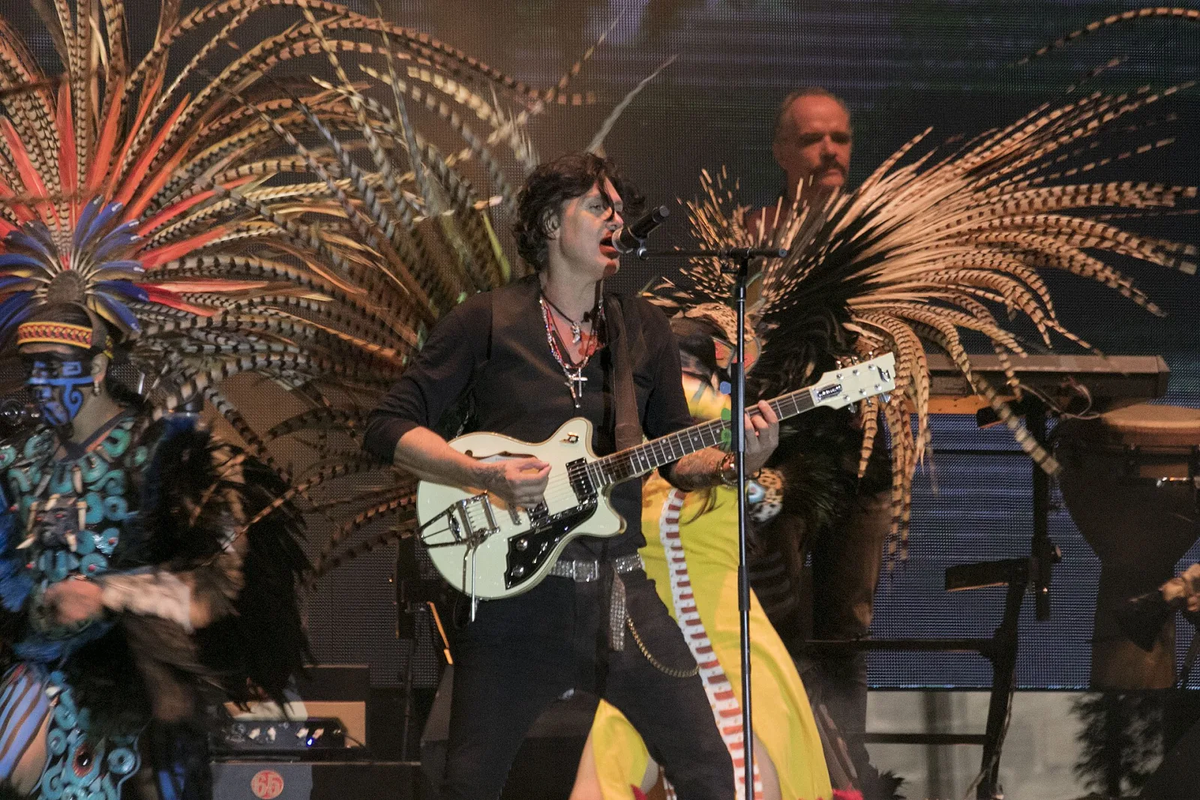
🏷️ Ficha musical
Why this song
Most songs have one owner. This one has had about ten, and none of them wrote it.
"La Negra Tomasa" was written in Cuba in 1937 by Guillermo Rodríguez Fiffe. Since then it has been recorded as Cuban trova, as New York salsa, and — in 1988 — as Mexican rock. Same tune, same words, four different countries.
So this page is about a simple question. When somebody else takes your song, what survives, what disappears, and what turns up that was never there?
Historical context
Cuba, 1937. Rodríguez Fiffe writes a song with two names: "La negra Tomasa" and "Bilongo". Bilongo is a word of African origin that means a spell in the Caribbean, and that is what the lyrics say — Tomasa has put one on him. The group that made it a hit was Trío Azul, three voices and guitars, formed in Havana in 1936 by Rosendo Ruiz.
From there the song travelled. Ismael Rivera with Rafael Cortijo in Puerto Rico. Tito Rodríguez, Eddie Palmieri and the Fania All Stars in New York salsa. Cuco Valoy in the Dominican Republic. Compay Segundo and the Buena Vista Social Club back in Cuba. Richard Bona in Cameroon.
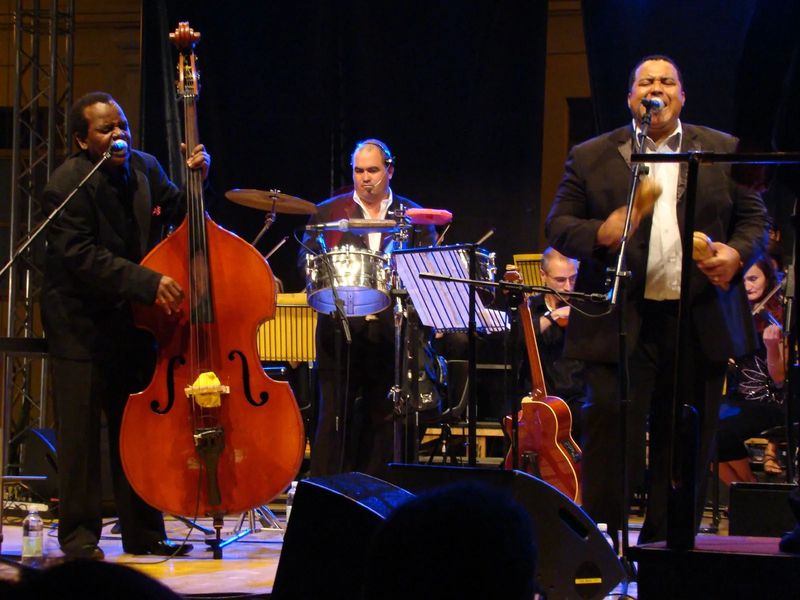
Foto: Shadowgate, CC BY 2.0, vía Wikimedia Commons
Mexico, 1988. One fact explains everything that follows: since 1971, Mexican rock had been kept off the radio, out of the concert halls and off record label contracts. The ban started loosening after the 1985 earthquake, but no band had scored a big hit, so labels still would not sign Mexican groups.
Caifanes were four people: Saúl Hernández on voice and guitar, Sabo Romo on bass, Diego Herrera on keyboards and saxophone, Alfonso André on drums. In December 1988 they recorded a maxi-single in Mexico City with three different versions of this Cuban song.
It was their first mass hit. After it, labels started signing Mexican rock again, and in the summer of 1989 Caifanes filled the Auditorio Nacional two nights running — the first Mexican rock band to manage it.
Musical characteristics
Start with what they did not do. Caifanes did not play the song as Cuban music. They put a cumbia rhythm underneath — cumbia is Colombian, and it is everywhere in Mexico — and on top of it they put guitar riffs and bass lines out of post-punk, the dark rock they actually played. Not Cuban, not quite rock: a third thing.
The bass is where you hear it. Tap four beats on the table: one, two, three, four. In rock the bass lands on beat one, together with the kick drum. In Cuban son it does not: the bass comes in early, before the one arrives, leaving that first beat almost empty. That figure has a name — tumbao. Listen to both versions below and decide which of the two the bass is doing.
The percussion works the same way. In Cuban music the boss is not the kick drum: it is two wooden sticks hitting each other, the clave, five strokes spread over two bars. Everything else fits around that pattern.
The Caifanes version has a rock kit, and for the percussion they had to bring in a guest player, Armando Espinoza. The Cuban part came into the record as a visitor.
What survives untouched are the chords. Four of them, going up: A, B♭, C, Dm. They climb and land on D minor, the tonic.
Now take those same four the other way round, coming down — Dm, C, B♭, A: that is the Andalusian cadence, the chord turn you have heard all your life in flamenco. A Cuban song, played by Mexicans, over a move that has been heard in Spain for centuries.
The form hides nothing: intro, two verses, chorus, another verse, solo, chorus, bridge, verse and final chorus. The bridge is the only section that happens once; everything else comes back.
Hard facts: D minor, 4/4, 174 BPM, 3:26.
Trivia and curiosities
- Caifanes agreed to sign with RCA Ariola on one condition: that the label sign Maldita Vecindad too. In 1988 that was not a favour between friends — it was the only way to get a second Mexican rock band onto the roster.
- The hit was so big that many people assumed Caifanes were a cumbia band. They had not heard the rest of the record, which is dark and heavy from start to finish. One song can hide a whole album.
- They recorded three versions of the same track for a single maxi-single. The radio one runs 3:26; the one that ended up on the CD runs 7:55. A song's length is not a property of the song — it is a format decision.
- The song has two titles, "La negra Tomasa" and "Bilongo", and depending on who records it you get one, the other, or both. Travel far enough and a song loses its single name.
Classroom activities
- Play: the four chords on a loop — A, B♭, C, Dm — on ukulele and electric guitar. B♭ is the hard one, because it needs a barre. The bass can play just the four roots: A, B♭, C, D. The drums hold the pulse and nothing else.
- Count: the chart says 174 BPM. Set the metronome to 174 and tap the pulse with your foot. Then halve it and tap again. Which one comes naturally when you dance to it?
- Analyse: a closed question. Watch the Compay Segundo video and the Caifanes video and write two instrument lists. Which instruments are in both? Which are in only one? That comparison is the answer to "what is lost and what appears".
- Create: take a song you all know and change only the rhythm underneath, leaving the melody and the chords alone. That is exactly the Caifanes procedure, and two minutes of rehearsal is enough to hear it.
Key vocabulary
- Cover version — versión
- Tumbao — tumbao: la figura del bajo del son cubano, que se adelanta y deja vacío el primer tiempo
- Clave — la clave: los dos palos y su patrón de cinco golpes en dos compases
- Andalusian cadence — cadencia andaluza
- Bridge — puente (la sección que suena una sola vez)
Resources
In the theory and history book — this song fits ¿Cuándo empieza una melodía a decir de dónde eres?, because it shows a rhythm can change country without the melody noticing; and ¿Cómo se guarda algo que solo existe mientras suena?, because without recordings this song would never have travelled from Havana to Mexico City.
Music video (radio version) — this is the version the chart we play along to follows.
The long version (7:54), on the band's official channel — the same song from the same maxi-single, stretched out. Good for comparison.
The same song, Cuban — Compay Segundo. Count the instruments and compare them with the Caifanes ones.
Guitar tutorial — Richi Cardichi. Fifteen minutes, section by section, chords and strumming.
Bass tutorial — MikeloverGTR. It has the tab and the notes marked on the fretboard, which is what you need to get the tumbao.
Drums — Richi Cardichi. Not a talked-through lesson: a cover with the kit on camera, and you can see clearly which hand does what.
- Tab — the button opens it in Songsterr, with separate guitar, bass and drum tracks.
Por dónde entrar
Busca «La Negra Tomasa» y te salen cuatro cosas distintas: una banda mexicana de rock, un cantante cubano casi centenario, una orquesta de salsa de Nueva York y un bajista de Camerún. Las cuatro tocan la misma canción. Ninguna la escribió.
La escribió un cubano, Guillermo Rodríguez Fiffe, en 1937. Desde entonces la canción no ha dejado de cambiar de casa. Y cada vez que llega a una casa nueva, sale sonando distinta.
De eso va esta página: qué se conserva de una canción cuando se la lleva otro, qué se pierde y qué aparece que antes no estaba.
Contexto histórico
Cuba, 1937. Rodríguez Fiffe compone una canción con dos títulos: «La negra Tomasa» y «Bilongo». Bilongo es una palabra de origen africano que en el Caribe nombra un hechizo, y la letra dice justo eso: que la negra Tomasa se lo ha echado. Quien la convierte en éxito es el Trío Azul, tres voces y guitarras que Rosendo Ruiz había montado en La Habana en 1936.
A partir de ahí la canción viaja. La graban Ismael Rivera con Rafael Cortijo en Puerto Rico, Tito Rodríguez, Eddie Palmieri y la Fania All Stars en la salsa de Nueva York, el dominicano Cuco Valoy, Compay Segundo y el Buena Vista Social Club de vuelta en Cuba, el camerunés Richard Bona. Cincuenta años de mudanzas.
Foto: Shadowgate, CC BY 2.0, vía Wikimedia Commons
México, 1988. Aquí hace falta un dato para entender lo que viene: desde 1971 el rock mexicano estaba prácticamente fuera de la radio, fuera de los conciertos y fuera de los contratos discográficos. Tras el terremoto de 1985 la cosa empezó a aflojar, pero ninguna banda había tenido un éxito grande, así que las discográficas seguían sin firmar grupos del país.
Caifanes eran cuatro: Saúl Hernández a la voz y la guitarra, Sabo Romo al bajo, Diego Herrera a los teclados y el saxofón, Alfonso André a la batería. En diciembre de 1988 grabaron en la Ciudad de México un maxisencillo con tres versiones distintas de esta canción cubana.
Fue su primer éxito masivo. A partir de ahí las discográficas volvieron a firmar rock mexicano, y en el verano de 1989 Caifanes llenó el Auditorio Nacional dos días seguidos. Ninguna banda de rock del país lo había conseguido antes.
Cómo suena
Lo primero que llama la atención es lo que no hicieron. Caifanes no tocaron la canción como cubana. Le pusieron debajo un ritmo de cumbia —que es colombiano, y que en México se oye por todas partes— y encima le montaron riffs de guitarra y líneas de bajo salidas del post-punk, que es el rock oscuro que ellos tocaban de verdad. Ni cubana ni rock del todo: una tercera cosa.
Donde mejor se ve es en el bajo. Marca cuatro golpes en la mesa y cuenta: uno, dos, tres, cuatro. En el rock, el bajo cae en el uno, a la vez que el bombo. En el son cubano no: se adelanta, entra antes de que llegue el uno y deja ese primer tiempo casi vacío. Esa figura tiene nombre, tumbao.
Escucha las dos versiones que tienes abajo y decide cuál de las dos cosas hace el bajo en cada una.
Con la percusión pasa algo parecido. En la música cubana el que manda no es el bombo: son dos palos de madera que chocan, la clave, con cinco golpes repartidos en dos compases. Todo lo demás se coloca alrededor de ese patrón.
En la versión de Caifanes hay una batería de rock, y para las percusiones tuvieron que llamar a un músico invitado, Armando Espinoza. La parte cubana entró en el disco como visita.
Lo que sí se conserva entero son los acordes. Son cuatro y suben: La, Si♭, Do, Rem. Suben y aterrizan en Re menor, que es la tónica.
Fíjate en esos mismos cuatro al revés, bajando —Rem, Do, Si♭, La—: eso es la cadencia andaluza, la vuelta de acordes que llevas oída toda la vida en el flamenco. Una canción cubana, tocada por mexicanos, sobre un giro que en España se oye desde hace siglos.
La forma tampoco esconde nada: intro, dos estrofas, estribillo, otra estrofa, solo, estribillo, puente, estrofa y estribillo final. El puente es la única sección que suena una sola vez; todo lo demás vuelve.
Datos duros: Re menor, 4/4, 174 BPM, 3:26.
Curiosidades
- Caifanes aceptó firmar con RCA Ariola con una condición: que la discográfica firmara también a Maldita Vecindad. En 1988 no era un capricho de amigos, era la única forma de que hubiera un segundo grupo de rock mexicano en el catálogo.
- El éxito fue tan grande que mucha gente creyó que Caifanes era un grupo de cumbia. No habían oído el resto del disco, que es rock oscuro y denso de principio a fin. Una sola canción puede tapar un álbum entero.
- Del mismo tema grabaron tres versiones para un solo maxisencillo. La que sonaba en la radio dura 3:26; la que quedó en el CD dura 7:55. La duración de una canción no es una propiedad de la canción: es una decisión de formato.
- La canción tiene dos títulos, «La negra Tomasa» y «Bilongo», y según quién la grabe aparece uno, otro o los dos. Cuando una canción viaja mucho, acaba perdiendo el nombre único.
Para hacer en clase
- Tocar: los cuatro acordes en bucle —La, Si♭, Do, Rem— con ukelele y guitarra eléctrica. El Si♭ es el que cuesta, porque pide cejilla. El bajo puede hacer solo las cuatro fundamentales: La, Si♭, Do, Re. La batería sostiene el pulso y nada más.
- Contar: el chart dice 174 BPM. Pon el metrónomo a 174 y marca el pulso con el pie. Después ponlo a la mitad y vuelve a marcarlo. ¿Cuál de los dos es el que te sale solo al bailarla?
- Analizar: pregunta cerrada. Escucha el vídeo de Compay Segundo y el de Caifanes y haz dos listas de instrumentos. ¿Cuáles aparecen en las dos? ¿Cuáles solo en una? Esa comparación es la respuesta al «qué se pierde y qué aparece».
- Crear: coged una canción que os sepáis y cambiadle solo el ritmo de debajo, sin tocar la melodía ni los acordes. Es exactamente el procedimiento de Caifanes, y se nota en dos minutos de ensayo.
Vocabulario fundamental
- Versión — Cuando un grupo graba una canción que no ha escrito. La melodía y la letra se quedan; todo lo demás se puede cambiar.
- Tumbao — La figura del bajo en el son cubano. Se adelanta al compás siguiente y deja el primer tiempo casi vacío.
- Clave — Dos palos de madera que chocan, con cinco golpes repartidos en dos compases. Es el patrón que ordena la música cubana.
- Cadencia andaluza — La vuelta de cuatro acordes que baja desde la tónica: Rem, Do, Si♭, La. Aquí va al revés, subiendo.
- Puente — La sección que suena una sola vez y rompe la alternancia de estrofa y estribillo.
Recursos
En el libro de teoría e historia — esta canción encaja con ¿Cuándo empieza una melodía a decir de dónde eres?, porque enseña que un ritmo puede cambiar de país sin que la melodía se entere; y con ¿Cómo se guarda algo que solo existe mientras suena?, porque sin grabaciones esta canción no habría llegado nunca de La Habana a la Ciudad de México.
Videoclip (versión para la radio) — es la versión que sigue el chart con el que la tocamos.
La versión larga (7:54), en el canal oficial del grupo — la misma canción del mismo maxisencillo, estirada. Buena para comparar.
La misma canción, en cubano — Compay Segundo. Cuenta los instrumentos y compáralos con los de Caifanes.
Tutorial de guitarra — Richi Cardichi. Quince minutos, parte por parte, con los acordes y el rasgueo.
Tutorial de bajo — MikeloverGTR. Lleva la tablatura y las notas señaladas en el diapasón, que es lo que hace falta para sacar el tumbao.
Batería — Richi Cardichi. No es un tutorial explicado: es un cover con la batería a cámara, y se ve bien qué mano hace cada cosa.
- Tablatura — el botón la abre en Songsterr, con pistas separadas de guitarra, bajo y batería.
Why this song
Most songs have one owner. This one has had about ten, and none of them wrote it.
"La Negra Tomasa" was written in Cuba in 1937 by Guillermo Rodríguez Fiffe. Since then it has been recorded as Cuban trova, as New York salsa, and — in 1988 — as Mexican rock. Same tune, same words, four different countries.
So this page is about a simple question. When somebody else takes your song, what survives, what disappears, and what turns up that was never there?
Historical context
Cuba, 1937. Rodríguez Fiffe writes a song with two names: "La negra Tomasa" and "Bilongo". Bilongo is a word of African origin that means a spell in the Caribbean, and that is what the lyrics say — Tomasa has put one on him. The group that made it a hit was Trío Azul, three voices and guitars, formed in Havana in 1936 by Rosendo Ruiz.
From there the song travelled. Ismael Rivera with Rafael Cortijo in Puerto Rico. Tito Rodríguez, Eddie Palmieri and the Fania All Stars in New York salsa. Cuco Valoy in the Dominican Republic. Compay Segundo and the Buena Vista Social Club back in Cuba. Richard Bona in Cameroon.
Foto: Shadowgate, CC BY 2.0, vía Wikimedia Commons
Mexico, 1988. One fact explains everything that follows: since 1971, Mexican rock had been kept off the radio, out of the concert halls and off record label contracts. The ban started loosening after the 1985 earthquake, but no band had scored a big hit, so labels still would not sign Mexican groups.
Caifanes were four people: Saúl Hernández on voice and guitar, Sabo Romo on bass, Diego Herrera on keyboards and saxophone, Alfonso André on drums. In December 1988 they recorded a maxi-single in Mexico City with three different versions of this Cuban song.
It was their first mass hit. After it, labels started signing Mexican rock again, and in the summer of 1989 Caifanes filled the Auditorio Nacional two nights running — the first Mexican rock band to manage it.
Musical characteristics
Start with what they did not do. Caifanes did not play the song as Cuban music. They put a cumbia rhythm underneath — cumbia is Colombian, and it is everywhere in Mexico — and on top of it they put guitar riffs and bass lines out of post-punk, the dark rock they actually played. Not Cuban, not quite rock: a third thing.
The bass is where you hear it. Tap four beats on the table: one, two, three, four. In rock the bass lands on beat one, together with the kick drum. In Cuban son it does not: the bass comes in early, before the one arrives, leaving that first beat almost empty. That figure has a name — tumbao. Listen to both versions below and decide which of the two the bass is doing.
The percussion works the same way. In Cuban music the boss is not the kick drum: it is two wooden sticks hitting each other, the clave, five strokes spread over two bars. Everything else fits around that pattern.
The Caifanes version has a rock kit, and for the percussion they had to bring in a guest player, Armando Espinoza. The Cuban part came into the record as a visitor.
What survives untouched are the chords. Four of them, going up: A, B♭, C, Dm. They climb and land on D minor, the tonic.
Now take those same four the other way round, coming down — Dm, C, B♭, A: that is the Andalusian cadence, the chord turn you have heard all your life in flamenco. A Cuban song, played by Mexicans, over a move that has been heard in Spain for centuries.
The form hides nothing: intro, two verses, chorus, another verse, solo, chorus, bridge, verse and final chorus. The bridge is the only section that happens once; everything else comes back.
Hard facts: D minor, 4/4, 174 BPM, 3:26.
Trivia and curiosities
- Caifanes agreed to sign with RCA Ariola on one condition: that the label sign Maldita Vecindad too. In 1988 that was not a favour between friends — it was the only way to get a second Mexican rock band onto the roster.
- The hit was so big that many people assumed Caifanes were a cumbia band. They had not heard the rest of the record, which is dark and heavy from start to finish. One song can hide a whole album.
- They recorded three versions of the same track for a single maxi-single. The radio one runs 3:26; the one that ended up on the CD runs 7:55. A song's length is not a property of the song — it is a format decision.
- The song has two titles, "La negra Tomasa" and "Bilongo", and depending on who records it you get one, the other, or both. Travel far enough and a song loses its single name.
Classroom activities
- Play: the four chords on a loop — A, B♭, C, Dm — on ukulele and electric guitar. B♭ is the hard one, because it needs a barre. The bass can play just the four roots: A, B♭, C, D. The drums hold the pulse and nothing else.
- Count: the chart says 174 BPM. Set the metronome to 174 and tap the pulse with your foot. Then halve it and tap again. Which one comes naturally when you dance to it?
- Analyse: a closed question. Watch the Compay Segundo video and the Caifanes video and write two instrument lists. Which instruments are in both? Which are in only one? That comparison is the answer to "what is lost and what appears".
- Create: take a song you all know and change only the rhythm underneath, leaving the melody and the chords alone. That is exactly the Caifanes procedure, and two minutes of rehearsal is enough to hear it.
Key vocabulary
- Cover version — versión
- Tumbao — tumbao: la figura del bajo del son cubano, que se adelanta y deja vacío el primer tiempo
- Clave — la clave: los dos palos y su patrón de cinco golpes en dos compases
- Andalusian cadence — cadencia andaluza
- Bridge — puente (la sección que suena una sola vez)
Resources
In the theory and history book — this song fits ¿Cuándo empieza una melodía a decir de dónde eres?, because it shows a rhythm can change country without the melody noticing; and ¿Cómo se guarda algo que solo existe mientras suena?, because without recordings this song would never have travelled from Havana to Mexico City.
Music video (radio version) — this is the version the chart we play along to follows.
The long version (7:54), on the band's official channel — the same song from the same maxi-single, stretched out. Good for comparison.
The same song, Cuban — Compay Segundo. Count the instruments and compare them with the Caifanes ones.
Guitar tutorial — Richi Cardichi. Fifteen minutes, section by section, chords and strumming.
Bass tutorial — MikeloverGTR. It has the tab and the notes marked on the fretboard, which is what you need to get the tumbao.
Drums — Richi Cardichi. Not a talked-through lesson: a cover with the kit on camera, and you can see clearly which hand does what.
- Tab — the button opens it in Songsterr, with separate guitar, bass and drum tracks.