Contenidos
La Gozadera — Gente de Zona ft. Marc Anthony (2015)
Twenty countries named one by one, and four chords that never change across three and a half minutes. All the movement comes from the percussion.
🏷️ Ficha musical
Why this song
Here is a song that calls a roll. Twenty Latin American countries plus the city of Miami, named one after another, until somebody has named your own.
Underneath that roll call, nothing moves. Four chords, the same four, from the first bar to the last. Verse and chorus are identical.
So if the song goes somewhere — and it does — the harmony is not what takes it there. Working out what does is the whole exercise.
Historical context
Gente de Zona are two Cubans, Alexander Delgado and Randy Malcom, from the Alamar neighbourhood of Havana. They came out of the Cuban rap and reggaeton scene of the early 2000s.
Reggaeton did not arrive in Cuba and stay the same. It took on the percussion and the instruments of traditional Cuban music, and the hybrid has a name: cubaton. That is the style the duo was known for on the island before anyone abroad had heard of them.
The door was opened by Bailando, with Enrique Iglesias, in 2014 — the first Spanish-language song to reach a billion YouTube plays. This one followed, released on 30 April 2015 on Sony Music Latin as the lead single from the album Visualízate, produced by Motiff.
The guest is the argument. Marc Anthony is American and is the best-selling salsa artist in history. Putting a salsa singer on top of a reggaeton track is the whole fusion condensed into one casting decision.
Then there is the lyric, which is a list: twenty countries and the city of Miami, one after another. It does not name them plainly. It names them by what they eat and what they play. Puerto Rico arrives as arroz con habichuela; the Dominican Republic as la tambora merenguera, the merengue drum.
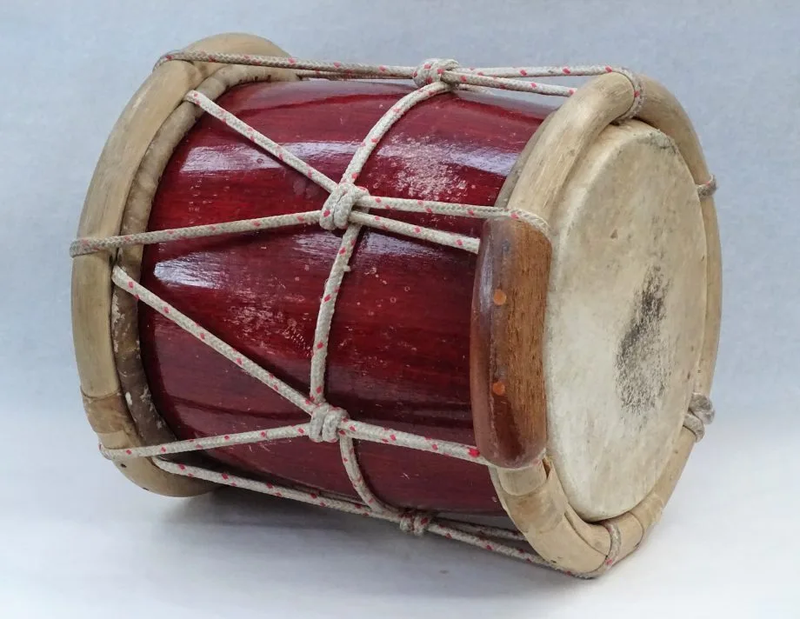
Una tambora de merengue, el tambor que la canción nombra cuando le toca el turno a la República Dominicana. Foto: Stiven David Licon Contreras, CC0, vía Wikimedia Commons
Musical characteristics
The four chords are A minor, F, C and G, in that order, four bars, on a loop. Put it on and count them: the turn you hear in the opening is exactly the turn you hear in the final chorus.
That turn has a proper name. Number the chords of the key from 1 to 7 and A minor is the sixth, F the fourth, C the first and G the fifth: vi – IV – I – V. Each number is a scale degree, and this is what degrees are for — recognising the same turn when it shows up in a different song. You will meet it again, in this very book.
One detail is worth facing directly. This song is in A minor, but its four chords are the ones a song in C major would use, because the two keys share a key signature: no sharps, no flats. That relationship is called the relative minor. What decides which of the two is in charge is which chord feels like home, and here the loop starts and lands on A minor.
Which leaves the real question. If the harmony does not move for three and a half minutes, something else has to move the song, and that something is how the rhythm section divides the work. Keyboards and guitar do not sustain the chords: they chop them into short hits that land between the beats. The percussion carries the pulse. The bass anchors.
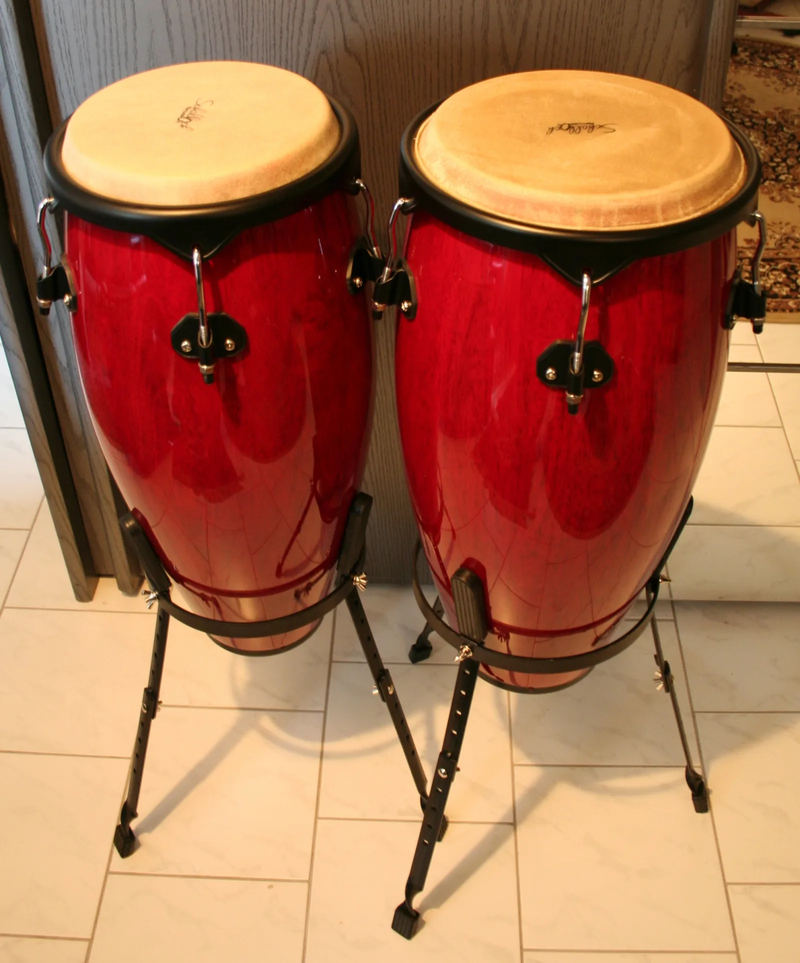
Congas o tumbadoras. La percusión cubana que el cubatón monta encima de la base de reggaetón. Foto: Stephan Czuratis, CC BY-SA 3.0, vía Wikimedia Commons
The bass is where you learn most. There are two very different ways of putting a bass under these four chords. One is to double the root and land with the kick drum, square, on the beat: that is what reggaeton does. The other is the tumbao, the bass figure of Afro-Cuban music, which dodges the strong beat and arrives ahead of the chord change, so that bass and harmony are never in step.
This song lets you compare the two without changing song, because two official recordings exist: the original and a salsa version. Same chords, same words. Play them back to back and listen only to the bass.
Hard facts: A minor, 4/4, 95 BPM, 3:23. Form: chorus, verse, chorus, verse, chorus — no bridge and not one harmonic surprise anywhere in it.
Trivia and curiosities
- The official video was shot in two countries, and the artists are never in the same room. Gente de Zona filmed in Cuba, Marc Anthony's scenes were filmed in the Dominican Republic, under director Alejandro Pérez. A song about everyone at one party was assembled from two places.
- An official salsa version exists, produced by Sergio George, with the same words and the same four chords. Change the rhythm section and the genre changes with it. It is the proof of what this article claims: the style is not in the chords.
- In 2021 the Copa América took it on as the tournament's official song and rewrote the lyric to name only the competing countries. A song built as a list can be edited like a list; do that to almost any other song and it breaks.
- As of May 2025 the video had passed 1.6 billion plays — built on four of the most ordinary chords in Western pop, played in the same order for the entire song.
Classroom activities
- Play: A minor, F, C and G, four bars on a loop. On ukulele all four are straightforward. On guitar the F is the only obstacle, and you can sidestep it: capo on the fifth fret with the shapes Em–C–G–D gives you the identical turn, and all four shapes are open.
- Sing: one track, two opposite ways of using a voice. The duo sings short and percussively, fitting syllables between the beats; Marc Anthony holds long open notes like the salsa singer he is. The same chords underneath both. A good place to check that style lives in the delivery, not in the notes.
- Analyse: a closed question. Play the original and the salsa version back to back. The words are the same and the chords are the same: write down what changed. Then count the countries in the lyric and say which ones are there for the rhyme.
- Create: take those same four chords and put a different rhythm section under them — a waltz, a cumbia, whatever you like. Steal the procedure, not the song.
Key vocabulary
- Cubaton — cubatón: el reggaetón hecho en Cuba, con percusión cubana encima
- Chord progression — progresión armónica
- Scale degree — grado
- Relative minor — relativo menor (misma armadura que su tonalidad mayor)
- Tumbao — tumbao: la figura del bajo en la música afrocubana
Resources
In Year 3 — this song is also used in the units ¿Qué pasa cuando dejamos de cantar todos lo mismo?, ¿Cómo sabes por dónde vas en una música que oyes por primera vez?, ¿Cuándo empieza una melodía a decir de dónde eres?, ¿Cómo se guarda algo que solo existe mientras suena?, from the theory and history book.
Where it is explained — this song is studied in the units ¿Por qué no te aburre una canción de un solo acorde?, ¿Por qué las canciones ya no te hacen esperar?, from the modern music history book.
Official video
Guitar tutorial — Juan Diego Arenas. Straight to the four-chord turn and the strumming pattern, no detours.
Piano tutorial — Juan Diego Arenas, the same teacher as the guitar one. If you split instruments across the class, both groups follow the same approach.
Bass — Jorge Barbosa. Not a lesson: the line played through with the hands in shot, which beats an explanation when what you want is to copy the figure.
Percussion (congas) — Marco Islas. The conga part played over the record; this is the layer the whole article is about.
Salsa version (official audio) — the same song with a different rhythm section. It is half of the analysis exercise.
- JamZone chart (Music Will) — https://jamzone.musicwill.org/songs/la-gozadera
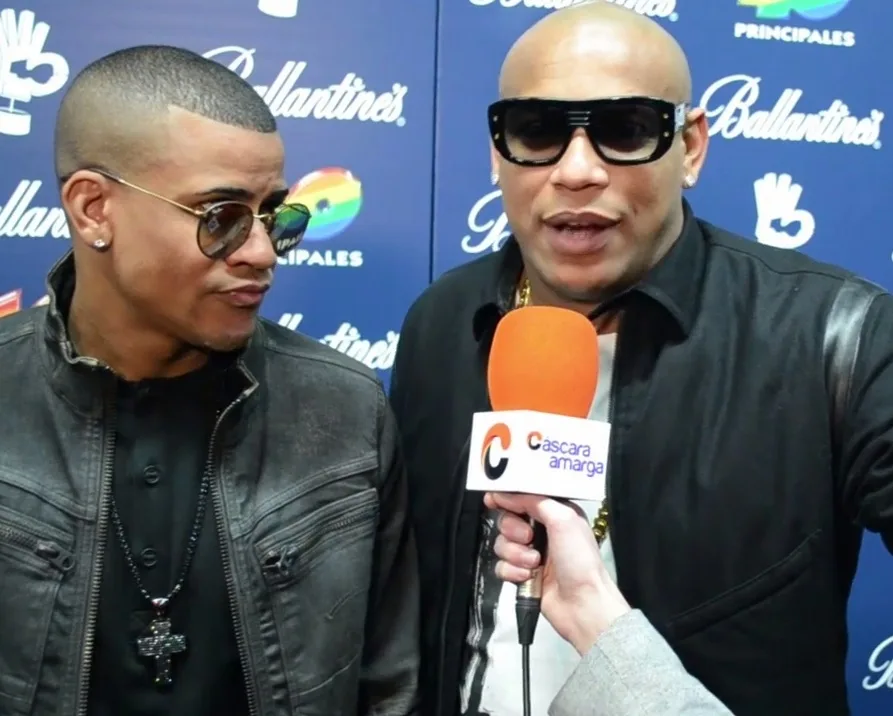
- Cover image — Gente de Zona en la alfombra roja de los Premios 40 Principales, diciembre de 2015. Foto: Cáscara amarga, CC BY 3.0, vía Wikimedia Commons
Por dónde entrar
Suena en verbenas, en bodas y en gimnasios desde 2015, y en 2021 fue la canción oficial de la Copa América. Es probable que te la sepas sin haberla puesto nunca.
Lo que no se oye a la primera es lo que la sostiene. Cuatro acordes, los mismos cuatro, del primer compás al último. En la estrofa y en el estribillo, idénticos.
Si la canción se mueve —y se mueve—, no la mueve la armonía. Lo interesante es averiguar quién la mueve.
Contexto histórico
Gente de Zona son dos cubanos, Alexander Delgado y Randy Malcom, salidos del barrio habanero de Alamar. Vienen de la escena del rap y el reggaetón cubanos de principios de los dos mil.
En Cuba el reggaetón no llegó y se quedó igual: absorbió la percusión y los instrumentos de la música cubana de toda la vida. A esa mezcla se le llama cubatón, y es el estilo con el que el dúo se hizo conocido en la isla antes de salir de ella.
La puerta se la abrió Bailando, con Enrique Iglesias, en 2014 — la primera canción en español que llegó a mil millones de reproducciones en YouTube. Un año después llegó esta, publicada el 30 de abril de 2015 en Sony Music Latin como primer sencillo del disco Visualízate, con Motiff en la producción.
El invitado dice tanto como la canción. Marc Anthony es estadounidense y es el artista de salsa que más discos ha vendido de la historia. Meter a un salsero encima de una base de reggaetón es la fusión entera resumida en una decisión de reparto.
Y luego está la letra, que es una lista: veinte países y la ciudad de Miami, nombrados uno detrás de otro. No los nombra a secas, los nombra por lo que comen y por lo que tocan. Puerto Rico entra como «el arroz con habichuela»; la República Dominicana, como «la tambora merenguera».
Una tambora de merengue, el tambor que la canción nombra cuando le toca el turno a la República Dominicana. Foto: Stiven David Licon Contreras, CC0, vía Wikimedia Commons
Cómo suena
Los cuatro acordes son Lam, Fa, Do y Sol, en ese orden, cuatro compases, en bucle. Ponla y cuéntalos: la vuelta que oyes en la entrada es exactamente la misma que oyes en el último estribillo.
Esa vuelta tiene nombre y apellidos. Si numeras del 1 al 7 los acordes que salen de la tonalidad, Lam es el sexto, Fa el cuarto, Do el primero y Sol el quinto: vi – IV – I – V. A cada número se le llama grado, y sirve para esto — para reconocer la misma vuelta cuando la oigas en otra canción. La vas a oír, y en este mismo libro.
Hay un detalle que conviene mirar de frente. La Gozadera está en La menor, pero sus cuatro acordes son los mismos que usaría una canción en Do mayor, porque las dos tonalidades comparten armadura: ni sostenidos ni bemoles. A eso se le llama relativo menor. Lo único que decide cuál de las dos manda es cuál de los dos acordes se siente como casa, y aquí la vuelta empieza y aterriza en Lam.
Dicho todo eso, queda el asunto de verdad. Si la armonía no se mueve en tres minutos y medio, algo tiene que mover la canción, y ese algo es el reparto de la sección rítmica. Los teclados y la guitarra no sostienen los acordes: los pican en golpes cortos que caen entre los tiempos. La percusión lleva el pulso. El bajo ancla.
Congas o tumbadoras. La percusión cubana que el cubatón monta encima de la base de reggaetón. Foto: Stephan Czuratis, CC BY-SA 3.0, vía Wikimedia Commons
El bajo es donde más se aprende. Hay dos maneras muy distintas de poner un bajo debajo de estos cuatro acordes. Una es doblar la fundamental y caer con el bombo, cuadrado, encima del tiempo: es lo que hace el reggaetón. La otra es el tumbao, la figura del bajo en la música afrocubana, que esquiva el tiempo fuerte y se adelanta al cambio de acorde, de modo que el bajo y la armonía nunca van a la vez.
Esta canción te deja comparar las dos sin cambiar de canción, porque existen dos grabaciones oficiales: la original y una versión salsa. Mismos acordes, misma letra. Ponlas seguidas y escucha solo el bajo.
Datos duros: La menor, 4/4, 95 BPM, 3:23. Forma: estribillo, estrofa, estribillo, estrofa, estribillo — sin puente y sin ninguna sorpresa armónica en todo el recorrido.
Curiosidades
- Cuba es el último país que se nombra en toda la canción, detrás de Guatemala, Nicaragua y El Salvador. El dúo es cubano: si la lista fuera un ranking, su propio país no iría al final. No es una lista de importancia, es una lista construida para desembocar en «si tú eres latino, saca tu bandera».
- La geografía va por detrás de la rima. «Perú con Honduras», «Chile con Argentina», «Y Uruguay con Paraguay». Los países se emparejan por cómo suenan, no por dónde están. El caso más claro es «Ecuador bilirrubina»: La Bilirrubina es un merengue dominicano de Juan Luis Guerra de 1990, y entra ahí porque rima con Argentina.
- Existe una versión salsa oficial, producida por Sergio George, con la misma letra y los mismos cuatro acordes. Cambia la sección rítmica y cambia el género. Es la demostración de lo que dice este artículo: el estilo no está en los acordes.
- En 2021 la Copa América la adoptó como canción oficial y le reescribió la letra para nombrar solo a los países que jugaban el torneo. Una canción hecha de una lista se puede editar como una lista; a casi ninguna otra canción se le puede hacer eso sin romperla.
Para hacer en clase
- Tocar: Lam–Fa–Do–Sol, cuatro compases en bucle. En ukelele salen los cuatro sin ninguna complicación. En guitarra el Fa es el único obstáculo, y se esquiva: con cejilla en el quinto traste y las formas de Mim–Do–Sol–Re suena exactamente la misma vuelta, y las cuatro son abiertas.
- Cantar: en la misma pista hay dos maneras opuestas de usar la voz. El dúo canta corto, percutido, encajando sílabas entre los tiempos; Marc Anthony estira notas largas y abiertas, como un salsero. Debajo, los mismos acordes. Buen sitio para comprobar que el estilo vive en cómo se dice, no en qué notas se dicen.
- Analizar: pregunta cerrada. Pon la versión original y la versión salsa seguidas. La letra es la misma y los acordes son los mismos: escribe qué ha cambiado. Luego cuenta los países de la letra y di cuáles están ahí por la rima.
- Crear: coge esos mismos cuatro acordes y ponles debajo otra sección rítmica — un vals, una cumbia, lo que se os ocurra. Se trata de robar el procedimiento, no la canción.
Vocabulario fundamental
- Cubatón — El reggaetón que se hace en Cuba, con la percusión y los instrumentos de la música cubana montados encima.
- Progresión armónica — La vuelta de acordes que se repite. Aquí son cuatro y no cambian en toda la canción.
- Grado — El número que le toca a un acorde según el lugar que ocupa en la tonalidad. Sirve para reconocer la misma vuelta en canciones distintas.
- Relativo menor — La tonalidad menor que comparte armadura con una mayor. La menor y Do mayor tienen las mismas notas; lo que cambia es cuál se siente como casa.
- Tumbao — La figura que toca el bajo en la música afrocubana. Esquiva el tiempo fuerte en vez de caer encima de él.
Recursos
En 3º de ESO — también se usa en las unidades ¿Qué pasa cuando dejamos de cantar todos lo mismo?, ¿Cómo sabes por dónde vas en una música que oyes por primera vez?, ¿Cuándo empieza una melodía a decir de dónde eres?, ¿Cómo se guarda algo que solo existe mientras suena?, del libro de teoría e historia.
Dónde se explica — esta canción se estudia en las unidades ¿Por qué no te aburre una canción de un solo acorde?, ¿Por qué las canciones ya no te hacen esperar?, del libro de historia de la música moderna.
Videoclip oficial
Tutorial de guitarra — Juan Diego Arenas. Va directo a la vuelta de cuatro acordes y al rasgueo, sin rodeos.
Tutorial de piano — Juan Diego Arenas, el mismo profesor que el de guitarra. Si repartís instrumentos en clase, los dos grupos siguen el mismo planteamiento.
Bajo — Jorge Barbosa. No es una lección: es la línea tocada entera con las manos a la vista, que para copiar la figura va mejor que una explicación.
Percusión (congas) — Marco Islas. La parte de congas tocada sobre la canción; es la capa de la que habla todo este artículo.
Versión salsa (audio oficial) — La misma canción con otra sección rítmica. Es la mitad del ejercicio de análisis.
- Ficha de JamZone (Music Will) — https://jamzone.musicwill.org/songs/la-gozadera
- Imagen de portada — Gente de Zona en la alfombra roja de los Premios 40 Principales, diciembre de 2015. Foto: Cáscara amarga, CC BY 3.0, vía Wikimedia Commons
Why this song
Here is a song that calls a roll. Twenty Latin American countries plus the city of Miami, named one after another, until somebody has named your own.
Underneath that roll call, nothing moves. Four chords, the same four, from the first bar to the last. Verse and chorus are identical.
So if the song goes somewhere — and it does — the harmony is not what takes it there. Working out what does is the whole exercise.
Historical context
Gente de Zona are two Cubans, Alexander Delgado and Randy Malcom, from the Alamar neighbourhood of Havana. They came out of the Cuban rap and reggaeton scene of the early 2000s.
Reggaeton did not arrive in Cuba and stay the same. It took on the percussion and the instruments of traditional Cuban music, and the hybrid has a name: cubaton. That is the style the duo was known for on the island before anyone abroad had heard of them.
The door was opened by Bailando, with Enrique Iglesias, in 2014 — the first Spanish-language song to reach a billion YouTube plays. This one followed, released on 30 April 2015 on Sony Music Latin as the lead single from the album Visualízate, produced by Motiff.
The guest is the argument. Marc Anthony is American and is the best-selling salsa artist in history. Putting a salsa singer on top of a reggaeton track is the whole fusion condensed into one casting decision.
Then there is the lyric, which is a list: twenty countries and the city of Miami, one after another. It does not name them plainly. It names them by what they eat and what they play. Puerto Rico arrives as arroz con habichuela; the Dominican Republic as la tambora merenguera, the merengue drum.
Una tambora de merengue, el tambor que la canción nombra cuando le toca el turno a la República Dominicana. Foto: Stiven David Licon Contreras, CC0, vía Wikimedia Commons
Musical characteristics
The four chords are A minor, F, C and G, in that order, four bars, on a loop. Put it on and count them: the turn you hear in the opening is exactly the turn you hear in the final chorus.
That turn has a proper name. Number the chords of the key from 1 to 7 and A minor is the sixth, F the fourth, C the first and G the fifth: vi – IV – I – V. Each number is a scale degree, and this is what degrees are for — recognising the same turn when it shows up in a different song. You will meet it again, in this very book.
One detail is worth facing directly. This song is in A minor, but its four chords are the ones a song in C major would use, because the two keys share a key signature: no sharps, no flats. That relationship is called the relative minor. What decides which of the two is in charge is which chord feels like home, and here the loop starts and lands on A minor.
Which leaves the real question. If the harmony does not move for three and a half minutes, something else has to move the song, and that something is how the rhythm section divides the work. Keyboards and guitar do not sustain the chords: they chop them into short hits that land between the beats. The percussion carries the pulse. The bass anchors.
Congas o tumbadoras. La percusión cubana que el cubatón monta encima de la base de reggaetón. Foto: Stephan Czuratis, CC BY-SA 3.0, vía Wikimedia Commons
The bass is where you learn most. There are two very different ways of putting a bass under these four chords. One is to double the root and land with the kick drum, square, on the beat: that is what reggaeton does. The other is the tumbao, the bass figure of Afro-Cuban music, which dodges the strong beat and arrives ahead of the chord change, so that bass and harmony are never in step.
This song lets you compare the two without changing song, because two official recordings exist: the original and a salsa version. Same chords, same words. Play them back to back and listen only to the bass.
Hard facts: A minor, 4/4, 95 BPM, 3:23. Form: chorus, verse, chorus, verse, chorus — no bridge and not one harmonic surprise anywhere in it.
Trivia and curiosities
- The official video was shot in two countries, and the artists are never in the same room. Gente de Zona filmed in Cuba, Marc Anthony's scenes were filmed in the Dominican Republic, under director Alejandro Pérez. A song about everyone at one party was assembled from two places.
- An official salsa version exists, produced by Sergio George, with the same words and the same four chords. Change the rhythm section and the genre changes with it. It is the proof of what this article claims: the style is not in the chords.
- In 2021 the Copa América took it on as the tournament's official song and rewrote the lyric to name only the competing countries. A song built as a list can be edited like a list; do that to almost any other song and it breaks.
- As of May 2025 the video had passed 1.6 billion plays — built on four of the most ordinary chords in Western pop, played in the same order for the entire song.
Classroom activities
- Play: A minor, F, C and G, four bars on a loop. On ukulele all four are straightforward. On guitar the F is the only obstacle, and you can sidestep it: capo on the fifth fret with the shapes Em–C–G–D gives you the identical turn, and all four shapes are open.
- Sing: one track, two opposite ways of using a voice. The duo sings short and percussively, fitting syllables between the beats; Marc Anthony holds long open notes like the salsa singer he is. The same chords underneath both. A good place to check that style lives in the delivery, not in the notes.
- Analyse: a closed question. Play the original and the salsa version back to back. The words are the same and the chords are the same: write down what changed. Then count the countries in the lyric and say which ones are there for the rhyme.
- Create: take those same four chords and put a different rhythm section under them — a waltz, a cumbia, whatever you like. Steal the procedure, not the song.
Key vocabulary
- Cubaton — cubatón: el reggaetón hecho en Cuba, con percusión cubana encima
- Chord progression — progresión armónica
- Scale degree — grado
- Relative minor — relativo menor (misma armadura que su tonalidad mayor)
- Tumbao — tumbao: la figura del bajo en la música afrocubana
Resources
In Year 3 — this song is also used in the units ¿Qué pasa cuando dejamos de cantar todos lo mismo?, ¿Cómo sabes por dónde vas en una música que oyes por primera vez?, ¿Cuándo empieza una melodía a decir de dónde eres?, ¿Cómo se guarda algo que solo existe mientras suena?, from the theory and history book.
Where it is explained — this song is studied in the units ¿Por qué no te aburre una canción de un solo acorde?, ¿Por qué las canciones ya no te hacen esperar?, from the modern music history book.
Official video
Guitar tutorial — Juan Diego Arenas. Straight to the four-chord turn and the strumming pattern, no detours.
Piano tutorial — Juan Diego Arenas, the same teacher as the guitar one. If you split instruments across the class, both groups follow the same approach.
Bass — Jorge Barbosa. Not a lesson: the line played through with the hands in shot, which beats an explanation when what you want is to copy the figure.
Percussion (congas) — Marco Islas. The conga part played over the record; this is the layer the whole article is about.
Salsa version (official audio) — the same song with a different rhythm section. It is half of the analysis exercise.
- JamZone chart (Music Will) — https://jamzone.musicwill.org/songs/la-gozadera
- Cover image — Gente de Zona en la alfombra roja de los Premios 40 Principales, diciembre de 2015. Foto: Cáscara amarga, CC BY 3.0, vía Wikimedia Commons