Contenidos
I Want to Know — Sugar Pie DeSanto (1960)
Twelve bars and three chords: the same frame as *Hound Dog*, at a different speed and for a different purpose. The woman singing it reached number four in 1960 and is in nobody's textbook.
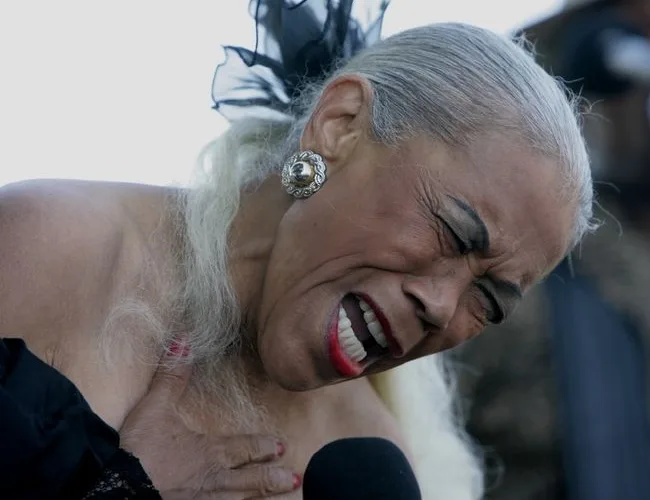
🏷️ Ficha musical
Why this song
The same man found both singers. In 1952 Johnny Otis produced Big Mama Thornton singing Hound Dog, and played the drums on it himself. Three years later he found a young singer in San Francisco and gave her a stage name: Sugar Pie.
One of those two records is in your textbook. This one is not, even though it reached number four on the American rhythm and blues chart in 1960.
The song is built on the twelve bars you already know. What changed is the speed, and who it was made for.
Historical context
Her name was Peylia Marsema Balinton. She was born in Brooklyn, New York, in 1935. Her mother was African American and a concert pianist; her father was Filipino. The family moved to San Francisco when she was four, and that is where she grew up. As a girl she was friends with another singer from the neighbourhood, Etta James. Thirty years later they would record together.
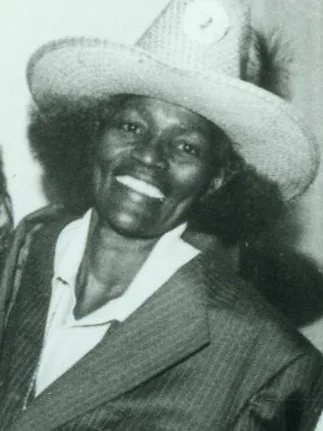
Foto: Barbara Weinberg Barefield, CC BY-SA 3.0, vía Wikimedia Commons
Johnny Otis found her in 1955. He was a bandleader, a talent scout and a producer, and he is the one who gave her the name Sugar Pie. She toured with his revue, and in 1959 and 1960 she toured with James Brown's as well.
"I Want to Know" came out in 1960 on Veltone, a small label, catalogue number 103, with "Baby It Ain't Right" on the other side. The label does not carry her name alone: it says she is backed by the Pee Wee Kingsley Band, and Pee Wee Kingsley was her husband. The record reached number four.
Two years later she moved to Chicago and signed to Chess — the label at 2120 South Michigan Avenue, the home of electric blues — as a singer and as a writer.
She died in Oakland in December 2024, aged eighty-nine. She was inducted into the Blues Hall of Fame that same year. Sixty-four years after the record.
Musical characteristics
Press play and count until the song starts over. It comes back quickly: the music goes round once and returns to where it began. That lap lasts twelve bars, and only three chords appear inside it — G, C and D.
The lap has a name: the twelve-bar blues. It works like a lap of a running track. You always know where you are, because you always pass the same places in the same order. You leave home (G), go out to the second chord (C), come home, and near the end the third one (D) turns up and pushes you back to the start.
G, C and D are not three chords picked at random. They are the first, the fourth and the fifth of the G scale. That is why they get written as roman numerals — I, IV and V — and why the same lap works in any key: change the three chords and the shape stays the same.
So far there is nothing here that Hound Dog does not have. The frame is identical. What changed is the speed and the purpose. Hound Dog takes its time; it is a blues for listening to somebody complain. This one runs at 130 beats per minute and waits for nobody; it is a blues for dancing.
That shift — same skeleton, different energy, and a record industry that wanted to sell to young people — is what ended up being called rhythm and blues.
In class the two songs also land in the same key: this one is in G to begin with, and Hound Dog is transposed to G on its chart. Same three chords, same shapes. You can play them one after the other without moving your left hand.
The form is simple too: two verses, a bridge, two verses, another bridge and a final verse. The bridge is the section that steps out of the routine for a moment, so that the verse lands harder when it comes back.
Hard facts: G major, 4/4, 130 BPM, 3:01. The chart counts seven sections. Do the arithmetic: twelve bars at 130 BPM last about twenty-two seconds, and seven times twenty-two falls short of three minutes and one second. There is time left unaccounted for. Where does it come from? Stopwatch in hand.
Trivia and curiosities
- Johnny Otis, the man who found her, also found Big Mama Thornton and Etta James. On the 1952 Hound Dog session he did more than produce: he sat down at the drums, and signed under a false name because he was under contract elsewhere. The names printed on a label are not always the ones who were in the room.
- She was 1.50 m tall and did standing back flips on stage. When she toured Europe with the American Folk Blues Festival in 1964, that is what audiences remembered. In the R&B of those years you did not defend a hit with a music video: you defended it every night, live, with your body.
- At Chess she was not only a singer. She was a writer too, and she signed her songs under a different name, Peylia Parham. That is the name on "Do I Make Myself Clear", which she recorded as a duet with her childhood friend Etta James.
- She entered the Blues Hall of Fame in 2024, the year she died. Recognition arriving sixty-four years late says nothing about how good the record is. It says who was deciding, and when, what got told.
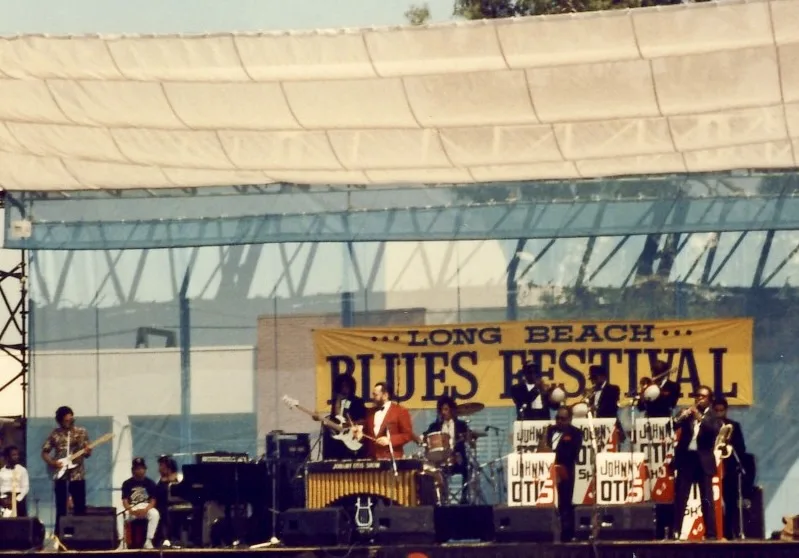
Foto: Sumori, CC BY-SA 4.0, vía Wikimedia Commons
Classroom activities
- Play: the twelve-bar lap in G. Ukuleles on G, C and D; bass on the roots of those three chords; electric guitar keeping the pulse; drums holding 130 without speeding up. The exact bar-by-bar layout is on the JamZone chart.
- Measure: time one complete lap. You should get around twenty-two seconds. Then count how many laps there are in the whole record and see whether the total reaches 3:01 or leaves time over. If it does, where is that time?
- Compare: play Hound Dog and this one back to back — in class they use the same three chords — and time one twelve-bar lap in each. The form is the same; the number is not. Write one sentence about what that number does to the song.
- Search: take the index of a music history book and look for five of the names in this article. Write down which ones are there and which are not. That is not your opinion: it is a figure you can count.
Key vocabulary
- Twelve-bar blues — blues de doce compases
- Degrees I, IV and V — grados I, IV y V (los acordes numerados por su lugar en la escala)
- Rhythm and blues — rhythm and blues (el blues acelerado y hecho para bailar)
- Bridge — puente
- Tempo — tempo: la velocidad del pulso, en pulsaciones por minuto
Resources
In Year 3 — this song is used in the units ¿Cómo sabes por dónde vas en una música que oyes por primera vez? and ¿Cómo se guarda algo que solo existe mientras suena?, from the theory and history book.
The 1960 record
Live, 1964 — "Rock Me Baby", from the Reelin' In The Years archive. Not this song, but the only way to watch her sing and move in those years.
Ukulele tutorial — MrTolandMusic. Fifty seconds: the whole lap in G, with G, C and D7.
Guitar tutorial — David Calabrés, in Spanish. He explains the twelve-bar structure and, above all, how to count it without getting lost.
Bass tutorial — TrueFire, with Brad Carlton. Long, but it teaches the twelve-bar blues bass line in G, which is the key of this song.
Drum tutorial — Love To Learn Drums. Three and a half minutes on how to hold the twelve bars without losing count.
Backing track — TrueFire, twelve-bar blues in G.
Por dónde entrar
Coge un libro de historia de la música, vete al índice de nombres y busca «DeSanto». No está.
Ahora dale al play. El disco es de 1960, llegó al número cuatro de la lista de rhythm and blues de Billboard en Estados Unidos, y lo canta una mujer que por esos mismos meses estaba de gira con el espectáculo de James Brown. Las dos cosas son verdad a la vez: el disco existió y funcionó, y la historia que se cuenta en clase lo dejó fuera.
Este artículo va de las dos cosas. De cómo está hecha la canción, que la vais a tocar. Y de por qué no la conocías.
Contexto histórico
Se llamaba Peylia Marsema Balinton. Nació en Brooklyn, Nueva York, en 1935. Su madre era afroamericana y pianista de concierto; su padre, filipino. A los cuatro años la familia se mudó a San Francisco y allí se crio. De pequeña era amiga de otra cantante del barrio, Etta James. Treinta años después grabarían discos juntas.
Foto: Barbara Weinberg Barefield, CC BY-SA 3.0, vía Wikimedia Commons
En 1955 la descubrió Johnny Otis. Otis era director de orquesta, cazatalentos y productor, y su nombre ya te ha salido antes: fue él quien produjo Hound Dog con Big Mama Thornton en 1952, y quien tocó la batería en aquella grabación. Otis le puso el nombre artístico con el que la conoces: Sugar Pie. Con su orquesta se fue de gira, y entre 1959 y 1960 salió también con la de James Brown.
«I Want to Know» se publicó en 1960 en Veltone, un sello pequeño, con el número 103 de catálogo y «Baby It Ain't Right» en la otra cara. En la etiqueta no pone solo su nombre: pone que la acompaña la banda de Pee Wee Kingsley, que era su marido. El disco llegó al número cuatro.
Dos años después ella se fue a Chicago y firmó con Chess —el sello del 2120 de South Michigan Avenue, la casa del blues eléctrico— como cantante y como autora.
Murió en Oakland en diciembre de 2024, con ochenta y nueve años. Ese mismo año entró en el Blues Hall of Fame. Sesenta y cuatro años después del disco.
Cómo suena
Dale al play y cuenta hasta que la canción vuelva a empezar. Vuelve enseguida: la música da una vuelta completa y regresa al punto de partida. Esa vuelta dura doce compases, y dentro de ella solo aparecen tres acordes: Sol, Do y Re.
Esa vuelta tiene nombre: blues de doce compases. Funciona como una vuelta a la pista de atletismo. Siempre sabes por dónde vas, porque siempre pasas por los mismos sitios y en el mismo orden. Sales de casa (Sol), te vas al segundo acorde (Do), vuelves a casa, y cerca del final aparece el tercero (Re), que es el que te empuja otra vez a la salida.
Sol, Do y Re no son tres acordes cualesquiera. Son el primero, el cuarto y el quinto de la escala de Sol. Por eso se escriben con números romanos, I, IV y V, y por eso la misma vuelta se puede tocar en cualquier tonalidad: cambias los tres acordes y la forma sigue intacta.
Hasta aquí no hay nada que Hound Dog no tenga. El armazón es el mismo. Lo que cambia es la velocidad y para qué sirve. Hound Dog se toma su tiempo: es un blues para escuchar a alguien quejarse. Esta va a 130 pulsaciones por minuto y no espera a nadie: es un blues para bailar.
Ese cambio —mismo esqueleto, otra energía, y una industria que quería venderle discos a gente joven— es lo que se acabó llamando rhythm and blues.
En clase las dos caen además en la misma tonalidad: esta es de origen en Sol, y Hound Dog está transportada a Sol en su chart. Mismos tres acordes y mismas posiciones. Podéis tocarlas seguidas sin mover la mano izquierda.
La forma tampoco es complicada: dos estrofas, un puente, dos estrofas, otro puente y una estrofa final. El puente es la sección que se sale un momento de la rutina, para que cuando vuelva la estrofa se note más.
Datos duros: Sol mayor, 4/4, 130 BPM, 3:01. El chart cuenta siete secciones. Haz la cuenta: doce compases a 130 BPM duran unos veintidós segundos, y siete veces veintidós se quedan por debajo de tres minutos y un segundo. Falta tiempo por explicar. ¿De dónde sale? Cronómetro en mano.
Curiosidades
- Johnny Otis, el hombre que la encontró, encontró también a Big Mama Thornton y a Etta James. En la grabación de Hound Dog de 1952 no solo produjo: se sentó a la batería, y firmó con nombre falso porque tenía contrato exclusivo con otra compañía. Los nombres que quedan escritos en la etiqueta no siempre son los que estaban en la sala.
- Medía 1,50 m y en el escenario hacía saltos mortales hacia atrás desde parada. Cuando en 1964 se fue de gira por Europa con el American Folk Blues Festival, eso fue lo que el público recordó. En el R&B de entonces un éxito no se defendía con un videoclip: se defendía cada noche, en directo y con el cuerpo.
- En Chess no entró solo a cantar. Entró también a escribir, y firmaba como autora con otro nombre, Peylia Parham. Así firmó «Do I Make Myself Clear», que grabó a dúo con su amiga de la infancia Etta James.
- Entró en el Blues Hall of Fame en 2024, el año en que murió. Que un reconocimiento llegue sesenta y cuatro años después no dice nada sobre la calidad del disco: dice quién decidía, y cuándo, qué se contaba.
Foto: Sumori, CC BY-SA 4.0, vía Wikimedia Commons
Para hacer en clase
- Tocar: la vuelta de doce compases en Sol. Ukeleles con Sol, Do y Re; el bajo con las fundamentales de esos tres acordes; la guitarra eléctrica marcando; la batería sosteniendo 130 por minuto sin acelerar. El reparto exacto de los compases está en el chart de JamZone.
- Medir: cronometra una vuelta completa. Te debería salir alrededor de veintidós segundos. Después cuenta cuántas vueltas hay en todo el disco y mira si la suma llega a 3:01 o si sobra tiempo. Si sobra, ¿dónde está ese tiempo?
- Comparar: pon Hound Dog y esta una detrás de otra —en clase se tocan con los mismos tres acordes— y cronometra una vuelta de doce compases en cada una. La forma es la misma; el número no. Escribe en una sola frase qué le hace ese número a la canción.
- Buscar: coge el índice de nombres de un libro de historia de la música y busca cinco de los que salen en este artículo. Anota cuáles están y cuáles no. Eso no es una opinión tuya: es un dato que se puede contar.
Vocabulario fundamental
- Blues de doce compases — La vuelta de doce compases sobre la que está construida media música popular del siglo XX. Pasas siempre por los mismos sitios y en el mismo orden.
- Grados I, IV y V — Los tres acordes de esa vuelta, numerados por el lugar que ocupan en la escala. Por eso la misma forma se puede tocar en cualquier tonalidad.
- Rhythm and blues — El nombre con el que se vendió el blues cuando se aceleró y se hizo para bailar.
- Puente — La sección que se sale un momento de la rutina, para que al volver la estrofa se note más.
- Tempo — La velocidad del pulso, en pulsaciones por minuto. Aquí, 130.
Recursos
En 3º de ESO — esta canción sirve para las unidades ¿Cómo sabes por dónde vas en una música que oyes por primera vez? y ¿Cómo se guarda algo que solo existe mientras suena?, del libro de teoría e historia.
La grabación de 1960
En directo, 1964 — «Rock Me Baby», del archivo Reelin' In The Years. No es esta canción, pero es la única manera de verla cantar y moverse en aquellos años.
Tutorial de ukelele — MrTolandMusic. Cincuenta segundos: la vuelta entera en Sol, con Sol, Do y Re7.
Tutorial de guitarra — David Calabrés, en castellano. Explica la estructura de los doce compases y, sobre todo, cómo contarlos sin perderse.
Tutorial de bajo — TrueFire, con Brad Carlton. Es largo y está en inglés, pero es el que enseña la línea de bajo del blues de doce compases en Sol, que es la tonalidad de esta canción.
Tutorial de batería — Love To Learn Drums. Tres minutos y medio sobre cómo acompañar los doce compases sin perder la cuenta.
Base para tocar encima — TrueFire, blues de doce compases en Sol.
Why this song
The same man found both singers. In 1952 Johnny Otis produced Big Mama Thornton singing Hound Dog, and played the drums on it himself. Three years later he found a young singer in San Francisco and gave her a stage name: Sugar Pie.
One of those two records is in your textbook. This one is not, even though it reached number four on the American rhythm and blues chart in 1960.
The song is built on the twelve bars you already know. What changed is the speed, and who it was made for.
Historical context
Her name was Peylia Marsema Balinton. She was born in Brooklyn, New York, in 1935. Her mother was African American and a concert pianist; her father was Filipino. The family moved to San Francisco when she was four, and that is where she grew up. As a girl she was friends with another singer from the neighbourhood, Etta James. Thirty years later they would record together.
Foto: Barbara Weinberg Barefield, CC BY-SA 3.0, vía Wikimedia Commons
Johnny Otis found her in 1955. He was a bandleader, a talent scout and a producer, and he is the one who gave her the name Sugar Pie. She toured with his revue, and in 1959 and 1960 she toured with James Brown's as well.
"I Want to Know" came out in 1960 on Veltone, a small label, catalogue number 103, with "Baby It Ain't Right" on the other side. The label does not carry her name alone: it says she is backed by the Pee Wee Kingsley Band, and Pee Wee Kingsley was her husband. The record reached number four.
Two years later she moved to Chicago and signed to Chess — the label at 2120 South Michigan Avenue, the home of electric blues — as a singer and as a writer.
She died in Oakland in December 2024, aged eighty-nine. She was inducted into the Blues Hall of Fame that same year. Sixty-four years after the record.
Musical characteristics
Press play and count until the song starts over. It comes back quickly: the music goes round once and returns to where it began. That lap lasts twelve bars, and only three chords appear inside it — G, C and D.
The lap has a name: the twelve-bar blues. It works like a lap of a running track. You always know where you are, because you always pass the same places in the same order. You leave home (G), go out to the second chord (C), come home, and near the end the third one (D) turns up and pushes you back to the start.
G, C and D are not three chords picked at random. They are the first, the fourth and the fifth of the G scale. That is why they get written as roman numerals — I, IV and V — and why the same lap works in any key: change the three chords and the shape stays the same.
So far there is nothing here that Hound Dog does not have. The frame is identical. What changed is the speed and the purpose. Hound Dog takes its time; it is a blues for listening to somebody complain. This one runs at 130 beats per minute and waits for nobody; it is a blues for dancing.
That shift — same skeleton, different energy, and a record industry that wanted to sell to young people — is what ended up being called rhythm and blues.
In class the two songs also land in the same key: this one is in G to begin with, and Hound Dog is transposed to G on its chart. Same three chords, same shapes. You can play them one after the other without moving your left hand.
The form is simple too: two verses, a bridge, two verses, another bridge and a final verse. The bridge is the section that steps out of the routine for a moment, so that the verse lands harder when it comes back.
Hard facts: G major, 4/4, 130 BPM, 3:01. The chart counts seven sections. Do the arithmetic: twelve bars at 130 BPM last about twenty-two seconds, and seven times twenty-two falls short of three minutes and one second. There is time left unaccounted for. Where does it come from? Stopwatch in hand.
Trivia and curiosities
- Johnny Otis, the man who found her, also found Big Mama Thornton and Etta James. On the 1952 Hound Dog session he did more than produce: he sat down at the drums, and signed under a false name because he was under contract elsewhere. The names printed on a label are not always the ones who were in the room.
- She was 1.50 m tall and did standing back flips on stage. When she toured Europe with the American Folk Blues Festival in 1964, that is what audiences remembered. In the R&B of those years you did not defend a hit with a music video: you defended it every night, live, with your body.
- At Chess she was not only a singer. She was a writer too, and she signed her songs under a different name, Peylia Parham. That is the name on "Do I Make Myself Clear", which she recorded as a duet with her childhood friend Etta James.
- She entered the Blues Hall of Fame in 2024, the year she died. Recognition arriving sixty-four years late says nothing about how good the record is. It says who was deciding, and when, what got told.
Foto: Sumori, CC BY-SA 4.0, vía Wikimedia Commons
Classroom activities
- Play: the twelve-bar lap in G. Ukuleles on G, C and D; bass on the roots of those three chords; electric guitar keeping the pulse; drums holding 130 without speeding up. The exact bar-by-bar layout is on the JamZone chart.
- Measure: time one complete lap. You should get around twenty-two seconds. Then count how many laps there are in the whole record and see whether the total reaches 3:01 or leaves time over. If it does, where is that time?
- Compare: play Hound Dog and this one back to back — in class they use the same three chords — and time one twelve-bar lap in each. The form is the same; the number is not. Write one sentence about what that number does to the song.
- Search: take the index of a music history book and look for five of the names in this article. Write down which ones are there and which are not. That is not your opinion: it is a figure you can count.
Key vocabulary
- Twelve-bar blues — blues de doce compases
- Degrees I, IV and V — grados I, IV y V (los acordes numerados por su lugar en la escala)
- Rhythm and blues — rhythm and blues (el blues acelerado y hecho para bailar)
- Bridge — puente
- Tempo — tempo: la velocidad del pulso, en pulsaciones por minuto
Resources
In Year 3 — this song is used in the units ¿Cómo sabes por dónde vas en una música que oyes por primera vez? and ¿Cómo se guarda algo que solo existe mientras suena?, from the theory and history book.
The 1960 record
Live, 1964 — "Rock Me Baby", from the Reelin' In The Years archive. Not this song, but the only way to watch her sing and move in those years.
Ukulele tutorial — MrTolandMusic. Fifty seconds: the whole lap in G, with G, C and D7.
Guitar tutorial — David Calabrés, in Spanish. He explains the twelve-bar structure and, above all, how to count it without getting lost.
Bass tutorial — TrueFire, with Brad Carlton. Long, but it teaches the twelve-bar blues bass line in G, which is the key of this song.
Drum tutorial — Love To Learn Drums. Three and a half minutes on how to hold the twelve bars without losing count.
Backing track — TrueFire, twelve-bar blues in G.