Contenidos
¿Por qué no te aburre una canción de un solo acorde?
*Chain of Fools* never changes chord. Not once. *Uptown Funk* has two, and they explain nothing. This unit is about who does the work when the harmony stops doing it.
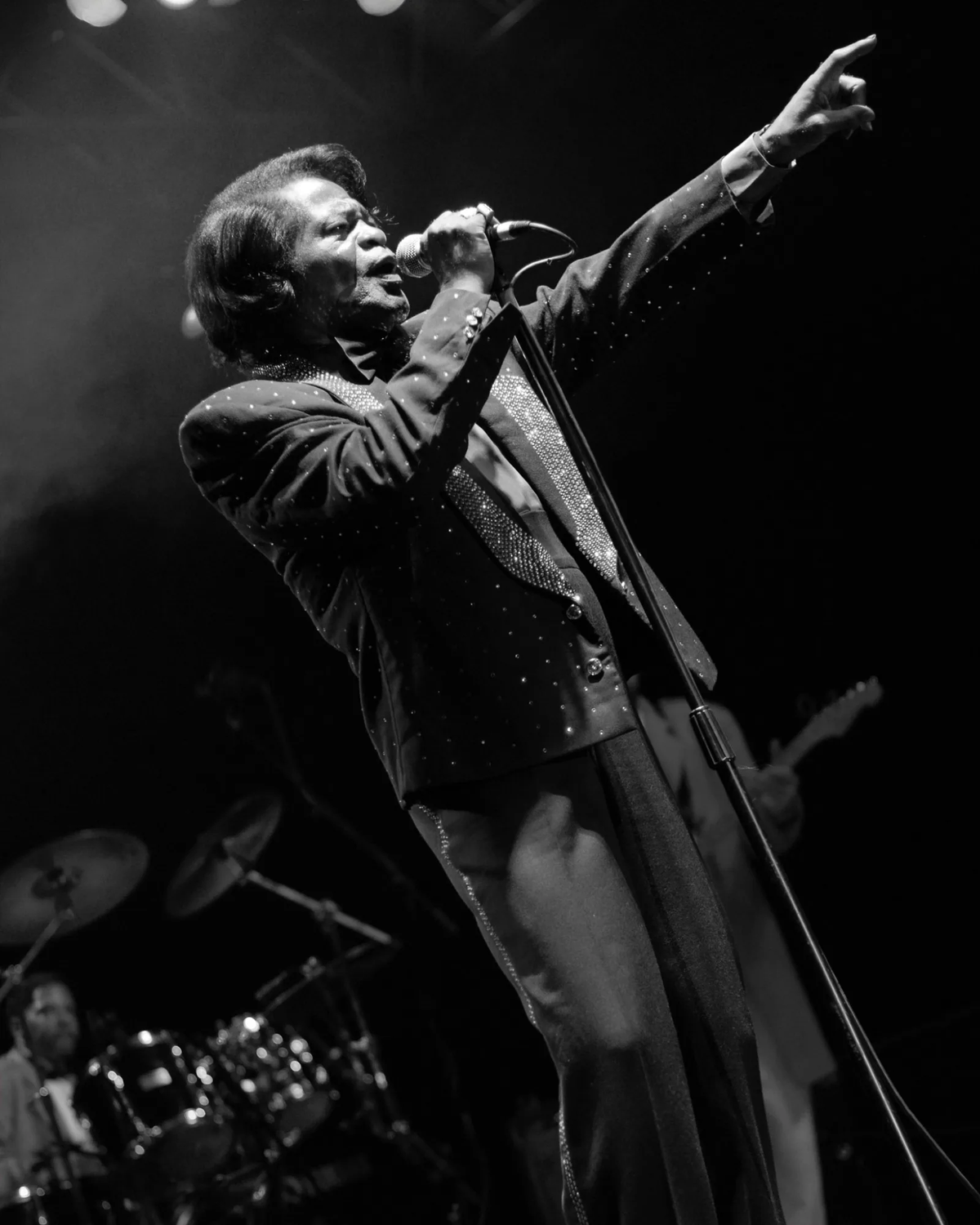
We ask ourselves
- If the song never changes chord, why don't you get bored?
- What does the bass play when it no longer has to hold up the chord?
- Why does the same note, moved half a beat, sound like something else?
- If seven people play at once, why is it not a mess?
- Can you write down on a score the thing that makes this sound like funk?
- Why is a song from 1967 built the same way as one from 2015?
Don't answer yet. We come back to these at the end.
The fragment
Before playing any song all the way through, we build the Uptown Funk loop with the whole class. Two chords, D minor and G, one per bar. The chords are not the interesting part.
Count out loud: 1 and 2 and 3 and 4 and. Eight slots per bar. The numbers are the beats; the "ands" are what sits between them. Now we share the bar out, two pairs at a time, with one rule: nobody plays where the previous pair plays.
- Feet stamp on 1, 2, 3 and 4. Never on an "and". That is the floor.
- Hands clap only on 2 and 4.
- Guitar says cha only on the "ands". Never on a number.
- Bass says bum on 1 and again on the "and" of 3. Two notes a bar, and the second one lands off the beat.
- Horns go pa on the "and" of 4, right before the bar starts again.
When the five layers hold together, you have the whole loop. Notice that no single layer is hard on its own. The hard part is not stepping into your neighbour's slot.
Now do it wrong on purpose. Same chords, same tempo, but everyone plays only on the numbers, nobody on the "ands". Same notes, same harmony, and the thing collapses. What just went missing is what this unit is about.
Now play Uptown Funk, all of it, with nobody talking over it.
What changed
You have just built four minutes of music out of two chords, and neither of them accounts for anything that happened. A harmony textbook tells you music moves forward because chords pull on each other. These two pull nowhere. They sit still.
The change has a date. In 1967 James Brown records Cold Sweat and the band spends the whole verse on one chord. That same year Aretha Franklin records Chain of Fools, which never changes chord at all. Once the harmony freezes, the interest has to come from somewhere else.
Mostly it comes from the split. Every instrument occupies specific slots and leaves the rest alone. The guitar plays where the bass is silent, the hi-hat fills what the snare leaves, and it sounds full without anybody playing much. You have already tested this: when everyone takes the same slots, it dies.
And it comes from syncopation, which is putting the accent where you were not expecting it. Your ear predicts a hit on the strong beat, it arrives half a beat early or late, and that small mismatch is what moves your body. It is not decoration. It is the material the song is made of.
A score writes the note values down accurately, but it does not write how far ahead or behind each hit sits, and that is half of the job. Which is why this is learned by playing it with other people rather than by reading it, and why we built it before talking about it.
The most concrete consequence belongs to the bass. If the harmony never moves, the bass loses its old job, which was telling you the root of the chord. So it stops doubling that root and starts playing a tune. In Levitating the bass line almost never repeats the same way twice, and it is the only part of the song that is telling you anything.
La Gozadera shows the same idea from the other side. There the bass and the percussion divide the bar between them, over a five-stroke pattern underneath that organises everybody. Four chords on a loop, and none of them resolves anything.
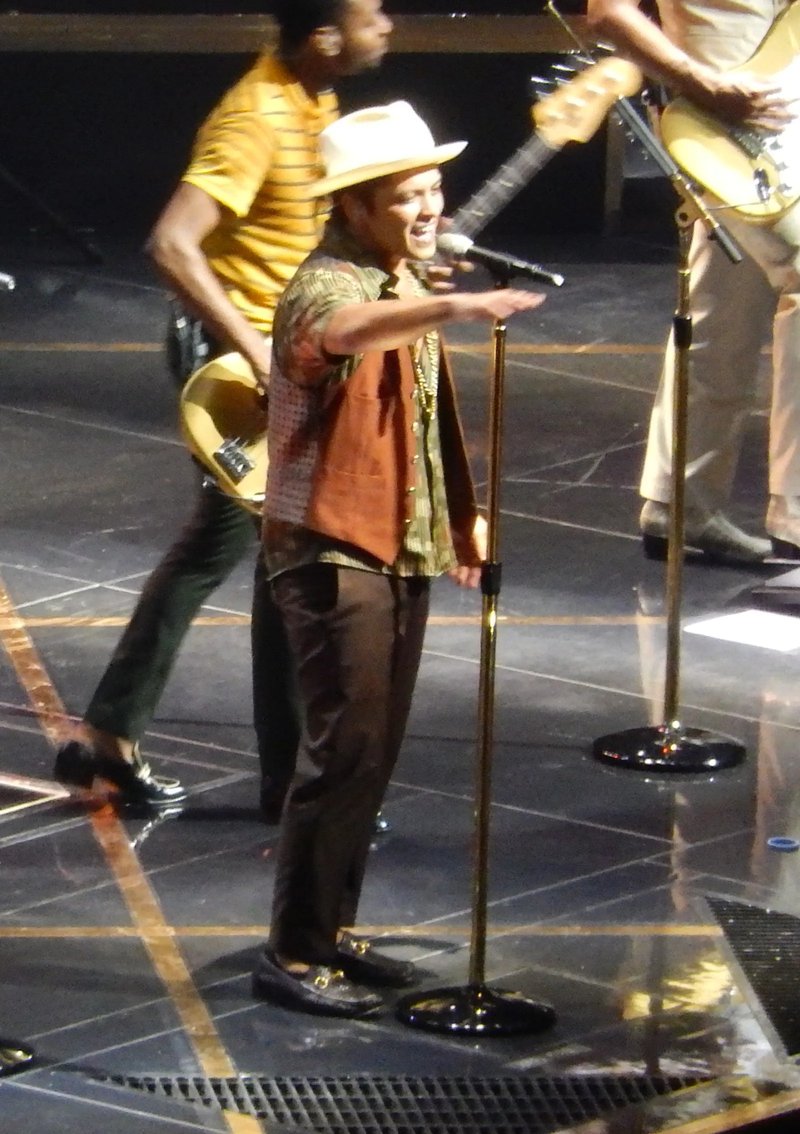
Foto: slgckgc, CC BY 2.0, vía Wikimedia Commons
Hard facts, and watch the count: Chain of Fools, November 1967, one chord, 117 BPM. Uptown Funk, single in November 2014, two chords, 115 BPM. La Gozadera, April 2015, four chords, 95 BPM. Levitating, March 2020, three chords, 103 BPM. Fifty-three years, four different countries, and not one progression that goes anywhere.
The same device elsewhere
Freezing the harmony and letting rhythm carry the interest was not invented by funk. These three are worth hearing back to back:
- Levitating, Dua Lipa (2020) — three chords looped from start to finish. The only thing that never repeats identically is the bass, moving on its own underneath the voice.
- Stravinsky's The Rite of Spring (1913) — the movement that starts right after the solo bassoon at the opening: one chord hammered by the whole orchestra, and the only interest is where the accents fall. The Paris audience hated it.
- Gnawa music from Morocco — the guembri, a three-string lute acting as the bass, repeats a short figure; the qraqeb, iron castanets, fill the gaps the guembri leaves. Chords: none.
None of them is better than the others and there is no ranking here. All three solve the same problem: how to hold attention for minutes on end without moving the harmony.
And here at home?
In Madrid it arrives early. Barrabás is founded in 1971, put together by Fernando Arbex as soon as Los Brincos break up, and in 1972 it releases Wild Safari, subtitled Música caliente, with "Woman" on it. That is funk with Latin percussion made in Spain four years after Cold Sweat, and it worked abroad.
The Spanish record that travelled furthest is from 1977: "Yes Sir, I Can Boogie", by Baccara — Mayte Mateos and María Mendiola — number one in the United Kingdom, Germany, the Netherlands, Switzerland, Sweden and half of Europe. The rest is worth saying too: it was written by two Germans, Frank Dostal and Rolf Soja. The voices were Spanish; the song was not.
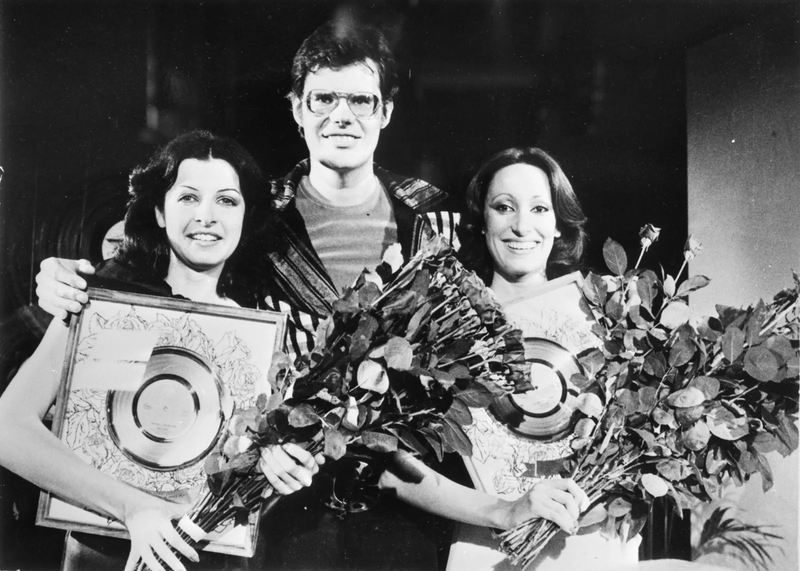
Foto: Fotógrafo desconocido / Anefo, CC0, vía Wikimedia Commons
In Aragón, in the seventies, there is none of this. What there is is the Nueva Canción Aragonesa, led by Labordeta, and in the eighties the guitar rock of Héroes del Silencio. The honest answer to "and here at home?" is that here, for thirty years, groove was not the point.
It arrives through rap, and it can be dated. On 11 June 1999 the Zaragoza group Violadores del Verso release Genios, and on it there is a track called "Yo tengo el funk", with music by R de Rumba. Thirty-two years after Cold Sweat, somebody from here says it out loud.
And eventually it gets played live. In 2009 Kase.O tours with a jazz band — saxophone, guitar, bass and drums — under the name Kase.O Jazz Magnetism, and in 2011 he puts it on record. It is the first time this repertoire sounds in Zaragoza with people playing it on stage instead of a sample.
Classroom activities
- While Chain of Fools plays: raise your hand the moment you think the chord is about to change. It never does. The interesting part is how many times your ear was wrong, and why.
- While Uptown Funk plays: half the class stamps only the numbers, the other half says cha only on the "ands". You have to last the whole song without stepping into the other side's slot.
- While Levitating plays: follow the bass with one finger in the air, up and down. What you are drawing is a melody, not an accompaniment.
- While La Gozadera plays: count how many different percussion instruments come in. Then work out who plays on the numbers and who plays between them.
- Play: we build Uptown Funk with the band. The full-band chart and the tab are attached to its own article.
- Create: take one chord, any chord. Share eight slots between five pairs, with the rule that nobody may play where somebody else plays. One minute straight without changing chord once.
Key vocabulary
- Groove — la sensación de empuje que produce cómo se reparten los golpes entre los instrumentos
- Syncopation — síncopa: un acento que cae donde el oído no lo esperaba
- Offbeat — contratiempo: el hueco entre dos tiempos, lo que contamos como «y»
- Vamp — un bucle de pocos acordes que se repite sin resolver en ninguna parte
- Bass line — línea de bajo: en esta música, una melodía y no un acompañamiento
Resources
The songs in this unit are in the library, each with its own article, full-band chart and tab: Chain of Fools, Uptown Funk, Levitating, La Gozadera.
The song we build — Uptown Funk, Mark Ronson with Bruno Mars (2014-15). Its article, with the full-band chart and the tab, is in the library.
One chord from beginning to end — Chain of Fools, Aretha Franklin (1967). Also in the library.
The bass on its own — Levitating, Dua Lipa (2020), in the library.
Bass and percussion sharing the bar — La Gozadera, Gente de Zona with Marc Anthony (2015), in the library.
Where this starts — Cold Sweat, James Brown (1967). The whole verse on one chord.
Frozen harmony in the orchestra — Stravinsky's The Rite of Spring (1913), London Symphony Orchestra with Simon Rattle. Listen to the movement that begins as soon as the solo bassoon finishes.
A bass that is the melody, with no chords at all — maalem Mahmoud Guinia with guembri and qraqeb, recorded in Marrakech.
Funk made in Spain — "Woman", Barrabás (1972).
Funk with an Aragonese name on it — "Yo tengo el funk", Violadores del Verso, from Genios (1999).
- The machine that freezes the rhythm — "Who plays the drums on this song?", the unit on the drum machine, in the library.
- What you don't hear here — "Yes Sir, I Can Boogie", Baccara (1977), the best-selling Spanish record in this whole story.
Nos preguntamos
- Si la canción no cambia de acorde, ¿por qué no te aburres?
- ¿Qué toca el bajo cuando ya no tiene que sostener el acorde?
- ¿Por qué la misma nota, movida medio tiempo, suena a otra cosa?
- Si tocan siete personas a la vez, ¿por qué no suena a barullo?
- ¿Se puede escribir en una partitura lo que hace que esto suene a funk?
- ¿Por qué una canción de 1967 y otra de 2015 se montan igual?
No las respondas todavía. Al final de la unidad volvemos a ellas.
El fragmento
Antes de poner ninguna canción entera, montamos el bucle de Uptown Funk con toda la clase. Son dos acordes, Re menor y Sol, uno por compás. Pero los acordes no son la parte interesante.
Contamos en voz alta: 1 y 2 y 3 y 4 y. Ocho huecos por compás. Los números son los tiempos; los «y», lo que hay entre medias. Ahora repartimos, de dos en dos parejas, y nadie toca donde toca el anterior.
- Los pies pisan en 1, 2, 3 y 4. Nunca en un «y». Ese es el suelo.
- Las palmas suenan solo en 2 y en 4.
- La guitarra dice cha únicamente en los «y». Nunca en un número.
- El bajo dice bum en el 1 y otra vez en el «y» del 3. Dos notas por compás, y la segunda cae fuera de tiempo.
- Los vientos hacen pa en el «y» del 4, justo antes de que el compás vuelva a empezar.
Cuando las cinco capas se sostienen a la vez, tienes el bucle entero. Fíjate en que ninguna capa es difícil por separado. Lo difícil es no invadir el hueco del de al lado.
Ahora hazlo mal a propósito. Repite exactamente lo mismo, con los mismos acordes y el mismo tempo, pero que todo el mundo toque solo en los números: nadie en los «y». Mismas notas, misma armonía, y la cosa se cae. Eso que se ha perdido es de lo que va toda la unidad.
Ahora sí, Uptown Funk entera y sin comentarios por encima.
Qué cambió
Acabas de montar cuatro minutos de música con dos acordes, y ninguno de los dos explica nada de lo que ha pasado. Un libro de armonía te enseña que la música avanza porque unos acordes tiran de otros. Aquí no tiran de nada: se quedan quietos.
El cambio tiene fecha. En 1967 James Brown graba Cold Sweat y la banda se pasa el verso entero sobre un acorde. Ese mismo año Aretha Franklin graba Chain of Fools, que no cambia de acorde en toda la canción. Cuando la armonía se congela, el interés sale de otro sitio.
Sale, sobre todo, del reparto. En esta música cada instrumento ocupa unos huecos concretos y deja libres los demás. La guitarra toca donde el bajo calla, el charles rellena lo que deja la caja, y el resultado suena lleno sin que nadie toque mucho. Ya lo has comprobado: si todos ocupan los mismos huecos, se cae.
Y sale de la síncopa, que es poner el acento donde no lo esperabas. El oído predice un golpe en el tiempo fuerte, llega medio tiempo antes o después, y ese pequeño desajuste es lo que te mueve el cuerpo. No es un adorno. Es el material con el que está hecha la canción.
Una partitura escribe bien las figuras, pero no escribe cuánto se adelanta o se retrasa cada golpe, y ahí está la mitad del asunto. Por eso esto se aprende tocándolo con otros y no leyéndolo, y por eso hemos empezado por montarlo antes de hablar de nada.
La consecuencia más concreta le toca al bajo. Si la armonía no se mueve, el bajo se queda sin su trabajo de siempre, que era decirte cuál es la fundamental del acorde. Así que deja de doblarla y se pone a hacer melodía. En Levitating la línea de bajo casi nunca se repite igual dos veces, y es la única parte de la canción que va contando algo.
La Gozadera enseña la misma idea desde el otro lado. Ahí el bajo y la percusión se reparten el compás entre los dos, con un patrón de cinco golpes debajo que organiza a todos. Cuatro acordes en bucle, y ninguno resuelve nada.
Foto: slgckgc, CC BY 2.0, vía Wikimedia Commons
Datos duros, y fíjate en la cuenta: Chain of Fools, noviembre de 1967, un acorde, 117 BPM. Uptown Funk, single en noviembre de 2014, dos acordes, 115 BPM. La Gozadera, abril de 2015, cuatro acordes, 95 BPM. Levitating, marzo de 2020, tres acordes, 103 BPM. Cincuenta y tres años, cuatro países distintos, y ni una sola progresión que vaya a alguna parte.
El mismo recurso en otros sitios
Congelar la armonía y dejar que el interés lo lleve el ritmo no lo inventó el funk. Estos tres conviene oírlos seguidos:
- Levitating, de Dua Lipa (2020) — tres acordes en bucle de principio a fin. Lo único que no se repite igual es el bajo, que va por libre por debajo de la voz.
- La consagración de la primavera, de Stravinsky (1913) — el número que empieza justo después del fagot solo del principio: un acorde golpeado una y otra vez por toda la orquesta, y el interés está solo en dónde caen los acentos. El público de París se lo tomó fatal.
- La música gnawa de Marruecos — el guembri, un laúd de tres cuerdas que hace de bajo, repite una figura corta; las qraqeb, unos crótalos de hierro, rellenan los huecos que el guembri deja. Acordes, ninguno.
Ninguno es mejor que otro y no hay jerarquía entre ellos. Los tres resuelven el mismo problema: cómo sostener la atención durante minutos sin mover la armonía.
Y aquí, ¿qué?
En Madrid esto llega pronto. Barrabás se funda en 1971, montado por Fernando Arbex en cuanto se disuelven Los Brincos, y en 1972 publica Wild Safari, subtitulado Música caliente, con «Woman» dentro. Es funk con percusión latina hecho en España cuatro años después de Cold Sweat, y funcionó fuera.
El disco español que más lejos llegó es de 1977 y es «Yes Sir, I Can Boogie», de Baccara —Mayte Mateos y María Mendiola—, número uno en el Reino Unido, Alemania, los Países Bajos, Suiza, Suecia y media Europa más. Conviene decir el resto: la compusieron dos alemanes, Frank Dostal y Rolf Soja. Las voces eran españolas; la canción, no.
Foto: Fotógrafo desconocido / Anefo, CC0, vía Wikimedia Commons
En Aragón, en los setenta, de esto no hay nada. Lo que hay es la Nueva Canción Aragonesa, con Labordeta a la cabeza, y en los ochenta el rock de guitarras de Héroes del Silencio. La respuesta honesta a «¿y aquí qué?» es que aquí, durante treinta años, el groove no fue el asunto.
Llega por el rap, y se puede fechar. El 11 de junio de 1999 los zaragozanos Violadores del Verso publican Genios, y dentro va un corte titulado «Yo tengo el funk», con la música de R de Rumba. Treinta y dos años después de Cold Sweat, alguien de aquí lo dice con todas las letras.
Y se acaba tocando en directo. En 2009 Kase.O sale de gira con una banda de jazz —saxo, guitarra, bajo y batería— bajo el nombre Kase.O Jazz Magnetism, y en 2011 lo publica en disco. Es la primera vez que este repertorio suena en Zaragoza con gente tocándolo en el escenario y no con un sample.
Para hacer en clase
- Mientras suena Chain of Fools: levanta la mano en el momento en que creas que va a cambiar el acorde. No cambia nunca. Lo interesante es cuántas veces se ha equivocado tu oído y por qué.
- Mientras suena Uptown Funk: media clase pisa solo los números y la otra media dice cha solo en los «y». Hay que aguantar la canción entera sin invadir el hueco del otro.
- Mientras suena Levitating: sigue el bajo con un dedo en el aire, subiendo y bajando. Lo que estás dibujando es una melodía, no un acompañamiento.
- Mientras suena La Gozadera: cuenta cuántos instrumentos de percusión distintos entran. Después, quién toca en los números y quién toca entre medias.
- Tocar: montamos Uptown Funk con la banda. El chart de banda completa y la tablatura están en su artículo.
- Crear: coged un solo acorde, el que sea. Repartid ocho huecos entre cinco parejas con la regla de que nadie puede tocar donde toca otro. Un minuto seguido sin cambiar de acorde ni una vez.
Vocabulario fundamental
- Groove — La sensación de que la música te empuja, producida por cómo se reparten los golpes entre los instrumentos. No es la melodía ni son los acordes.
- Síncopa — Un acento que cae donde el oído no lo esperaba, normalmente entre dos tiempos en vez de encima de uno.
- Contratiempo — El hueco que hay entre dos tiempos: lo que en clase contamos como «y». Es donde toca la guitarra funk.
- Vamp — Un bucle de uno, dos o cuatro acordes que se repite sin resolver en ninguna parte. La armonía queda congelada y el interés se va al ritmo.
- Línea de bajo — Lo que toca el bajo. En esta música deja de doblar la fundamental del acorde y pasa a ser una melodía con vida propia.
Recursos
Las canciones de esta unidad están en la biblioteca, cada una con su artículo, su chart de banda y su tablatura: Chain of Fools, Uptown Funk, Levitating, La Gozadera.
La canción del fragmento — Uptown Funk, Mark Ronson con Bruno Mars (2014-15). El artículo, con su chart de banda y su tablatura, está en la biblioteca.
Un solo acorde de principio a fin — Chain of Fools, Aretha Franklin (1967). También está en la biblioteca.
El bajo por libre — Levitating, Dua Lipa (2020), en la biblioteca.
El reparto entre bajo y percusión — La Gozadera, Gente de Zona con Marc Anthony (2015), en la biblioteca.
Dónde empieza esto — Cold Sweat, James Brown (1967). El verso entero sobre un acorde.
La armonía congelada en la orquesta — La consagración de la primavera de Stravinsky (1913), por la London Symphony Orchestra con Simon Rattle. Escucha el número que empieza en cuanto termina el fagot solo.
Un bajo que es la melodía, sin acordes — el maalem Mahmoud Guinia con el guembri y las qraqeb, grabado en Marrakech.
El funk hecho en España — «Woman», de Barrabás (1972).
El funk con nombre aragonés — «Yo tengo el funk», Violadores del Verso, del disco Genios (1999).
- La máquina que congela el ritmo — «¿Quién toca la batería en esta canción?», la unidad sobre la caja de ritmos, en la biblioteca.
- Lo que no suena aquí — «Yes Sir, I Can Boogie», Baccara (1977), el disco español más vendido de toda esta historia.
We ask ourselves
- If the song never changes chord, why don't you get bored?
- What does the bass play when it no longer has to hold up the chord?
- Why does the same note, moved half a beat, sound like something else?
- If seven people play at once, why is it not a mess?
- Can you write down on a score the thing that makes this sound like funk?
- Why is a song from 1967 built the same way as one from 2015?
Don't answer yet. We come back to these at the end.
The fragment
Before playing any song all the way through, we build the Uptown Funk loop with the whole class. Two chords, D minor and G, one per bar. The chords are not the interesting part.
Count out loud: 1 and 2 and 3 and 4 and. Eight slots per bar. The numbers are the beats; the "ands" are what sits between them. Now we share the bar out, two pairs at a time, with one rule: nobody plays where the previous pair plays.
- Feet stamp on 1, 2, 3 and 4. Never on an "and". That is the floor.
- Hands clap only on 2 and 4.
- Guitar says cha only on the "ands". Never on a number.
- Bass says bum on 1 and again on the "and" of 3. Two notes a bar, and the second one lands off the beat.
- Horns go pa on the "and" of 4, right before the bar starts again.
When the five layers hold together, you have the whole loop. Notice that no single layer is hard on its own. The hard part is not stepping into your neighbour's slot.
Now do it wrong on purpose. Same chords, same tempo, but everyone plays only on the numbers, nobody on the "ands". Same notes, same harmony, and the thing collapses. What just went missing is what this unit is about.
Now play Uptown Funk, all of it, with nobody talking over it.
What changed
You have just built four minutes of music out of two chords, and neither of them accounts for anything that happened. A harmony textbook tells you music moves forward because chords pull on each other. These two pull nowhere. They sit still.
The change has a date. In 1967 James Brown records Cold Sweat and the band spends the whole verse on one chord. That same year Aretha Franklin records Chain of Fools, which never changes chord at all. Once the harmony freezes, the interest has to come from somewhere else.
Mostly it comes from the split. Every instrument occupies specific slots and leaves the rest alone. The guitar plays where the bass is silent, the hi-hat fills what the snare leaves, and it sounds full without anybody playing much. You have already tested this: when everyone takes the same slots, it dies.
And it comes from syncopation, which is putting the accent where you were not expecting it. Your ear predicts a hit on the strong beat, it arrives half a beat early or late, and that small mismatch is what moves your body. It is not decoration. It is the material the song is made of.
A score writes the note values down accurately, but it does not write how far ahead or behind each hit sits, and that is half of the job. Which is why this is learned by playing it with other people rather than by reading it, and why we built it before talking about it.
The most concrete consequence belongs to the bass. If the harmony never moves, the bass loses its old job, which was telling you the root of the chord. So it stops doubling that root and starts playing a tune. In Levitating the bass line almost never repeats the same way twice, and it is the only part of the song that is telling you anything.
La Gozadera shows the same idea from the other side. There the bass and the percussion divide the bar between them, over a five-stroke pattern underneath that organises everybody. Four chords on a loop, and none of them resolves anything.
Foto: slgckgc, CC BY 2.0, vía Wikimedia Commons
Hard facts, and watch the count: Chain of Fools, November 1967, one chord, 117 BPM. Uptown Funk, single in November 2014, two chords, 115 BPM. La Gozadera, April 2015, four chords, 95 BPM. Levitating, March 2020, three chords, 103 BPM. Fifty-three years, four different countries, and not one progression that goes anywhere.
The same device elsewhere
Freezing the harmony and letting rhythm carry the interest was not invented by funk. These three are worth hearing back to back:
- Levitating, Dua Lipa (2020) — three chords looped from start to finish. The only thing that never repeats identically is the bass, moving on its own underneath the voice.
- Stravinsky's The Rite of Spring (1913) — the movement that starts right after the solo bassoon at the opening: one chord hammered by the whole orchestra, and the only interest is where the accents fall. The Paris audience hated it.
- Gnawa music from Morocco — the guembri, a three-string lute acting as the bass, repeats a short figure; the qraqeb, iron castanets, fill the gaps the guembri leaves. Chords: none.
None of them is better than the others and there is no ranking here. All three solve the same problem: how to hold attention for minutes on end without moving the harmony.
And here at home?
In Madrid it arrives early. Barrabás is founded in 1971, put together by Fernando Arbex as soon as Los Brincos break up, and in 1972 it releases Wild Safari, subtitled Música caliente, with "Woman" on it. That is funk with Latin percussion made in Spain four years after Cold Sweat, and it worked abroad.
The Spanish record that travelled furthest is from 1977: "Yes Sir, I Can Boogie", by Baccara — Mayte Mateos and María Mendiola — number one in the United Kingdom, Germany, the Netherlands, Switzerland, Sweden and half of Europe. The rest is worth saying too: it was written by two Germans, Frank Dostal and Rolf Soja. The voices were Spanish; the song was not.
Foto: Fotógrafo desconocido / Anefo, CC0, vía Wikimedia Commons
In Aragón, in the seventies, there is none of this. What there is is the Nueva Canción Aragonesa, led by Labordeta, and in the eighties the guitar rock of Héroes del Silencio. The honest answer to "and here at home?" is that here, for thirty years, groove was not the point.
It arrives through rap, and it can be dated. On 11 June 1999 the Zaragoza group Violadores del Verso release Genios, and on it there is a track called "Yo tengo el funk", with music by R de Rumba. Thirty-two years after Cold Sweat, somebody from here says it out loud.
And eventually it gets played live. In 2009 Kase.O tours with a jazz band — saxophone, guitar, bass and drums — under the name Kase.O Jazz Magnetism, and in 2011 he puts it on record. It is the first time this repertoire sounds in Zaragoza with people playing it on stage instead of a sample.
Classroom activities
- While Chain of Fools plays: raise your hand the moment you think the chord is about to change. It never does. The interesting part is how many times your ear was wrong, and why.
- While Uptown Funk plays: half the class stamps only the numbers, the other half says cha only on the "ands". You have to last the whole song without stepping into the other side's slot.
- While Levitating plays: follow the bass with one finger in the air, up and down. What you are drawing is a melody, not an accompaniment.
- While La Gozadera plays: count how many different percussion instruments come in. Then work out who plays on the numbers and who plays between them.
- Play: we build Uptown Funk with the band. The full-band chart and the tab are attached to its own article.
- Create: take one chord, any chord. Share eight slots between five pairs, with the rule that nobody may play where somebody else plays. One minute straight without changing chord once.
Key vocabulary
- Groove — la sensación de empuje que produce cómo se reparten los golpes entre los instrumentos
- Syncopation — síncopa: un acento que cae donde el oído no lo esperaba
- Offbeat — contratiempo: el hueco entre dos tiempos, lo que contamos como «y»
- Vamp — un bucle de pocos acordes que se repite sin resolver en ninguna parte
- Bass line — línea de bajo: en esta música, una melodía y no un acompañamiento
Resources
The songs in this unit are in the library, each with its own article, full-band chart and tab: Chain of Fools, Uptown Funk, Levitating, La Gozadera.
The song we build — Uptown Funk, Mark Ronson with Bruno Mars (2014-15). Its article, with the full-band chart and the tab, is in the library.
One chord from beginning to end — Chain of Fools, Aretha Franklin (1967). Also in the library.
The bass on its own — Levitating, Dua Lipa (2020), in the library.
Bass and percussion sharing the bar — La Gozadera, Gente de Zona with Marc Anthony (2015), in the library.
Where this starts — Cold Sweat, James Brown (1967). The whole verse on one chord.
Frozen harmony in the orchestra — Stravinsky's The Rite of Spring (1913), London Symphony Orchestra with Simon Rattle. Listen to the movement that begins as soon as the solo bassoon finishes.
A bass that is the melody, with no chords at all — maalem Mahmoud Guinia with guembri and qraqeb, recorded in Marrakech.
Funk made in Spain — "Woman", Barrabás (1972).
Funk with an Aragonese name on it — "Yo tengo el funk", Violadores del Verso, from Genios (1999).
- The machine that freezes the rhythm — "Who plays the drums on this song?", the unit on the drum machine, in the library.
- What you don't hear here — "Yes Sir, I Can Boogie", Baccara (1977), the best-selling Spanish record in this whole story.