Contenidos
Come and Get Your Love — Redbone (1974)
Four chords going round and round, and a song that sounds like it was already playing before you pressed play. Recorded in 1973 by the first Native American band to reach the US top five.
🏷️ Ficha musical
Why this song
The version you know is missing its beginning. That is not a figure of speech: the album cut opens with a slow introduction, and the radio edit cuts it off and drops you straight into the band at full speed.
You have heard it. It is on the cassette the hero carries around in Guardians of the Galaxy (2014), and it opened every episode of F Is for Family between 2015 and 2021.
Press play and listen to the first second only. It does not sound like a start. Part of that is the edit, and part of it is where the chords put you.
Historical context
In the 1960s two brothers from Coalinga, California, played surf music in Los Angeles clubs. Pat and Lolly Vegas came from a Yaqui, Shoshone and Mexican family.
The Yaqui are a people of north-western Mexico and southern Arizona, with a music of their own built on gourd rattles and on leg rattles made from dried cocoons.
Their agent told them the world was not ready for a duo of Mexican musicians playing surf. So they billed themselves as the Vegas Brothers and said nothing about where they came from.
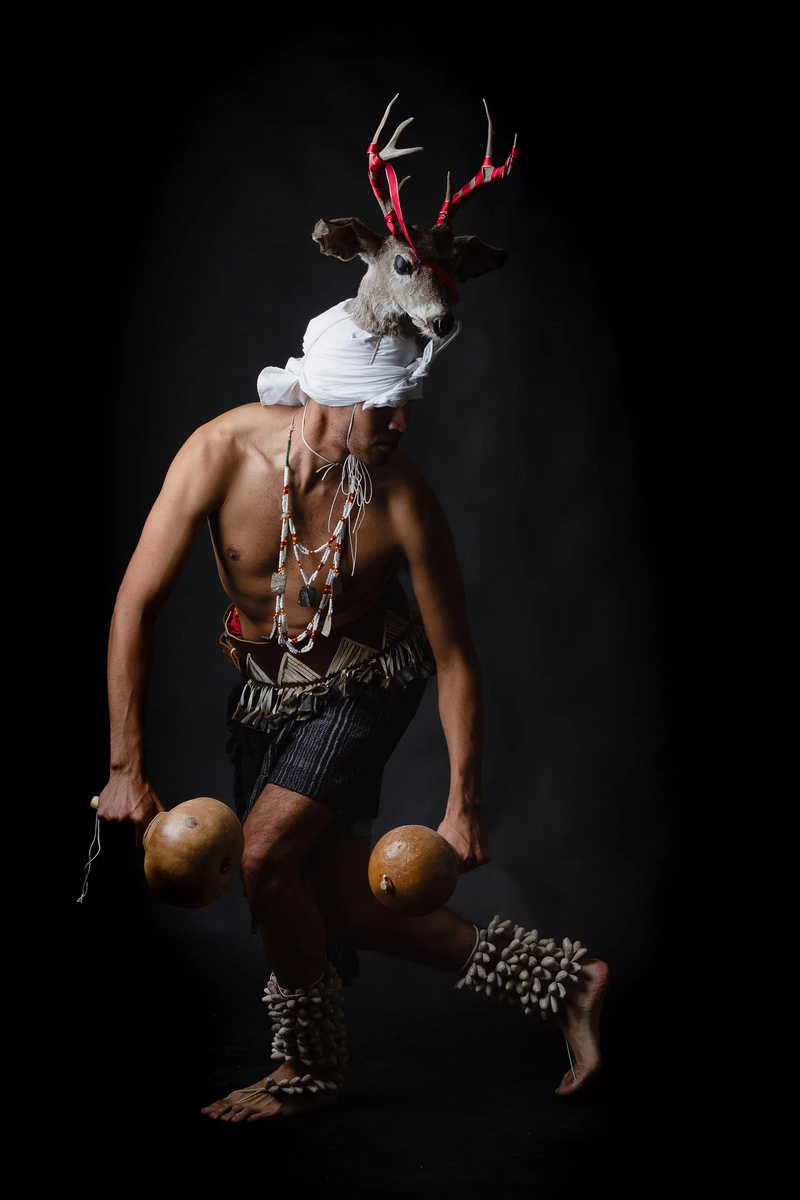
Foto: Alejandro Yanes, CC BY-SA 4.0, vía Wikimedia Commons
In 1969 they did the opposite. They put together a rock band whose members were all Native or Chicano — Pat on bass, his brother Lolly on guitar and vocals, Tony Bellamy and Peter DePoe — and called it Redbone. In Louisiana, "redbone" is the word for a mixed-race person.
They took the label and put it on the poster. They went on stage in traditional regalia, and the album covers did the same job. According to Pat Vegas, the person who pushed them to form an all-Native rock band was Jimi Hendrix.
The album was recorded between June and October 1973 and came out that November. It is called Wovoka, after the Paiute prophet who founded the Ghost Dance movement in 1889 — the movement that ended in the Wounded Knee massacre of 1890.
On that same record Redbone released "We Were All Wounded at Wounded Knee", about the massacre and about the occupation of that same place by Native activists a few months earlier. In the United States several stations banned it. In the Netherlands it went to number one.
The one that did get played in America was this one. The single came out on 1 November 1973, entered the chart on 12 January 1974 and reached number five on 13 April. That is why the song is dated 1974 although it was recorded in 1973: 1974 is the year it was heard.
No Native American band had ever climbed that high. And once the hit landed, the trade magazine Broadcasting described it as the band's "most commercially oriented and un-Indian effort". Before any of that, on 22 February 1974, Redbone had played this same song on the television show The Midnight Special, introduced by a traditional dance.
Musical characteristics
It is the same four chords from start to finish, never changing: E minor, A, D, B minor.
That is where the trick is. Home for this song is D major. But D is not at the start of the loop: it is third. Every time round, the music begins away from home, passes through home for a moment and leaves again. So you never hear a "here it starts": there is no point where the music sits down. The chord that acts as home is called the tonic.
The voice does the same thing: it comes in over that first chord, the E minor, without waiting for the D. And the chords themselves are loaded. Chord charts for this song write "D major seventh" and "B minor seventh": each chord gets an extra note that does not belong to it. That extra note is called the seventh, and it is what gives the song its soft 1970s colour, the sound of something that never quite closes.
Then there is the second explanation, which is industrial rather than musical. The album version runs 5:02 and starts slowly. For radio they made a shorter edit, 3:27, that opens with the band already at full speed. That is the one you know: the beginning was literally cut off.
On top of the chords there is a metallic, buzzing sound that is not an ordinary guitar. It is an electric sitar: a guitar with a special bridge that makes the strings buzz like the Indian instrument. Lolly Vegas plays it, and sings.
Underneath there are strings and an electric piano that the band did not play: a studio team added them, with Gene Page handling the orchestration and Joe Sample on piano. Everything added on top of what the band plays is the arrangement.
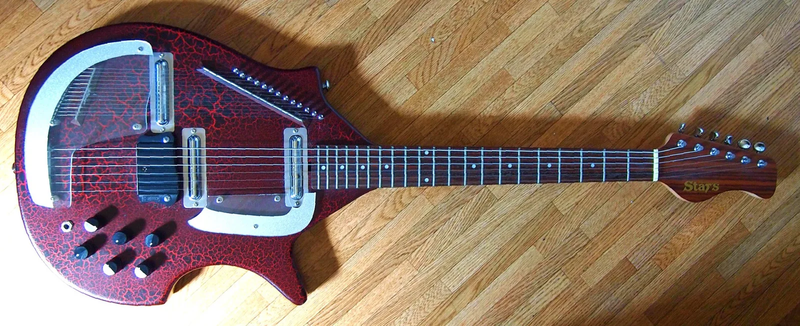
Foto: Shunichi Kouroki, CC BY 2.0, vía Wikimedia Commons
Hard facts: D major, 4/4, 107 beats per minute, 3:27 for the radio version and 5:02 for the album one. The form runs like this: intro, verse, chorus, verse, chorus, bridge, chorus, verse, intro, chorus. Look at the second to last link: the intro comes back near the end, just before the final chorus.
One warning if you go looking for the chords yourself: some transcriptions write G where this article writes E minor. The two chords share two notes, so in this song you can swap them without anything clashing.
Trivia and curiosities
- It had a different title first. The song circulated as a promo called "Hail", which is the shout that opens the recording. The chorus ate the title.
- The Vegas brothers spent most of the 1960s on stage under a name that hid them. An agent had told them audiences were not ready for two Mexican musicians playing surf, so they became the Vegas Brothers. It took them ten years to put their own story on the poster.
- In 1995 a German Eurodance project, Real McCoy, covered it and took it to number 19 in the United States and to number one on the dance club chart. Same four chords, a completely different decade and a completely different machine playing them.
- It became a hit again forty years later without a single note changing. A 2014 film put it on its hero's cassette, and in 2018 a Christmas advertising campaign took it to number one in French singles sales. The same 1973 recording.
Classroom activities
- Play: the whole loop is E minor, A, D, B minor. On ukulele, E minor and A come out straight away; D and B minor need more fingers, so share them out. The bass only needs the four root notes: E, A, D, B. The drums keep the same pattern the whole way through.
- Analyse: a closed question. Play the loop twice, first starting on E minor, as on the record, and then starting on D. Record both. Which of the two sounds like "this has just started"? Justify your answer by saying where D falls in each one.
- Sing: the chorus repeats the same line over and over, so it takes two minutes to learn by ear. Everyone sings the chorus; leave the verses to a small group. One practical warning: the first note of the melody is a D, and the chord underneath is E minor, which has no D in it. If singers cannot find it, ask whoever is playing the chord to add the seventh — E minor seventh.
- Create: take any four chords and arrange them so that the home chord is third, not first. Play that loop for a minute. It is the procedure of this song without the song.
Key vocabulary
- Tonic — tónica: el acorde que hace de casa
- Seventh — séptima: una nota añadida que no pertenece al acorde
- Electric sitar — sitar eléctrico
- Arrangement — arreglo: lo que se añade encima de lo que toca el grupo
- Form — forma: el orden de las secciones
Resources
In the Year 3 theory and history book — this song works for ¿Cuándo empieza una melodía a decir de dónde eres?, ¿Cómo sabes por dónde vas en una música que oyes por primera vez? and ¿Cómo se guarda algo que solo existe mientras suena?.
Official music video — animated, released in 2020. There was none in 1974.
Ukulele tutorial — TenThumbs Productions. Chord by chord first, then the strumming.
Guitar tutorial — Jason Read. Five minutes, no detours.
Bass tutorial — Matt LaBarber, with the tab on screen.
Drums, the score on screen — COPYDRUM. Not a lesson: the rhythm written out, scrolling with the music. There is no drum lesson for this song worth linking to.
The whole band at once — K-12 Modern Band. Chords on screen for guitar, ukulele, keyboard and bass, with the lyrics underneath.
The album version — 5:02. This is where the slow introduction lives, the one the radio edit removed. Compare it with the opening of the music video.
- Tab — the Songsterr button opens it with the tracks separated out: bass, drums, guitar and electric sitar.
Por dónde entrar
La has oído. Suena en Guardianes de la Galaxia (2014), en la cinta de casete que el protagonista lleva a todas partes, y en la cabecera de la serie F Is for Family entre 2015 y 2021.
Ahora haz una prueba: ponla y fíjate solo en el primer segundo. No suena a principio. Suena a que la canción ya estaba en marcha y alguien acaba de abrir la puerta.
Eso no es casualidad. Tiene dos explicaciones: una está en los acordes, y la otra es una decisión que tomó la discográfica.
Contexto histórico
En los años sesenta, dos hermanos de Coalinga (California) tocaban surf en los clubes de Los Ángeles. Se llamaban Pat y Lolly Vegas, y su familia era yaqui, shoshone y mexicana.
Los yaquis son un pueblo del noroeste de México y del sur de Arizona, con una música propia de sonajas y de cascabeles hechos con capullos secos.
Su representante les dijo que el mundo todavía no estaba preparado para un dúo de mexicanos tocando surf. Así que se anunciaban como los Vegas Brothers y no contaban de dónde venían.
Foto: Alejandro Yanes, CC BY-SA 4.0, vía Wikimedia Commons
En 1969 hicieron justo lo contrario. Montaron una banda de rock cuyos miembros eran todos nativos o chicanos —Pat al bajo, su hermano Lolly a la guitarra y la voz, Tony Bellamy y Peter DePoe— y la llamaron Redbone. En Luisiana, «redbone» es la palabra para una persona de raza mezclada.
Cogieron la etiqueta y la pusieron en el cartel. Salían al escenario con ropa tradicional, y las portadas de los discos iban por el mismo camino. Según cuenta Pat Vegas, quien les animó a montar una banda de rock íntegramente nativa fue Jimi Hendrix.
El disco se grabó entre junio y octubre de 1973 y salió en noviembre. Se llama Wovoka, por un profeta paiute que en 1889 fundó la Danza de los Espíritus, el movimiento que terminó en la matanza de Wounded Knee en 1890.
En ese mismo disco Redbone publicó «We Were All Wounded at Wounded Knee», sobre aquella matanza y sobre la ocupación de ese mismo lugar por activistas indios pocos meses antes. En Estados Unidos varias emisoras la prohibieron. En los Países Bajos llegó al número uno.
La que sí sonó en Estados Unidos fue esta. El single salió el 1 de noviembre de 1973, entró en la lista el 12 de enero de 1974 y llegó al número cinco el 13 de abril. Por eso la canción se conoce como de 1974 aunque esté grabada en 1973: 1974 es el año en que sonó.
Ninguna banda nativa americana había llegado tan alto. Y cuando llegó el éxito, la revista del sector Broadcasting lo describió como el trabajo «más orientado a lo comercial y menos indio» del grupo. Antes de eso, el 22 de febrero de 1974, Redbone había tocado esta misma canción en el programa de televisión The Midnight Special presentándola con una danza tradicional.
Cómo suena
Todo el rato son los mismos cuatro acordes, del principio al final, sin cambiar nunca: mi menor, la, re, si menor.
Y ahí está el truco. La casa de esta canción es re mayor. Pero el re no está al principio del bucle: está en tercer lugar. Cada vuelta empieza fuera de casa, pasa por casa un momento y se vuelve a ir enseguida. Por eso nunca oyes un «aquí empieza»: no hay un sitio donde la música se pare a descansar. Al acorde que hace de casa se le llama tónica.
La voz hace lo mismo: entra encima del primer acorde, el mi menor, sin esperar a que llegue el re. Y los propios acordes van cargados. En los cifrados aparecen «re séptima mayor» y «si menor séptima»: a cada acorde se le añade una nota que no le pertenece. A esa nota de más se le llama séptima, y es la que da a la canción ese color suave de los setenta, el de algo que no termina de cerrarse.
Y luego está la segunda explicación, que no es musical sino de fábrica. La versión del disco dura 5:02 y arranca despacio, con una introducción lenta. Para la radio hicieron una edición más corta, de 3:27, que empieza ya con el grupo a toda velocidad. Esa es la que conoces: a la canción le cortaron literalmente el principio.
Encima de los acordes hay un sonido metálico y zumbón que no es una guitarra normal. Es un sitar eléctrico: una guitarra con un puente especial que hace vibrar las cuerdas como el instrumento indio. Lo toca Lolly Vegas, el mismo que canta.
Al fondo hay cuerdas y un piano eléctrico que no tocó la banda: los puso un equipo de estudio, con Gene Page encargándose de la orquestación y Joe Sample al piano. A todo eso que se añade encima de lo que toca el grupo se le llama arreglo.
Foto: Shunichi Kouroki, CC BY 2.0, vía Wikimedia Commons
Datos duros: re mayor, 4/4, 107 pulsos por minuto, 3:27 en la versión de radio y 5:02 en la del disco. La forma va así: intro, estrofa, estribillo, estrofa, estribillo, puente, estribillo, estrofa, intro y estribillo. Fíjate en el penúltimo eslabón: el intro vuelve a aparecer casi al final, justo antes del último estribillo.
Un aviso por si buscas el cifrado por tu cuenta: en algunas transcripciones verás sol donde aquí pone mi menor. Los dos acordes comparten dos notas, así que en esta canción se pueden intercambiar sin que chirríe.
Curiosidades
- El título original era otro. La canción circuló primero como promoción con el nombre «Hail», que es el grito con el que arranca la grabación. El estribillo acabó comiéndose al título.
- Redbone no tuvo videoclip hasta 2020, cuarenta y seis años después. En 1974 una canción no necesitaba imágenes para ser un éxito; quien decidía era la radio.
- Dos canciones del mismo disco, el mismo año, suertes opuestas. «We Were All Wounded at Wounded Knee» se retiró de la edición estadounidense y varias emisoras la prohibieron, y fue número uno en los Países Bajos. Esta fue disco de oro en abril de 1974. Lo que cambió no fue la banda: fue de qué hablaba la letra.
- Volvió a ser un éxito cuarenta años después sin cambiar una sola nota. Una película de 2014 la metió en la cinta de casete de su protagonista, y en 2018 una campaña de Navidad en Francia la llevó al número uno de ventas de singles. La misma grabación de 1973.
Para hacer en clase
- Tocar: el bucle entero es mi menor, la, re, si menor. En ukelele, mi menor y la salen a la primera; re y si menor piden más dedos, así que repártelos. El bajo solo necesita las cuatro fundamentales: mi, la, re, si. La batería mantiene el mismo patrón de principio a fin.
- Analizar: pregunta cerrada. Tocad el bucle dos veces, primero empezando por mi menor, como está en el disco, y después empezando por re. Grabad las dos. ¿Cuál de las dos suena a «esto acaba de empezar»? Explicad la respuesta diciendo en qué posición cae el re en cada una.
- Cantar: el estribillo repite la misma frase una y otra vez, así que se aprende de oído en dos minutos. Cantadlo todos y dejad las estrofas a un grupo pequeño. Aviso práctico: la primera nota de la melodía es un re, y debajo suena mi menor, que no lleva re. Si cuesta encontrarla, que quien toque el acorde le añada la séptima: mi menor séptima.
- Crear: coged cuatro acordes cualesquiera y colocadlos de forma que el de casa no sea el primero, sino el tercero. Tocad ese bucle un minuto seguido. Es el procedimiento de esta canción sin la canción.
Vocabulario fundamental
- Tónica — El acorde que hace de casa. Aquí es re mayor, y el bucle lo coloca en tercer lugar en vez de al principio.
- Séptima — Una nota añadida a un acorde que no forma parte de él. Suena suave y deja la sensación de que la cosa no está cerrada.
- Sitar eléctrico — Una guitarra con un puente especial que hace vibrar las cuerdas como el instrumento indio.
- Arreglo — Lo que se añade encima de lo que toca el grupo. Aquí, las cuerdas y el piano eléctrico que pusieron músicos de estudio.
- Forma — El orden de las secciones de una canción. En esta, el intro reaparece casi al final.
Recursos
En el libro de teoría e historia de 3º — esta canción sirve para ¿Cuándo empieza una melodía a decir de dónde eres?, para ¿Cómo sabes por dónde vas en una música que oyes por primera vez? y para ¿Cómo se guarda algo que solo existe mientras suena?.
Videoclip oficial — animado, publicado en 2020. En 1974 no hubo ninguno.
Tutorial de ukelele — TenThumbs Productions. Va acorde por acorde y luego junta el rasgueo.
Tutorial de guitarra — Jason Read. Cinco minutos, sin rodeos.
Tutorial de bajo — Matt LaBarber, con la tablatura en pantalla.
Batería, la partitura en pantalla — COPYDRUM. No es una clase: es el ritmo escrito, que va avanzando con la música. No hay ninguna lección de batería de esta canción que merezca la pena enlazar.
Toda la banda a la vez — K-12 Modern Band. Los acordes en pantalla para guitarra, ukelele, teclado y bajo, con la letra debajo.
La versión del disco — 5:02. Aquí sí está la introducción lenta que la edición para radio quitó. Compárala con el principio del videoclip.
- Tablatura — el botón de Songsterr la abre con las pistas separadas: bajo, batería, guitarra y sitar eléctrico.
Why this song
The version you know is missing its beginning. That is not a figure of speech: the album cut opens with a slow introduction, and the radio edit cuts it off and drops you straight into the band at full speed.
You have heard it. It is on the cassette the hero carries around in Guardians of the Galaxy (2014), and it opened every episode of F Is for Family between 2015 and 2021.
Press play and listen to the first second only. It does not sound like a start. Part of that is the edit, and part of it is where the chords put you.
Historical context
In the 1960s two brothers from Coalinga, California, played surf music in Los Angeles clubs. Pat and Lolly Vegas came from a Yaqui, Shoshone and Mexican family.
The Yaqui are a people of north-western Mexico and southern Arizona, with a music of their own built on gourd rattles and on leg rattles made from dried cocoons.
Their agent told them the world was not ready for a duo of Mexican musicians playing surf. So they billed themselves as the Vegas Brothers and said nothing about where they came from.
Foto: Alejandro Yanes, CC BY-SA 4.0, vía Wikimedia Commons
In 1969 they did the opposite. They put together a rock band whose members were all Native or Chicano — Pat on bass, his brother Lolly on guitar and vocals, Tony Bellamy and Peter DePoe — and called it Redbone. In Louisiana, "redbone" is the word for a mixed-race person.
They took the label and put it on the poster. They went on stage in traditional regalia, and the album covers did the same job. According to Pat Vegas, the person who pushed them to form an all-Native rock band was Jimi Hendrix.
The album was recorded between June and October 1973 and came out that November. It is called Wovoka, after the Paiute prophet who founded the Ghost Dance movement in 1889 — the movement that ended in the Wounded Knee massacre of 1890.
On that same record Redbone released "We Were All Wounded at Wounded Knee", about the massacre and about the occupation of that same place by Native activists a few months earlier. In the United States several stations banned it. In the Netherlands it went to number one.
The one that did get played in America was this one. The single came out on 1 November 1973, entered the chart on 12 January 1974 and reached number five on 13 April. That is why the song is dated 1974 although it was recorded in 1973: 1974 is the year it was heard.
No Native American band had ever climbed that high. And once the hit landed, the trade magazine Broadcasting described it as the band's "most commercially oriented and un-Indian effort". Before any of that, on 22 February 1974, Redbone had played this same song on the television show The Midnight Special, introduced by a traditional dance.
Musical characteristics
It is the same four chords from start to finish, never changing: E minor, A, D, B minor.
That is where the trick is. Home for this song is D major. But D is not at the start of the loop: it is third. Every time round, the music begins away from home, passes through home for a moment and leaves again. So you never hear a "here it starts": there is no point where the music sits down. The chord that acts as home is called the tonic.
The voice does the same thing: it comes in over that first chord, the E minor, without waiting for the D. And the chords themselves are loaded. Chord charts for this song write "D major seventh" and "B minor seventh": each chord gets an extra note that does not belong to it. That extra note is called the seventh, and it is what gives the song its soft 1970s colour, the sound of something that never quite closes.
Then there is the second explanation, which is industrial rather than musical. The album version runs 5:02 and starts slowly. For radio they made a shorter edit, 3:27, that opens with the band already at full speed. That is the one you know: the beginning was literally cut off.
On top of the chords there is a metallic, buzzing sound that is not an ordinary guitar. It is an electric sitar: a guitar with a special bridge that makes the strings buzz like the Indian instrument. Lolly Vegas plays it, and sings.
Underneath there are strings and an electric piano that the band did not play: a studio team added them, with Gene Page handling the orchestration and Joe Sample on piano. Everything added on top of what the band plays is the arrangement.
Foto: Shunichi Kouroki, CC BY 2.0, vía Wikimedia Commons
Hard facts: D major, 4/4, 107 beats per minute, 3:27 for the radio version and 5:02 for the album one. The form runs like this: intro, verse, chorus, verse, chorus, bridge, chorus, verse, intro, chorus. Look at the second to last link: the intro comes back near the end, just before the final chorus.
One warning if you go looking for the chords yourself: some transcriptions write G where this article writes E minor. The two chords share two notes, so in this song you can swap them without anything clashing.
Trivia and curiosities
- It had a different title first. The song circulated as a promo called "Hail", which is the shout that opens the recording. The chorus ate the title.
- The Vegas brothers spent most of the 1960s on stage under a name that hid them. An agent had told them audiences were not ready for two Mexican musicians playing surf, so they became the Vegas Brothers. It took them ten years to put their own story on the poster.
- In 1995 a German Eurodance project, Real McCoy, covered it and took it to number 19 in the United States and to number one on the dance club chart. Same four chords, a completely different decade and a completely different machine playing them.
- It became a hit again forty years later without a single note changing. A 2014 film put it on its hero's cassette, and in 2018 a Christmas advertising campaign took it to number one in French singles sales. The same 1973 recording.
Classroom activities
- Play: the whole loop is E minor, A, D, B minor. On ukulele, E minor and A come out straight away; D and B minor need more fingers, so share them out. The bass only needs the four root notes: E, A, D, B. The drums keep the same pattern the whole way through.
- Analyse: a closed question. Play the loop twice, first starting on E minor, as on the record, and then starting on D. Record both. Which of the two sounds like "this has just started"? Justify your answer by saying where D falls in each one.
- Sing: the chorus repeats the same line over and over, so it takes two minutes to learn by ear. Everyone sings the chorus; leave the verses to a small group. One practical warning: the first note of the melody is a D, and the chord underneath is E minor, which has no D in it. If singers cannot find it, ask whoever is playing the chord to add the seventh — E minor seventh.
- Create: take any four chords and arrange them so that the home chord is third, not first. Play that loop for a minute. It is the procedure of this song without the song.
Key vocabulary
- Tonic — tónica: el acorde que hace de casa
- Seventh — séptima: una nota añadida que no pertenece al acorde
- Electric sitar — sitar eléctrico
- Arrangement — arreglo: lo que se añade encima de lo que toca el grupo
- Form — forma: el orden de las secciones
Resources
In the Year 3 theory and history book — this song works for ¿Cuándo empieza una melodía a decir de dónde eres?, ¿Cómo sabes por dónde vas en una música que oyes por primera vez? and ¿Cómo se guarda algo que solo existe mientras suena?.
Official music video — animated, released in 2020. There was none in 1974.
Ukulele tutorial — TenThumbs Productions. Chord by chord first, then the strumming.
Guitar tutorial — Jason Read. Five minutes, no detours.
Bass tutorial — Matt LaBarber, with the tab on screen.
Drums, the score on screen — COPYDRUM. Not a lesson: the rhythm written out, scrolling with the music. There is no drum lesson for this song worth linking to.
The whole band at once — K-12 Modern Band. Chords on screen for guitar, ukulele, keyboard and bass, with the lyrics underneath.
The album version — 5:02. This is where the slow introduction lives, the one the radio edit removed. Compare it with the opening of the music video.
- Tab — the Songsterr button opens it with the tracks separated out: bass, drums, guitar and electric sitar.