Contenidos
Birds of a Feather — Billie Eilish (2024)
Four chords that never change in three and a half minutes, and a voice recorded so close you can hear her breathe. The only thing moving here is how hard she pushes.

🏷️ Ficha musical
Why this song
The title is an English idiom: birds of a feather flock together. In Spanish you would say «Dios los cría y ellos se juntan». Eilish keeps only the first half and makes it a promise instead of a warning.
Now the part nobody notices: how little there is inside. Four chords, one per bar, then back to the start. They do not change in the verse, in the chorus, or at the end.
So here is the question to come in with. If the harmony never moves, what is getting you to the last second?
Historical context
Billie Eilish and her brother Finneas O'Connell have been making records at home since 2015. Happier Than Ever (2021) was recorded in the basement of Finneas's Los Angeles house, and Hit Me Hard and Soft (2024) came out of the same place: his home studio, him producing, her singing.
That shapes the sound before anyone decides anything. In a home studio you do not put in a huge drum kit or a brass section. You put in a microphone, a keyboard and a computer. Critics call this record bedroom pop for exactly that reason.
The song was started on 16 February 2023 and was not finished until January of the following year. Eleven months for four chords. They rewrote the whole chorus, and at one point they considered leaving it off the album.
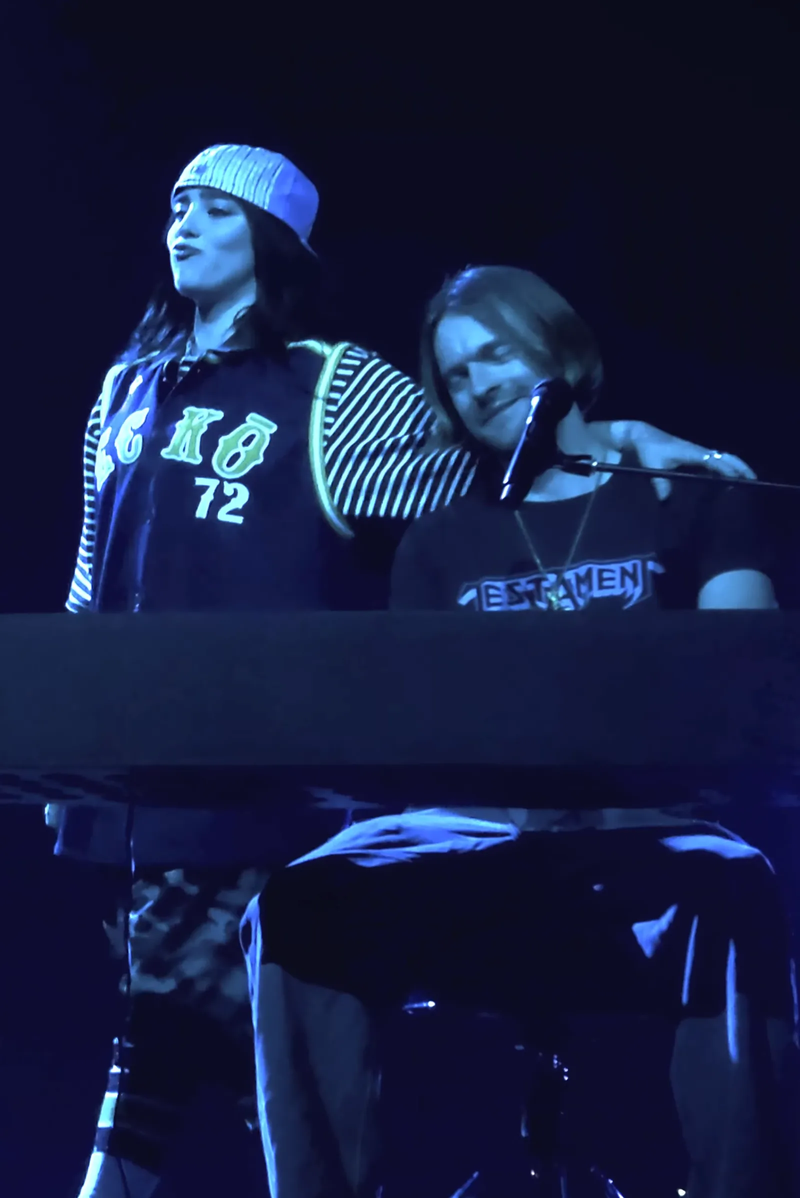
Foto: the CwE, CC BY 3.0, vía Wikimedia Commons
It came out on 17 May 2024 inside the album and was released as a single on 2 July. It went to number one globally and became the most-streamed song of 2024 on Spotify.
Musical characteristics
The turn of chords that keeps coming back — its chord progression — is D – B minor – E minor – A. Four bars. It repeats through the verse, through "birds of a feather", through "I don't know what I'm crying for" and through "I'll love you 'til the day that I die". It never leaves.
Which means the harmony cannot tell you where the chorus is. To find it you have to follow the words and the melody, not the chords.
Now listen to how empty everything else is. There is no drum kit hammering the backbeat: there is a soft kick and a bass holding it up. When few things sound at once and a lot of room is left over, you are talking about texture, and here it is deliberately thin.
The voice fills that gap. You hear the air before each line and the consonants very sharply: that is what happens when the mic is centimetres away and you sing quietly. It is how Eilish sings across the whole record, and it is why it sounds like she is telling you something in your ear.
Then, at the end, she shouts. It is the loudest high note she has recorded in her career, and it works because you have spent three minutes hearing her almost whisper. Singing that loud up there without the voice breaking is called belting. What changes from start to finish is not the harmony: it is the dynamics, how loud or soft each moment is.
One note for anyone playing it: D, E minor and A are open chords, but B minor needs a barre. Put a capo on the 2nd fret and the loop becomes C – A minor – D minor – G, with no hard shape left in it.
Hard facts: D major, 4/4, 105 BPM, 3:30. The form is verse and chorus three times, plus an instrumental coda.
Trivia and curiosities
- Eleven months for a four-chord song. Finneas puts it like this: "we overthought this sort of simple song so hard; we kept getting lost in the maze." Simple to play and simple to write are not the same thing.
- At one point they thought about cutting it from the album. Billie: "I thought this was my flop song." It became the most-streamed song in the world that year. The people making the music do not know what will happen to it.
- The second verse hides a vocal clip lifted from "Getting Older", off their previous album, from 2021. A sample of themselves, buried where almost nobody goes looking.
- The final belt went one note higher by accident. She was aiming for the second-to-last note and, mid-take, decided to push one more. The most remembered moment of the song was improvised on the spot.
- Billie and Finneas do not agree on where the chorus is. He says "birds of a feather" is the pre-chorus and the chorus starts at "I don't know what I'm crying for". She hears it differently. Formal analysis is an interpretation, not a fact printed on the song.
Classroom activities
- Play: the loop D – Bm – Em – A, four bars, round and round. On guitar, capo 2 and you play C – Am – Dm – G. The bass only needs the four roots: D, B, E, A.
- Sing: the verse sits low and is nearly spoken. It is one of the few current songs a whole class can sing without straining. Do not attempt the final belt as a group.
- Analyse: a closed question. Play the song and mark the second where each section starts. Then justify what evidence you used — because the chords cannot help you, they are always the same four.
- Create: take any four chords and write one minute of music in which the only thing that changes is the dynamics, from whisper to shout, without touching the harmony. Steal the procedure, not the song.
Key vocabulary
- Chord progression — progresión de acordes: la vuelta de acordes que se repite
- Texture — textura: cuántas cosas suenan a la vez
- Dynamics — dinámica: lo fuerte o flojo que suena cada momento
- Belting — cantar fuerte en la zona aguda con voz de pecho
- Sample — un trozo de una grabación reutilizado dentro de otra
Resources
In Year 3 — this song is also used in the units ¿Cuánto cuesta una canción cuando hay que copiarla a mano?, ¿Cómo se guarda algo que solo existe mientras suena?, from the theory and history book.
Where it is explained — this song is studied in ¿Por qué las canciones ya no te hacen esperar?, from the modern music history book.
Official music video
Guitar tutorial — guitarsimple, in Spanish. Three ways to play it, with chords, arpeggios and tab on screen.
Piano tutorial — Bitesize Piano. Chords and accompaniment rather than single notes: this is the one that shows you the loop.
Bass tutorial — RezaBass, with tab on screen and standard tuning.
Drum tutorial — Play Music Melbourne. Eleven minutes, with a simple and an advanced version of the same pattern.
Both writers explaining the song — "Story of My Song", on Billie Eilish's own channel. Nearly all the trivia above comes from here.
- Modern band chart (Music Will) — https://jamzone.musicwill.org/songs/birds-of-a-feather
- Tab — the button opens it in Songsterr
- Images — Billie Eilish in Inglewood, December 2024. Photos: the CwE, CC BY 3.0, via Wikimedia Commons
Por dónde entrar
La oíste en la clausura de los Juegos de París, en agosto de 2024, cuando la bandera olímpica pasaba a Los Ángeles. Y la has oído en el móvil, en el gimnasio y en cinco anuncios: fue la canción más escuchada del año en Spotify.
Lo que casi nadie nota es lo poco que hay dentro. Cuatro acordes, uno por compás, y vuelta a empezar. No cambian en la estrofa, ni en el estribillo, ni al final.
Así que la pregunta con la que entrar es esta: si la armonía no se mueve nunca, ¿qué es lo que te hace llegar al final?
Contexto histórico
Billie Eilish y su hermano Finneas O'Connell llevan haciendo discos en casa desde 2015. Happier Than Ever (2021) se grabó en el sótano de la casa de Finneas en Los Ángeles, y Hit Me Hard and Soft (2024) salió del mismo sitio: su estudio doméstico, él a la producción y ella cantando.
Eso condiciona el sonido antes de que nadie decida nada. En un estudio de casa no metes una batería atronadora ni una sección de metales: metes un micro, un teclado y un ordenador. La crítica llama a este disco bedroom pop precisamente por eso.
La canción empezó el 16 de febrero de 2023 y no estuvo terminada hasta enero del año siguiente. Once meses para cuatro acordes. Reescribieron el estribillo entero, y hubo un momento en que se plantearon dejarla fuera del disco.
Foto: the CwE, CC BY 3.0, vía Wikimedia Commons
Salió el 17 de mayo de 2024 dentro del álbum y se publicó como single el 2 de julio. Acabó siendo número uno global y la canción más escuchada de 2024 en Spotify.
Cómo suena
La vuelta de acordes que se repite —su progresión de acordes— es Re – Si menor – Mi menor – La. Cuatro compases. Se repite entera en la estrofa, en el «birds of a feather», en el «I don't know what I'm crying for» y en el «I'll love you 'til the day that I die». Nunca se sale de ahí.
Eso significa que la armonía no te puede decir dónde está el estribillo. Si quieres encontrarlo, tienes que fijarte en la letra y en la melodía, no en los acordes.
Fíjate ahora en lo vacío que está el resto. No hay una batería que marque el golpe fuerte: hay un bombo blando y un bajo que sostiene. Cuando suenan pocas cosas a la vez y queda mucho sitio libre, se está hablando de la textura, y aquí es deliberadamente escasa.
Ese hueco lo ocupa la voz. Se le oye el aire antes de cada frase y las consonantes muy definidas: es lo que pasa cuando el micro está a pocos centímetros y cantas bajito. Es la manera de cantar de Eilish en todo el disco, y por eso suena como si te lo contara al oído.
Y entonces, al final, grita. Es el agudo más fuerte que ha grabado en su carrera, y funciona porque llevas tres minutos oyéndola casi susurrar. Cantar así de fuerte arriba sin que la voz se rompa se llama belting. Lo que cambia de principio a fin no es la armonía: es la dinámica, lo fuerte o flojo que suena cada momento.
Una nota para quien la vaya a tocar: Re, Mi menor y La salen con acordes abiertos, pero Si menor pide cejilla. Con la cejilla en el traste 2 el bucle se convierte en Do – La menor – Re menor – Sol, y ya no hay ninguna postura difícil.
Datos duros: Re mayor, 4/4, 105 BPM, 3:30. La forma es estrofa y estribillo tres veces, más una coda instrumental.
Curiosidades
- Once meses para una canción de cuatro acordes. Finneas lo resume así: «le dimos demasiadas vueltas a una canción sencilla; nos perdimos en el laberinto». Sencillo de tocar y sencillo de escribir no son lo mismo.
- Hubo un momento en que pensaron dejarla fuera del disco. Billie: «creía que era mi canción fracasada». Fue la más escuchada del mundo ese año. Quien hace la música no sabe lo que va a pasar con ella.
- En la segunda estrofa hay un fragmento de voz sacado de «Getting Older», del disco anterior, de 2021. Un sample de sí mismos, escondido donde casi nadie lo busca.
- El grito final subió una nota por accidente. Ella apuntaba al penúltimo sonido y, ya cantando, decidió tirar uno más arriba. El momento más recordado de la canción se improvisó en la toma.
- Billie y Finneas no se ponen de acuerdo en dónde está el estribillo. Él dice que «birds of a feather» es el pre-estribillo y que el estribillo empieza en «I don't know what I'm crying for». Ella no lo ve igual. El análisis formal es una interpretación, no un dato impreso en la canción.
Para hacer en clase
- Tocar: el bucle Re – Si menor – Mi menor – La, cuatro compases, en bucle cerrado. En guitarra, cejilla al 2 y tocas Do – Lam – Rem – Sol. El bajo solo necesita las cuatro fundamentales: re, si, mi, la.
- Cantar: la estrofa está muy grave y casi hablada. Es de las pocas canciones actuales que un grupo entero puede cantar sin forzar. El grito del final no se intenta en grupo.
- Analizar: pregunta cerrada. Poned la canción y marcad en qué segundo empieza cada sección. Después justificad con qué prueba lo habéis decidido — porque con los acordes no se puede, son siempre los mismos cuatro.
- Crear: coged cuatro acordes cualesquiera y escribid un minuto de música en el que lo único que cambie sea la dinámica: de susurro a grito, sin tocar la armonía. Se roba el procedimiento, no la canción.
Vocabulario fundamental
- Progresión de acordes — La vuelta de acordes que se repite. Aquí son cuatro y no cambian en toda la canción.
- Textura — Cuántas cosas suenan a la vez y cuánto sitio libre queda. Aquí hay muy poco sonando, y por eso la voz se oye tan de cerca.
- Dinámica — Lo fuerte o flojo que suena cada momento. Es lo único que se mueve de verdad en esta canción.
- Belting — Cantar fuerte en la zona aguda con voz de pecho, sin que se rompa. Es lo que hace Eilish al final.
- Sample — Un trozo de una grabación que ya existía, reutilizado dentro de otra.
Recursos
En 3º de ESO — también se usa en las unidades ¿Cuánto cuesta una canción cuando hay que copiarla a mano?, ¿Cómo se guarda algo que solo existe mientras suena?, del libro de teoría e historia.
Dónde se explica — esta canción se estudia en ¿Por qué las canciones ya no te hacen esperar?, del libro de historia de la música moderna.
Videoclip oficial
Tutorial de guitarra — guitarsimple, en castellano. Enseña tres formas de tocarla, con acordes, arpegios y tablatura en pantalla.
Tutorial de piano — Bitesize Piano. Va por acordes y acompañamiento, no por notas sueltas: es el que sirve para entender el bucle.
Tutorial de bajo — RezaBass, con la tablatura en pantalla y afinación estándar.
Tutorial de batería — Play Music Melbourne. Once minutos, con una versión sencilla y otra avanzada del mismo patrón.
Los dos autores explicando la canción — «Story of My Song», en el canal de Billie Eilish. De aquí salen casi todas las curiosidades de arriba.
- Chart de banda (Music Will) — https://jamzone.musicwill.org/songs/birds-of-a-feather
- Tablatura — el botón la abre en Songsterr
- Imágenes — Billie Eilish en Inglewood, diciembre de 2024. Fotos: the CwE, CC BY 3.0, vía Wikimedia Commons
Why this song
The title is an English idiom: birds of a feather flock together. In Spanish you would say «Dios los cría y ellos se juntan». Eilish keeps only the first half and makes it a promise instead of a warning.
Now the part nobody notices: how little there is inside. Four chords, one per bar, then back to the start. They do not change in the verse, in the chorus, or at the end.
So here is the question to come in with. If the harmony never moves, what is getting you to the last second?
Historical context
Billie Eilish and her brother Finneas O'Connell have been making records at home since 2015. Happier Than Ever (2021) was recorded in the basement of Finneas's Los Angeles house, and Hit Me Hard and Soft (2024) came out of the same place: his home studio, him producing, her singing.
That shapes the sound before anyone decides anything. In a home studio you do not put in a huge drum kit or a brass section. You put in a microphone, a keyboard and a computer. Critics call this record bedroom pop for exactly that reason.
The song was started on 16 February 2023 and was not finished until January of the following year. Eleven months for four chords. They rewrote the whole chorus, and at one point they considered leaving it off the album.
Foto: the CwE, CC BY 3.0, vía Wikimedia Commons
It came out on 17 May 2024 inside the album and was released as a single on 2 July. It went to number one globally and became the most-streamed song of 2024 on Spotify.
Musical characteristics
The turn of chords that keeps coming back — its chord progression — is D – B minor – E minor – A. Four bars. It repeats through the verse, through "birds of a feather", through "I don't know what I'm crying for" and through "I'll love you 'til the day that I die". It never leaves.
Which means the harmony cannot tell you where the chorus is. To find it you have to follow the words and the melody, not the chords.
Now listen to how empty everything else is. There is no drum kit hammering the backbeat: there is a soft kick and a bass holding it up. When few things sound at once and a lot of room is left over, you are talking about texture, and here it is deliberately thin.
The voice fills that gap. You hear the air before each line and the consonants very sharply: that is what happens when the mic is centimetres away and you sing quietly. It is how Eilish sings across the whole record, and it is why it sounds like she is telling you something in your ear.
Then, at the end, she shouts. It is the loudest high note she has recorded in her career, and it works because you have spent three minutes hearing her almost whisper. Singing that loud up there without the voice breaking is called belting. What changes from start to finish is not the harmony: it is the dynamics, how loud or soft each moment is.
One note for anyone playing it: D, E minor and A are open chords, but B minor needs a barre. Put a capo on the 2nd fret and the loop becomes C – A minor – D minor – G, with no hard shape left in it.
Hard facts: D major, 4/4, 105 BPM, 3:30. The form is verse and chorus three times, plus an instrumental coda.
Trivia and curiosities
- Eleven months for a four-chord song. Finneas puts it like this: "we overthought this sort of simple song so hard; we kept getting lost in the maze." Simple to play and simple to write are not the same thing.
- At one point they thought about cutting it from the album. Billie: "I thought this was my flop song." It became the most-streamed song in the world that year. The people making the music do not know what will happen to it.
- The second verse hides a vocal clip lifted from "Getting Older", off their previous album, from 2021. A sample of themselves, buried where almost nobody goes looking.
- The final belt went one note higher by accident. She was aiming for the second-to-last note and, mid-take, decided to push one more. The most remembered moment of the song was improvised on the spot.
- Billie and Finneas do not agree on where the chorus is. He says "birds of a feather" is the pre-chorus and the chorus starts at "I don't know what I'm crying for". She hears it differently. Formal analysis is an interpretation, not a fact printed on the song.
Classroom activities
- Play: the loop D – Bm – Em – A, four bars, round and round. On guitar, capo 2 and you play C – Am – Dm – G. The bass only needs the four roots: D, B, E, A.
- Sing: the verse sits low and is nearly spoken. It is one of the few current songs a whole class can sing without straining. Do not attempt the final belt as a group.
- Analyse: a closed question. Play the song and mark the second where each section starts. Then justify what evidence you used — because the chords cannot help you, they are always the same four.
- Create: take any four chords and write one minute of music in which the only thing that changes is the dynamics, from whisper to shout, without touching the harmony. Steal the procedure, not the song.
Key vocabulary
- Chord progression — progresión de acordes: la vuelta de acordes que se repite
- Texture — textura: cuántas cosas suenan a la vez
- Dynamics — dinámica: lo fuerte o flojo que suena cada momento
- Belting — cantar fuerte en la zona aguda con voz de pecho
- Sample — un trozo de una grabación reutilizado dentro de otra
Resources
In Year 3 — this song is also used in the units ¿Cuánto cuesta una canción cuando hay que copiarla a mano?, ¿Cómo se guarda algo que solo existe mientras suena?, from the theory and history book.
Where it is explained — this song is studied in ¿Por qué las canciones ya no te hacen esperar?, from the modern music history book.
Official music video
Guitar tutorial — guitarsimple, in Spanish. Three ways to play it, with chords, arpeggios and tab on screen.
Piano tutorial — Bitesize Piano. Chords and accompaniment rather than single notes: this is the one that shows you the loop.
Bass tutorial — RezaBass, with tab on screen and standard tuning.
Drum tutorial — Play Music Melbourne. Eleven minutes, with a simple and an advanced version of the same pattern.
Both writers explaining the song — "Story of My Song", on Billie Eilish's own channel. Nearly all the trivia above comes from here.
- Modern band chart (Music Will) — https://jamzone.musicwill.org/songs/birds-of-a-feather
- Tab — the button opens it in Songsterr
- Images — Billie Eilish in Inglewood, December 2024. Photos: the CwE, CC BY 3.0, via Wikimedia Commons