Contenidos
Seven Nation Army — The White Stripes (2003)
Seven notes that sound like a bass and are not. Half the world's stadiums sing them without knowing whose they are, and with them the class band closes the first term.
🏷️ Ficha musical
Why it's in this book
This is December's anchor song and the one you record at the end of the first term. It opens the family of songs where the riff, not the chords, is in charge: Smoke on the Water, Oye como va and, in June, Billie Jean come after it. In the room with no instruments you sing it all the way through, with the riff in your voice and the bass drum in your foot; with ukuleles, E minor is enough for the riff, plus C and D to accompany; in the music room the bass carries the riff, the drums hold the beat and the electric guitar takes its first improvised solo on the E minor pentatonic. It used to be played in Year 9 too; now it is yours alone, because here the band hour counts for more and there is room for a solo. The second voice is a stadium's: everyone sings the riff in unison.
Why this song
If you have ever been to a football match, you already know it. "Oh, oh-oh-oh-oh, oh, oh". The crowd sings those seven notes before a goal, after a goal and when their team is losing.
Hardly anyone singing them knows they come from a 2003 rock song. And hardly anyone who knows the song knows that what you hear at the start is not a bass guitar.
Historical context
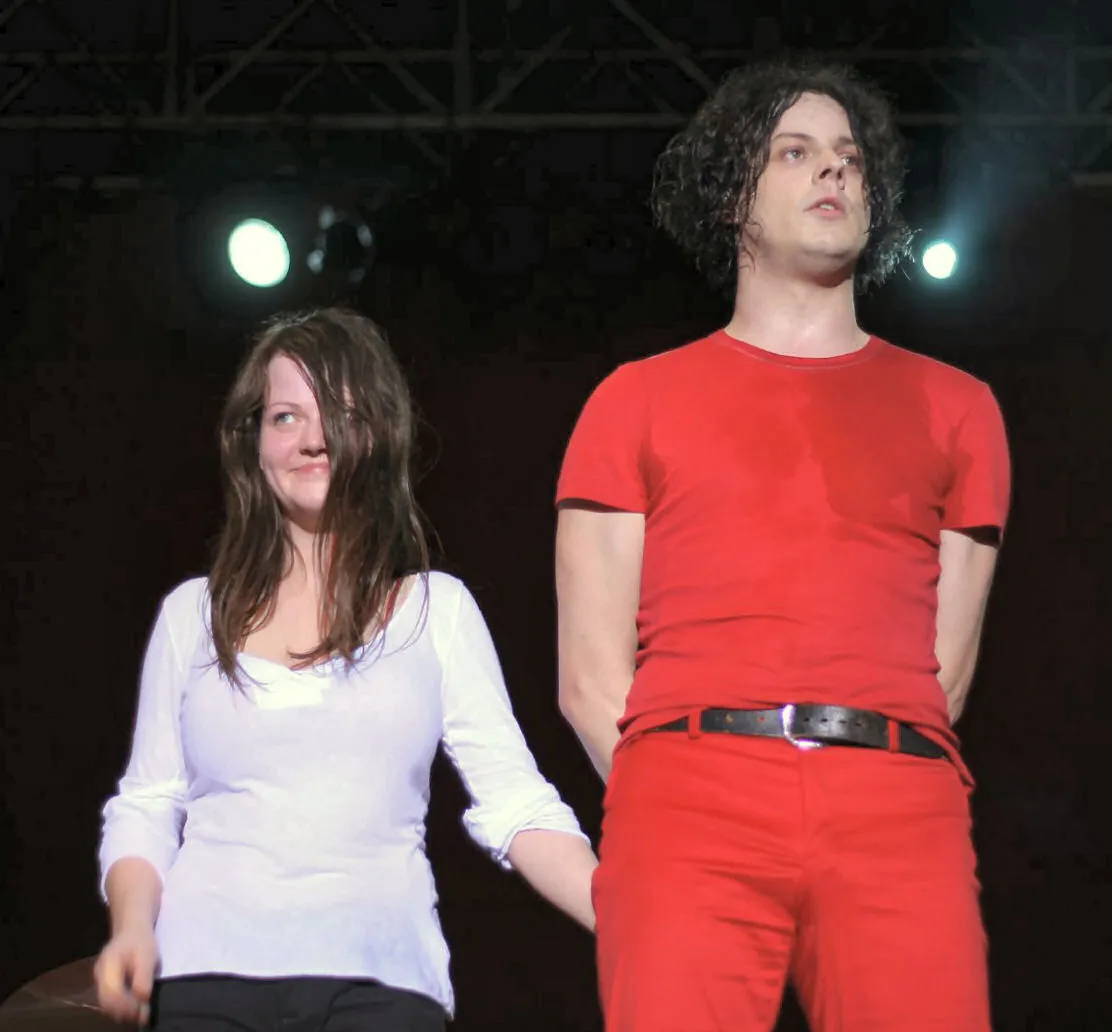
The White Stripes were two people: Jack White on vocals and guitar, and Meg White on drums. They had no bass player. At a time when rock records were stacked with layer upon layer of sound, they played almost bare.
Jack came up with the riff in Melbourne, Australia, in January 2002, during a soundcheck. He liked it so much that he saved it for something special: he wanted to use it if he was ever asked to write a James Bond theme. Since that seemed unlikely, he used it in a band song instead. Five years later, as it happens, he did get to write a Bond song.
They recorded it in London, at Toe Rag Studios. Jack called it a "little experiment": he wanted a song that worked without a sung chorus.
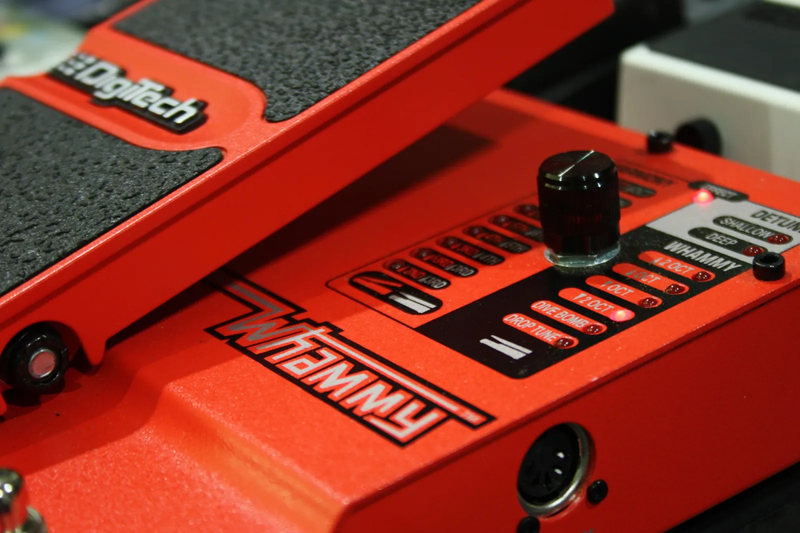
Foto: Jason, CC BY 2.0, vía Wikimedia Commons
This is the trick. It is a DigiTech Whammy, the same kind of effects pedal Jack used. It shifts the pitch of whatever the guitar plays. Set one octave down, the guitar sounds as low as a bass. That is why the band did not need a bass player.
Football came on its own. In October 2003, at a Champions League match in Milan, fans of the Belgian club Brugge started singing the riff. Roma fans copied it, then Italy's national team supporters, and when Italy won the 2006 World Cup the "po po po po po" rang through the streets of Rome. Jack put it like this: nothing is more beautiful in music than when people take a melody and turn it into folk music.
Musical characteristics
A riff that repeats. A riff is a short, easy-to-recognise phrase that repeats many times and holds up the whole song. This one has seven notes: one long and six short. First it goes up, then it steps down. Because it repeats non-stop, it is also an ostinato: a figure that keeps insisting.
A fake bass. Listen to how low the riff sounds. It seems like a bass guitar, but it is a guitar through the Whammy pedal. For the class band this is good news: the riff fits on a real bass, and on the keyboard with the left hand.
Drums like a heartbeat. Meg plays one bass-drum hit per beat, like a heart. In the verses the drums stay on that heartbeat and add almost nothing. The tension grows because the loud part is saved for later.
A chorus with no words. When the song explodes, Jack does not sing: he plays the riff on distorted guitar while Meg hits the cymbals. The "chorus" is the riff at full volume. That is why stadiums sing it with "oh": it is a melody with no lyrics.
Two new chords. Before each explosion there is a passage that climbs to two chords, G and A. It is the only moment the song leaves E.
Where the solo goes. The riff is built from notes of the E minor pentatonic scale: E, G, A, B, D. With those five notes, any phrase fits on top. That is improvising with a safety net: there are no wrong notes.
Hard facts: E minor, 4/4, 124 beats per minute (the published sheet music says 120), 3:52. The form: intro with the riff, verse, pre-chorus, instrumental blast, verse, pre-chorus, guitar solo, final blast.
Guided listening
Play the music video. At first you only hear the low riff and the bass drum. Count the notes of the riff on your fingers: you should get seven.
When the voice comes in, listen to the drums. Has anything changed? Listen for whether it is the same heartbeat or whether a new hit has joined in.
When the voice climbs and the chords change, get ready. The blast is coming: distorted guitar and cymbals. Check that what you hear is the riff again, now high and loud.
In the guitar solo, listen to how Jack bends and twists the notes. Then compare: what does the solo have in common with the riff?
Trivia and curiosities
- The title comes from a childhood mistake. As a boy in Detroit, Jack White heard "Seven Nation Army" when people said "Salvation Army". It was a placeholder title, but it stuck.
- In the music video, Meg had a broken left wrist. They placed a tom in front of her to hide the cast.
- The record label did not want it as the album's first single. Jack insisted. It won a Grammy.
- The riff works in a stadium because anyone can sing it: it stays within one octave and moves mostly by step. A hard melody would never have been adopted by a football crowd.
Classroom activities
- Sing the riff. Room with no instruments: the whole class sings the riff on "oh" and taps the bass drum with their feet, one hit per beat. Half the class sings, the other half keeps the heartbeat. Then swap.
- Play the riff. Bass and keyboard (left hand): E, E, G, E, D, C, B. Ukulele: the note E on the first string, or an E minor chord on every beat. Whoever accompanies with chords plays C and D in the pre-chorus of the class version.
- First solo. Electric guitar and keyboard improvise two bars on the E minor pentatonic while everyone else keeps the riff going. Take turns, without stopping the music.
- Analyse. Does this song have a chorus? Answer in one sentence and back it up with what you heard: where there is singing, where there is not, and what takes its place.
Key vocabulary
- Riff — riff: frase corta que se repite y sostiene la canción
- Ostinato — ostinato
- Pentatonic scale — escala pentatónica: escala de cinco notas
- Improvising — improvisar
- Unison — unísono: todos cantan la misma melodía a la misma altura
Resources
Official music video — A tunnel of triangles that never ends. Notice how the video speeds up as the music builds.
Guitar tutorial — JustinGuitar. The riff in an easy version, explained slowly.
Ukulele tutorial — Ukulele Cheats. To play the riff and the chords along with the recording.
Piano tutorial — PHianonize. An easy keyboard version.
Drum tutorial — LearnSomeDrums. An easy lesson, made for beginners.
Bass tutorial — Andy Guitar. Made for people picking up a bass for the first time.
- Harmonic analysis — Hooktheory, section by section: https://www.hooktheory.com/theorytab/view/the-white-stripes/seven-nation-army
Por qué está en este libro
Es la canción ancla de diciembre y la que se graba al final del primer trimestre. Abre la familia de canciones en las que manda el riff, no los acordes: después vendrán Smoke on the Water, Oye como va y, en junio, Billie Jean. En el aula sin instrumentos la cantáis entera con el riff en la voz y el bombo en el pie; con ukelele basta con mi menor para el riff y do y re para acompañar; en el aula de música el bajo lleva el riff, la batería sostiene el pulso y la guitarra eléctrica se estrena improvisando con la pentatónica de mi menor. Antes se tocaba también en 3º; ahora es solo vuestra porque aquí la hora de banda pesa más y hay sitio para el solo. La segunda voz es la de un estadio: todo el mundo canta el riff al unísono.
Por dónde entrar
Si has ido a un partido de fútbol, ya te la sabes. «Oh, oh-oh-oh-oh, oh, oh». Esas siete notas las canta la grada antes de un gol, después de un gol y cuando el equipo pierde.
Casi nadie de los que las cantan sabe que vienen de una canción de rock de 2003. Y casi nadie de los que conocen la canción sabe que lo que suena al principio no es un bajo.
Contexto histórico
The White Stripes eran dos personas: Jack White, en la voz y la guitarra, y Meg White, en la batería. No tenían bajista. En una época en la que el rock llenaba los discos de capas y capas de sonido, ellos tocaban casi desnudos.
Jack inventó el riff en Melbourne (Australia), en enero de 2002, durante una prueba de sonido. Le gustó tanto que lo guardó para una ocasión especial: quería usarlo si algún día le encargaban la canción de una película de James Bond. Como eso no parecía probable, lo metió en una canción de la banda. Cinco años después, por cierto, sí le encargaron una canción de Bond.
La grabaron en Londres, en el estudio Toe Rag. Jack dijo que era un «pequeño experimento»: quería una canción que funcionara sin estribillo cantado.
Foto: Jason, CC BY 2.0, vía Wikimedia Commons
Este es el truco. Es un pedal DigiTech Whammy, el mismo modelo de efecto que usó Jack. Cambia la altura de lo que toca la guitarra. Puesto una octava por debajo, la guitarra suena tan grave como un bajo. Por eso la banda no necesitaba bajista.
El fútbol llegó solo. En octubre de 2003, en un partido de la Champions en Milán, los aficionados del Club Brujas belga empezaron a cantar el riff. Lo copiaron los de la Roma, después la selección italiana, y en el Mundial de 2006 Italia ganó con el «po po po po po» sonando en las calles de Roma. Jack lo contó así: no hay nada más bonito en la música que cuando la gente se queda con una melodía y la convierte en música popular.
Cómo suena
Un riff que se repite. Un riff es una frase corta, fácil de reconocer, que se repite muchas veces y sostiene toda la canción. Este tiene siete notas: una larga y seis cortas. Primero sube, después baja paso a paso. Como se repite sin parar, también es un ostinato: una figura que insiste.
Un falso bajo. Escucha qué grave suena el riff. Parece un bajo eléctrico, pero es una guitarra con el pedal Whammy. Para la banda de clase es una buena noticia: el riff cabe en un bajo de verdad, y en el teclado con la mano izquierda.
Una batería que late. Meg toca un golpe de bombo por pulso, como un corazón. En las estrofas la batería se queda en ese latido y casi no adorna nada. La tensión crece porque se guarda lo fuerte para después.
El estribillo sin palabras. Cuando la canción explota, Jack no canta: toca el riff con la guitarra distorsionada y Meg golpea los platos. El «estribillo» es el riff a todo volumen. Por eso el estadio lo canta con «oh»: es una melodía sin letra.
Dos acordes nuevos. Antes de cada explosión hay un pasaje que sube a dos acordes, sol y la. Es el único momento en el que la canción sale de mi.
Dónde va el solo. El riff está hecho con notas de la escala pentatónica de mi menor: mi, sol, la, si, re. Con esas cinco notas cualquier frase encaja encima. Eso es improvisar con red: no hay nota mala.
Datos duros: mi menor, 4/4, 124 pulsos por minuto (la partitura publicada dice 120), 3:52. La forma: intro con el riff, estrofa, preestribillo, estallido instrumental, estrofa, preestribillo, solo de guitarra, estallido final.
Escucha guiada
Pon el videoclip. Al principio solo suena el riff grave y el bombo. Cuenta las notas del riff con los dedos: tienen que salirte siete.
Cuando entra la voz, fíjate en la batería. ¿Ha cambiado algo? Escucha si sigue el mismo latido o si se ha sumado algún golpe nuevo.
Cuando la voz sube y cambian los acordes, prepárate. Viene el estallido: guitarra distorsionada y platos. Comprueba que lo que suena es otra vez el riff, ahora agudo y fuerte.
En el solo de guitarra, escucha cómo Jack retuerce las notas. Después compara: ¿qué tiene en común el solo con el riff?
Curiosidades
- El título viene de un error de niño. Jack White, de pequeño en Detroit, entendía «Seven Nation Army» cuando la gente decía «Salvation Army», el Ejército de Salvación. Era un título provisional, pero se quedó.
- En el videoclip, Meg tenía la muñeca izquierda rota. Colocaron un tom delante para taparle la escayola.
- La discográfica no quería que fuera el primer sencillo del disco. Jack insistió. Ganó un Grammy.
- El riff funciona en un estadio porque cualquiera puede cantarlo: está dentro de una octava y casi todo va por grados vecinos. Una melodía difícil no la habría adoptado una grada.
Para hacer en clase
- Cantar el riff. Aula sin instrumentos: toda la clase canta el riff con «oh» y marca el bombo con el pie, un golpe por pulso. Media clase canta, la otra media hace el latido. Después, cambio.
- Tocar el riff. Bajo y teclado (mano izquierda): mi, mi, sol, mi, re, do, si. Ukelele: la nota mi en la primera cuerda, o el acorde de mi menor en cada pulso. Quien acompañe con acordes, do y re en el preestribillo de la versión de clase.
- Primer solo. La guitarra eléctrica y el teclado improvisan dos compases con la pentatónica de mi menor mientras el resto mantiene el riff. Por turnos, sin parar la música.
- Analizar. ¿Tiene esta canción estribillo? Respondedlo con una frase y defendedla con lo que habéis oído: dónde se canta, dónde no, y qué lo sustituye.
Vocabulario fundamental
- Riff — Frase corta que se repite y sostiene toda la canción. La reconoces a la primera.
- Ostinato — Una figura que insiste, repetida una y otra vez sin cambiar.
- Escala pentatónica — Escala de cinco notas. En mi menor: mi, sol, la, si, re.
- Improvisar — Inventar la música mientras la tocas, encima de algo que se repite.
- Unísono — Todos cantan la misma melodía, a la vez y a la misma altura.
Recursos
Videoclip oficial — Un túnel de triángulos que no se acaba. Fíjate en cómo el vídeo acelera cuando la música sube.
Tutorial de guitarra — JustinGuitar. El riff en versión fácil, explicado despacio.
Tutorial de ukelele — Ukulele Cheats. Para tocar el riff y los acordes junto a la grabación.
Tutorial de piano — PHianonize. Versión fácil para teclado.
Tutorial de batería — LearnSomeDrums. Lección fácil, pensada para quien empieza.
Tutorial de bajo — Andy Guitar. Pensado para quien coge el bajo por primera vez.
- Análisis armónico — Hooktheory, sección por sección: https://www.hooktheory.com/theorytab/view/the-white-stripes/seven-nation-army
Why it's in this book
This is December's anchor song and the one you record at the end of the first term. It opens the family of songs where the riff, not the chords, is in charge: Smoke on the Water, Oye como va and, in June, Billie Jean come after it. In the room with no instruments you sing it all the way through, with the riff in your voice and the bass drum in your foot; with ukuleles, E minor is enough for the riff, plus C and D to accompany; in the music room the bass carries the riff, the drums hold the beat and the electric guitar takes its first improvised solo on the E minor pentatonic. It used to be played in Year 9 too; now it is yours alone, because here the band hour counts for more and there is room for a solo. The second voice is a stadium's: everyone sings the riff in unison.
Why this song
If you have ever been to a football match, you already know it. "Oh, oh-oh-oh-oh, oh, oh". The crowd sings those seven notes before a goal, after a goal and when their team is losing.
Hardly anyone singing them knows they come from a 2003 rock song. And hardly anyone who knows the song knows that what you hear at the start is not a bass guitar.
Historical context
The White Stripes were two people: Jack White on vocals and guitar, and Meg White on drums. They had no bass player. At a time when rock records were stacked with layer upon layer of sound, they played almost bare.
Jack came up with the riff in Melbourne, Australia, in January 2002, during a soundcheck. He liked it so much that he saved it for something special: he wanted to use it if he was ever asked to write a James Bond theme. Since that seemed unlikely, he used it in a band song instead. Five years later, as it happens, he did get to write a Bond song.
They recorded it in London, at Toe Rag Studios. Jack called it a "little experiment": he wanted a song that worked without a sung chorus.
Foto: Jason, CC BY 2.0, vía Wikimedia Commons
This is the trick. It is a DigiTech Whammy, the same kind of effects pedal Jack used. It shifts the pitch of whatever the guitar plays. Set one octave down, the guitar sounds as low as a bass. That is why the band did not need a bass player.
Football came on its own. In October 2003, at a Champions League match in Milan, fans of the Belgian club Brugge started singing the riff. Roma fans copied it, then Italy's national team supporters, and when Italy won the 2006 World Cup the "po po po po po" rang through the streets of Rome. Jack put it like this: nothing is more beautiful in music than when people take a melody and turn it into folk music.
Musical characteristics
A riff that repeats. A riff is a short, easy-to-recognise phrase that repeats many times and holds up the whole song. This one has seven notes: one long and six short. First it goes up, then it steps down. Because it repeats non-stop, it is also an ostinato: a figure that keeps insisting.
A fake bass. Listen to how low the riff sounds. It seems like a bass guitar, but it is a guitar through the Whammy pedal. For the class band this is good news: the riff fits on a real bass, and on the keyboard with the left hand.
Drums like a heartbeat. Meg plays one bass-drum hit per beat, like a heart. In the verses the drums stay on that heartbeat and add almost nothing. The tension grows because the loud part is saved for later.
A chorus with no words. When the song explodes, Jack does not sing: he plays the riff on distorted guitar while Meg hits the cymbals. The "chorus" is the riff at full volume. That is why stadiums sing it with "oh": it is a melody with no lyrics.
Two new chords. Before each explosion there is a passage that climbs to two chords, G and A. It is the only moment the song leaves E.
Where the solo goes. The riff is built from notes of the E minor pentatonic scale: E, G, A, B, D. With those five notes, any phrase fits on top. That is improvising with a safety net: there are no wrong notes.
Hard facts: E minor, 4/4, 124 beats per minute (the published sheet music says 120), 3:52. The form: intro with the riff, verse, pre-chorus, instrumental blast, verse, pre-chorus, guitar solo, final blast.
Guided listening
Play the music video. At first you only hear the low riff and the bass drum. Count the notes of the riff on your fingers: you should get seven.
When the voice comes in, listen to the drums. Has anything changed? Listen for whether it is the same heartbeat or whether a new hit has joined in.
When the voice climbs and the chords change, get ready. The blast is coming: distorted guitar and cymbals. Check that what you hear is the riff again, now high and loud.
In the guitar solo, listen to how Jack bends and twists the notes. Then compare: what does the solo have in common with the riff?
Trivia and curiosities
- The title comes from a childhood mistake. As a boy in Detroit, Jack White heard "Seven Nation Army" when people said "Salvation Army". It was a placeholder title, but it stuck.
- In the music video, Meg had a broken left wrist. They placed a tom in front of her to hide the cast.
- The record label did not want it as the album's first single. Jack insisted. It won a Grammy.
- The riff works in a stadium because anyone can sing it: it stays within one octave and moves mostly by step. A hard melody would never have been adopted by a football crowd.
Classroom activities
- Sing the riff. Room with no instruments: the whole class sings the riff on "oh" and taps the bass drum with their feet, one hit per beat. Half the class sings, the other half keeps the heartbeat. Then swap.
- Play the riff. Bass and keyboard (left hand): E, E, G, E, D, C, B. Ukulele: the note E on the first string, or an E minor chord on every beat. Whoever accompanies with chords plays C and D in the pre-chorus of the class version.
- First solo. Electric guitar and keyboard improvise two bars on the E minor pentatonic while everyone else keeps the riff going. Take turns, without stopping the music.
- Analyse. Does this song have a chorus? Answer in one sentence and back it up with what you heard: where there is singing, where there is not, and what takes its place.
Key vocabulary
- Riff — riff: frase corta que se repite y sostiene la canción
- Ostinato — ostinato
- Pentatonic scale — escala pentatónica: escala de cinco notas
- Improvising — improvisar
- Unison — unísono: todos cantan la misma melodía a la misma altura
Resources
Official music video — A tunnel of triangles that never ends. Notice how the video speeds up as the music builds.
Guitar tutorial — JustinGuitar. The riff in an easy version, explained slowly.
Ukulele tutorial — Ukulele Cheats. To play the riff and the chords along with the recording.
Piano tutorial — PHianonize. An easy keyboard version.
Drum tutorial — LearnSomeDrums. An easy lesson, made for beginners.
Bass tutorial — Andy Guitar. Made for people picking up a bass for the first time.
- Harmonic analysis — Hooktheory, section by section: https://www.hooktheory.com/theorytab/view/the-white-stripes/seven-nation-army