Contenidos
El cuerpo como instrumento: cómo usar este libro
You do not need any instrument. Feet, thighs, hands and fingers are already a four-piece drum kit. This book teaches you to play it with videos, from the first pulse to a full choreography on a current song.
Why this
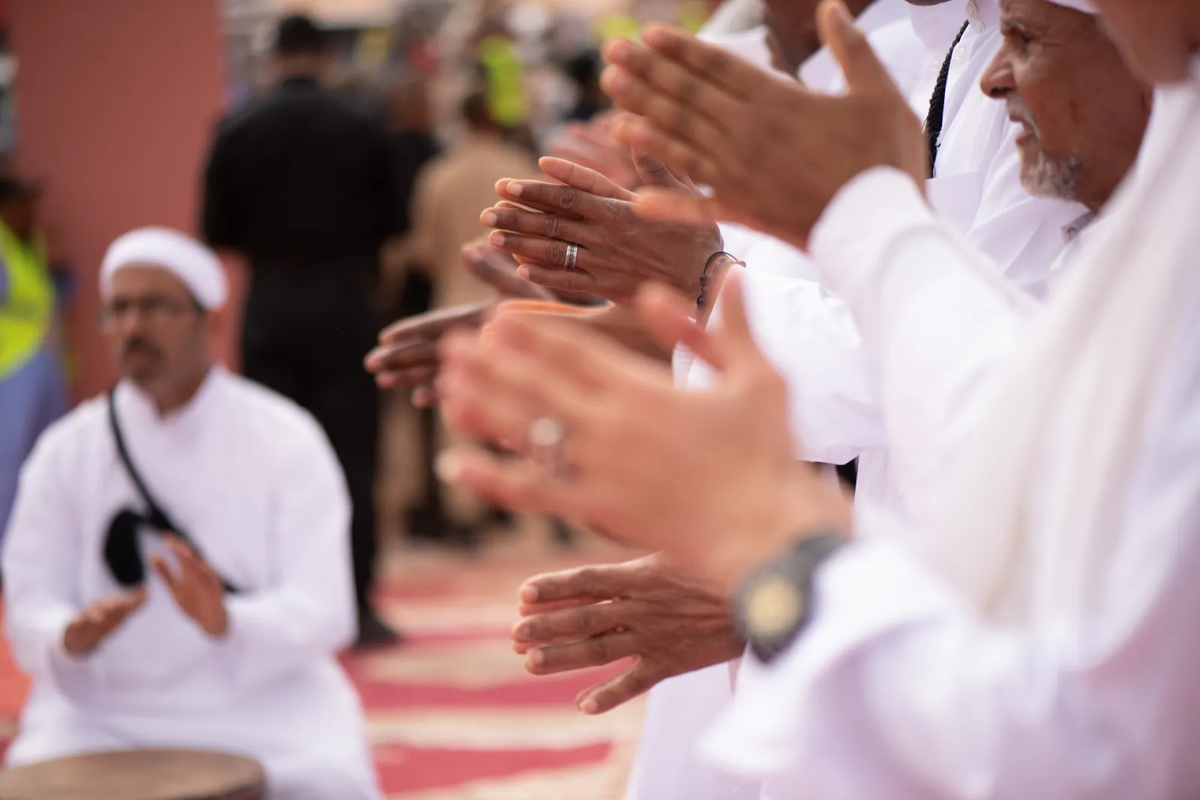
When an audience claps along at a concert, that is body percussion. When someone in the playground hits chest and thighs along to a song on their phone, that is too. South African miners danced in rubber boots because they were forbidden to talk; in the United States, when drums were banned for enslaved people, the rhythm moved into the body. It is the oldest instrument there is, and the only one you always carry.
This book has six chapters. This is the first, and it is for every year group: here are the four sounds, the pulse and the three ways of working with a video. Then come the chapters for 1st, 3rd and 4th year, one on pen tapping and one on the groups that turned this into art.
The four sounds
Almost a century ago Carl Orff reduced the body to four sound gestures. From low to high:
- Feet (stamp): the lowest sound. It plays the kick drum.
- Thighs (pat): medium. It plays the tom.
- Hands (clap): dry and clear. It plays the snare.
- Finger snaps: the highest. It plays the hi-hat or a bell.
The chest (hollow, between thigh and clap) and the mouth (tongue clicks, whistles) are usually added. With six sounds you can play almost any drum beat.
This video, by an Italian teacher, shows six easy exercises with those sounds. He does not talk: watch and copy.
Six easy exercises
The pulse: the one thing you cannot lose
The pulse is the heartbeat of the music: the "one, two, three, four" you count out loud, which never speeds up or slows down. Everything else sits on top of it. Lose the pulse and there is no body percussion, only noise.
The Austrian Richard Filz has a pulse exercise built exactly for this. The feet keep the pulse and the hands add things. When the hands get tangled, the feet keep going.
Pulse exercises
And, in Spanish, the basic rhythms of a four-beat bar with the body.
Basic 4/4 rhythms
Right, left and mirror
The second problem in body percussion is not the rhythm but knowing which hand goes. Two exercises solve it. First, alternating right and left without thinking. Second, the mirror: the teacher faces you, so their right hand is your left. Almost every video in this book is filmed in mirror or warns you when it is not.
Right and left
Mirror
Three ways of working with a video
The videos in this book are of three kinds, and each is used differently.
- Tutorial: someone teaches the pattern in chunks, faster each time. Pause, repeat the chunk, move on. That is what Filz does in this warm-up.
Body percussion warm-up tutorial
- Rhythm-gram: the gestures appear on screen in sync with the song, with colours or icons. Nothing to learn beforehand: you read while it plays. It is the format of Mr. Noé, a teacher from Reus, and the most used one in this book. This example is on Coldplay's "Viva la Vida".
Rhythm-gram: Viva la Vida
- Choreography: a group plays the whole piece and you copy it by watching several times. It is the format of the final chapters.
A game to start today
"Boom Snap Clap" is a hand game you learn in five minutes and can speed up without limit. Start sitting down; with a desk in front of you there is nothing to be shy about.
Boom Snap Clap challenge
And a full basic lesson, in English but with no need to understand a word, to do from start to finish as a group.
Basic body percussion lesson
Classroom activities
- Echo. The teacher plays one bar; the class repeats it. Ten times in a row, without stopping the pulse, changing the pattern each time.
- Circle. Standing in a circle, each person invents a one-bar gesture and the others repeat it. Go all the way round.
- Pulse with obstacles. The feet keep the pulse while someone counts, talks or plays music over the top. The feet that do not change win.
- Seated first. In the first sessions everything is done sitting down with the desk in front. Standing comes later, when the pattern plays itself.
Key vocabulary
- Body percussion: music made only with the sounds of the body.
- Pulse: the regular beat of the music, the one you count.
- Ostinato: a short pattern repeated without change.
- Echo: the teacher plays and the class repeats the same thing.
- Mirror: the person teaching faces you and uses the opposite hand to yours.
- Rhythm-gram: a video where the gestures appear on screen in time with the song.
Por dónde entrar
Cuando en un concierto el público da palmas al ritmo, está haciendo percusión corporal. Cuando en el patio alguien golpea el pecho y los muslos siguiendo una canción del móvil, también. En Sudáfrica los mineros bailaban con las botas de goma porque tenían prohibido hablar; en Estados Unidos, cuando se prohibieron los tambores a los esclavos, el ritmo se pasó al cuerpo. Es el instrumento más antiguo que existe y el único que llevas siempre puesto.
Este libro tiene seis capítulos. Este es el primero, y sirve para todos los cursos: aquí están los cuatro sonidos, el pulso y las tres formas de trabajar con un vídeo. Después vienen los capítulos de 1.º, 3.º y 4.º, uno de percusión con bolígrafo y uno con los grupos que han convertido esto en arte.
Los cuatro sonidos
Carl Orff, hace casi un siglo, redujo el cuerpo a cuatro gestos sonoros. Van de grave a agudo:
- Pies (pisada): el sonido más grave. Hace de bombo.
- Muslos (palmada en las piernas): medio. Hace de tom.
- Palmas: seco y claro. Hace de caja.
- Chasquidos de dedos: el más agudo. Hace de charles o de campana.
A esos cuatro se suele añadir el pecho (hueco, entre muslo y palma) y la boca (chasquidos de lengua, silbidos). Con seis sonidos ya se puede tocar casi cualquier ritmo de batería.
Este vídeo, de un profesor italiano, enseña seis ejercicios fáciles con esos sonidos. No habla: mira y copia.
Seis ejercicios fáciles
El pulso: lo único que no se puede perder
El pulso es el latido de la música: el «uno, dos, tres, cuatro» que se cuenta en voz alta y no acelera ni frena. Todo lo demás se pone encima. Si se pierde el pulso, no hay percusión corporal, hay ruido.
El austriaco Richard Filz tiene un ejercicio de pulso pensado exactamente para esto. Los pies llevan el pulso y las manos van añadiendo cosas. Cuando las manos se lían, los pies siguen.
Ejercicios de pulso
Y en castellano, los ritmos básicos de un compás de cuatro tiempos con el cuerpo.
Ritmos básicos en 4/4
Derecha, izquierda y espejo
El segundo problema de la percusión corporal no es el ritmo, es saber qué mano va. Dos ejercicios lo resuelven. El primero, alternar derecha e izquierda sin pensar. El segundo, el espejo: el profesor está de frente, así que su mano derecha es tu izquierda. Casi todos los vídeos de este libro están grabados en espejo o avisan cuando no lo están.
Derecha e izquierda
Espejo
Tres formas de trabajar con un vídeo
Los vídeos de este libro son de tres tipos, y cada uno se usa de una manera.
- Tutorial: alguien enseña el patrón por trozos, cada vez más rápido. Se para el vídeo, se repite el trozo, se sigue. Es lo que hace Filz en este calentamiento.
Calentamiento de percusión corporal, tutorial
- Ritmograma: los gestos aparecen en pantalla sincronizados con la canción, con colores o iconos. No hay que aprenderse nada antes: se lee mientras suena. Es el formato de Mr. Noé, un maestro de Reus, y es el más usado en este libro. Este ejemplo es sobre «Viva la Vida» de Coldplay.
Ritmograma: Viva la Vida
- Coreografía: un grupo toca la pieza entera y tú la copias viéndola varias veces. Es el formato de los capítulos finales.
Un juego para empezar hoy
«Boom Snap Clap» es un juego de manos que se aprende en cinco minutos y se puede acelerar sin límite. Empieza sentado; con el pupitre delante no hay vergüenza que valga.
Boom Snap Clap, reto
Y una clase básica entera, en inglés pero sin necesidad de entender nada, para hacer de principio a fin en grupo.
Lección básica de percusión corporal
Para hacer en clase
- Eco. El profesor toca un compás; la clase lo repite. Diez veces seguidas, sin parar el pulso, cambiando el patrón cada vez.
- Círculo. De pie, en círculo, cada uno inventa un gesto de un compás y los demás lo repiten. Da la vuelta entera.
- Pulso con obstáculos. Los pies llevan el pulso mientras alguien cuenta, habla o pone música por encima. Ganan los pies que no cambian.
- Sentados primero. Las primeras sesiones, todo se hace sentado y con la mesa delante. De pie, más adelante, cuando el patrón ya sale solo.
Vocabulario fundamental
- Percusión corporal: música hecha solo con los sonidos del cuerpo.
- Pulso: el latido regular de la música, el que se cuenta.
- Ostinato: un patrón corto que se repite sin cambiar.
- Eco: el profesor toca y la clase repite lo mismo.
- Espejo: el que enseña está de frente y usa la mano contraria a la tuya.
- Ritmograma: vídeo donde los gestos aparecen en pantalla al ritmo de la canción.
Why this
When an audience claps along at a concert, that is body percussion. When someone in the playground hits chest and thighs along to a song on their phone, that is too. South African miners danced in rubber boots because they were forbidden to talk; in the United States, when drums were banned for enslaved people, the rhythm moved into the body. It is the oldest instrument there is, and the only one you always carry.
This book has six chapters. This is the first, and it is for every year group: here are the four sounds, the pulse and the three ways of working with a video. Then come the chapters for 1st, 3rd and 4th year, one on pen tapping and one on the groups that turned this into art.
The four sounds
Almost a century ago Carl Orff reduced the body to four sound gestures. From low to high:
- Feet (stamp): the lowest sound. It plays the kick drum.
- Thighs (pat): medium. It plays the tom.
- Hands (clap): dry and clear. It plays the snare.
- Finger snaps: the highest. It plays the hi-hat or a bell.
The chest (hollow, between thigh and clap) and the mouth (tongue clicks, whistles) are usually added. With six sounds you can play almost any drum beat.
This video, by an Italian teacher, shows six easy exercises with those sounds. He does not talk: watch and copy.
Six easy exercises
The pulse: the one thing you cannot lose
The pulse is the heartbeat of the music: the "one, two, three, four" you count out loud, which never speeds up or slows down. Everything else sits on top of it. Lose the pulse and there is no body percussion, only noise.
The Austrian Richard Filz has a pulse exercise built exactly for this. The feet keep the pulse and the hands add things. When the hands get tangled, the feet keep going.
Pulse exercises
And, in Spanish, the basic rhythms of a four-beat bar with the body.
Basic 4/4 rhythms
Right, left and mirror
The second problem in body percussion is not the rhythm but knowing which hand goes. Two exercises solve it. First, alternating right and left without thinking. Second, the mirror: the teacher faces you, so their right hand is your left. Almost every video in this book is filmed in mirror or warns you when it is not.
Right and left
Mirror
Three ways of working with a video
The videos in this book are of three kinds, and each is used differently.
- Tutorial: someone teaches the pattern in chunks, faster each time. Pause, repeat the chunk, move on. That is what Filz does in this warm-up.
Body percussion warm-up tutorial
- Rhythm-gram: the gestures appear on screen in sync with the song, with colours or icons. Nothing to learn beforehand: you read while it plays. It is the format of Mr. Noé, a teacher from Reus, and the most used one in this book. This example is on Coldplay's "Viva la Vida".
Rhythm-gram: Viva la Vida
- Choreography: a group plays the whole piece and you copy it by watching several times. It is the format of the final chapters.
A game to start today
"Boom Snap Clap" is a hand game you learn in five minutes and can speed up without limit. Start sitting down; with a desk in front of you there is nothing to be shy about.
Boom Snap Clap challenge
And a full basic lesson, in English but with no need to understand a word, to do from start to finish as a group.
Basic body percussion lesson
Classroom activities
- Echo. The teacher plays one bar; the class repeats it. Ten times in a row, without stopping the pulse, changing the pattern each time.
- Circle. Standing in a circle, each person invents a one-bar gesture and the others repeat it. Go all the way round.
- Pulse with obstacles. The feet keep the pulse while someone counts, talks or plays music over the top. The feet that do not change win.
- Seated first. In the first sessions everything is done sitting down with the desk in front. Standing comes later, when the pattern plays itself.
Key vocabulary
- Body percussion: music made only with the sounds of the body.
- Pulse: the regular beat of the music, the one you count.
- Ostinato: a short pattern repeated without change.
- Echo: the teacher plays and the class repeats the same thing.
- Mirror: the person teaching faces you and uses the opposite hand to yours.
- Rhythm-gram: a video where the gestures appear on screen in time with the song.