Contenidos
Memories — Maroon 5 (2019)
A 2019 song resting on eight chords written more than three hundred years ago. Maroon 5 made it to remember a friend, and built it on Pachelbel's Canon.
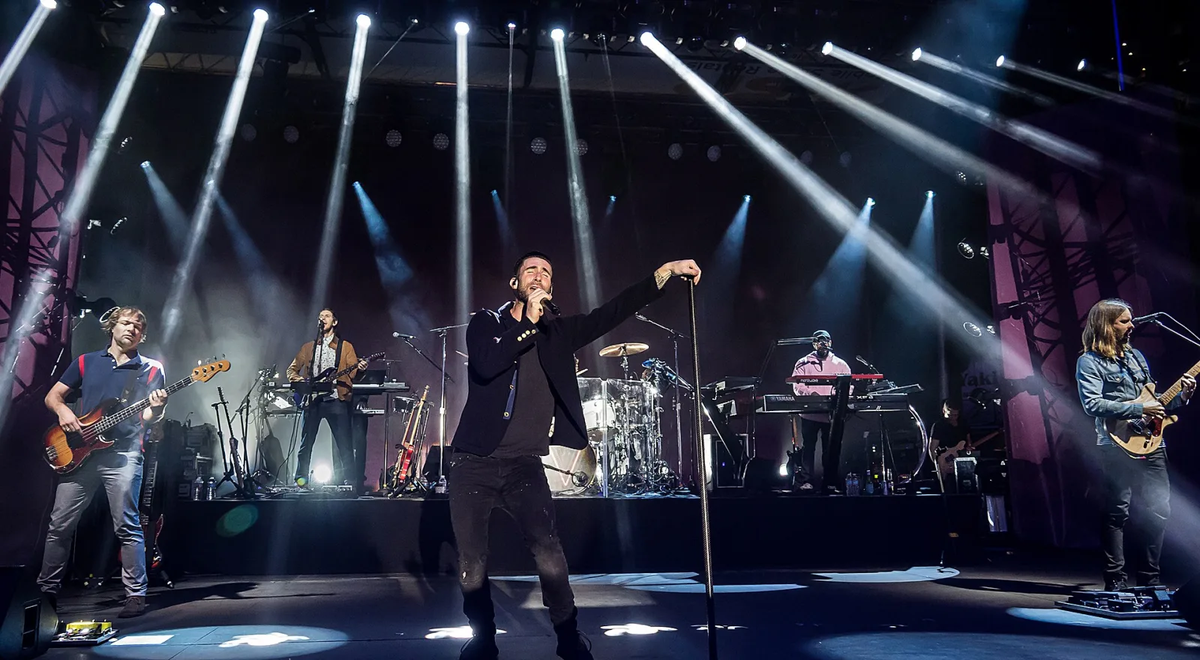
🏷️ Ficha musical
Why this song
You probably know the chords of this song already, even if you have never heard Maroon 5. They are played at weddings, in adverts and under background videos. They are the chords of Pachelbel's Canon, a piece of Baroque music.
Try this. Play the Canon, then play "Memories". Listen only to the bass, the lowest notes. It is the same path.
The question on this page is simple: how can music that old hold up a pop song from today?
Historical context
Johann Pachelbel was a German composer and organist. He lived from 1653 to 1706, in the period we call the Baroque. Nobody knows which year he wrote his Canon. The dates experts suggest range from 1680 to 1706.
After his death the piece was forgotten for a long time. It was not published until 1919. It became famous in 1968, when a French orchestra recorded it much more slowly than it had been played until then.
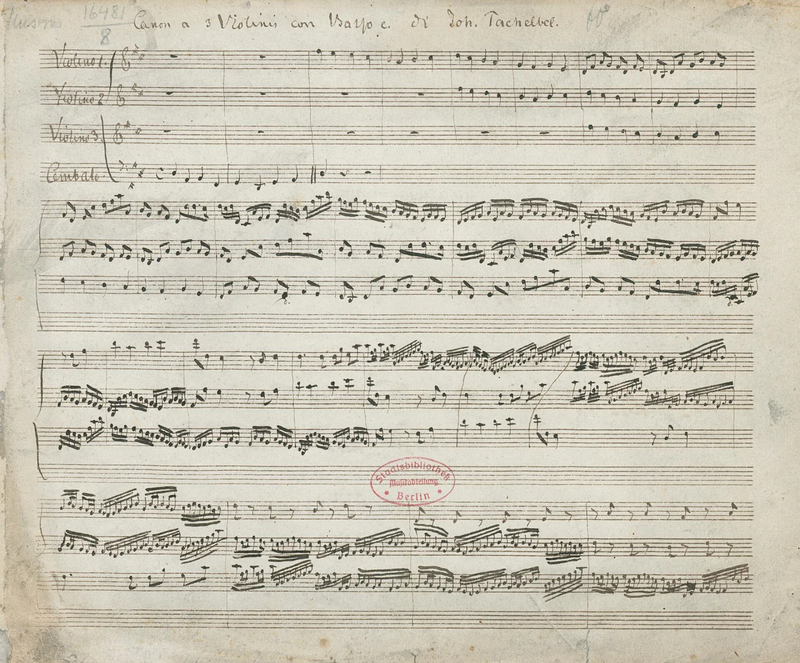
Foto: copia anónima de 1838–1842, Staatsbibliothek zu Berlin, dominio público, vía Wikimedia Commons
Pachelbel did not write this page. It is a handwritten copy made between 1838 and 1842, the oldest one that has survived. Look at the fourth line down: those are the eight bass notes, written only once, because they repeat.
Now jump to 2019. Maroon 5 is a pop rock band formed in Los Angeles. Its singer is Adam Levine. In December 2017 Jordan Feldstein died. He was the band's manager and Levine's friend since childhood.
"Memories" is a song to remember him. Levine put it like this: "This song is for anyone who has ever experienced loss. In other words, this song is for all of us." The lyrics are a toast to the people who are here and to the ones who are gone. The music video ends with a dedication: "For Jordi", his nickname.
So how did Pachelbel get in? In March 2019 a group of songwriters shut themselves in a basement on Long Island, near New York, to write songs. One of them, Michael Pollack, sat at an electric piano, started playing those chords, and the Canon's melody came out. They tried using the whole melody, but it felt too busy. They kept the chords and a piece of the melody.
Musical characteristics
Listen only to the lowest notes. They follow a path of eight notes and, when they get to the end, start again. They never change in the whole song. A musical idea that repeats over and over is called an ostinato.
At first the electric piano plays that path, with the left hand. The bass guitar does not appear until the first chorus, and then comes back in the second verse.
Above each bass note there is a chord. Eight chords repeating in the same order make a chord progression. The one in "Memories" is exactly the Canon's.
The Canon has something else. The three violins play the same melody, but not together: the first one starts, the second comes in two bars later, and the third two bars after that. It is like singing "Frère Jacques" in groups. That is a canon. "Memories" is not a canon: it has one voice singing. It kept the bass and the chords, not the way the violins come in.
Notice what is almost missing, too: drums. The producers tried several drum parts coming in at the second verse, as in many ballads, and none of them worked. Adam Levine asked them to bring in just the hi-hat there, the double cymbal played with the foot. That is how it stayed. The song rests on the piano and the voice, not on the hit of the drums.
Now a warning for when you play. The record is in B major, which has five sharps. The chart attached here is in C major, which has none. It is the same song, one semitone higher. Moving a whole song to a different pitch, without changing anything else, is called transposing.
Why C? Because it is much easier in class. On the keyboard, everything is on white keys. On ukulele and guitar you get chords you already know: C, G, A minor, E minor and F. And classroom xylophones often have only the natural notes. If you play along with the record, it will not fit: you will sound one semitone higher. To play along with the record you need the original version, or you need to transpose.
This is the bass in C, all eight notes: C, G, A, E, F, C, F, G.
Hard facts: B major on the record and C major on the chart, 4/4, 91 beats per minute, 3:09. The form runs like this: intro, chorus, verse, pre-chorus, chorus, verse, pre-chorus, chorus. Notice that the chorus arrives straight away, right after the intro.
Guided listening
First play Pachelbel's Canon, in the recording under Resources. Listen to the bass at the start: eight slow notes. Count how many times you hear it before the first violin comes in.
Then listen to the violins coming in: one, then another, then another, with the same melody.
Now play "Memories". In the intro, listen to the low notes of the electric piano. It is the same path, faster and at a different pitch. Wait for the chorus: that is where the bass guitar joins.
When the chorus arrives, listen to the melody of the voice. A piece of it will sound like the Canon.
Finally, wait for the second verse. That is where the drums come in. Notice how little they do: just the hi-hat.
Trivia and curiosities
- Pachelbel is not in the credits of "Memories". His music is more than three hundred years old and is in the public domain: anyone can use it without asking or paying.
- Vincent Ford, on the other hand, is in the credits, and he died in 2008. Ford is the credited writer of Bob Marley's "No Woman, No Cry". According to American Songwriter magazine, he is credited because of a resemblance between the two songs. The difference is the age: Pachelbel's music no longer belongs to anyone, and "No Woman, No Cry" still does.
- The Canon is often played at weddings, and at funerals too. The same music works for celebrating and for saying goodbye. "Memories" does both at once: missing someone and celebrating the time you had with them.
- It reached number 2 in the United States and number 22 in Spain. In Spain it went triple platinum.
Classroom activities
- Play the Canon's bass while others sing. One group loops the eight bass notes in C: C, G, A, E, F, C, F, G. Bass guitar, left hand on keyboard or xylophones all work. When the loop is steady, another group sings the chorus of "Memories" on top. If it fits, you have proved with your own hands that it is the same foundation.
- Play the band with the chart. Ukulele, guitar and keyboard: C, G, A minor, E minor, F, C, F, G, two chords per bar. The chord diagrams are in the attached PDF. The drums follow the pattern on the chart, and the bass plays the eight notes above.
- Analyse: one closed question. Listen to the start of the Canon and the start of "Memories". How many notes does the bass play before it starts again? Is it the same number in both? Answer with a number.
- Sing a canon. Sing a song everyone knows, like "Frère Jacques", as a canon in three groups. Then think: what would have to happen for "Memories" to be a real canon?
- Create. At the bottom, the chart gives the C pentatonic scale: C, D, E, G, A. Five notes, and almost nothing sounds wrong with them. While the band plays the loop, each student improvises a four-bar phrase with those five notes. That is the SOLO slot on the chart.
Key vocabulary
- Ostinato — ostinato: una idea que se repite sin cambiar
- Chord progression — progresión de acordes
- Canon — canon: la misma melodía, con las voces entrando una detrás de otra
- Transposing — transportar: pasar la canción entera a otra altura
- Pentatonic — pentatónica: escala de cinco notas
Resources
Official music video — Adam Levine sings alone, very close to the camera, against a dark background. At the end comes the dedication "For Jordi".
Ukulele tutorial — Jonah Ruth. In C, with the same chords as the chart and no barre chords. It is long, but it goes step by step.
Guitar tutorial — Eric Blackmon. Basic chords: C, G, A minor, E minor and F, in the Canon's order.
Keyboard tutorial — Piano by Yosefien. An easy version in C major, with lit-up keys and the score on top.
Bass, the tab on screen — Backwards Bass. Careful: it is in B, the key of the record, so the frets do not match the chart. Use it to hear what the bass does on the recording.
Drum tutorial — Jack Young. The rhythm written on screen, with the drummer playing it underneath.
Pachelbel's Canon, to compare — Voices of Music, on instruments like the ones of Pachelbel's time: three violins, cello, organ and theorbo, which is a large lute. The last three play the bass. Listen to the bass first, then to the violins coming in one after another.
- Tab — the Songsterr button opens it with the tracks separated out: bass, electric piano, piano, violin and drums.
Por dónde entrar
Es muy probable que ya conozcas los acordes de esta canción, aunque no hayas oído nunca a Maroon 5. Suenan en muchas bodas, en anuncios y en vídeos de fondo. Son los del Canon de Pachelbel, una pieza de música barroca.
Haz una prueba. Pon el Canon y después pon «Memories». Fíjate solo en el bajo, en las notas más graves. Es el mismo camino.
La pregunta de esta página es sencilla: ¿cómo puede una música tan antigua sostener una canción pop de hoy?
Contexto histórico
Johann Pachelbel era un compositor y organista alemán. Vivió entre 1653 y 1706, en la época que llamamos Barroco. Nadie sabe en qué año escribió su Canon. Las fechas que proponen los expertos van de 1680 a 1706.
Después de morir él, la pieza se olvidó durante mucho tiempo. No se publicó hasta 1919. Y se hizo famosa en 1968, cuando una orquesta francesa la grabó mucho más despacio de como se tocaba hasta entonces.
Foto: copia anónima de 1838–1842, Staatsbibliothek zu Berlin, dominio público, vía Wikimedia Commons
Esta imagen no la escribió Pachelbel. Es una copia hecha a mano entre 1838 y 1842, la más antigua que ha llegado hasta hoy. Mira la cuarta línea, la de abajo: son las ocho notas del bajo, escritas una sola vez, porque se repiten.
Ahora saltamos a 2019. Maroon 5 es un grupo de pop rock nacido en Los Ángeles. Su cantante es Adam Levine. En diciembre de 2017 murió Jordan Feldstein, que era su mánager y amigo de Levine desde niños.
«Memories» es una canción para recordarle. Levine lo explicó así: la canción es para cualquiera que haya perdido a alguien, «es decir, para todos nosotros». La letra es un brindis por los que están y por los que ya no están. El videoclip termina con una dedicatoria: «For Jordi», que era su apodo.
¿Y cómo llegó ahí Pachelbel? En marzo de 2019, un grupo de compositores se encerró en un sótano de Long Island, cerca de Nueva York, a escribir canciones. Uno de ellos, Michael Pollack, se sentó a un piano eléctrico, empezó a tocar esos acordes y le salió la melodía del Canon. Intentaron usar la melodía entera, pero les pareció demasiado cargada. Se quedaron con los acordes y con un trozo de la melodía.
Cómo suena
Escucha solo las notas más graves. Hacen un camino de ocho notas y, al terminar, vuelven a empezar. No cambian en toda la canción. A una idea musical que se repite una y otra vez se le llama ostinato.
Al principio ese camino lo toca el piano eléctrico, con la mano izquierda. El bajo eléctrico no aparece hasta el primer estribillo, y después vuelve en la segunda estrofa.
Encima de cada nota del bajo hay un acorde. Ocho acordes seguidos que se repiten en el mismo orden forman una progresión de acordes. La de «Memories» es exactamente la del Canon.
En el Canon hay algo más. Los tres violines tocan la misma melodía, pero no a la vez: el primero empieza, el segundo entra dos compases después y el tercero dos compases más tarde. Es como cantar «Frère Jacques» por grupos. Eso es un canon. «Memories» no es un canon: tiene una sola voz cantando. Se ha quedado con el bajo y los acordes, no con la manera de entrar de los violines.
Fíjate también en lo que casi no hay: batería. Los productores probaron varias baterías que entraban en la segunda estrofa, como en muchas baladas, y ninguna funcionó. Adam Levine les pidió que ahí entrara solo el charles, el platillo doble que se toca con el pie. Así se quedó. La canción descansa sobre el piano y la voz, no sobre el golpe de la batería.
Ahora, un aviso para cuando toques. El disco suena en Si mayor, que tiene cinco sostenidos. El chart que tienes adjunto está en Do mayor, que no tiene ninguno. Es la misma canción, un semitono más aguda. Pasar una canción entera a otra altura, sin cambiar nada más, es transportar.
¿Por qué en Do? Porque en clase es mucho más fácil. En el teclado se toca todo con teclas blancas. En ukelele y guitarra salen acordes que ya conoces: do, sol, la menor, mi menor y fa. Y las láminas de clase suelen tener solo las notas naturales. Si tocáis encima del disco, no os va a encajar: sonaréis un semitono por encima. Para tocar encima del disco hay que usar la versión original o transportar.
Así queda el bajo en Do, las ocho notas: do, sol, la, mi, fa, do, fa, sol.
Datos duros: Si mayor en el disco y Do mayor en el chart, 4/4, 91 pulsos por minuto, 3:09. La forma va así: intro, estribillo, estrofa, preestribillo, estribillo, estrofa, preestribillo y estribillo. Fíjate en que el estribillo llega enseguida, justo después de la intro.
Escucha guiada
Primero pon el Canon de Pachelbel, en la grabación de Recursos. Escucha el bajo del principio: ocho notas lentas. Cuenta cuántas veces lo oyes antes de que entre el primer violín.
Luego escucha cómo entran los violines: uno, después otro, después otro, con la misma melodía.
Después pon «Memories». En la intro, escucha las notas graves del piano eléctrico. Es el mismo camino, más rápido y en otra altura. Espera al estribillo: ahí se suma el bajo eléctrico.
Cuando llegue el estribillo, escucha la melodía de la voz. Un trozo te sonará del Canon.
Por último, espera a la segunda estrofa. Ahí entra la batería. Escucha qué poco hace: solo el charles.
Curiosidades
- Pachelbel no aparece en los créditos de «Memories». Su música tiene más de trescientos años y es de dominio público: cualquiera puede usarla sin pedir permiso ni pagar.
- En cambio, sí aparece Vincent Ford, que murió en 2008. Ford figura como autor de «No Woman, No Cry», de Bob Marley. Según la revista American Songwriter, está en los créditos por el parecido entre las dos canciones. La diferencia está en los años: la música de Pachelbel ya no tiene dueño, y la de «No Woman, No Cry» todavía sí.
- El Canon suena a menudo en bodas y también en funerales. La misma música sirve para celebrar y para despedir. «Memories» hace las dos cosas a la vez: echar de menos a alguien y celebrar lo que se vivió con él.
- Llegó al número 2 en Estados Unidos, y en España al 22. En España ha sido triple disco de platino.
Para hacer en clase
- Tocar el bajo del Canon mientras otros cantan. Un grupo toca en bucle las ocho notas del bajo en Do: do, sol, la, mi, fa, do, fa, sol. Vale el bajo, el teclado con la mano izquierda o las láminas. Cuando el bucle esté firme, otro grupo canta el estribillo de «Memories» encima. Si encaja, habéis comprobado con vuestras manos que es la misma base.
- Tocar la banda con el chart. Ukelele, guitarra y teclado: do, sol, la menor, mi menor, fa, do, fa, sol, dos acordes por compás. Los diagramas están en el PDF adjunto. La batería sigue el patrón del chart, y el bajo, las ocho notas de antes.
- Analizar: una pregunta cerrada. Escuchad el principio del Canon y el principio de «Memories». ¿Cuántas notas tiene el bajo antes de volver a empezar? ¿Es el mismo número en las dos? Contestad con un número.
- Cantar en canon. Cantad en canon una canción que sepáis todos, como «Frère Jacques», en tres grupos. Después pensad: ¿qué tendría que pasar para que «Memories» fuera un canon de verdad?
- Crear. El chart trae abajo la escala pentatónica de Do: do, re, mi, sol, la. Son cinco notas y con ellas casi nada suena mal. Mientras la banda toca el bucle, cada alumno improvisa una frase de cuatro compases con esas cinco notas. Es el hueco del SOLO del chart.
Vocabulario fundamental
- Ostinato — Una idea musical que se repite una y otra vez sin cambiar. Aquí, las ocho notas del bajo.
- Progresión de acordes — Una serie de acordes que se repite en el mismo orden. La de «Memories» es la del Canon.
- Canon — Varias voces tocan o cantan la misma melodía, pero entrando una detrás de otra.
- Transportar — Pasar una canción entera a otra altura sin cambiar nada más. El chart está en Do; el disco, en Si.
- Pentatónica — Una escala de cinco notas. En Do: do, re, mi, sol, la.
Recursos
Videoclip oficial — Adam Levine canta solo, muy cerca de la cámara, sobre un fondo oscuro. Al final aparece la dedicatoria «For Jordi».
Tutorial de ukelele — Jonah Ruth. En Do, con los mismos acordes del chart y sin cejilla. Es largo, pero va paso a paso.
Tutorial de guitarra — Eric Blackmon. Acordes básicos: do, sol, la menor, mi menor y fa, en el orden del Canon.
Tutorial de teclado — Piano by Yosefien. Versión fácil en Do mayor, con las teclas iluminadas y la partitura encima.
Bajo, la tablatura en pantalla — Backwards Bass. Ojo: va en Si, la tonalidad del disco, así que los trastes no coinciden con el chart. Sirve para oír qué hace el bajo de la grabación.
Tutorial de batería — Jack Young. El ritmo escrito en pantalla, con el batería tocándolo debajo.
El Canon de Pachelbel, para comparar — Voices of Music, con instrumentos como los de la época de Pachelbel: tres violines, violonchelo, órgano y tiorba, que es un laúd grande. Los tres últimos hacen el bajo. Escucha primero el bajo y luego cómo entran los violines uno detrás de otro.
- Tablatura — el botón de Songsterr la abre con las pistas separadas: bajo, piano eléctrico, piano, violín y batería.
Why this song
You probably know the chords of this song already, even if you have never heard Maroon 5. They are played at weddings, in adverts and under background videos. They are the chords of Pachelbel's Canon, a piece of Baroque music.
Try this. Play the Canon, then play "Memories". Listen only to the bass, the lowest notes. It is the same path.
The question on this page is simple: how can music that old hold up a pop song from today?
Historical context
Johann Pachelbel was a German composer and organist. He lived from 1653 to 1706, in the period we call the Baroque. Nobody knows which year he wrote his Canon. The dates experts suggest range from 1680 to 1706.
After his death the piece was forgotten for a long time. It was not published until 1919. It became famous in 1968, when a French orchestra recorded it much more slowly than it had been played until then.
Foto: copia anónima de 1838–1842, Staatsbibliothek zu Berlin, dominio público, vía Wikimedia Commons
Pachelbel did not write this page. It is a handwritten copy made between 1838 and 1842, the oldest one that has survived. Look at the fourth line down: those are the eight bass notes, written only once, because they repeat.
Now jump to 2019. Maroon 5 is a pop rock band formed in Los Angeles. Its singer is Adam Levine. In December 2017 Jordan Feldstein died. He was the band's manager and Levine's friend since childhood.
"Memories" is a song to remember him. Levine put it like this: "This song is for anyone who has ever experienced loss. In other words, this song is for all of us." The lyrics are a toast to the people who are here and to the ones who are gone. The music video ends with a dedication: "For Jordi", his nickname.
So how did Pachelbel get in? In March 2019 a group of songwriters shut themselves in a basement on Long Island, near New York, to write songs. One of them, Michael Pollack, sat at an electric piano, started playing those chords, and the Canon's melody came out. They tried using the whole melody, but it felt too busy. They kept the chords and a piece of the melody.
Musical characteristics
Listen only to the lowest notes. They follow a path of eight notes and, when they get to the end, start again. They never change in the whole song. A musical idea that repeats over and over is called an ostinato.
At first the electric piano plays that path, with the left hand. The bass guitar does not appear until the first chorus, and then comes back in the second verse.
Above each bass note there is a chord. Eight chords repeating in the same order make a chord progression. The one in "Memories" is exactly the Canon's.
The Canon has something else. The three violins play the same melody, but not together: the first one starts, the second comes in two bars later, and the third two bars after that. It is like singing "Frère Jacques" in groups. That is a canon. "Memories" is not a canon: it has one voice singing. It kept the bass and the chords, not the way the violins come in.
Notice what is almost missing, too: drums. The producers tried several drum parts coming in at the second verse, as in many ballads, and none of them worked. Adam Levine asked them to bring in just the hi-hat there, the double cymbal played with the foot. That is how it stayed. The song rests on the piano and the voice, not on the hit of the drums.
Now a warning for when you play. The record is in B major, which has five sharps. The chart attached here is in C major, which has none. It is the same song, one semitone higher. Moving a whole song to a different pitch, without changing anything else, is called transposing.
Why C? Because it is much easier in class. On the keyboard, everything is on white keys. On ukulele and guitar you get chords you already know: C, G, A minor, E minor and F. And classroom xylophones often have only the natural notes. If you play along with the record, it will not fit: you will sound one semitone higher. To play along with the record you need the original version, or you need to transpose.
This is the bass in C, all eight notes: C, G, A, E, F, C, F, G.
Hard facts: B major on the record and C major on the chart, 4/4, 91 beats per minute, 3:09. The form runs like this: intro, chorus, verse, pre-chorus, chorus, verse, pre-chorus, chorus. Notice that the chorus arrives straight away, right after the intro.
Guided listening
First play Pachelbel's Canon, in the recording under Resources. Listen to the bass at the start: eight slow notes. Count how many times you hear it before the first violin comes in.
Then listen to the violins coming in: one, then another, then another, with the same melody.
Now play "Memories". In the intro, listen to the low notes of the electric piano. It is the same path, faster and at a different pitch. Wait for the chorus: that is where the bass guitar joins.
When the chorus arrives, listen to the melody of the voice. A piece of it will sound like the Canon.
Finally, wait for the second verse. That is where the drums come in. Notice how little they do: just the hi-hat.
Trivia and curiosities
- Pachelbel is not in the credits of "Memories". His music is more than three hundred years old and is in the public domain: anyone can use it without asking or paying.
- Vincent Ford, on the other hand, is in the credits, and he died in 2008. Ford is the credited writer of Bob Marley's "No Woman, No Cry". According to American Songwriter magazine, he is credited because of a resemblance between the two songs. The difference is the age: Pachelbel's music no longer belongs to anyone, and "No Woman, No Cry" still does.
- The Canon is often played at weddings, and at funerals too. The same music works for celebrating and for saying goodbye. "Memories" does both at once: missing someone and celebrating the time you had with them.
- It reached number 2 in the United States and number 22 in Spain. In Spain it went triple platinum.
Classroom activities
- Play the Canon's bass while others sing. One group loops the eight bass notes in C: C, G, A, E, F, C, F, G. Bass guitar, left hand on keyboard or xylophones all work. When the loop is steady, another group sings the chorus of "Memories" on top. If it fits, you have proved with your own hands that it is the same foundation.
- Play the band with the chart. Ukulele, guitar and keyboard: C, G, A minor, E minor, F, C, F, G, two chords per bar. The chord diagrams are in the attached PDF. The drums follow the pattern on the chart, and the bass plays the eight notes above.
- Analyse: one closed question. Listen to the start of the Canon and the start of "Memories". How many notes does the bass play before it starts again? Is it the same number in both? Answer with a number.
- Sing a canon. Sing a song everyone knows, like "Frère Jacques", as a canon in three groups. Then think: what would have to happen for "Memories" to be a real canon?
- Create. At the bottom, the chart gives the C pentatonic scale: C, D, E, G, A. Five notes, and almost nothing sounds wrong with them. While the band plays the loop, each student improvises a four-bar phrase with those five notes. That is the SOLO slot on the chart.
Key vocabulary
- Ostinato — ostinato: una idea que se repite sin cambiar
- Chord progression — progresión de acordes
- Canon — canon: la misma melodía, con las voces entrando una detrás de otra
- Transposing — transportar: pasar la canción entera a otra altura
- Pentatonic — pentatónica: escala de cinco notas
Resources
Official music video — Adam Levine sings alone, very close to the camera, against a dark background. At the end comes the dedication "For Jordi".
Ukulele tutorial — Jonah Ruth. In C, with the same chords as the chart and no barre chords. It is long, but it goes step by step.
Guitar tutorial — Eric Blackmon. Basic chords: C, G, A minor, E minor and F, in the Canon's order.
Keyboard tutorial — Piano by Yosefien. An easy version in C major, with lit-up keys and the score on top.
Bass, the tab on screen — Backwards Bass. Careful: it is in B, the key of the record, so the frets do not match the chart. Use it to hear what the bass does on the recording.
Drum tutorial — Jack Young. The rhythm written on screen, with the drummer playing it underneath.
Pachelbel's Canon, to compare — Voices of Music, on instruments like the ones of Pachelbel's time: three violins, cello, organ and theorbo, which is a large lute. The last three play the bass. Listen to the bass first, then to the violins coming in one after another.
- Tab — the Songsterr button opens it with the tracks separated out: bass, electric piano, piano, violin and drums.