Contenidos
Matador — Los Fabulosos Cadillacs (1993)
Three chords, a full band, and a guitar that never lands where you expect it. What matters here is not the notes: it is who comes in, who shuts up, and in which gap.
🏷️ Ficha musical
Why this song
In 1996 the Pet Shop Boys took a chunk of this song and looped it under their own track Single-Bilingual, from start to finish. If you know that song, you already know this riff.
It also turns up in the film Grosse Pointe Blank, and a university marching band in California used to play it at American football games. A song about a man on the run from the police travels oddly well.
Historical context
Ska started in Jamaica in the late 1950s. It mixed the island's mento with the jazz and rhythm and blues arriving from the United States, and you knew it by two things: a walking bass, and chords that always land between the beats.
It then jumped twice. First to England in the late 1970s, with the 2 Tone label, faster and with a punk edge. Then, through the 1980s and 1990s, to half the world. Los Fabulosos Cadillacs, formed in Buenos Aires in 1985, belong to that third wave.
They did not copy the Jamaican template, though. In Matador, ska meets two rhythms from the River Plate: candombe, brought by the descendants of enslaved Africans in Uruguay and Argentina and played on three different drums, and the murga of the Buenos Aires carnival. That is why the percussion sounds like a carnival troupe rather than Kingston.

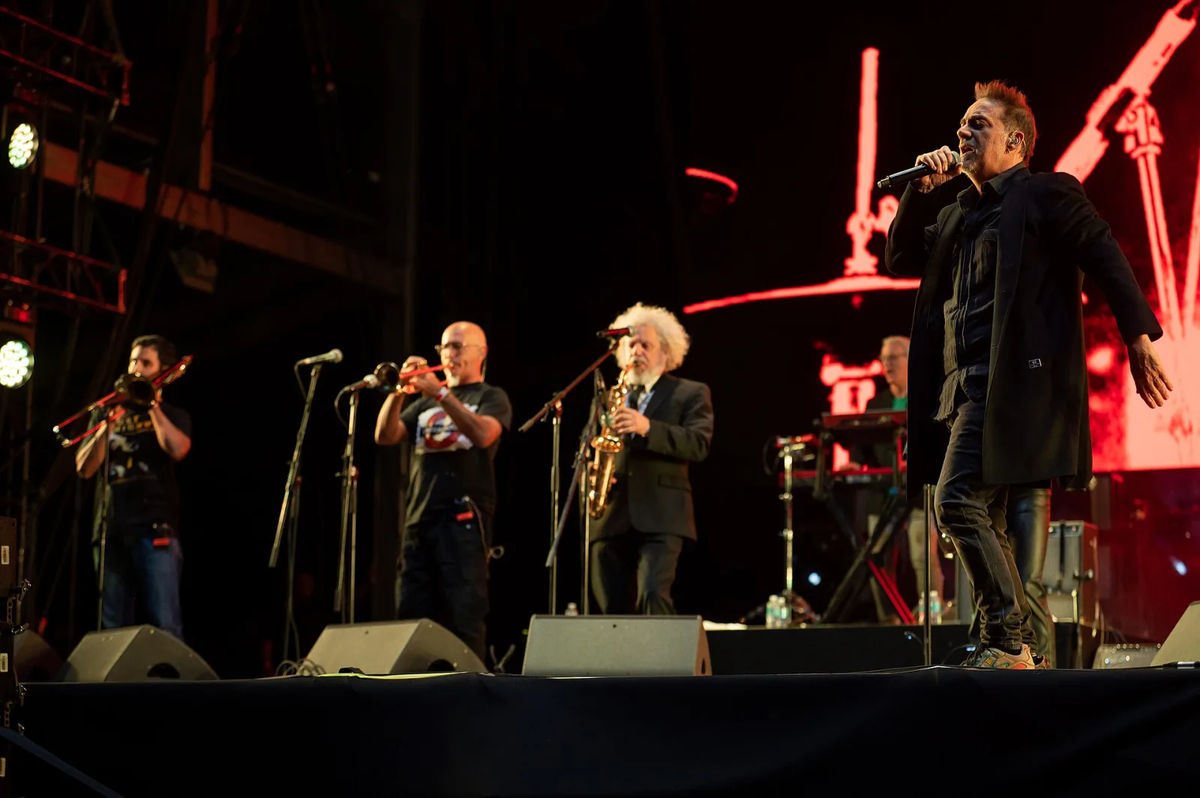
Foto: Secretaría de Cultura CDMX, CC BY 2.0, vía Wikimedia Commons
The song was written by Flavio Cianciarulo, the bass player, and came out on Vasos vacíos (1993). The words are sung by a hunted man in the first person: "me dicen el matador, nací en Barracas", a neighbourhood of Buenos Aires. It names Víctor Jara, the Chilean singer-songwriter kidnapped and murdered in 1973, days after Pinochet's coup.
That is not decoration. Argentina was ten years into democracy after a dictatorship (1976-1983) that disappeared thousands of people, and the band has several songs about it. Here the subject is hidden inside something you dance to.

Foto: Hannu Lindroos / Lehtikuva, dominio público, vía Wikimedia Commons
Musical characteristics
Do this before you read any further. Tap four steady beats with your foot and count them out loud: one, two, three, four. Now clap — but not on the foot. Clap in the gap between one tap and the next.
That is exactly what the guitar does all the way through. It never lines up with your foot. It lands in the gap, short and dry, cut off straight away. Playing like that is called the offbeat, and it is the fingerprint of ska.
The bass does the opposite: it walks on the strong beats. So guitar and bass take turns, one after the other, and between them they leave no empty space. That is where the feeling of running comes from, even though nobody speeds up.
On top of that base there are a lot of people. In 1993 the group was nine strong, and what changes from one section to the next is not the harmony, which stays put: it is how many are playing. How many things sound at once, and what job each one has, is called texture.
The layers you notice most are the brass. There are three: trumpet, saxophone and trombone, playing together. When three wind instruments work as one block they are called a horn section, and here they are half the song.
Notice when they show up. They do not play over the voice, and they do not play all the time. They wait for Vicentico to finish a line and then answer with one of their own. That taking of turns is called call and response, and it is the same idea as a choir echoing a soloist.
The harmony fits in three chords: Am – Dm – E. The first two are minor and sound dark. The third, the E, is major, which means it carries a note — a G sharp — that does not belong to A minor. It is an intruder, so it pushes: your ear asks to go back to Am. The chord that does that job is called the dominant. One thing to watch: the chart we hand out in class writes E minor there, without the G sharp. That is the easy version, because it stays inside A minor and takes one finger on the ukulele. It sounds fine, but it does not push the same way. Play both one after the other and listen for which one asks to go back to Am.
Hard facts: A minor, 4/4, 192 BPM, 4:36. The 192 is ska's fast count. If you tap your foot you go at half that, around 96, and the guitar chops fall between your taps.
Trivia and curiosities
- It was written by the bass player, not the singer. In a band with three horns, a drummer and a separate percussionist, songs do not always start in front of the microphone.
- Vasos vacíos was not a new album: it was a greatest-hits compilation with two unreleased tracks slipped inside. This was one of them. The band's best-known song came in through the back door.
- One line says "no hace mucho tiempo que cayó el León Santillán". He is a character from another of their songs, Manuel Santillán, el León, on the previous album. Two songs sharing one story.
- The video was directed by Pucho Mentasti and the hunted man is played by Eusebio Poncela, a Spanish actor from Madrid, not an Argentine one. It won the viewers' choice prize at the 1994 MTV Video Music Awards.
- In Argentina, football crowds still sing the chorus with their own words swapped in. A song about a man running from the police became a terrace chant.
Classroom activities
- Play: Am – Dm – E on a loop. Electric guitar and ukulele on the offbeats only: short chop, hand muting the strings straight after. Bass on the beats. Drums, snare on 2 and 4. If E major will not come out on the ukulele, E minor works: the song holds up, but you lose the pull at the end of each line.
- Sing: the chorus is two words repeated on a short note. A good place for everyone to sing without pushing into the high register.
- Analyse: a closed question. Listen to the whole song with a sheet of paper and mark every time the horns come in. Do they sound while the voice is singing, or right after it? Then count how many times the chord changes in the entire track.
- Create: take any three chords. One group sings a four-bar line, another answers with a wordless melody. Steal the procedure, not the song.
Key vocabulary
- Offbeat — contratiempo: el golpe que cae en el hueco entre dos pulsos
- Texture — textura
- Horn section — sección de vientos (aquí, trompeta, saxofón y trombón)
- Call and response — pregunta y respuesta
- Dominant — dominante: el acorde que empuja de vuelta al principal
Resources
In the theory and history book — this song works for ¿Cómo sabes por dónde vas en una música que oyes por primera vez?, because here you find your way by the layers and not by the harmony, and for ¿Cuándo empieza una melodía a decir de dónde eres?, because of the candombe and murga sitting under the ska.
Official video
Guitar tutorial — ACORDES PARA GUITARRA CRIOLLA. As well as the chords, it stops on the strumming, which is the hard part. It is filmed on a nylon-string guitar, but the right hand is the same on an electric.
Ukulele tutorial — ukutaru, an online ukulele school. Fifteen minutes, the longest of the four.
Bass tutorial — Joel Zelaz Tabs, with the tab on screen and the whole song. This is the line everything else leans on.
Drum tutorial — Chuy Bataco. Six minutes, just the pattern for this song.
- Tab — the button opens the song in Songsterr, with separate tracks for bass, guitar, drums and horns
- Cover image — Trombone, trumpet and sax behind Vicentico at the Zócalo in Mexico City, 2023. Foto: Secretaría de Cultura CDMX, CC BY 2.0, vía Wikimedia Commons
Por dónde entrar
Rafa Nadal salía a la pista con esta canción en las sesiones nocturnas del US Open de 2010. Puede que la hayas oído ahí, o en una grada de fútbol, o en un anuncio.
Y hay otro detalle español: el matador del videoclip no es argentino. Lo interpreta Eusebio Poncela, actor madrileño.
Contexto histórico
El ska nació en Jamaica a finales de los años cincuenta. Mezclaba el mento de la isla con el jazz y el rhythm and blues que llegaban de Estados Unidos, y se reconocía por dos cosas: un bajo que camina y unos acordes que caen siempre entre los pulsos.
De ahí saltó dos veces. Primero a Inglaterra a finales de los setenta, con el sello 2 Tone, más rápido y con filo punk. Después, en los ochenta y noventa, a medio mundo. Los Fabulosos Cadillacs, formados en Buenos Aires en 1985, son esa tercera ola.
Pero no copiaron el molde jamaicano. En Matador el ska se cruza con dos ritmos del Río de la Plata: el candombe, que traen los descendientes de africanos esclavizados en Uruguay y Argentina y que se toca con tres tambores distintos, y la murga del carnaval de Buenos Aires. Por eso la percusión suena a comparsa y no a Kingston.
Foto: Secretaría de Cultura CDMX, CC BY 2.0, vía Wikimedia Commons
La canción la escribió Flavio Cianciarulo, el bajista, y salió en Vasos vacíos (1993). La letra la canta un perseguido en primera persona: «me dicen el matador, nací en Barracas», un barrio de Buenos Aires. Nombra a Víctor Jara, el cantautor chileno secuestrado y asesinado en 1973, pocos días después del golpe de Pinochet.
No es un adorno. Argentina llevaba diez años de democracia tras una dictadura (1976-1983) que hizo desaparecer a miles de personas, y el grupo tiene varias canciones sobre eso. Aquí el tema va escondido dentro de algo que se baila.
Foto: Hannu Lindroos / Lehtikuva, dominio público, vía Wikimedia Commons
Cómo suena
Haz esto antes de leer nada más. Marca con el pie cuatro golpes seguidos y cuenta en voz alta: uno, dos, tres, cuatro. Ahora da palmas, pero no encima del pie: justo en el hueco que queda entre un golpe y el siguiente.
Eso que acabas de hacer es lo que hace la guitarra durante toda la canción. Nunca coincide con el pie. Cae siempre en el hueco, con un golpe corto y seco que se apaga enseguida. A eso se le llama tocar a contratiempo, y es la marca del ska.
El bajo hace lo contrario: camina sobre los pulsos fuertes. Así que guitarra y bajo se turnan, uno sí y uno no, y entre los dos no dejan ni un espacio vacío. De ahí viene la sensación de que la canción va corriendo aunque nadie acelere.
Encima de esa base hay mucha gente. En 1993 el grupo era de nueve, y lo que cambia de una sección a otra no es la armonía, que no se mueve: es cuántos están tocando. A eso —cuántas cosas suenan a la vez y qué papel tiene cada una— se le llama textura.
Las capas que más se notan son los metales. Hay tres: trompeta, saxofón y trombón, tocando juntos. Cuando tres instrumentos de viento funcionan como un bloque se les llama sección de vientos, y aquí son media canción.
Fíjate en cuándo aparecen. No suenan a la vez que la voz, ni todo el rato. Esperan a que Vicentico termine una frase y entonces contestan con la suya. Esa manera de alternar, uno dice y otro responde, se llama pregunta y respuesta, y es la misma idea que hay en un coro que repite lo que canta el solista.
La armonía cabe en tres acordes: Lam – Rem – Mi. Los dos primeros son menores y suenan oscuros. El tercero, el Mi, es mayor, y eso significa que lleva un sonido —un sol sostenido— que no pertenece a La menor. Es un intruso, y por eso empuja: el oído pide volver a Lam. Al acorde que hace ese trabajo se le llama dominante. Ojo a una cosa: el chart que repartimos en clase escribe ahí Mi menor, sin el sol sostenido. Es la versión fácil, porque se queda dentro de La menor y en ukelele sale con un dedo. Suena bien, pero no empuja igual. Tocad los dos seguidos y escuchad cuál de los dos pide volver a Lam.
Datos duros: La menor, 4/4, 192 BPM, 4:36. Los 192 son la cuenta rápida del ska. Si marcas con el pie, vas a la mitad, sobre 96, y los golpes de la guitarra caen entre uno y otro.
Curiosidades
- La escribió el bajista, no el cantante. En un grupo con tres vientos, batería y percusión aparte, las canciones no nacen siempre delante del micrófono.
- Vasos vacíos no era un disco nuevo: era un recopilatorio de grandes éxitos con dos temas inéditos metidos dentro. Uno era este. La canción más conocida del grupo entró por la puerta de atrás.
- La letra dice «no hace mucho tiempo que cayó el León Santillán». Es un personaje de otra canción suya, Manuel Santillán, el León, del disco anterior. Dos canciones con la misma historia detrás.
- Los Pet Shop Boys cogieron un trozo de Matador y lo repitieron de principio a fin de su canción Single-Bilingual (1996). Sirve para ver de qué está hecho un sample: basta un fragmento reconocible.
- El videoclip lo dirigió Pucho Mentasti y ganó el premio del público en los MTV Video Music Awards de 1994. Fue lo que sacó al grupo de Argentina.
Para hacer en clase
- Tocar: Lam – Rem – Mi en bucle. Guitarra eléctrica y ukelele, solo en los contratiempos: golpe corto y la mano apagando las cuerdas justo después. Bajo, en los pulsos. Batería, caja en el 2 y en el 4. Si el Mi mayor no sale en el ukelele, se puede tocar Mi menor: la canción se sostiene, pero se pierde el tirón del final de frase.
- Cantar: el estribillo son dos palabras repetidas sobre una nota corta. Es un buen sitio para cantar todos sin forzar el agudo.
- Analizar: pregunta cerrada. Escucha la canción entera con un papel y apunta cada vez que entran los vientos. ¿Suenan mientras canta la voz o justo después? Luego cuenta cuántas veces cambia el acorde en todo el tema.
- Crear: coged tres acordes cualesquiera. Uno canta una frase de cuatro compases y otro grupo responde con una melodía sin letra. Se trata de robar el procedimiento, no la canción.
Vocabulario fundamental
- Contratiempo — El golpe que cae en el hueco entre dos pulsos, nunca encima. Es lo que hace que el ska suene siempre hacia delante.
- Textura — Cuántas cosas suenan a la vez y qué papel tiene cada una. Aquí es lo único que cambia de una sección a otra.
- Sección de vientos — Un grupo de instrumentos de viento tocando como un bloque. En esta canción, trompeta, saxofón y trombón.
- Pregunta y respuesta — Una parte dice algo y otra le contesta, por turnos, sin pisarse.
- Dominante — El acorde que crea tensión y empuja de vuelta al acorde principal. Aquí, el Mi que devuelve a Lam.
Recursos
En el libro de teoría e historia — esta canción sirve para ¿Cómo sabes por dónde vas en una música que oyes por primera vez?, porque aquí te orientas por las capas y no por la armonía, y para ¿Cuándo empieza una melodía a decir de dónde eres?, por el candombe y la murga que hay debajo del ska.
Videoclip oficial
Tutorial de guitarra — canal ACORDES PARA GUITARRA CRIOLLA. Además de los acordes se para en el rasgueo, que es la parte que cuesta. Está grabado con guitarra española, pero la mano derecha es la misma en la eléctrica.
Tutorial de ukelele — ukutaru, escuela de ukelele. Quince minutos de tutorial completo, el más largo de los cuatro.
Tutorial de bajo — Joel Zelaz Tabs, con la tablatura en pantalla y la canción entera. Es la línea que sostiene todo lo demás.
Tutorial de batería — Chuy Bataco. Seis minutos, solo el patrón de la canción.
- Tablatura — el botón abre la canción en Songsterr, con pistas separadas de bajo, guitarra, batería y vientos
- Imagen de portada — Trombón, trompeta y saxo acompañando a Vicentico en el Zócalo de Ciudad de México, 2023. Foto: Secretaría de Cultura CDMX, CC BY 2.0, vía Wikimedia Commons
Why this song
In 1996 the Pet Shop Boys took a chunk of this song and looped it under their own track Single-Bilingual, from start to finish. If you know that song, you already know this riff.
It also turns up in the film Grosse Pointe Blank, and a university marching band in California used to play it at American football games. A song about a man on the run from the police travels oddly well.
Historical context
Ska started in Jamaica in the late 1950s. It mixed the island's mento with the jazz and rhythm and blues arriving from the United States, and you knew it by two things: a walking bass, and chords that always land between the beats.
It then jumped twice. First to England in the late 1970s, with the 2 Tone label, faster and with a punk edge. Then, through the 1980s and 1990s, to half the world. Los Fabulosos Cadillacs, formed in Buenos Aires in 1985, belong to that third wave.
They did not copy the Jamaican template, though. In Matador, ska meets two rhythms from the River Plate: candombe, brought by the descendants of enslaved Africans in Uruguay and Argentina and played on three different drums, and the murga of the Buenos Aires carnival. That is why the percussion sounds like a carnival troupe rather than Kingston.
Foto: Secretaría de Cultura CDMX, CC BY 2.0, vía Wikimedia Commons
The song was written by Flavio Cianciarulo, the bass player, and came out on Vasos vacíos (1993). The words are sung by a hunted man in the first person: "me dicen el matador, nací en Barracas", a neighbourhood of Buenos Aires. It names Víctor Jara, the Chilean singer-songwriter kidnapped and murdered in 1973, days after Pinochet's coup.
That is not decoration. Argentina was ten years into democracy after a dictatorship (1976-1983) that disappeared thousands of people, and the band has several songs about it. Here the subject is hidden inside something you dance to.
Foto: Hannu Lindroos / Lehtikuva, dominio público, vía Wikimedia Commons
Musical characteristics
Do this before you read any further. Tap four steady beats with your foot and count them out loud: one, two, three, four. Now clap — but not on the foot. Clap in the gap between one tap and the next.
That is exactly what the guitar does all the way through. It never lines up with your foot. It lands in the gap, short and dry, cut off straight away. Playing like that is called the offbeat, and it is the fingerprint of ska.
The bass does the opposite: it walks on the strong beats. So guitar and bass take turns, one after the other, and between them they leave no empty space. That is where the feeling of running comes from, even though nobody speeds up.
On top of that base there are a lot of people. In 1993 the group was nine strong, and what changes from one section to the next is not the harmony, which stays put: it is how many are playing. How many things sound at once, and what job each one has, is called texture.
The layers you notice most are the brass. There are three: trumpet, saxophone and trombone, playing together. When three wind instruments work as one block they are called a horn section, and here they are half the song.
Notice when they show up. They do not play over the voice, and they do not play all the time. They wait for Vicentico to finish a line and then answer with one of their own. That taking of turns is called call and response, and it is the same idea as a choir echoing a soloist.
The harmony fits in three chords: Am – Dm – E. The first two are minor and sound dark. The third, the E, is major, which means it carries a note — a G sharp — that does not belong to A minor. It is an intruder, so it pushes: your ear asks to go back to Am. The chord that does that job is called the dominant. One thing to watch: the chart we hand out in class writes E minor there, without the G sharp. That is the easy version, because it stays inside A minor and takes one finger on the ukulele. It sounds fine, but it does not push the same way. Play both one after the other and listen for which one asks to go back to Am.
Hard facts: A minor, 4/4, 192 BPM, 4:36. The 192 is ska's fast count. If you tap your foot you go at half that, around 96, and the guitar chops fall between your taps.
Trivia and curiosities
- It was written by the bass player, not the singer. In a band with three horns, a drummer and a separate percussionist, songs do not always start in front of the microphone.
- Vasos vacíos was not a new album: it was a greatest-hits compilation with two unreleased tracks slipped inside. This was one of them. The band's best-known song came in through the back door.
- One line says "no hace mucho tiempo que cayó el León Santillán". He is a character from another of their songs, Manuel Santillán, el León, on the previous album. Two songs sharing one story.
- The video was directed by Pucho Mentasti and the hunted man is played by Eusebio Poncela, a Spanish actor from Madrid, not an Argentine one. It won the viewers' choice prize at the 1994 MTV Video Music Awards.
- In Argentina, football crowds still sing the chorus with their own words swapped in. A song about a man running from the police became a terrace chant.
Classroom activities
- Play: Am – Dm – E on a loop. Electric guitar and ukulele on the offbeats only: short chop, hand muting the strings straight after. Bass on the beats. Drums, snare on 2 and 4. If E major will not come out on the ukulele, E minor works: the song holds up, but you lose the pull at the end of each line.
- Sing: the chorus is two words repeated on a short note. A good place for everyone to sing without pushing into the high register.
- Analyse: a closed question. Listen to the whole song with a sheet of paper and mark every time the horns come in. Do they sound while the voice is singing, or right after it? Then count how many times the chord changes in the entire track.
- Create: take any three chords. One group sings a four-bar line, another answers with a wordless melody. Steal the procedure, not the song.
Key vocabulary
- Offbeat — contratiempo: el golpe que cae en el hueco entre dos pulsos
- Texture — textura
- Horn section — sección de vientos (aquí, trompeta, saxofón y trombón)
- Call and response — pregunta y respuesta
- Dominant — dominante: el acorde que empuja de vuelta al principal
Resources
In the theory and history book — this song works for ¿Cómo sabes por dónde vas en una música que oyes por primera vez?, because here you find your way by the layers and not by the harmony, and for ¿Cuándo empieza una melodía a decir de dónde eres?, because of the candombe and murga sitting under the ska.
Official video
Guitar tutorial — ACORDES PARA GUITARRA CRIOLLA. As well as the chords, it stops on the strumming, which is the hard part. It is filmed on a nylon-string guitar, but the right hand is the same on an electric.
Ukulele tutorial — ukutaru, an online ukulele school. Fifteen minutes, the longest of the four.
Bass tutorial — Joel Zelaz Tabs, with the tab on screen and the whole song. This is the line everything else leans on.
Drum tutorial — Chuy Bataco. Six minutes, just the pattern for this song.
- Tab — the button opens the song in Songsterr, with separate tracks for bass, guitar, drums and horns
- Cover image — Trombone, trumpet and sax behind Vicentico at the Zócalo in Mexico City, 2023. Foto: Secretaría de Cultura CDMX, CC BY 2.0, vía Wikimedia Commons