Contenidos
Love Story — Taylor Swift (2008)
Romeo and Juliet with banjo and fiddle, and with a happy ending. Four chords you will recognise in half of pop, and a last chorus that suddenly steps up.
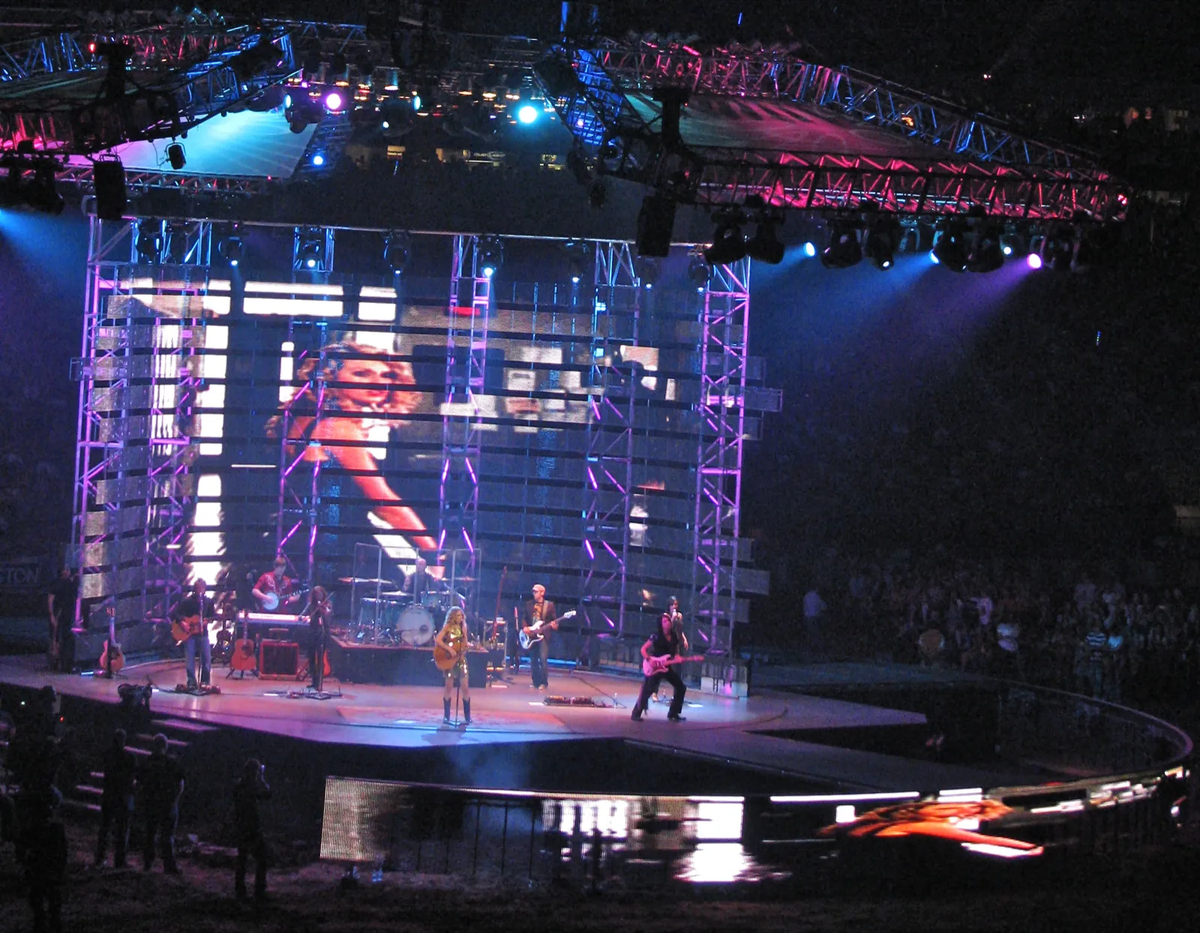
🏷️ Ficha musical
Why it's in this book
"Love Story" is the anchor song for November. It is here because it uses the most-sung loop in pop: four chords that repeat, I–V–vi–IV. In class we play it in C, with C, G, A minor and F, the same four you will find in Anti-Hero, Riptide or Perfect, starting from a different place. On the record the verse puts the chords in another order and the last chorus goes up a tone; in class we keep the chorus loop all the way through and do not go up, so your hand has nothing new to learn. In the classroom with no instruments we sing it with a body-percussion drum beat, on every beat; with ukuleles we strum the loop; and in the music room the whole band plays, with the keyboard taking the banjo's part. The second voice sings a third in the chorus. This same month, with Lean On Me, you start rotating in the band.
Why this song
You probably know the story of Romeo and Juliet: two young people in love and two families who will not let them be together. In the end, they both die.
Taylor Swift thought it was the best love story ever told, except for the ending. So she wrote one with a happy ending.
The question on this page is: what does a song that tells a story sound like? Listen to what happens just before the last chorus.
Historical context
Taylor Swift started out as a country singer. Country is the traditional music of the southern United States. She moved to Nashville, the capital of country music, and released her first album at 16.
"Love Story" came from a boy nobody around her liked. Not her family, not her friends. That reminded her of Romeo and Juliet, a play Shakespeare wrote more than four hundred years ago.
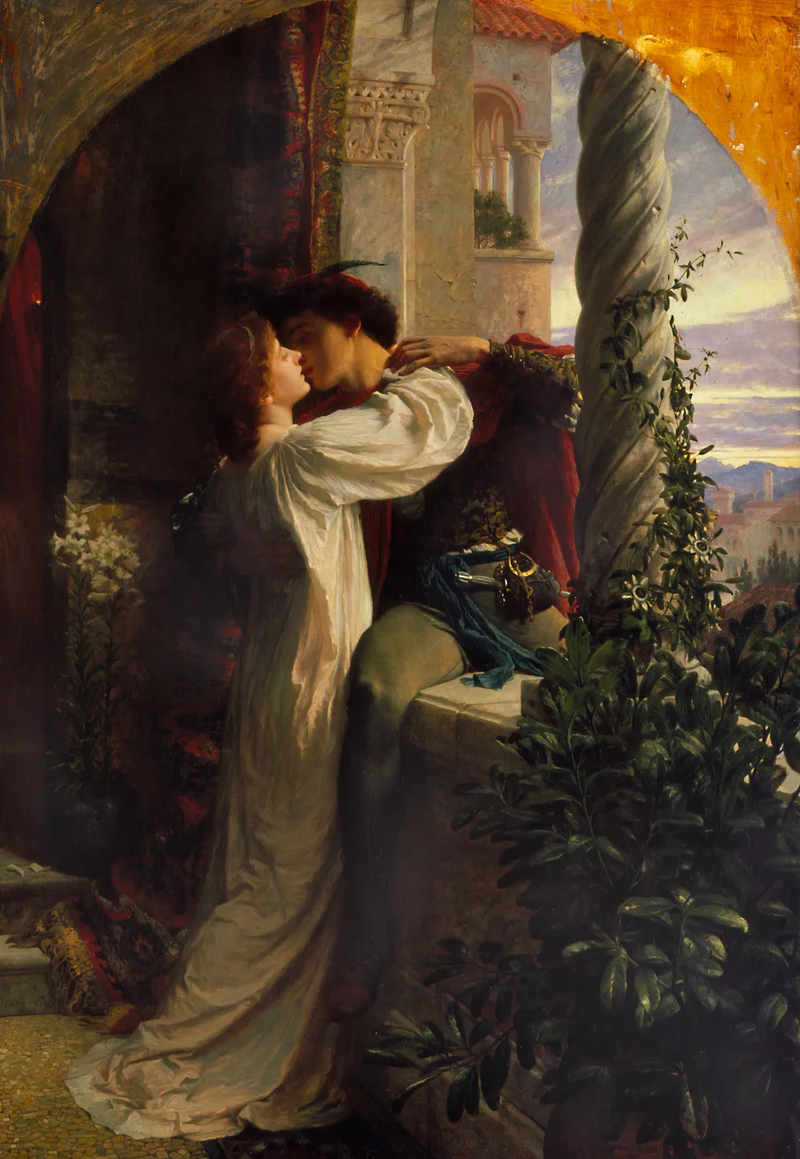
Foto: Frank Dicksee, dominio público, vía Wikimedia Commons
The balcony scene from Romeo and Juliet, painted by Frank Dicksee in 1884. The first verse of "Love Story" starts right there: on a balcony, in summer.
Swift wrote the song in about twenty minutes, sitting on her bedroom floor. The next day she recorded a demo in a quarter of an hour. It came out in 2008 on her second album, Fearless.
It was a huge hit. It reached number 4 in the United States and was the first country song to reach number 1 on pop radio. In 2021 she recorded it again from scratch, as "Love Story (Taylor's Version)".
Musical characteristics
Country instruments. Listen to the intro. One instrument picks notes very fast, with a metallic sound: that is the banjo. Then a violin comes in, which in country music is called a fiddle. Banjo and fiddle are what say "this is country". For pop radio they made another mix where both were replaced with electric guitars.
The four-chord loop. The chorus uses four chords that repeat: on the record, D, A, B minor and G. In class, one tone lower: C, G, A minor and F. This chord progression is the most used in pop over the last twenty years. Once you learn it, you will hear it everywhere.
A walking drum beat. The drums mark the four beats of each bar with no frills, at 119 beats per minute. It is a light pace, like walking fast.
The final leap. After the bridge, the drums speed up and the song goes up a whole tone: from D major to E major. That change of key is called a modulation. It is like climbing a step just before the happy ending. And it is no accident: in that last chorus, Romeo asks Juliet to marry him.
Hard facts: D major, with the last chorus in E major, 4/4, 119 beats per minute, 3:55. The form: intro, verse, pre-chorus, chorus, verse, pre-chorus, chorus, bridge and final chorus.
Guided listening
Play the music video. In the intro, look for the banjo: the fast metallic sound underneath everything.
In the first verse, listen to how the voice tells the story, almost speaking. She is describing a scene.
When the chorus arrives, play the chords in the air or count how many times they change. There are four, and then they start again.
After the bridge, pay attention: the drums speed up and everything sounds one step higher. Sing the first note of the chorus before and after the leap. Is it the same?
At the end, compare the last chorus with the first. The words change, and so does the story.
Trivia and curiosities
- The music video mixes historical periods: a castle, dresses from past centuries and a ballroom dance. It won Video of the Year at the 2009 country music awards.
- Swift's favourite line in the song is the one where she says this love is difficult, but real.
- The second verse mentions another book: The Scarlet Letter, by Nathaniel Hawthorne. Some critics thought the reference made no sense.
- The producer, Nathan Chapman, recorded nine different acoustic guitars on top of each other. That is why it sounds so full without any electric guitars.
Classroom activities
- Body-percussion drums. Foot on beats 1 and 3, clap on 2 and 4. Keep it going through a whole chorus without speeding up.
- The loop on ukulele. C, G, A minor, F, one chord per bar. Start with downstrokes on every beat.
- Find the leap. With the record playing, raise your hand when you hear the song change key. What do the drums do just before?
- Second voice. Half the class sings the chorus melody and the other half a third above.
- Band. In the music room the whole band plays. The keyboard imitates the banjo with short, quick notes over the chords.
Key vocabulary
- Banjo — banjo
- Chord progression — progresión de acordes
- Chorus — estribillo
- Key change / modulation — modulación: cambiar de tonalidad en mitad de la canción
Resources
Official music video — Romeo and Juliet in a castle, with costumes from another age.
Ukulele tutorial — Bernadette Teaches Music. A play-along, with the chords on screen.
Guitar tutorial — Andy Guitar. Step by step: chords, strumming and changes.
Piano tutorial — Piano Beginner. The melody, slowly, to get started.
Por qué está en este libro
«Love Story» es la canción ancla de noviembre. Está aquí porque usa el bucle más cantado del pop: cuatro acordes que se repiten, I–V–vi–IV. En clase lo tocamos en Do, con do, sol, la menor y fa, y son los mismos cuatro que vas a encontrar en Anti-Hero, Riptide o Perfect, empezando por otro sitio. En el disco la estrofa ordena los acordes de otra forma y el último estribillo sube un tono; en clase nos quedamos con el bucle del estribillo todo el rato y sin subir, para que la mano no tenga que aprender nada nuevo. En el aula sin instrumentos se canta con la batería hecha con el cuerpo, a negras; con ukelele, rasgueamos el bucle; y en el aula de música toca toda la banda, con el teclado haciendo el papel del banjo. La segunda voz canta una tercera en el estribillo. Este mismo mes, con Lean On Me, empezáis a rotar en la banda.
Por dónde entrar
Seguro que conoces la historia de Romeo y Julieta: dos chicos que se quieren y dos familias que no les dejan. Al final mueren los dos.
Taylor Swift pensó que esa era la mejor historia de amor jamás contada, menos por el final. Así que escribió otra con final feliz.
La pregunta de esta página es: ¿cómo suena una canción que cuenta un cuento? Fíjate en lo que pasa justo antes del último estribillo.
Contexto histórico
Taylor Swift empezó como cantante de country, la música tradicional del sur de Estados Unidos. Se mudó a Nashville, la capital del country, y sacó su primer disco con 16 años.
«Love Story» nació de un chico que no gustaba a nadie de su entorno. Ni a su familia ni a sus amigos. Eso le recordó a Romeo y Julieta, una obra de teatro que Shakespeare escribió hace más de cuatrocientos años.
Foto: Frank Dicksee, dominio público, vía Wikimedia Commons
La escena del balcón de Romeo y Julieta, pintada por Frank Dicksee en 1884. La primera estrofa de «Love Story» empieza justo ahí: en un balcón, en verano.
Swift escribió la canción en unos veinte minutos, sentada en el suelo de su cuarto. Al día siguiente grabó una maqueta en un cuarto de hora. Salió en 2008 en su segundo disco, Fearless.
Fue un éxito enorme. Llegó al número 4 en Estados Unidos y fue la primera canción country en llegar al número 1 de las radios de pop. En 2021 la volvió a grabar entera, con el nombre «Love Story (Taylor's Version)».
Cómo suena
Instrumentos de country. Escucha la intro. Hay un instrumento que pica las notas muy rápido, con un sonido metálico: es el banjo. Luego entra un violín, que en el country se llama fiddle. Banjo y violín son los que dicen «esto es country». Para las radios de pop hicieron otra mezcla en la que los cambiaron por guitarras eléctricas.
El bucle de cuatro acordes. El estribillo usa cuatro acordes que se repiten: en el disco, re, la, si menor y sol. En clase, un tono más abajo: do, sol, la menor y fa. Esta progresión de acordes es la más usada del pop de los últimos veinte años. Cuando la aprendas, la vas a oír en todas partes.
Una batería que camina. La batería marca los cuatro pulsos de cada compás sin adornos, a 119 pulsos por minuto. Es un paso ligero, de caminar deprisa.
El salto final. Después del puente, la batería acelera y la canción sube un tono entero: de re mayor a mi mayor. Ese cambio de tonalidad se llama modulación. Es como subir un escalón justo antes del final feliz. Y no es casualidad: en ese último estribillo Romeo pide a Julieta que se case con él.
Datos duros: Re mayor, con el último estribillo en Mi mayor, 4/4, 119 pulsos por minuto, 3:55. La forma: intro, estrofa, preestribillo, estribillo, estrofa, preestribillo, estribillo, puente y estribillo final.
Escucha guiada
Pon el videoclip. En la intro, busca el banjo: es el sonido metálico y rápido que va debajo de todo.
En la primera estrofa, escucha cómo la voz cuenta la historia casi hablando. Está narrando una escena.
Cuando llegue el estribillo, toca los acordes en el aire o cuenta cuántas veces cambian. Son cuatro y vuelven a empezar.
Después del puente, presta atención: la batería se acelera y todo suena un escalón más alto. Canta la primera nota del estribillo antes y después del salto. ¿Te sale igual?
Al final, compara el último estribillo con el primero. Las palabras cambian, y la historia también.
Curiosidades
- El videoclip mezcla épocas: un castillo, vestidos de siglos pasados y un baile de salón. Ganó el premio al vídeo del año en los premios del country de 2009.
- Su frase favorita de la canción es una en la que dice que ese amor es difícil, pero real.
- En la segunda estrofa aparece otra novela: La letra escarlata, de Nathaniel Hawthorne. A algunos críticos les pareció que la cita no venía a cuento.
- El productor, Nathan Chapman, grabó nueve guitarras acústicas distintas una encima de otra. Por eso suena tan llena aunque no haya guitarras eléctricas.
Para hacer en clase
- Batería con el cuerpo. Pie en el pulso 1 y 3, palmada en el 2 y 4. Mantenedlo durante un estribillo entero sin acelerar.
- El bucle en ukelele. Do, sol, la menor, fa, un acorde por compás. Empezad con golpes hacia abajo en cada pulso.
- Encontrar el salto. Con el disco, levantad la mano cuando notéis que la canción sube de tono. ¿Qué hace la batería justo antes?
- Segunda voz. La mitad de la clase canta la melodía del estribillo y la otra mitad una tercera por encima.
- Banda. En el aula de música toca toda la banda. El teclado imita el banjo con notas cortas y rápidas sobre los acordes.
Vocabulario fundamental
- Banjo — Instrumento de cuerda con caja redonda, como un tambor. Suena metálico y muy rápido.
- Progresión de acordes — Una serie de acordes que se repite en el mismo orden. Aquí: do, sol, la menor, fa.
- Estribillo — La parte que vuelve igual varias veces y que canta todo el mundo.
- Modulación — Cambiar de tonalidad en mitad de la canción. Aquí sube un tono antes del final.
Recursos
Videoclip oficial — Romeo y Julieta en un castillo, con vestidos de otra época.
Tutorial de ukelele — Bernadette Teaches Music. Se toca encima de la canción, con los acordes en pantalla.
Tutorial de guitarra — Andy Guitar. Paso a paso: acordes, rasgueo y cambios.
Tutorial de piano — Piano Beginner. La melodía, despacio, para empezar.
Why it's in this book
"Love Story" is the anchor song for November. It is here because it uses the most-sung loop in pop: four chords that repeat, I–V–vi–IV. In class we play it in C, with C, G, A minor and F, the same four you will find in Anti-Hero, Riptide or Perfect, starting from a different place. On the record the verse puts the chords in another order and the last chorus goes up a tone; in class we keep the chorus loop all the way through and do not go up, so your hand has nothing new to learn. In the classroom with no instruments we sing it with a body-percussion drum beat, on every beat; with ukuleles we strum the loop; and in the music room the whole band plays, with the keyboard taking the banjo's part. The second voice sings a third in the chorus. This same month, with Lean On Me, you start rotating in the band.
Why this song
You probably know the story of Romeo and Juliet: two young people in love and two families who will not let them be together. In the end, they both die.
Taylor Swift thought it was the best love story ever told, except for the ending. So she wrote one with a happy ending.
The question on this page is: what does a song that tells a story sound like? Listen to what happens just before the last chorus.
Historical context
Taylor Swift started out as a country singer. Country is the traditional music of the southern United States. She moved to Nashville, the capital of country music, and released her first album at 16.
"Love Story" came from a boy nobody around her liked. Not her family, not her friends. That reminded her of Romeo and Juliet, a play Shakespeare wrote more than four hundred years ago.
Foto: Frank Dicksee, dominio público, vía Wikimedia Commons
The balcony scene from Romeo and Juliet, painted by Frank Dicksee in 1884. The first verse of "Love Story" starts right there: on a balcony, in summer.
Swift wrote the song in about twenty minutes, sitting on her bedroom floor. The next day she recorded a demo in a quarter of an hour. It came out in 2008 on her second album, Fearless.
It was a huge hit. It reached number 4 in the United States and was the first country song to reach number 1 on pop radio. In 2021 she recorded it again from scratch, as "Love Story (Taylor's Version)".
Musical characteristics
Country instruments. Listen to the intro. One instrument picks notes very fast, with a metallic sound: that is the banjo. Then a violin comes in, which in country music is called a fiddle. Banjo and fiddle are what say "this is country". For pop radio they made another mix where both were replaced with electric guitars.
The four-chord loop. The chorus uses four chords that repeat: on the record, D, A, B minor and G. In class, one tone lower: C, G, A minor and F. This chord progression is the most used in pop over the last twenty years. Once you learn it, you will hear it everywhere.
A walking drum beat. The drums mark the four beats of each bar with no frills, at 119 beats per minute. It is a light pace, like walking fast.
The final leap. After the bridge, the drums speed up and the song goes up a whole tone: from D major to E major. That change of key is called a modulation. It is like climbing a step just before the happy ending. And it is no accident: in that last chorus, Romeo asks Juliet to marry him.
Hard facts: D major, with the last chorus in E major, 4/4, 119 beats per minute, 3:55. The form: intro, verse, pre-chorus, chorus, verse, pre-chorus, chorus, bridge and final chorus.
Guided listening
Play the music video. In the intro, look for the banjo: the fast metallic sound underneath everything.
In the first verse, listen to how the voice tells the story, almost speaking. She is describing a scene.
When the chorus arrives, play the chords in the air or count how many times they change. There are four, and then they start again.
After the bridge, pay attention: the drums speed up and everything sounds one step higher. Sing the first note of the chorus before and after the leap. Is it the same?
At the end, compare the last chorus with the first. The words change, and so does the story.
Trivia and curiosities
- The music video mixes historical periods: a castle, dresses from past centuries and a ballroom dance. It won Video of the Year at the 2009 country music awards.
- Swift's favourite line in the song is the one where she says this love is difficult, but real.
- The second verse mentions another book: The Scarlet Letter, by Nathaniel Hawthorne. Some critics thought the reference made no sense.
- The producer, Nathan Chapman, recorded nine different acoustic guitars on top of each other. That is why it sounds so full without any electric guitars.
Classroom activities
- Body-percussion drums. Foot on beats 1 and 3, clap on 2 and 4. Keep it going through a whole chorus without speeding up.
- The loop on ukulele. C, G, A minor, F, one chord per bar. Start with downstrokes on every beat.
- Find the leap. With the record playing, raise your hand when you hear the song change key. What do the drums do just before?
- Second voice. Half the class sings the chorus melody and the other half a third above.
- Band. In the music room the whole band plays. The keyboard imitates the banjo with short, quick notes over the chords.
Key vocabulary
- Banjo — banjo
- Chord progression — progresión de acordes
- Chorus — estribillo
- Key change / modulation — modulación: cambiar de tonalidad en mitad de la canción
Resources
Official music video — Romeo and Juliet in a castle, with costumes from another age.
Ukulele tutorial — Bernadette Teaches Music. A play-along, with the chords on screen.
Guitar tutorial — Andy Guitar. Step by step: chords, strumming and changes.
Piano tutorial — Piano Beginner. The melody, slowly, to get started.