Contenidos
Let It Be — The Beatles (1970)
A slow hymn that sounds like church music but isn't. Four chords, a short phrase that keeps coming back and a piano that holds everything up: the ideal song for learning to sing all together, in tune.
🏷️ Ficha musical
Why it's in this book
In November, the anchor song for Year 9 (3º ESO) is "Stand by Me". "Let It Be" is the month's second song, the one the band on duty can choose, and that is no accident: it uses the same four chords as "Stand by Me" (C, A minor, F and G), just in another order. "Stand by Me" goes C–Am–F–G; this one goes C–G–Am–F, the most sung loop in pop. In this book it shares that loop with "Someone You Loved" and "Resistiré". What you learn with it is to sing a slow hymn in unison, everyone on the same note and in tune, and then to add thirds on "let it be". In the room with nothing, we sing it a cappella and mark the slow beat with body percussion; in the ukulele room, we play the four chords; in the music room, the keyboard plays the record's part and the electric guitar takes the solo. To be honest: the record has more chords (D minor, E minor and a B flat in the instrumental passage). In class we play the four-chord version, C–G–Am–F, and it still sounds like the song.
Why this song
What makes a song sound like a hymn, something people sing standing up and all together? It is not the lyrics or the subject. It is the music: a slow tempo, chords that land where your ear expects them, and a phrase so short that you are singing it by the second time round.
"Let It Be" answers that question with very little. Listen to it with that in mind.
Historical context
In January 1969 the Beatles were tired of each other. They had been together for seven years and argued about almost everything. That month they shut themselves in to record with a camera rolling, for a film that ended up being called "Let It Be".
Paul McCartney wrote the song. He said the idea came from a dream. In it he saw his mother, Mary, who had died of cancer when he was 14. In the dream she told him everything would be all right, to let it be. That is why the lyrics mention "Mother Mary". Many people hear it as a prayer to the Virgin Mary; McCartney has always said listeners can take it however they like.
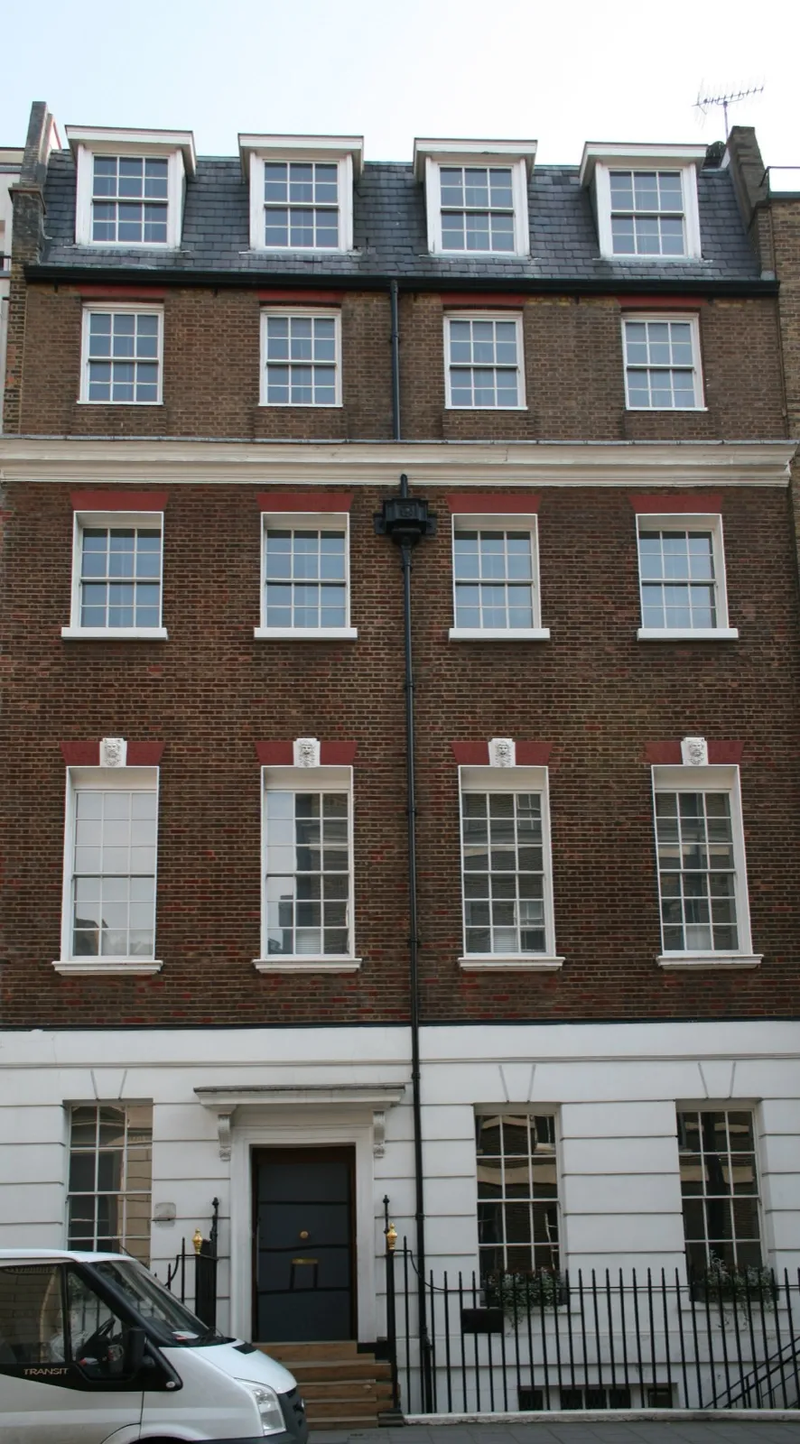
Foto: Misterweiss, dominio público, vía Wikimedia Commons
This is number 3 Savile Row, in London, the headquarters of Apple, the Beatles' company. The master take of "Let It Be" was recorded in its studio on 31 January 1969. The day before, the band had played on the roof of this same building: it was their last concert.
There is a fifth musician on the recording: Billy Preston, on organ. That organ is what brings the song closest to gospel, the music of African American churches.
The single came out on 6 March 1970. It was the Beatles' last single before McCartney announced he was leaving the band. By then Aretha Franklin had already released her own version: McCartney had sent her a demo.
Musical characteristics
A piano playing church. The song starts with the piano alone. Full chords, played calmly, each one in its place. It is the way a church pianist plays to accompany a congregation. So even before the voice comes in, you know what kind of song this is.
Four chords you already know. The verse starts with C, G, A minor and F. That order is a chord progression pop has used thousands of times: in this book you meet it again in "Someone You Loved". Play it on a loop and either song fits on top.
The record has more chords than those four. A D minor appears in the verse, an E minor in the chorus, and in the instrumental passage a B flat that does not belong to the key of C. That B flat is what makes the passage sound like a change of light. But the backbone is the same four chords.
A short phrase. The chorus repeats the title words four times. Each phrase is short and falls gently. When a melody moves very little and repeats, everyone can sing it at once on the same note. Everyone singing the same note is called unison. It is harder than it looks: if one voice drifts, you hear it.
How it grows. First, piano and voice. Then the organ, bass and drums come in, and finally a small orchestra and a soft choir. The harmony does not change for the song to grow. What changes is how many people are playing.
Two solos for one song. George Harrison recorded two different guitar solos. The single has the softer one. The album has the louder, dirtier one. Listen to both versions: it is the same song with two personalities.
Hard facts: C major, 4/4, 74 beats per minute, 3:50 for the single and 4:03 for the album. Form: piano intro, verse, chorus, verse, chorus, instrumental passage, solo, verse and final choruses.
Guided listening
Play the music video. In the intro, count the piano chords. Each one lasts the same time. Try saying "C, G, A, F" quietly as they change.
In the first verse, notice what is playing. Almost only the piano and McCartney's voice.
When the chorus arrives, sing the title quietly along with him. Check that your note is the same as his: that is singing in unison.
After the second chorus, listen to the passage without voice. Find the moment where the harmony "changes light": that is the B flat.
In the guitar solo, ask yourself: is it soft or loud? If it is loud and dirty, you are hearing the album version.
Trivia and curiosities
- In a 1968 rehearsal, before recording it properly, McCartney sang "Brother Malcolm" instead of "Mother Mary". Malcolm Evans was the band's assistant. The lyrics were still moving.
- McCartney has said the phrase may have come from Shakespeare: in "Hamlet", the prince dies saying "let it be". Even simple words have a history.
- The first version on sale was not the Beatles' own. It was Aretha Franklin's, in January 1970. A song with a gospel sound ended up first in the voice of the Queen of Soul.
- In 1987 a group of musicians called Ferry Aid recorded it to raise money after a ferry disaster. It was number 1 in the UK for three weeks. McCartney is on it, with his vocal from the original sessions.
Classroom activities
- Unison in tune. The whole class sings the chorus together, with no instruments. Boys an octave lower. First very quietly, listening to the person next to you. If someone stands out above the rest, you are not in unison.
- Play the four chords. Ukulele: C, G, A minor, F, one chord per bar. Start with one downstroke per beat, slowly. When that works, sing and play at the same time.
- Thirds on "let it be". Half the class sings the melody. The other half sings the same phrase starting a third lower. Hint: the note for the third is inside the chord you are playing on the ukulele.
- Change the order. Play C–G–Am–F and sing "Let It Be" on top. Now play C–Am–F–G and sing "Stand by Me". Same four chords, a different song. What changes: the chords or the order?
- Band. In the music room, the keyboard plays the chords like the piano on the record: full and slow. The electric guitar prepares a short solo over the instrumental passage.
Key vocabulary
- Gospel — gospel: la música de las iglesias afroamericanas
- Chord progression — progresión de acordes
- Unison — unísono: todas las voces en la misma nota
- Thirds — terceras: una segunda voz a distancia de tercera
Resources
Official music video — On the Beatles' channel.
Ukulele tutorial — Bernadette Teaches Music. Playing and singing at once, with chords and lyrics on screen.
Guitar tutorial — JustinGuitar. An easy version for beginners.
Piano tutorial — Piano with Nate. The accompaniment in three levels, from the easiest to the one on the record.
Por qué está en este libro
En noviembre la canción ancla de 3º es «Stand by Me». «Let It Be» es la segunda canción del mes, la que puede elegir la banda del turno, y no está ahí por casualidad: usa los mismos cuatro acordes que «Stand by Me» (do, la menor, fa y sol), solo que en otro orden. En «Stand by Me» van do–la menor–fa–sol; aquí, do–sol–la menor–fa, el bucle más cantado del pop. En este libro lo comparte con «Someone You Loved» y «Resistiré». Lo que aprendes con ella es a cantar un himno lento al unísono, todos en la misma nota y afinados, y después a añadir terceras en «let it be». En el aula sin nada se canta a capela marcando el pulso lento con el cuerpo; en el aula con ukelele se tocan los cuatro acordes; en el aula de música el teclado hace la parte del disco y la guitarra eléctrica se lleva el solo. Un aviso honesto: el disco tiene más acordes (re menor, mi menor y un si bemol en el pasaje instrumental). En clase tocamos la versión de cuatro, do–sol–la menor–fa, y suena a la canción.
Por dónde entrar
¿Qué hace que una canción suene a himno, a algo que se canta de pie y todos juntos? No es la letra ni el tema. Es la música: un tempo lento, acordes que caen donde el oído los espera y una frase tan corta que a la segunda vuelta ya la cantas.
«Let It Be» responde a esa pregunta con muy poco. Escúchala pensando en eso.
Contexto histórico
En enero de 1969 los Beatles estaban cansados de sí mismos. Llevaban siete años juntos y discutían por casi todo. Ese mes se encerraron a grabar con una cámara delante, para una película que acabaría llamándose «Let It Be».
La canción la escribió Paul McCartney. Contó que la idea le vino de un sueño. En él aparecía su madre, Mary, que había muerto de cáncer cuando él tenía 14 años. En el sueño ella le decía que todo iría bien, que lo dejara estar: «let it be». Por eso la letra habla de «Mother Mary». Mucha gente la oye como una oración a la Virgen María; McCartney siempre ha dicho que cada uno la entienda como quiera.
Foto: Misterweiss, dominio público, vía Wikimedia Commons
Este es el número 3 de Savile Row, en Londres, la sede de Apple, la empresa de los Beatles. En su estudio se grabó la toma buena de «Let It Be», el 31 de enero de 1969. El día antes, el grupo había tocado en la azotea de este mismo edificio: fue su último concierto.
En la grabación hay un quinto músico: Billy Preston, al órgano. Ese órgano es lo que más acerca la canción al gospel, la música de las iglesias afroamericanas.
El sencillo salió el 6 de marzo de 1970. Fue el último de los Beatles antes de que McCartney anunciara que se iba del grupo. Para entonces, Aretha Franklin ya había publicado su propia versión: McCartney le había enviado una maqueta.
Cómo suena
Un piano que hace de iglesia. La canción empieza con el piano solo. Acordes llenos, tocados con calma, cada uno en su sitio. Es la forma de tocar de un pianista de iglesia acompañando a la gente que canta. Por eso, antes de que entre la voz, ya sabes qué clase de canción es.
Cuatro acordes que ya conoces. La estrofa arranca con do, sol, la menor y fa. Ese orden es una progresión de acordes que el pop ha usado miles de veces: en este libro la vuelves a encontrar en «Someone You Loved». Si la tocas en bucle, cualquiera de las dos canciones cabe encima.
En el disco hay más acordes que esos cuatro. En la estrofa aparece un re menor, en el estribillo un mi menor, y en el pasaje instrumental, un si bemol que no pertenece a la tonalidad de do. Ese si bemol es lo que hace que el pasaje suene a cambio de luz. Pero la columna son los cuatro acordes de siempre.
Una frase corta. El estribillo repite las palabras del título cuatro veces. Cada frase es corta y baja despacio. Cuando una melodía se mueve poco y se repite, todo el mundo puede cantarla a la vez y en la misma nota. Cantar todos la misma nota se llama unísono. Y es más difícil de lo que parece: si una sola voz se desvía, se nota.
Cómo crece. Primero, piano y voz. Después entran el órgano, el bajo, la batería y, al final, una pequeña orquesta y un coro suave. La armonía no cambia para crecer. Lo que cambia es cuánta gente toca.
Dos solos para una canción. George Harrison grabó dos solos de guitarra distintos. En el sencillo suena el más suave. En el álbum, el más fuerte y sucio. Si escuchas las dos versiones, es la misma canción con dos caracteres.
Datos duros: do mayor, 4/4, 74 pulsos por minuto, 3:50 el sencillo y 4:03 el álbum. Forma: intro de piano, estrofa, estribillo, estrofa, estribillo, pasaje instrumental, solo, estrofa y estribillos finales.
Escucha guiada
Pon el videoclip. En la intro, cuenta los acordes del piano. Cada uno dura lo mismo. Intenta decir en voz baja «do, sol, la, fa» cuando cambian.
En la primera estrofa, fíjate en qué suena. Casi solo el piano y la voz de McCartney.
Cuando llegue el estribillo, canta el título con él, en voz baja. Comprueba que tu nota es la misma que la suya: eso es cantar al unísono.
Después del segundo estribillo, escucha el pasaje sin voz. Busca el momento en que la armonía «cambia de luz»: es el si bemol.
En el solo de guitarra, pregúntate: ¿este solo es suave o fuerte? Si es fuerte y sucio, estás oyendo la versión del álbum.
Curiosidades
- En un ensayo de 1968, antes de grabarla en serio, McCartney cantó «Brother Malcolm» en lugar de «Mother Mary». Malcolm Evans era el ayudante del grupo. La letra todavía se estaba moviendo.
- McCartney ha contado que quizá la frase le venía de Shakespeare: en «Hamlet», el príncipe se muere diciendo «let it be». Las palabras sencillas también tienen historia.
- La primera versión que salió a la venta no fue la de los Beatles. Fue la de Aretha Franklin, en enero de 1970. Una canción con sonido de gospel acabó primero en la voz de la reina del soul.
- En 1987, un grupo de músicos llamado Ferry Aid la grabó para recaudar dinero tras el naufragio de un ferri. Fue número 1 en el Reino Unido tres semanas. McCartney aparece en ella, con su voz de la grabación original.
Para hacer en clase
- Unísono afinado. Toda la clase canta el estribillo a la vez, sin instrumentos. Chicos una octava abajo. Primero, muy bajito, escuchando a quien tienes al lado. Si alguien se oye por encima de los demás, no estáis al unísono.
- Tocar los cuatro acordes. Ukelele: do, sol, la menor, fa, un acorde por compás. Empezad con un golpe hacia abajo por pulso, lento. Cuando salga, cantad y tocad a la vez.
- Terceras en «let it be». Una mitad de la clase canta la melodía. La otra canta la misma frase empezando una tercera por debajo. Pista: la nota de la tercera está dentro del acorde que estás tocando con el ukelele.
- Cambiar el orden. Tocad do–sol–la menor–fa y cantad encima «Let It Be». Ahora tocad do–la menor–fa–sol y cantad encima «Stand by Me». Mismos cuatro acordes, otra canción. ¿Qué cambia: los acordes o el orden?
- Banda. En el aula de música, el teclado toca los acordes como el piano del disco: llenos y lentos. La eléctrica prepara un solo corto sobre el pasaje instrumental.
Vocabulario fundamental
- Gospel — La música de las iglesias afroamericanas: coros, órgano y piano, cantada para que se una todo el mundo.
- Progresión de acordes — Una serie de acordes que se repite en el mismo orden. Aquí: do, sol, la menor, fa.
- Unísono — Cuando todas las voces cantan la misma nota a la vez.
- Terceras — Una segunda voz que canta la misma melodía, pero una tercera por debajo o por encima.
Recursos
Videoclip oficial — En el canal de los Beatles.
Tutorial de ukelele — Bernadette Teaches Music. Tocar y cantar a la vez, con los acordes y la letra en pantalla.
Tutorial de guitarra — JustinGuitar. Versión fácil para principiantes.
Tutorial de piano — Piano with Nate. El acompañamiento en tres niveles, del más fácil al del disco.
Why it's in this book
In November, the anchor song for Year 9 (3º ESO) is "Stand by Me". "Let It Be" is the month's second song, the one the band on duty can choose, and that is no accident: it uses the same four chords as "Stand by Me" (C, A minor, F and G), just in another order. "Stand by Me" goes C–Am–F–G; this one goes C–G–Am–F, the most sung loop in pop. In this book it shares that loop with "Someone You Loved" and "Resistiré". What you learn with it is to sing a slow hymn in unison, everyone on the same note and in tune, and then to add thirds on "let it be". In the room with nothing, we sing it a cappella and mark the slow beat with body percussion; in the ukulele room, we play the four chords; in the music room, the keyboard plays the record's part and the electric guitar takes the solo. To be honest: the record has more chords (D minor, E minor and a B flat in the instrumental passage). In class we play the four-chord version, C–G–Am–F, and it still sounds like the song.
Why this song
What makes a song sound like a hymn, something people sing standing up and all together? It is not the lyrics or the subject. It is the music: a slow tempo, chords that land where your ear expects them, and a phrase so short that you are singing it by the second time round.
"Let It Be" answers that question with very little. Listen to it with that in mind.
Historical context
In January 1969 the Beatles were tired of each other. They had been together for seven years and argued about almost everything. That month they shut themselves in to record with a camera rolling, for a film that ended up being called "Let It Be".
Paul McCartney wrote the song. He said the idea came from a dream. In it he saw his mother, Mary, who had died of cancer when he was 14. In the dream she told him everything would be all right, to let it be. That is why the lyrics mention "Mother Mary". Many people hear it as a prayer to the Virgin Mary; McCartney has always said listeners can take it however they like.
Foto: Misterweiss, dominio público, vía Wikimedia Commons
This is number 3 Savile Row, in London, the headquarters of Apple, the Beatles' company. The master take of "Let It Be" was recorded in its studio on 31 January 1969. The day before, the band had played on the roof of this same building: it was their last concert.
There is a fifth musician on the recording: Billy Preston, on organ. That organ is what brings the song closest to gospel, the music of African American churches.
The single came out on 6 March 1970. It was the Beatles' last single before McCartney announced he was leaving the band. By then Aretha Franklin had already released her own version: McCartney had sent her a demo.
Musical characteristics
A piano playing church. The song starts with the piano alone. Full chords, played calmly, each one in its place. It is the way a church pianist plays to accompany a congregation. So even before the voice comes in, you know what kind of song this is.
Four chords you already know. The verse starts with C, G, A minor and F. That order is a chord progression pop has used thousands of times: in this book you meet it again in "Someone You Loved". Play it on a loop and either song fits on top.
The record has more chords than those four. A D minor appears in the verse, an E minor in the chorus, and in the instrumental passage a B flat that does not belong to the key of C. That B flat is what makes the passage sound like a change of light. But the backbone is the same four chords.
A short phrase. The chorus repeats the title words four times. Each phrase is short and falls gently. When a melody moves very little and repeats, everyone can sing it at once on the same note. Everyone singing the same note is called unison. It is harder than it looks: if one voice drifts, you hear it.
How it grows. First, piano and voice. Then the organ, bass and drums come in, and finally a small orchestra and a soft choir. The harmony does not change for the song to grow. What changes is how many people are playing.
Two solos for one song. George Harrison recorded two different guitar solos. The single has the softer one. The album has the louder, dirtier one. Listen to both versions: it is the same song with two personalities.
Hard facts: C major, 4/4, 74 beats per minute, 3:50 for the single and 4:03 for the album. Form: piano intro, verse, chorus, verse, chorus, instrumental passage, solo, verse and final choruses.
Guided listening
Play the music video. In the intro, count the piano chords. Each one lasts the same time. Try saying "C, G, A, F" quietly as they change.
In the first verse, notice what is playing. Almost only the piano and McCartney's voice.
When the chorus arrives, sing the title quietly along with him. Check that your note is the same as his: that is singing in unison.
After the second chorus, listen to the passage without voice. Find the moment where the harmony "changes light": that is the B flat.
In the guitar solo, ask yourself: is it soft or loud? If it is loud and dirty, you are hearing the album version.
Trivia and curiosities
- In a 1968 rehearsal, before recording it properly, McCartney sang "Brother Malcolm" instead of "Mother Mary". Malcolm Evans was the band's assistant. The lyrics were still moving.
- McCartney has said the phrase may have come from Shakespeare: in "Hamlet", the prince dies saying "let it be". Even simple words have a history.
- The first version on sale was not the Beatles' own. It was Aretha Franklin's, in January 1970. A song with a gospel sound ended up first in the voice of the Queen of Soul.
- In 1987 a group of musicians called Ferry Aid recorded it to raise money after a ferry disaster. It was number 1 in the UK for three weeks. McCartney is on it, with his vocal from the original sessions.
Classroom activities
- Unison in tune. The whole class sings the chorus together, with no instruments. Boys an octave lower. First very quietly, listening to the person next to you. If someone stands out above the rest, you are not in unison.
- Play the four chords. Ukulele: C, G, A minor, F, one chord per bar. Start with one downstroke per beat, slowly. When that works, sing and play at the same time.
- Thirds on "let it be". Half the class sings the melody. The other half sings the same phrase starting a third lower. Hint: the note for the third is inside the chord you are playing on the ukulele.
- Change the order. Play C–G–Am–F and sing "Let It Be" on top. Now play C–Am–F–G and sing "Stand by Me". Same four chords, a different song. What changes: the chords or the order?
- Band. In the music room, the keyboard plays the chords like the piano on the record: full and slow. The electric guitar prepares a short solo over the instrumental passage.
Key vocabulary
- Gospel — gospel: la música de las iglesias afroamericanas
- Chord progression — progresión de acordes
- Unison — unísono: todas las voces en la misma nota
- Thirds — terceras: una segunda voz a distancia de tercera
Resources
Official music video — On the Beatles' channel.
Ukulele tutorial — Bernadette Teaches Music. Playing and singing at once, with chords and lyrics on screen.
Guitar tutorial — JustinGuitar. An easy version for beginners.
Piano tutorial — Piano with Nate. The accompaniment in three levels, from the easiest to the one on the record.