Contenidos
I Ain't Worried — OneRepublic (2022)
A four-bar whistle holds up a whole song, and OneRepublic did not invent it: they borrowed it from a 2006 Swedish record, with the writing credits to prove it.
🏷️ Ficha musical
Why this song
Four chords, one whistle, two minutes and a half. Nothing else.
It is the tune from the beach football scene in Top Gun: Maverick — the one moment in the film where nobody is flying. If it sounded familiar before you saw the film, you were right. The whistle comes from "Young Folks", released by the Swedish band Peter Bjorn and John in 2006, and three of their members are named in the credits of this one.
Historical context
Ryan Tedder wrote the song for that specific scene. In his words, he wrote it "with the characters in mind relaxing and having fun in the scene for the first time in those two hours of film". It came out on 13 May 2022 with the Top Gun: Maverick soundtrack.

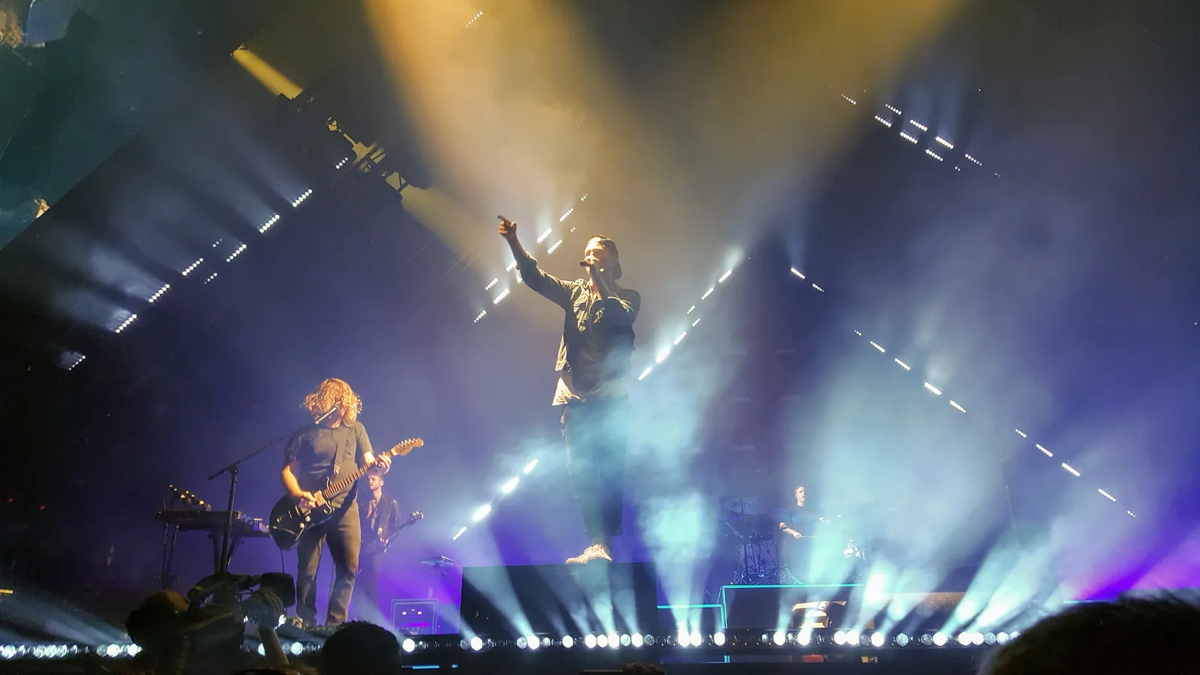
Foto: Julio Enriquez, CC BY 2.0, vía Wikimedia Commons
That explains its size. It runs 2:28, well short of a normal radio single. It is not built to hold up an album side. It is built to fit a scene and get out.
Six people are credited as writers. Three are OneRepublic and their team: Tedder, Brent Kutzle and Tyler Spry. The other three — Peter Morén, Björn Yttling and John Eriksson — are Peter Bjorn and John, and they were never in the room. They are there because the song contains elements of their 2006 single "Young Folks".
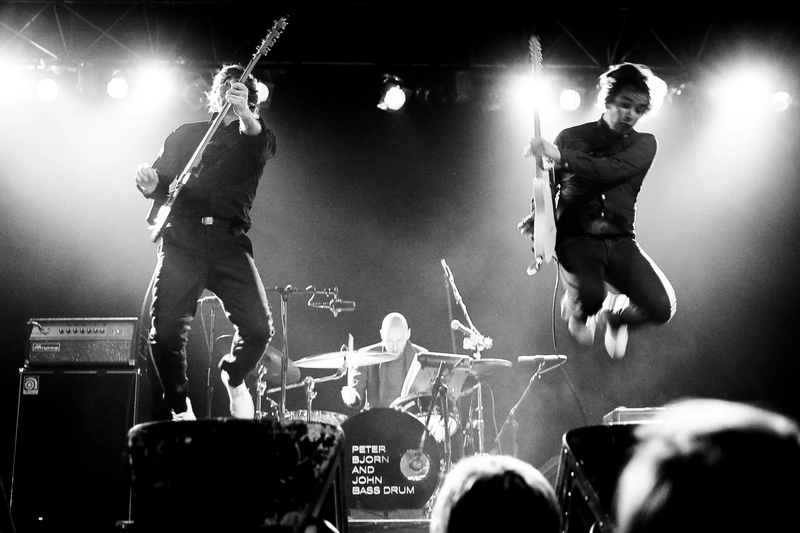
Foto: Davinic, CC BY-SA 3.0, vía Wikimedia Commons
When a song reuses a melodic idea from another one by playing it again, rather than copying the sound of the original record, it is called an interpolation. It gets settled by sharing the songwriting credit, which is exactly what happened here.
Musical characteristics
Four chords, always the same, always in the same order: B♭ – G minor – D minor – F. They never change, not even under the bridge. That is a harmonic loop: the harmony stops telling a story and becomes a floor for other things to happen on.
Look at a keyboard while you listen. Those four chords use six different notes and only one of them is a black key: B♭. That is why the song walks into a classroom so easily.
That single flat is the key signature, and it is also where the analysts disagree. One flat can mean F major or D minor: the same signature seen from two different homes. They are relative keys. JamZone calls it D minor; Hooktheory reads the chorus as F major. Both are defensible, and which one you hear depends on the chord where the music seems to settle.
The whistle sits on top of that floor. It is the main melody, not decoration, and it stays inside a single octave: Hooktheory puts the chorus melody between C4 and C5. That band a melody moves in, high or low, is its register.
A one-octave register plus motion that mostly goes to neighbouring notes gives you a melody you can whistle. That is the whole design.
Hard facts: D minor (one flat), 4/4, 140 BPM, 2:28. The form is intro, verse, chorus, verse, chorus, verse, bridge, chorus.
Trivia and curiosities
- The original whistle in "Young Folks" was a placeholder. Björn Yttling whistled it only so the band could remember the melody, meaning to replace it later with an organ or something similar. They ran it through a tape delay, it sounded good, and it stayed. The final version is often the temporary one nobody got round to changing.
- Three Swedes are paid for a song they did not play on. It shows where authorship actually lives in pop: not in who pressed record, but in whose melodic idea you recognise.
- It runs 2:28 with no solo, no key change and no long outro. When music is written for a scene, the scene outranks the format.
- The same song is filed as D minor in one database and F major in another. Neither is wrong: a key signature does not decide the key on its own — your ear does.
Classroom activities
- Play the tune on a violin. This is the main reason to bring the song into class. The whistle has the register and the stepwise motion of a string melody. If someone in the group plays violin, this is where they take the lead: first position, in whichever of the two octaves feels comfortable. With a violin doubling the tune, the band stops sounding like karaoke.
- What to do if nobody whistles in tune. That is normal, and one lesson will not fix it: whistling in tune is a knack you have or you don't. Three things that do work: give it to the violin, give it to any melodic instrument you have (recorder, melodica, keyboard on a flute patch), or hum it with the mouth closed. Nothing depends on the timbre being a whistle.
- Play the loop as a band. B♭, G minor, D minor, F, one chord per bar. On guitar those are barre chords, so put a capo on the third fret and use the G, Em, Bm and D shapes: they sound as exactly those four chords and only one awkward barre is left. On a keyboard you play them as they are, with a single black key.
- Analyse: one closed question. Listen to the loop three times and stop the music at the point where it seems to land. D minor or F major? You have to justify it by naming the chord you would stop on. Then, with a clock and a calculator: at 140 BPM in 4/4, how many bars fit into 2:28? If the loop is four bars long, how many times round does the whole song go?
- Create: steal the procedure. Write an eight-bar melody under two conditions: it must fit inside one octave, and it must mostly move to neighbouring notes. The test is simple — if the class can hum it back after two hearings, it works.
Key vocabulary
- Interpolation — interpolación: reutilizar una idea melódica de otra canción tocándola de nuevo, no copiando el disco
- Harmonic loop — bucle armónico
- Key signature — armadura
- Relative keys — tonalidades relativas (fa mayor y re menor comparten armadura)
- Register — registro (la zona grave o aguda en la que se mueve la melodía)
Resources
In Year 3 — this song is also used in the unit ¿Quién pagaba la música cuando nadie compraba entradas?, from the theory and history book.
Where it is explained — this song is studied in ¿De quién es la melodía que estás cantando?, from the modern music history book.
Official music video
Guitar tutorial — Marty Music. A full lesson, with the strumming and the shapes for the loop.
Piano tutorial — Akboman, easy version.
Bass tutorial — krost, with the tab on screen and a play-along track.
Drum tutorial — Steve Howard, sheet music included.
Violin tutorial — Music 4 Humans. This is the main tune, the whistled one, with the notation on screen.
- Song sheet — https://jamzone.musicwill.org/songs/i-aint-worried
- Harmonic analysis — https://www.hooktheory.com/theorytab/view/onerepublic/i-aint-worried
- Tab — attached below; the button opens it in Songsterr, which has a separate whistle track
Por dónde entrar
Puedes tocar el tema principal de esta canción sin instrumento. Basta con silbar.
Ese es el gancho: la melodía que se te queda no la canta nadie, la silba alguien. Aparece en Top Gun: Maverick, en la única escena en la que los pilotos dejan de volar y juegan al fútbol en la playa.
Y si te suena de antes de la película, tienes razón. El silbido viene de «Young Folks», un tema sueco de 2006. Está reconocido en los créditos, no discutido en un juzgado.
Contexto histórico
Ryan Tedder escribió la canción para una escena concreta. Sus palabras: la pensó «con los personajes relajándose y pasándoselo bien por primera vez en esas dos horas de película». Salió el 13 de mayo de 2022 con la banda sonora de Top Gun: Maverick.
Foto: Julio Enriquez, CC BY 2.0, vía Wikimedia Commons
Eso explica su medida. Dura 2:28, bastante menos que una canción normal de radio. No está construida para aguantar una cara de disco, sino para caber en una escena y desaparecer.
En los créditos de autoría hay seis nombres. Tres son de OneRepublic y su equipo: Tedder, Brent Kutzle y Tyler Spry. Los otros tres —Peter Morén, Björn Yttling y John Eriksson— son el grupo sueco Peter Bjorn and John, y no estuvieron en la sala. Están ahí porque la canción contiene elementos de su «Young Folks» (2006).
Foto: Davinic, CC BY-SA 3.0, vía Wikimedia Commons
Cuando una canción reutiliza una idea melódica de otra tocándola de nuevo, en vez de copiar el sonido del disco original, se llama interpolación. Se resuelve repartiendo la autoría, que es lo que pasó aquí.
Cómo suena
Cuatro acordes, siempre los mismos, siempre en el mismo orden: si♭ – sol menor – re menor – fa. No cambian en toda la canción, ni siquiera debajo del puente. A eso se le llama bucle armónico: la armonía deja de contar una historia y se convierte en un suelo sobre el que pasan otras cosas.
Fíjate en el teclado si lo tienes delante. Esos cuatro acordes usan seis notas distintas y solo una es tecla negra: el si♭. Por eso la canción entra tan fácil en un aula.
Esa única alteración es la armadura de la pieza. Es también el sitio donde los analistas no se ponen de acuerdo: con un si♭ puedes estar en fa mayor o en re menor, que son la misma armadura vista desde dos casas distintas. Se llaman tonalidades relativas.
JamZone dice re menor; Hooktheory analiza el estribillo como fa mayor. Las dos lecturas son defendibles. Cuál oigas depende de en qué acorde te parece que la música descansa.
Encima de ese suelo va el silbido. Es la melodía principal, no un adorno, y se queda dentro de una sola octava: Hooktheory sitúa la del estribillo entre do4 y do5. Esa zona en la que se mueve una melodía, grave o aguda, es su registro.
Un registro de una octava y un movimiento casi siempre a notas vecinas dan una melodía que se puede silbar. Ahí está todo el diseño de la canción.
Datos duros: re menor (un si♭), 4/4, 140 BPM, 2:28. La forma es intro, estrofa, estribillo, estrofa, estribillo, estrofa, puente y estribillo.
Curiosidades
- El silbido original de «Young Folks» era provisional. Björn Yttling lo grabó solo para acordarse de la melodía, con la idea de sustituirlo después por un órgano o algo parecido; le pasaron una cinta de eco por encima, sonó bien y se quedó. Lo definitivo suele ser lo provisional que nadie llegó a cambiar.
- Tres suecos cobran por una canción en la que no tocaron. Sirve para ver dónde está la autoría en el pop: no en quién aprieta el botón de grabar, sino en de quién es la idea melódica que reconoces.
- Dura 2:28 y no tiene solo, ni cambio de tonalidad, ni final largo. Cuando la música se escribe para una escena, la escena manda sobre el formato.
- La misma canción figura en re menor en una base de datos y en fa mayor en otra. No es que una esté mal: la armadura no decide la tonalidad por sí sola, la decide el oído.
Para hacer en clase
- Tocar el tema con un violín. Es la razón principal para traer esta canción a clase. El silbido tiene el registro y el movimiento por grados vecinos de una melodía de cuerda. Si en el grupo hay alguien que toca el violín, aquí deja de acompañar y lleva la voz cantante: primera posición, en la octava que le resulte cómoda. Con el violín doblando el tema, la banda deja de sonar a karaoke.
- Qué hacer si nadie silba afinado. Es lo normal, y no se arregla en una sesión: silbar afinado se tiene o no se tiene. Tres salidas que sí funcionan: que lo toque el violín, que lo toque cualquier instrumento melódico a mano (flauta dulce, melódica, teclado con timbre de flauta) o que se cante con la boca cerrada. Nada depende de que el timbre sea un silbido.
- Tocar el bucle con la banda. Si♭, sol menor, re menor, fa, un acorde por compás. En guitarra son cejillas, así que pon capo en el traste 3 y usa las posiciones de sol, mi menor, si menor y re: suenan exactamente esos cuatro acordes y solo queda una cejilla incómoda. En teclado se tocan tal cual, con una sola tecla negra.
- Analizar: dos preguntas cerradas. Escuchad el bucle tres veces y parad la música cuando os parezca que «cae». ¿En re menor o en fa mayor? Se justifica nombrando el acorde en el que pararíais. La segunda va con reloj y calculadora: a 140 BPM y 4/4, ¿cuántos compases caben en 2:28, y cuántas vueltas de cuatro compases da la canción?
- Crear: robar el procedimiento. Escribid una melodía de ocho compases con dos condiciones: que quepa en una octava y que se mueva casi siempre a notas vecinas. La prueba de que funciona es simple: si la clase puede tararearla después de escucharla dos veces, está bien hecha.
Vocabulario fundamental
- Interpolación — Reutilizar una idea melódica de otra canción tocándola de nuevo, en vez de copiar el sonido del disco original. Se paga con créditos de autoría.
- Bucle armónico — Una serie corta de acordes que se repite sin cambiar de principio a fin. La armonía deja de avanzar y pasa a ser el suelo de todo lo demás.
- Armadura — Las alteraciones que se escriben al principio del pentagrama y valen para toda la pieza. Aquí, un si♭.
- Tonalidades relativas — Una mayor y una menor que comparten armadura, como fa mayor y re menor. Cambia dónde sientes que la música descansa, no las notas disponibles.
- Registro — La zona grave o aguda en la que se mueve una melodía. El de esta cabe en una octava, y por eso se puede silbar.
Recursos
En 3º de ESO — también se usa en la unidad ¿Quién pagaba la música cuando nadie compraba entradas?, del libro de teoría e historia.
Dónde se explica — esta canción se estudia en ¿De quién es la melodía que estás cantando?, del libro de historia de la música moderna.
Videoclip oficial
Tutorial de guitarra — Marty Music. Lección completa, con el rasgueo y las posiciones del bucle.
Tutorial de piano — Akboman, versión fácil.
Tutorial de bajo — krost, con la tablatura en pantalla y pista para tocar encima.
Tutorial de batería — Steve Howard, con la partitura incluida.
Tutorial de violín — Music 4 Humans. Es el tema principal, el del silbido, con partitura en pantalla.
- Ficha de la canción — https://jamzone.musicwill.org/songs/i-aint-worried
- Análisis armónico — https://www.hooktheory.com/theorytab/view/onerepublic/i-aint-worried
- Tablatura — adjunta abajo; el botón la abre en Songsterr, que tiene pista de silbido separada
Why this song
Four chords, one whistle, two minutes and a half. Nothing else.
It is the tune from the beach football scene in Top Gun: Maverick — the one moment in the film where nobody is flying. If it sounded familiar before you saw the film, you were right. The whistle comes from "Young Folks", released by the Swedish band Peter Bjorn and John in 2006, and three of their members are named in the credits of this one.
Historical context
Ryan Tedder wrote the song for that specific scene. In his words, he wrote it "with the characters in mind relaxing and having fun in the scene for the first time in those two hours of film". It came out on 13 May 2022 with the Top Gun: Maverick soundtrack.
Foto: Julio Enriquez, CC BY 2.0, vía Wikimedia Commons
That explains its size. It runs 2:28, well short of a normal radio single. It is not built to hold up an album side. It is built to fit a scene and get out.
Six people are credited as writers. Three are OneRepublic and their team: Tedder, Brent Kutzle and Tyler Spry. The other three — Peter Morén, Björn Yttling and John Eriksson — are Peter Bjorn and John, and they were never in the room. They are there because the song contains elements of their 2006 single "Young Folks".
Foto: Davinic, CC BY-SA 3.0, vía Wikimedia Commons
When a song reuses a melodic idea from another one by playing it again, rather than copying the sound of the original record, it is called an interpolation. It gets settled by sharing the songwriting credit, which is exactly what happened here.
Musical characteristics
Four chords, always the same, always in the same order: B♭ – G minor – D minor – F. They never change, not even under the bridge. That is a harmonic loop: the harmony stops telling a story and becomes a floor for other things to happen on.
Look at a keyboard while you listen. Those four chords use six different notes and only one of them is a black key: B♭. That is why the song walks into a classroom so easily.
That single flat is the key signature, and it is also where the analysts disagree. One flat can mean F major or D minor: the same signature seen from two different homes. They are relative keys. JamZone calls it D minor; Hooktheory reads the chorus as F major. Both are defensible, and which one you hear depends on the chord where the music seems to settle.
The whistle sits on top of that floor. It is the main melody, not decoration, and it stays inside a single octave: Hooktheory puts the chorus melody between C4 and C5. That band a melody moves in, high or low, is its register.
A one-octave register plus motion that mostly goes to neighbouring notes gives you a melody you can whistle. That is the whole design.
Hard facts: D minor (one flat), 4/4, 140 BPM, 2:28. The form is intro, verse, chorus, verse, chorus, verse, bridge, chorus.
Trivia and curiosities
- The original whistle in "Young Folks" was a placeholder. Björn Yttling whistled it only so the band could remember the melody, meaning to replace it later with an organ or something similar. They ran it through a tape delay, it sounded good, and it stayed. The final version is often the temporary one nobody got round to changing.
- Three Swedes are paid for a song they did not play on. It shows where authorship actually lives in pop: not in who pressed record, but in whose melodic idea you recognise.
- It runs 2:28 with no solo, no key change and no long outro. When music is written for a scene, the scene outranks the format.
- The same song is filed as D minor in one database and F major in another. Neither is wrong: a key signature does not decide the key on its own — your ear does.
Classroom activities
- Play the tune on a violin. This is the main reason to bring the song into class. The whistle has the register and the stepwise motion of a string melody. If someone in the group plays violin, this is where they take the lead: first position, in whichever of the two octaves feels comfortable. With a violin doubling the tune, the band stops sounding like karaoke.
- What to do if nobody whistles in tune. That is normal, and one lesson will not fix it: whistling in tune is a knack you have or you don't. Three things that do work: give it to the violin, give it to any melodic instrument you have (recorder, melodica, keyboard on a flute patch), or hum it with the mouth closed. Nothing depends on the timbre being a whistle.
- Play the loop as a band. B♭, G minor, D minor, F, one chord per bar. On guitar those are barre chords, so put a capo on the third fret and use the G, Em, Bm and D shapes: they sound as exactly those four chords and only one awkward barre is left. On a keyboard you play them as they are, with a single black key.
- Analyse: one closed question. Listen to the loop three times and stop the music at the point where it seems to land. D minor or F major? You have to justify it by naming the chord you would stop on. Then, with a clock and a calculator: at 140 BPM in 4/4, how many bars fit into 2:28? If the loop is four bars long, how many times round does the whole song go?
- Create: steal the procedure. Write an eight-bar melody under two conditions: it must fit inside one octave, and it must mostly move to neighbouring notes. The test is simple — if the class can hum it back after two hearings, it works.
Key vocabulary
- Interpolation — interpolación: reutilizar una idea melódica de otra canción tocándola de nuevo, no copiando el disco
- Harmonic loop — bucle armónico
- Key signature — armadura
- Relative keys — tonalidades relativas (fa mayor y re menor comparten armadura)
- Register — registro (la zona grave o aguda en la que se mueve la melodía)
Resources
In Year 3 — this song is also used in the unit ¿Quién pagaba la música cuando nadie compraba entradas?, from the theory and history book.
Where it is explained — this song is studied in ¿De quién es la melodía que estás cantando?, from the modern music history book.
Official music video
Guitar tutorial — Marty Music. A full lesson, with the strumming and the shapes for the loop.
Piano tutorial — Akboman, easy version.
Bass tutorial — krost, with the tab on screen and a play-along track.
Drum tutorial — Steve Howard, sheet music included.
Violin tutorial — Music 4 Humans. This is the main tune, the whistled one, with the notation on screen.
- Song sheet — https://jamzone.musicwill.org/songs/i-aint-worried
- Harmonic analysis — https://www.hooktheory.com/theorytab/view/onerepublic/i-aint-worried
- Tab — attached below; the button opens it in Songsterr, which has a separate whistle track