Contenidos
Fast Car — Tracy Chapman (1988)
One guitar, four chords picked note by note, and a story with a beginning and an end. It is not a love song: it is about getting out.
🏷️ Ficha musical
Why this song
Most famous songs earn their place with a big chorus. This one earns it with a right hand.
There is no band at the start. There is a guitar, and it does not even play whole chords — the notes come out one after another, slowly. You recognise the song before the voice arrives.
Then listen to the words. Almost every song you know is about love. This one tells a story instead, and love is the smallest part of it.
Historical context
Tracy Chapman grew up in Cleveland, an industrial city in the north of the United States, raised by her mother alone. She described it herself: a working-class background, and people around her working hard and hoping things would get better. That is where the song comes from.
It was released as a single on 6 April 1988, on Elektra, produced by David Kershenbaum. It was the first song on her first album.
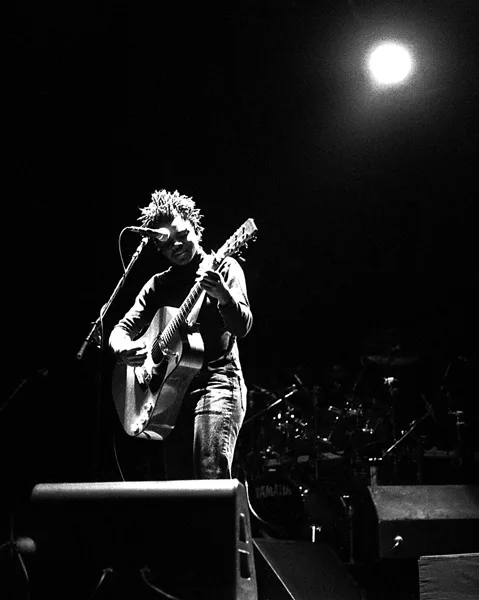
A technical fault launched it. In June 1988 Wembley Stadium in London held a concert for Nelson Mandela's 70th birthday, while he was still in prison in South Africa. Chapman had already played her set.
Just as Stevie Wonder was due on stage, the floppy disk for his keyboard went missing and he could not play without it. Wonder left. The organisers pushed Chapman back out with a microphone and her guitar while they prepared the next act, and she sang "Fast Car" to a full stadium and a worldwide broadcast. By 27 August her album was number one in the United States and this single was number six.
What the words tell. The narrator has left school to look after her father, who drinks. She works on a supermarket till: "I work in the market as a checkout girl". She and her partner make a plan — get in a car, drive to the city, start again.
At first it works. Then she keeps working, he does not, the children arrive, and the plan is left behind. At the end she tells him to take the car and go. The critic John Tague put it in 1988: this is not about people struck by extraordinary disaster, but about escaping one dead end and landing in another.
Musical characteristics
When you play a chord, you strike the strings together and a block of sound comes out. Play those same notes one at a time and the block turns into a line. That is an arpeggio. The chord has not changed; you are just hearing it from the inside.
The whole song rests on that. The guitar arpeggiates four chords, and those four chords never change — not in the verses, not in the choruses.
On the record they are D, A, F# minor and E, in that order. The version you are going to play sits a whole tone lower, in G: C, G, E minor and D. Same song, with the chords moved to where they fall easily on a ukulele and a guitar. Moving a whole song to another pitch like that is called transposing.
So if the harmony never changes, how do you know the chorus has arrived? From the words and from how much is playing.
At first there is a guitar and little else. Then in come Larry Klein's bass, Denny Fongheiser's drums and Ed Black's pedal steel — a guitar laid flat and played with a metal bar, the one that makes that sliding sound. How many things sound at once and what job each one does is the texture, and it is the only thing that really moves here.
The form is easy to follow: intro, two verses, chorus, then verse and chorus twice more.
Hard facts: A major, 4/4, 104 BPM, 4:57 on the album. The official video uses the short version, 4:27.
Trivia and curiosities
- A missing floppy disk is what put the song on the map. Without that fault Chapman would not have been sent back on stage at Wembley that night.
- Chapman has said the song is not her life: "I never had a fast car." Singing in the first person does not mean singing about yourself.
- In 2015 the British DJ Jonas Blue turned it into a dance track at 114 BPM. It reached number two in the UK — higher than Chapman's original, which had peaked at number five in 1988. Same four chords, different decade.
- In 2023 the country singer Luke Combs recorded it almost untouched, keeping the "checkout girl" line. It went to number one on the country charts, and Chapman became the first Black person to win the Country Music Association's Song of the Year award. In February 2024 the two of them played it together at the Grammys — her first televised live performance in nine years.

Luke Combs, autor de la versión de 2023 que devolvió Fast Car a las listas. Foto: Clintonbrannen, CC BY-SA 4.0, vía Wikimedia Commons
Classroom activities
- Play: the loop in G — C, G, E minor, D. Ukuleles and guitars arpeggiate it, note by note; the bass plays only the note each chord is named after (C, G, E, D); the drums keep a calm 4/4 at 104. Half the class picks and half strums the same loop, then you swap. You hear straight away which of the two sounds like the record.
- Analyse: listen to the whole song and write down the order in which each instrument arrives. Since the chords never change, that list is the full explanation of why the song grows.
- Language: put the story in order. Who is speaking? What do they want at the start? What do they have at the end? Point to the exact moment the plan stops working. There is an answer: it is not a matter of opinion.
- Create: four lines that tell a story with a beginning and an end, over the same four-chord loop. Steal the procedure, not the song.
Key vocabulary
- Arpeggio — arpegio: las notas de un acorde tocadas una detrás de otra
- Chord progression — progresión de acordes
- To transpose — transportar: mover la canción entera a otra altura
- Texture — textura
- Form — forma
Resources
Where it is explained — telling verses from choruses is covered in ¿Cómo sabes por dónde vas en una música que oyes por primera vez?. And that the song exists beyond the night it was sung is exactly what ¿Cómo se guarda algo que solo existe mientras suena? is about.
Official music video
Live at Wembley, 1988 — the concert for Nelson Mandela's 70th birthday. One person, one guitar, a full stadium.
The 2023 version — Luke Combs. Same words, same chords, a different chart.
Guitar tutorial — Andy Guitar, beginner fingerstyle version. This is exactly the right hand the article is about.
Ukulele tutorial — Ukulele Cheats, with a play-along at the end.
Bass — Brand73, with the tab on screen. It is in the album key, a tone above the one you play in class.
Drums — Jack Young. Two minutes, the whole pattern.
- Tab — Songsterr: https://www.songsterr.com/a/wsa/tracy-chapman-fast-car-tab-s167
Por dónde entrar
Arranca la canción y no hay banda. Hay una guitarra, y ni siquiera toca los acordes enteros. Va soltando las notas una detrás de otra, despacio.
La reconoces antes de que aparezca la voz. Eso lo está haciendo una mano derecha sola, sin bajo y sin batería debajo.
La otra cosa rara es la letra. Casi todas las canciones que te sabes hablan de amor. Esta cuenta una historia, y el amor es lo de menos.
Contexto histórico
Tracy Chapman creció en Cleveland, una ciudad industrial del norte de Estados Unidos, criada por su madre sola. Ella misma lo explicó así: venía de una familia obrera y veía a su alrededor a gente trabajando mucho y esperando que las cosas mejorasen. De ese sitio sale esta canción.
Salió como single el 6 de abril de 1988, con el sello Elektra y la producción de David Kershenbaum. Era la primera canción de su primer disco.
Lo que la lanzó fue una avería. En junio de 1988, el estadio de Wembley, en Londres, acogió un concierto por el 70 cumpleaños de Nelson Mandela, que entonces seguía preso en Sudáfrica. Chapman ya había cantado lo suyo.
Justo cuando le tocaba salir a Stevie Wonder, se descubrió que faltaba el disquete de su teclado, y sin él no podía tocar. Wonder se fue del escenario. La organización devolvió a Chapman allí con un micrófono y su guitarra mientras preparaban al siguiente, y cantó Fast Car ante un estadio lleno y una retransmisión mundial. El 27 de agosto su disco era el número uno en Estados Unidos y este single el número seis.
La historia que cuenta la letra. La que habla ha dejado los estudios para cuidar de su padre, que bebe. Trabaja de cajera en un supermercado: «I work in the market as a checkout girl». Con su pareja hace un plan — subirse a un coche, irse a la ciudad, empezar de cero.
Al principio funciona. Después ella sigue trabajando, él no, llegan los hijos, y el plan se queda por el camino. Al final ella le dice que coja el coche y se vaya. El crítico John Tague lo resumió en 1988: no habla de gente con una desgracia extraordinaria, sino de quien escapa de un sitio sin salida y acaba en otro parecido.
Cómo suena
Cuando tocas un acorde, pulsas todas las cuerdas a la vez y sale un bloque de sonido. Si en vez de eso tocas esas mismas notas una por una, el bloque se convierte en una fila. Eso es un arpegio. El acorde no ha cambiado; lo que cambia es que ahora lo oyes por dentro.
La canción entera se sostiene sobre eso. La guitarra arpegia cuatro acordes, y esos cuatro acordes no cambian nunca: ni en las estrofas ni en los estribillos.
En el disco son Re, La, Fa# menor y Mi, en esa vuelta. La versión que vais a tocar está un tono más abajo, en Sol: Do, Sol, Mi menor y Re. Es la misma canción con los acordes puestos donde caen fáciles en el ukelele y en la guitarra. Mover una canción entera de altura así se llama transportar.
Entonces, si la armonía nunca cambia, ¿cómo notas que ha entrado el estribillo? Por la letra y por la cantidad de cosas que suenan.
Al principio hay una guitarra y poco más. Luego van entrando el bajo de Larry Klein, la batería de Denny Fongheiser y el pedal steel de Ed Black — una guitarra tumbada que se toca con una barra de metal, la que hace ese sonido que se desliza. Cuántas cosas suenan a la vez y qué papel tiene cada una es la textura, y es lo único que se mueve de verdad aquí.
La forma se sigue sin esfuerzo: introducción, dos estrofas, estribillo, y luego estrofa y estribillo dos veces más.
Datos duros: La mayor, 4/4, 104 BPM, 4:57 en el disco. El videoclip oficial usa la versión corta, de 4:27.
Curiosidades
- Lo que puso la canción en el mapa fue un disquete perdido. Sin esa avería, Chapman no habría vuelto al escenario aquella noche de Wembley. Conviene saber cuánta carrera se decide por accidente.
- Chapman ha dicho que la canción no es su vida: «Yo nunca tuve un coche rápido». Que alguien cante en primera persona no significa que esté contando lo suyo.
- En 2023, el cantante de country Luke Combs la grabó casi sin tocar nada. Ni siquiera cambió el «trabajo de cajera» por algo masculino. Llegó al número uno de las listas de country, y Chapman fue la primera persona negra en ganar el premio a la canción del año de la asociación del country. La canción no había cambiado: lo que cambió fue en qué lista la metieron.
- La canción Dreams de Gabrielle se montó al principio sobre un trozo de Fast Car, y hubo que quitarlo porque no consiguieron el permiso. Usar un pedazo de una grabación ajena exige un contrato; si no llega, fuera.
Luke Combs, autor de la versión de 2023 que devolvió Fast Car a las listas. Foto: Clintonbrannen, CC BY-SA 4.0, vía Wikimedia Commons
Para hacer en clase
- Tocar: la vuelta en Sol — Do, Sol, Mi menor, Re. Ukeleles y guitarras la arpegian, nota a nota; el bajo toca solo la nota que da nombre a cada acorde (do, sol, mi, re); la batería marca un 4/4 tranquilo a 104. Media clase arpegia y la otra media rasguea el mismo bucle, y luego se cambia. Se oye al momento cuál de las dos se parece al disco.
- Analizar: escucha la canción entera y anota en qué orden va entrando cada instrumento. Como los acordes no cambian nunca, esa lista es la explicación completa de por qué la canción crece.
- Lengua: pon la historia en orden. ¿Quién habla? ¿Qué quiere al principio? ¿Qué tiene al final? Señala el punto exacto en que el plan deja de funcionar. Tiene respuesta: no es una pregunta de opinión.
- Crear: cuatro frases que cuenten una historia con principio y final, encima del mismo bucle de cuatro acordes. Se copia el procedimiento, no la canción.
Vocabulario fundamental
- Arpegio — Las notas de un acorde tocadas una detrás de otra en vez de todas a la vez.
- Progresión de acordes — El orden en que se repiten unos acordes. Aquí son cuatro y no cambian en toda la canción.
- Transportar — Mover una canción entera a otra altura sin tocar nada más. Del La del disco al Sol que tocáis en clase.
- Textura — Cuántas cosas suenan a la vez y qué papel tiene cada una.
- Forma — Cómo se ordenan las partes: introducción, estrofas y estribillos.
Recursos
Dónde se explica — distinguir estrofas de estribillos se trabaja en ¿Cómo sabes por dónde vas en una música que oyes por primera vez?. Y que la canción exista más allá de la noche en que se cantó es justo lo que se explica en ¿Cómo se guarda algo que solo existe mientras suena?.
Videoclip oficial
En directo, Wembley 1988 — el concierto por el 70 cumpleaños de Nelson Mandela. Una persona, una guitarra y un estadio entero.
La versión de 2023 — Luke Combs. Misma letra, mismos acordes, otra lista.
Tutorial de guitarra — Andy Guitar, versión de arpegio para principiantes. Es exactamente la mano derecha de la que habla el artículo.
Tutorial de ukelele — Ukulele Cheats, con play-along al final para tocar encima.
Bajo — Brand73, con la tablatura en pantalla. Va en la tonalidad del disco, un tono por encima de la que tocáis en clase.
Batería — Jack Young. Dos minutos y el patrón entero.
- Tablatura — Songsterr: https://www.songsterr.com/a/wsa/tracy-chapman-fast-car-tab-s167
Why this song
Most famous songs earn their place with a big chorus. This one earns it with a right hand.
There is no band at the start. There is a guitar, and it does not even play whole chords — the notes come out one after another, slowly. You recognise the song before the voice arrives.
Then listen to the words. Almost every song you know is about love. This one tells a story instead, and love is the smallest part of it.
Historical context
Tracy Chapman grew up in Cleveland, an industrial city in the north of the United States, raised by her mother alone. She described it herself: a working-class background, and people around her working hard and hoping things would get better. That is where the song comes from.
It was released as a single on 6 April 1988, on Elektra, produced by David Kershenbaum. It was the first song on her first album.
A technical fault launched it. In June 1988 Wembley Stadium in London held a concert for Nelson Mandela's 70th birthday, while he was still in prison in South Africa. Chapman had already played her set.
Just as Stevie Wonder was due on stage, the floppy disk for his keyboard went missing and he could not play without it. Wonder left. The organisers pushed Chapman back out with a microphone and her guitar while they prepared the next act, and she sang "Fast Car" to a full stadium and a worldwide broadcast. By 27 August her album was number one in the United States and this single was number six.
What the words tell. The narrator has left school to look after her father, who drinks. She works on a supermarket till: "I work in the market as a checkout girl". She and her partner make a plan — get in a car, drive to the city, start again.
At first it works. Then she keeps working, he does not, the children arrive, and the plan is left behind. At the end she tells him to take the car and go. The critic John Tague put it in 1988: this is not about people struck by extraordinary disaster, but about escaping one dead end and landing in another.
Musical characteristics
When you play a chord, you strike the strings together and a block of sound comes out. Play those same notes one at a time and the block turns into a line. That is an arpeggio. The chord has not changed; you are just hearing it from the inside.
The whole song rests on that. The guitar arpeggiates four chords, and those four chords never change — not in the verses, not in the choruses.
On the record they are D, A, F# minor and E, in that order. The version you are going to play sits a whole tone lower, in G: C, G, E minor and D. Same song, with the chords moved to where they fall easily on a ukulele and a guitar. Moving a whole song to another pitch like that is called transposing.
So if the harmony never changes, how do you know the chorus has arrived? From the words and from how much is playing.
At first there is a guitar and little else. Then in come Larry Klein's bass, Denny Fongheiser's drums and Ed Black's pedal steel — a guitar laid flat and played with a metal bar, the one that makes that sliding sound. How many things sound at once and what job each one does is the texture, and it is the only thing that really moves here.
The form is easy to follow: intro, two verses, chorus, then verse and chorus twice more.
Hard facts: A major, 4/4, 104 BPM, 4:57 on the album. The official video uses the short version, 4:27.
Trivia and curiosities
- A missing floppy disk is what put the song on the map. Without that fault Chapman would not have been sent back on stage at Wembley that night.
- Chapman has said the song is not her life: "I never had a fast car." Singing in the first person does not mean singing about yourself.
- In 2015 the British DJ Jonas Blue turned it into a dance track at 114 BPM. It reached number two in the UK — higher than Chapman's original, which had peaked at number five in 1988. Same four chords, different decade.
- In 2023 the country singer Luke Combs recorded it almost untouched, keeping the "checkout girl" line. It went to number one on the country charts, and Chapman became the first Black person to win the Country Music Association's Song of the Year award. In February 2024 the two of them played it together at the Grammys — her first televised live performance in nine years.
Luke Combs, autor de la versión de 2023 que devolvió Fast Car a las listas. Foto: Clintonbrannen, CC BY-SA 4.0, vía Wikimedia Commons
Classroom activities
- Play: the loop in G — C, G, E minor, D. Ukuleles and guitars arpeggiate it, note by note; the bass plays only the note each chord is named after (C, G, E, D); the drums keep a calm 4/4 at 104. Half the class picks and half strums the same loop, then you swap. You hear straight away which of the two sounds like the record.
- Analyse: listen to the whole song and write down the order in which each instrument arrives. Since the chords never change, that list is the full explanation of why the song grows.
- Language: put the story in order. Who is speaking? What do they want at the start? What do they have at the end? Point to the exact moment the plan stops working. There is an answer: it is not a matter of opinion.
- Create: four lines that tell a story with a beginning and an end, over the same four-chord loop. Steal the procedure, not the song.
Key vocabulary
- Arpeggio — arpegio: las notas de un acorde tocadas una detrás de otra
- Chord progression — progresión de acordes
- To transpose — transportar: mover la canción entera a otra altura
- Texture — textura
- Form — forma
Resources
Where it is explained — telling verses from choruses is covered in ¿Cómo sabes por dónde vas en una música que oyes por primera vez?. And that the song exists beyond the night it was sung is exactly what ¿Cómo se guarda algo que solo existe mientras suena? is about.
Official music video
Live at Wembley, 1988 — the concert for Nelson Mandela's 70th birthday. One person, one guitar, a full stadium.
The 2023 version — Luke Combs. Same words, same chords, a different chart.
Guitar tutorial — Andy Guitar, beginner fingerstyle version. This is exactly the right hand the article is about.
Ukulele tutorial — Ukulele Cheats, with a play-along at the end.
Bass — Brand73, with the tab on screen. It is in the album key, a tone above the one you play in class.
Drums — Jack Young. Two minutes, the whole pattern.
- Tab — Songsterr: https://www.songsterr.com/a/wsa/tracy-chapman-fast-car-tab-s167