Contenidos
Cielito lindo — Tradicional mexicana (1882)
Two chords, a waltz beat and an "ay, ay, ay, ay" that a whole stadium can sing. The Mexican song everybody knows.
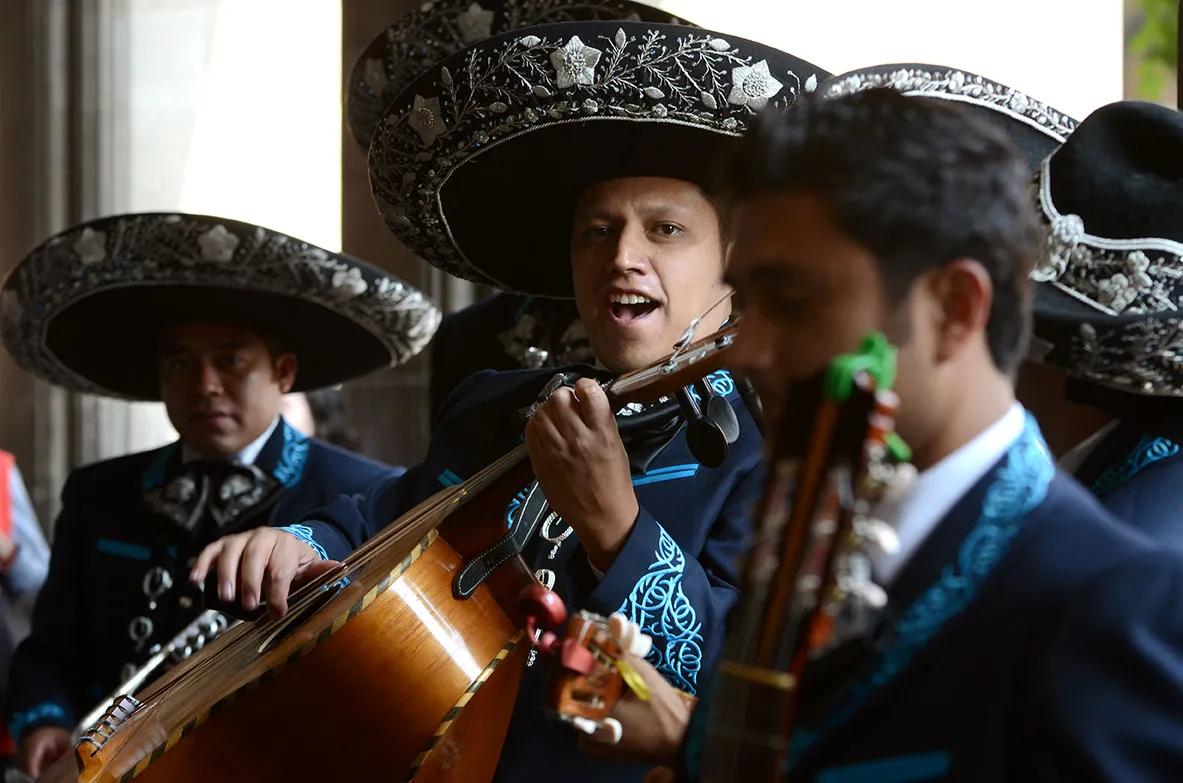
🏷️ Ficha musical
Why it's in this book
Cielito lindo is one of the songs for the December concert, together with Perfect. Both sway in three, which is why they share a month: it is when we work on waltz time. In class we play it with just two chords, C and G7, one that rests and one that wants to go back. It is the easiest song in the book to sing and play at the same time. The "ay, ay, ay, ay" in the chorus is sung in two parts, with the second voice a third above. In the room with no instruments we sing it and mark the "one-two-three" with our bodies. In the ukulele room, the two chords in three. And in the music room, the guitalele plays the bass, like the guitarrón in a mariachi band. We record it before the holidays.
Why this song
If you have watched Mexico play at a World Cup, you have heard it. Mexican fans sing it in the stands, and "ay, ay, ay, ay, canta y no llores" rises over the whole stadium.
The question on this page is: how do you make a song that anyone can sing, straight away, in a stadium? The answer fits into two chords.
Historical context
The song was made popular in 1882 by Quirino Mendoza y Cortés, a Mexican composer. But part of the lyrics is much older than him.
The first lines talk about Sierra Morena, a mountain range in the south of Spain. In the early 17th century, bandits hid there, and travellers were afraid to cross it. Over time, that threat turned into a compliment: the eyes of the person you love are the thieves who live in those mountains. Mendoza took those old lines and gave them a new tune.
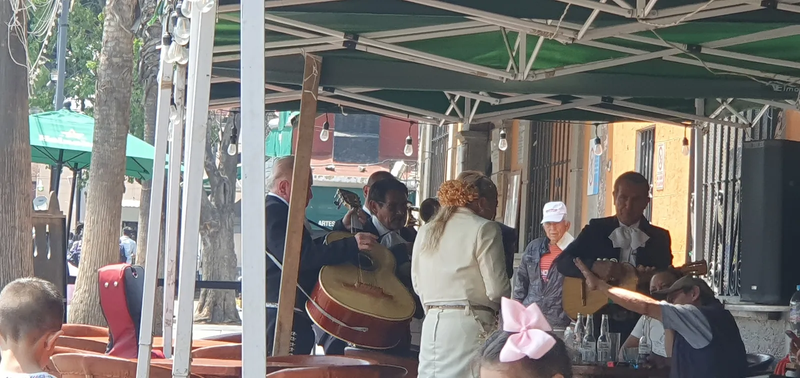
Foto: José Luiz, CC BY-SA 4.0, vía Wikimedia Commons
A mariachi band in Plaza Garibaldi, Mexico City, in 2024. The big round instrument is the guitarrón: the bass of the mariachi band.
Today it is played by mariachis, the Mexican bands of violins, trumpets and guitars. It has been recorded hundreds of times. Pedro Infante sang it in a 1947 film, and it has been recorded by everyone from opera tenors to Speedy Gonzales.
Musical characteristics
A sway in three. Count while it plays: "ONE-two-three, ONE-two-three". The first beat is heavier than the other two. When beats are grouped in threes, it is called triple time. In the score it is written 3/4. It is waltz time.
Two chords: home and away. Play C on the ukulele. It sounds at rest. Now play G7. It sounds as if something is missing. Your ear wants to go back to C. That pair is called tension and release, and on its own it can accompany the whole chorus.
Many versions have one more chord. If you listen carefully, at some points the mariachis play a third chord, F. In class we leave it out and keep two, so that you can sing and play from day one.
Two voices that move together. In the "ay, ay, ay, ay", a second voice sings the same words a little higher, always at the same distance. That distance is called a third, and it is what makes two voices sound sweet together.
Facts: written by Quirino Mendoza y Cortés, 1882. In class, C major, 3/4, chords C–G7. There is no original record, so there is no official tempo.
Guided listening
Play the Mariachi Vargas de Tecalitlán version. In the introduction, notice which instruments carry the tune: violins or trumpets?
When the voice starts, mark the "ONE-two-three" with your hand. A strong hit on one, soft on two and three.
When the "ay, ay, ay, ay" arrives, listen for whether one voice is singing or several. If there are several, find the one on top.
Listen to the bass all the way through. It is the guitarrón. Which beat of the bar does it play on: just the first, or all three?
Trivia and curiosities
- The words are Spanish and the music is Mexican. Some lines about bandits in Sierra Morena ended up as the anthem of Mexican fans at the World Cup.
- Many people in Mexico read the line differently: not "la Sierra Morena" (the mountain range) but "la sierra, morena", as if speaking to a dark-haired girl. The same line, two songs.
- The verse has the shape of a seguidilla, a Spanish seven-line stanza. It is the same shape used in the seguidillas that are sung and danced in Spain.
- In 2020, Google made an animated doodle with the song.
Classroom activities
- Count in three. The whole class does "feet-clap-clap" while the song plays: feet on one, claps on two and three.
- Two chords. On ukulele: C and G7. One strong strum and two soft ones in each bar. Change chord when the melody asks for it.
- The third. Half the class sings the "ay, ay, ay, ay" with the melody. The other half sings it a third higher. Then put the two together.
- Band. In the music room, the guitalele plays C or G on the first beat of each bar, like the guitarrón. The ukulele strums on two and three.
Key vocabulary
- Triple time — compás ternario
- Tension and release — tensión y reposo
- Guitarrón — guitarrón: la guitarra grande que hace de bajo en el mariachi
- Third — tercera: la distancia entre dos notas que suena dulce cuando dos voces cantan juntas
Resources
Performance — Mariachi Vargas de Tecalitlán, on their official channel.
Ukulele tutorial — Ukelandia. A play-along, with the chords on screen.
Guitar tutorial — Tus Clases de Guitarra. An easy version for beginners, with three chords (in Spanish).
Keyboard tutorial — Omar Laime. The melody with the keys lighting up, plus the score.
Por qué está en este libro
Cielito lindo es una de las canciones del festival de diciembre, junto a Perfect. Las dos se balancean en tres, y por eso van en el mismo mes: es cuando trabajamos el compás de vals. En clase la tocamos con solo dos acordes, Do y Sol7, uno que descansa y otro que pide volver. Es la canción más fácil del libro para cantar y tocar a la vez. El «ay, ay, ay, ay» del estribillo se canta a dos voces, con la segunda voz una tercera por encima. En el aula sin instrumentos la cantamos marcando el «un-dos-tres» con el cuerpo. En el aula de ukeleles, los dos acordes en tres. Y en el aula de música, el guitalele hace el bajo, como el guitarrón de un mariachi. La grabamos antes de las vacaciones.
Por dónde entrar
Si has visto un partido de México en un Mundial, la has oído. La afición mexicana la canta en las gradas, y el «ay, ay, ay, ay, canta y no llores» se oye por encima del estadio.
La pregunta de esta página es: ¿cómo se hace una canción que puede cantar cualquiera, a la primera, en un estadio? La respuesta cabe en dos acordes.
Contexto histórico
La canción la dio a conocer en 1882 Quirino Mendoza y Cortés, un compositor mexicano. Pero parte de la letra es mucho más vieja que él.
Los primeros versos hablan de Sierra Morena, unas montañas del sur de España. A principios del siglo XVII se escondían allí bandoleros, y los viajeros tenían miedo de cruzarlas. Con el tiempo, esa amenaza se convirtió en un piropo: los ojos de la persona amada son los ladrones que viven en la sierra. Mendoza tomó esos versos antiguos y les puso una melodía nueva.
Foto: José Luiz, CC BY-SA 4.0, vía Wikimedia Commons
Un mariachi en la plaza Garibaldi de Ciudad de México, en 2024. El instrumento grande y redondo es el guitarrón: es el bajo del mariachi.
Hoy la tocan los mariachis, los grupos de violines, trompetas y guitarras de México. Se ha grabado cientos de veces. Pedro Infante la cantó en una película de 1947, y la han grabado desde tenores de ópera hasta Speedy Gonzales.
Cómo suena
Un balanceo en tres. Cuenta mientras suena: «UN-dos-tres, UN-dos-tres». El primer pulso pesa más que los otros dos. Cuando los pulsos se agrupan de tres en tres, se llama compás ternario. En la partitura se escribe 3/4. Es el compás del vals.
Dos acordes: casa y camino. Toca Do en el ukelele. Suena a descanso. Ahora toca Sol7. Suena a que falta algo. El oído quiere volver a Do. A esa pareja se le llama tensión y reposo, y con ella sola se puede acompañar el estribillo entero.
Muchas versiones tienen un acorde más. Si escuchas bien, en algunos momentos los mariachis tocan un tercer acorde, Fa. En clase lo quitamos y nos quedamos con dos, porque así puedes cantar y tocar desde el primer día.
Dos voces que van juntas. En el «ay, ay, ay, ay», una segunda voz canta las mismas palabras un poco más aguda, siempre a la misma distancia. Esa distancia se llama tercera, y es la que hace que dos voces suenen dulces juntas.
Datos: autor, Quirino Mendoza y Cortés, 1882. En clase, Do mayor, 3/4, acordes C–G7. No hay disco original, así que no hay tempo oficial.
Escucha guiada
Pon la versión del Mariachi Vargas de Tecalitlán. En la introducción, fíjate en qué instrumentos llevan la melodía: ¿violines o trompetas?
Cuando empiece a cantar la voz, marca el «UN-dos-tres» con la mano. Golpe fuerte en el uno, suave en el dos y el tres.
Cuando llegue el «ay, ay, ay, ay», escucha si canta una sola voz o varias. Si son varias, busca la que va por encima.
Escucha el bajo durante toda la canción. Es el guitarrón. ¿En qué pulso del compás toca: en el uno, o en los tres?
Curiosidades
- La letra es española y la música, mexicana. Unos versos sobre bandoleros de Sierra Morena acabaron siendo el himno de la afición mexicana en los Mundiales.
- Mucha gente en México entiende el verso de otra manera: no «la Sierra Morena», sino «la sierra, morena», como si le hablara a una chica morena. La misma frase, dos canciones.
- La estrofa tiene la forma de la seguidilla, una estrofa española de siete versos. Es la misma forma que usan las seguidillas que se cantan y bailan en España.
- En 2020, Google le dedicó un doodle animado con la canción.
Para hacer en clase
- Contar en tres. Toda la clase hace «pies-palmas-palmas» mientras suena la canción: pies en el uno, palmas en el dos y el tres.
- Dos acordes. Con ukelele: Do y Sol7. Un rasgueo fuerte y dos suaves en cada compás. Cambiad de acorde cuando la melodía lo pida.
- La tercera. Media clase canta el «ay, ay, ay, ay» con la melodía. La otra media lo canta una tercera por encima. Después, juntad las dos.
- Banda. En el aula de música, el guitalele toca la nota Do o la nota Sol en el primer pulso de cada compás, como el guitarrón. El ukelele rasguea en el dos y el tres.
Vocabulario fundamental
- Compás ternario — Los pulsos se agrupan de tres en tres, con el primero más fuerte. Como en el vals.
- Tensión y reposo — Un acorde que pide moverse y otro que descansa. Aquí, Sol7 y Do.
- Guitarrón — La guitarra grande del mariachi, que hace de bajo.
- Tercera — La distancia entre dos voces que suena más dulce cuando cantan juntas.
Recursos
Interpretación — Mariachi Vargas de Tecalitlán, en su canal oficial.
Tutorial de ukelele — Ukelandia. Para tocar junto al vídeo, con los acordes en pantalla.
Tutorial de guitarra — Tus Clases de Guitarra. Versión fácil para principiantes, con tres acordes.
Tutorial de teclado — Omar Laime. La melodía con las teclas iluminadas y la partitura.
Why it's in this book
Cielito lindo is one of the songs for the December concert, together with Perfect. Both sway in three, which is why they share a month: it is when we work on waltz time. In class we play it with just two chords, C and G7, one that rests and one that wants to go back. It is the easiest song in the book to sing and play at the same time. The "ay, ay, ay, ay" in the chorus is sung in two parts, with the second voice a third above. In the room with no instruments we sing it and mark the "one-two-three" with our bodies. In the ukulele room, the two chords in three. And in the music room, the guitalele plays the bass, like the guitarrón in a mariachi band. We record it before the holidays.
Why this song
If you have watched Mexico play at a World Cup, you have heard it. Mexican fans sing it in the stands, and "ay, ay, ay, ay, canta y no llores" rises over the whole stadium.
The question on this page is: how do you make a song that anyone can sing, straight away, in a stadium? The answer fits into two chords.
Historical context
The song was made popular in 1882 by Quirino Mendoza y Cortés, a Mexican composer. But part of the lyrics is much older than him.
The first lines talk about Sierra Morena, a mountain range in the south of Spain. In the early 17th century, bandits hid there, and travellers were afraid to cross it. Over time, that threat turned into a compliment: the eyes of the person you love are the thieves who live in those mountains. Mendoza took those old lines and gave them a new tune.
Foto: José Luiz, CC BY-SA 4.0, vía Wikimedia Commons
A mariachi band in Plaza Garibaldi, Mexico City, in 2024. The big round instrument is the guitarrón: the bass of the mariachi band.
Today it is played by mariachis, the Mexican bands of violins, trumpets and guitars. It has been recorded hundreds of times. Pedro Infante sang it in a 1947 film, and it has been recorded by everyone from opera tenors to Speedy Gonzales.
Musical characteristics
A sway in three. Count while it plays: "ONE-two-three, ONE-two-three". The first beat is heavier than the other two. When beats are grouped in threes, it is called triple time. In the score it is written 3/4. It is waltz time.
Two chords: home and away. Play C on the ukulele. It sounds at rest. Now play G7. It sounds as if something is missing. Your ear wants to go back to C. That pair is called tension and release, and on its own it can accompany the whole chorus.
Many versions have one more chord. If you listen carefully, at some points the mariachis play a third chord, F. In class we leave it out and keep two, so that you can sing and play from day one.
Two voices that move together. In the "ay, ay, ay, ay", a second voice sings the same words a little higher, always at the same distance. That distance is called a third, and it is what makes two voices sound sweet together.
Facts: written by Quirino Mendoza y Cortés, 1882. In class, C major, 3/4, chords C–G7. There is no original record, so there is no official tempo.
Guided listening
Play the Mariachi Vargas de Tecalitlán version. In the introduction, notice which instruments carry the tune: violins or trumpets?
When the voice starts, mark the "ONE-two-three" with your hand. A strong hit on one, soft on two and three.
When the "ay, ay, ay, ay" arrives, listen for whether one voice is singing or several. If there are several, find the one on top.
Listen to the bass all the way through. It is the guitarrón. Which beat of the bar does it play on: just the first, or all three?
Trivia and curiosities
- The words are Spanish and the music is Mexican. Some lines about bandits in Sierra Morena ended up as the anthem of Mexican fans at the World Cup.
- Many people in Mexico read the line differently: not "la Sierra Morena" (the mountain range) but "la sierra, morena", as if speaking to a dark-haired girl. The same line, two songs.
- The verse has the shape of a seguidilla, a Spanish seven-line stanza. It is the same shape used in the seguidillas that are sung and danced in Spain.
- In 2020, Google made an animated doodle with the song.
Classroom activities
- Count in three. The whole class does "feet-clap-clap" while the song plays: feet on one, claps on two and three.
- Two chords. On ukulele: C and G7. One strong strum and two soft ones in each bar. Change chord when the melody asks for it.
- The third. Half the class sings the "ay, ay, ay, ay" with the melody. The other half sings it a third higher. Then put the two together.
- Band. In the music room, the guitalele plays C or G on the first beat of each bar, like the guitarrón. The ukulele strums on two and three.
Key vocabulary
- Triple time — compás ternario
- Tension and release — tensión y reposo
- Guitarrón — guitarrón: la guitarra grande que hace de bajo en el mariachi
- Third — tercera: la distancia entre dos notas que suena dulce cuando dos voces cantan juntas
Resources
Performance — Mariachi Vargas de Tecalitlán, on their official channel.
Ukulele tutorial — Ukelandia. A play-along, with the chords on screen.
Guitar tutorial — Tus Clases de Guitarra. An easy version for beginners, with three chords (in Spanish).
Keyboard tutorial — Omar Laime. The melody with the keys lighting up, plus the score.