Contenidos
Blinding Lights — The Weeknd (2019)
A 2019 song that sounds like 1984. The keyboard carries the tune, the voice arrives second, and the whole harmony fits into four chords that never change.
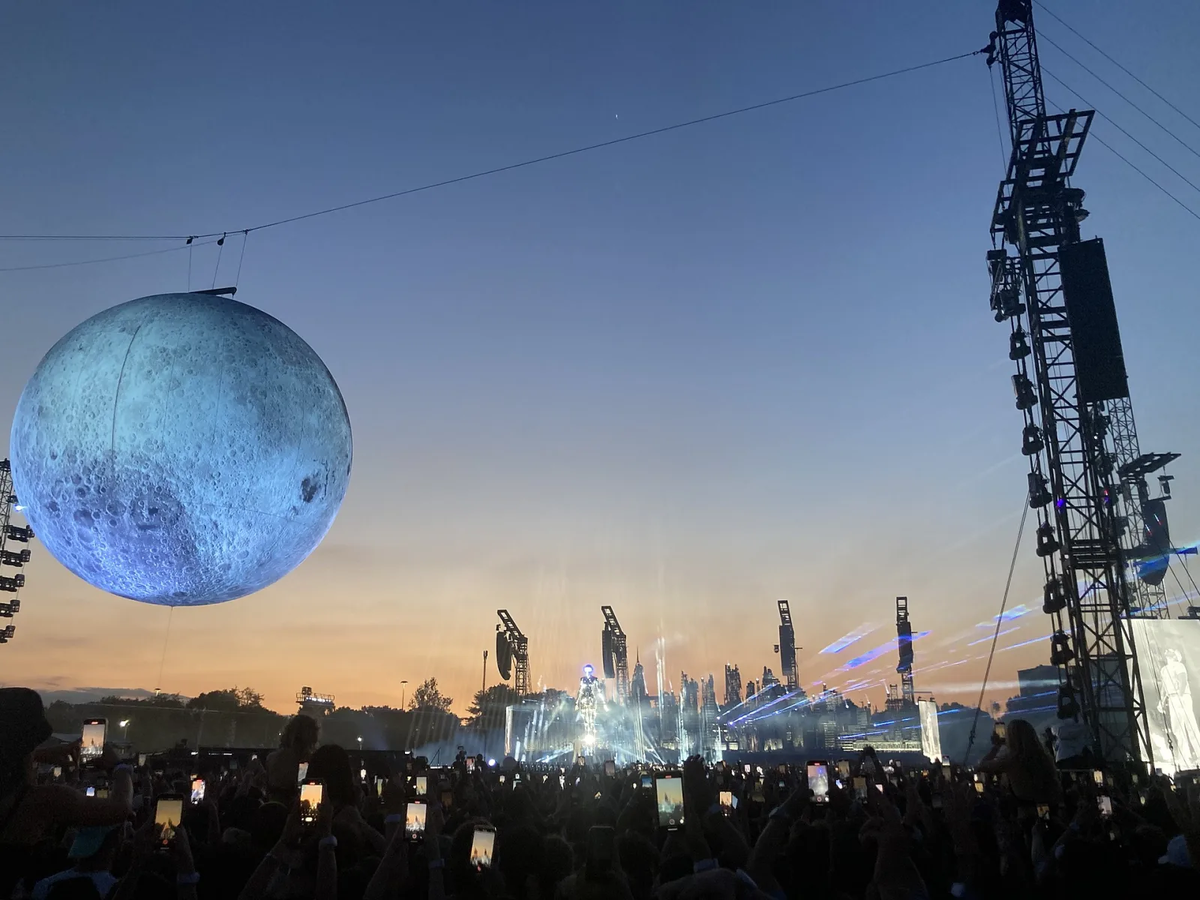
🏷️ Ficha musical
Why this song
Five days before the single came out, the song premiered inside a car advert on German television. That is where most of Germany heard it first: not on the radio, not on Spotify, but selling an electric SUV.
Now listen to what plays in that advert. The voice has not come in yet. What you recognise is twelve seconds of keyboard.
That is why this song is in the book. It is the clearest case all year of a lead melody that nobody sings: a synthesiser plays it.
Historical context
The Weeknd recorded it in February 2019 with Max Martin and Oscar Holter. Martin is Swedish and has been writing hits for thirty years; the brief this time was to make 1984 happen without it sounding like fancy dress.
The song came out on 29 November 2019 as the second single from After Hours. It went on to top the charts in more than forty countries and became the most streamed song in Spotify's history.
The Weeknd has never hidden where the sound comes from. He told Billboard he admires the era before he was born, naming Siouxsie and the Banshees and Cocteau Twins. Who it actually resembles was pointed out by other people.
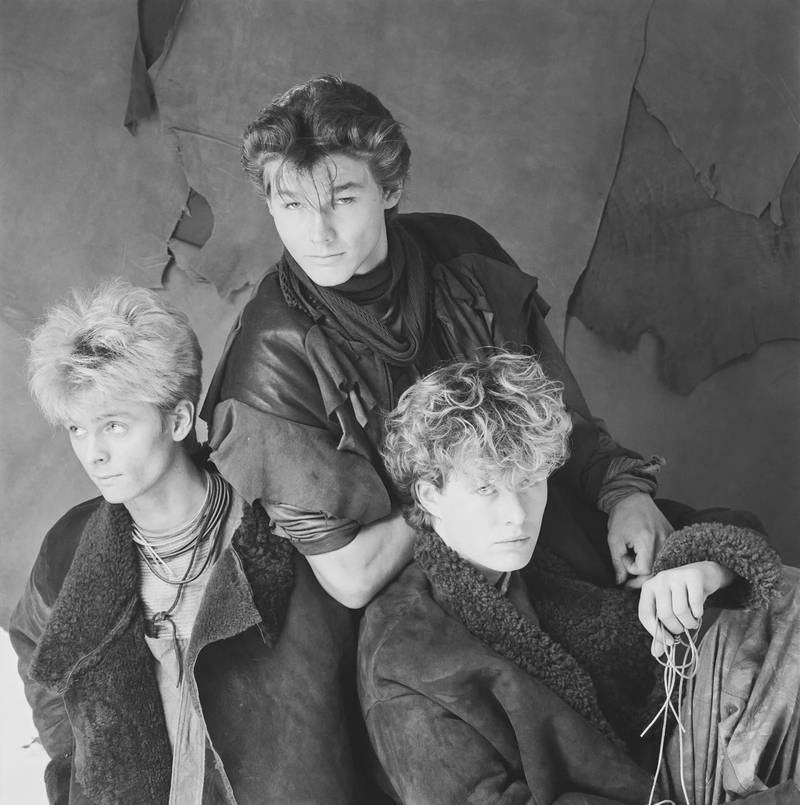
Foto: Sheila Rock, CC BY 2.0, vía Wikimedia Commons
Ben Beaumont-Thomas, in The Guardian, wrote that Max Martin seems to pay homage to his Scandinavian neighbours a-ha. "Take On Me" (1985) is in the index too: it runs at 169 BPM, this one at 171. Two beats apart, thirty-four years in between.
Musical characteristics
Start with the thing almost no current song does: the most important melody is not sung.
The synthesiser comes in alone and plays a high, repeating line that returns in every chorus. The instrument carrying the main melody in front of everything else is called the lead. Here the lead is the song; the voice only answers it.
Underneath there are four chords and no more: Fm · Cm · E♭ · B♭, one bar each, looping from start to finish. In the version you are going to play, the same loop comes out as Am · Em · G · D.
Look at that fourth chord, D major. If it were D minor, the song would be textbook sad. Being major puts an F sharp inside the scale and lights it up from within, without leaving the minor world. A minor scale with a raised sixth is the Dorian mode, and it is the whole reason this song sounds wistful and euphoric at once.
The drums do the other half of the job. They sound short, hard and tailless: the hit is chopped off instead of fading. That chop is called gated reverb, and it is the fingerprint of the 1980s.
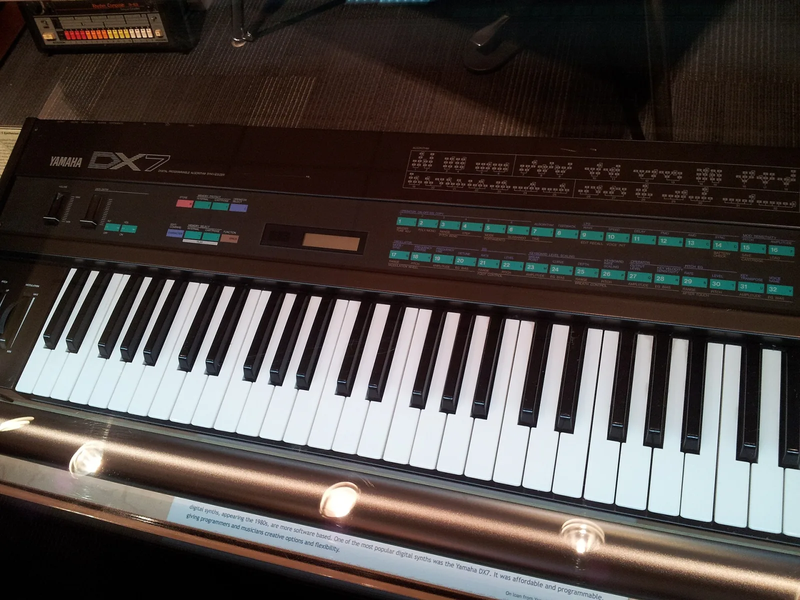
Foto: doryfour, CC BY-SA 2.0, vía Wikimedia Commons
The form is not the usual one either. Between verse and chorus there is a stretch that climbs and never resolves, the pre-chorus, and that is where the song squeezes before it lets go: intro, verse, pre-chorus, chorus, verse, chorus.
Hard facts: F Dorian (three flats in the key signature), 4/4, 171 BPM, 3:22.
That number is scarier to read than to play. Kick and snare share the four beats, so what your body feels is a pulse at half that, around 86. Counting the slower pulse is playing half-time, and it explains why some sources say 171 and others 86.
Trivia and curiosities
- The song premiered inside a car advert before it existed as a single. The Weeknd later told Vanity Fair he thought it would be a commercial failure. A useful measure of how little anyone knows — the author included — about what will work.
- It spent 90 weeks on the Hot 100 and was the first song to spend a whole year without dropping out of the top 10. In November 2021 Billboard named it the best-performing song in that chart's history. Staying turned out to be worth more than peaking.
- At the 2020 Grammys it received no nominations at all. Same song, same year: an all-time audience record and zero awards. The two systems measure different things.
- The music video does not carry the album version. Only there does the song drop its tempo and change key for three and a half bars. Good proof that a video is no way to measure anything about the recording.
- Frank DiGiacomo wrote in Billboard that the opening drumbeat is "a DeLorean back to Michael Jackson's 'Beat It'". That is a comparison by ear, not a quotation from a score — check it yourself.
Classroom activities
- Play: Am, Em, G and D, one bar each, on a loop. Four chords that never change, so the whole piece is learnable in one session.
- Double the tune: if you came from the violin and have just sat down at a keyboard, this is your song. The synth line needs one hand only, and in A Dorian all four open violin strings — G, D, A, E — sit inside the scale. Play it alongside the keyboard and compare the two timbres.
- Analyse: a closed question. Play the loop twice, once with D major and once with D minor. Which one is the song, and exactly which note separates them?
- Create: take four chords with a raised sixth and write an eight-bar melody over them, meant for an instrument rather than a voice. Steal the procedure, not the song.
Key vocabulary
- Lead — el instrumento que lleva la melodía principal; aquí no es la voz, es el sintetizador
- Dorian mode — modo dórico: escala menor con la sexta subida
- Gated reverb — reverberación de puerta: el eco cortado de golpe, sin cola
- Pre-chorus — pre-estribillo
- Half-time — a mitad de tiempo: contar el pulso a la mitad de rápido de lo escrito
Resources
Where it is explained — this song is studied in ¿Quién toca la batería en esta canción?, from the modern music history book.
Official video
Guitar tutorial — Andy Guitar. With a capo on the 3rd fret and Dm, Am, C and G shapes it sounds in the album's original key.
Keyboard tutorial — YouLearnMusic. The right hand plays the synth line and the left just the bass note. The shortest route to actually playing the thing.
Bass tutorial — MunsonMusic. He also explains why the real key is the three-flat one and not another.
Drum tutorial — Dynamic Drum School. Play-along with the drum chart on screen.
How that synth sound is built — Anthony Marinelli takes the chorus lead apart on an analogue synthesiser, parameter by parameter.
- Band charts (guitar, keyboard, bass, drums, ukulele) — https://jamzone.musicwill.org/songs/blinding-lights
- Harmonic analysis — https://www.hooktheory.com/theorytab/view/the-weeknd/blinding-lights
- Tab — attached below; the button opens it in Songsterr
Por dónde entrar
Esa entrada la has oído sin buscarla: en el reto de baile de TikTok, en un emote de Fortnite, en el Just Dance, en la promoción de la Super Bowl.
Pregúntate qué es exactamente lo que reconoces ahí. No es la voz, que todavía no ha entrado. No es la letra. Lo que reconoces son doce segundos de teclado.
Por eso esta canción está en el libro. Es el caso más claro de todo el curso en el que la melodía principal no la canta nadie: la toca un sintetizador.
Contexto histórico
The Weeknd la grabó en febrero de 2019 con Max Martin y Oscar Holter. Martin es sueco y lleva treinta años firmando éxitos; esta vez el encargo era hacer sonar 1984 sin que pareciera un disfraz.
La estrategia de lanzamiento dice mucho de cómo funciona la música ahora. La canción se estrenó el 24 de noviembre de 2019 dentro de un anuncio de coches emitido en la televisión alemana. El single salió cinco días después.
The Weeknd nunca ha escondido de dónde viene ese sonido. En una entrevista con Billboard contó que admira la época anterior a su nacimiento, y citó a Siouxsie and the Banshees y a Cocteau Twins. Lo que no dijo —lo dijeron los críticos— es a quién se parece de verdad.
Foto: Sheila Rock, CC BY 2.0, vía Wikimedia Commons
Ben Beaumont-Thomas, en The Guardian, escribió que Max Martin parece rendir homenaje a sus vecinos escandinavos a-ha. En el índice tienes «Take On Me» (1985): va a 169 BPM, esta va a 171. Dos pulsos de diferencia, treinta y cuatro años en medio.
Cómo suena
Empieza por lo que casi ninguna canción de hoy hace: la melodía más importante no está cantada.
El sintetizador entra solo y toca una línea aguda y repetida que vuelve en cada estribillo. A ese papel —el instrumento que lleva la melodía principal por delante de todo lo demás— se le llama lead. Aquí el lead es la canción; la voz se limita a contestarle.
Debajo hay cuatro acordes y ninguno más: Fam · Dom · Mi♭ · Si♭, un compás cada uno, en bucle de principio a fin. En la versión que vas a tocar tú, la misma vuelta suena Lam · Mim · Sol · Re.
Fíjate en el cuarto acorde, el Re mayor. Si fuera Re menor, la canción sonaría triste de manual. Al ser mayor, aparece un fa sostenido que ilumina la escala por dentro sin sacarla del modo menor. Esa escala menor con la sexta subida se llama modo dórico, y es el motivo entero de que esta canción suene melancólica y eufórica a la vez.
La batería hace la otra mitad del trabajo. Suena corta, dura y sin cola: el golpe se corta de golpe en lugar de apagarse. Ese recorte se llama reverberación de puerta (gated reverb), y es la huella sonora de los ochenta.
Foto: doryfour, CC BY-SA 2.0, vía Wikimedia Commons
La forma tampoco es la de siempre. Entre la estrofa y el estribillo hay un tramo que sube y no resuelve, el pre-estribillo, y es donde la canción aprieta antes de soltar: intro, estrofa, pre-estribillo, estribillo, estrofa, estribillo.
Datos duros: Fa dórico (armadura de tres bemoles), 4/4, 171 BPM, 3:22.
Ese número asusta al leerlo y no al tocarlo. El bombo y la caja se reparten los cuatro tiempos, así que lo que notas en el cuerpo es un pulso a la mitad, unos 86. Contar la mitad se llama tocar a mitad de tiempo, y explica por qué unas fuentes dicen 171 y otras 86.
Curiosidades
- La canción se estrenó dentro de un anuncio de coches, antes de existir como single. The Weeknd contó después a Vanity Fair que pensaba que iba a ser un fracaso comercial. Sirve para medir lo poco que sabe nadie —autor incluido— sobre lo que va a funcionar.
- Estuvo 90 semanas en la lista Hot 100 y fue la primera canción que pasó un año entero sin salirse del top 10. En noviembre de 2021 Billboard la declaró la canción con mejor rendimiento histórico de esa lista. Aguantar resultó valer más que llegar al número uno.
- En los Grammy de 2020 no recibió ni una sola nominación. La misma canción, el mismo año: récord absoluto de público y cero premios. Los dos sistemas miden cosas distintas.
- El videoclip no lleva la misma versión que el disco. Solo ahí la canción baja el tempo y cambia de tonalidad durante tres compases y medio. Es una buena prueba de que un vídeo puede no servir para medir nada de la grabación.
- Frank DiGiacomo escribió en Billboard que la entrada de batería es «un DeLorean de vuelta a Beat It de Michael Jackson». Es una comparación de oído, no una cita de partitura: compruébala tú.
Para hacer en clase
- Tocar: Lam, Mim, Sol y Re, un compás cada uno, en bucle. Cuatro acordes que no cambian en toda la canción, así que se aprende la pieza entera en una sesión.
- Doblar la melodía: si vienes del violín y te acabas de sentar al teclado, esta es tu canción. La línea del sinte se toca con una sola mano, y en La dórico las cuatro cuerdas al aire del violín —sol, re, la, mi— están todas dentro de la escala. Tócala a la vez que el teclado y compara timbres.
- Analizar: pregunta cerrada. Toca la vuelta dos veces, una con Re mayor y otra con Re menor. ¿Cuál de las dos es la canción, y qué nota exacta las separa?
- Crear: coge cuatro acordes con la sexta subida y escribe encima una melodía de ocho compases pensada para un instrumento, no para una voz. Se trata de robar el procedimiento, no la canción.
Vocabulario fundamental
- Lead — El instrumento que lleva la melodía principal por delante de todo lo demás. Aquí no es la voz: es el sintetizador.
- Modo dórico — Una escala menor con la sexta nota subida. Es lo que hace que la canción suene triste y luminosa a la vez.
- Reverberación de puerta — El eco de la batería cortado de golpe, sin cola. Es la marca de fábrica del sonido de los ochenta.
- Pre-estribillo — El tramo entre la estrofa y el estribillo que sube la tensión y no la resuelve.
- Mitad de tiempo — Contar el pulso a la mitad de rápido de lo que está escrito. Por eso esta canción es 171 y se siente 86.
Recursos
Dónde se explica — esta canción se estudia en ¿Quién toca la batería en esta canción?, del libro de historia de la música moderna.
Videoclip oficial
Tutorial de guitarra — Andy Guitar. Con cejilla en el traste 3 y formas de Rem, Lam, Do y Sol suena en la tonalidad original del disco.
Tutorial de teclado — YouLearnMusic. La mano derecha toca la línea del sinte y la izquierda solo la nota del bajo. Es la versión más corta para llegar a tocar el tema de verdad.
Tutorial de bajo — MunsonMusic. Explica además por qué la tonalidad real es la de tres bemoles y no otra.
Tutorial de batería — Dynamic Drum School. Play-along con la partitura de batería en pantalla.
Cómo se construye ese sonido de sinte — Anthony Marinelli desmonta el lead del estribillo en un sintetizador analógico, parámetro a parámetro.
- Charts de banda (guitarra, teclado, bajo, batería, ukelele) — https://jamzone.musicwill.org/songs/blinding-lights
- Análisis armónico — https://www.hooktheory.com/theorytab/view/the-weeknd/blinding-lights
- Tablatura — adjunta abajo; el botón la abre en Songsterr
Why this song
Five days before the single came out, the song premiered inside a car advert on German television. That is where most of Germany heard it first: not on the radio, not on Spotify, but selling an electric SUV.
Now listen to what plays in that advert. The voice has not come in yet. What you recognise is twelve seconds of keyboard.
That is why this song is in the book. It is the clearest case all year of a lead melody that nobody sings: a synthesiser plays it.
Historical context
The Weeknd recorded it in February 2019 with Max Martin and Oscar Holter. Martin is Swedish and has been writing hits for thirty years; the brief this time was to make 1984 happen without it sounding like fancy dress.
The song came out on 29 November 2019 as the second single from After Hours. It went on to top the charts in more than forty countries and became the most streamed song in Spotify's history.
The Weeknd has never hidden where the sound comes from. He told Billboard he admires the era before he was born, naming Siouxsie and the Banshees and Cocteau Twins. Who it actually resembles was pointed out by other people.
Foto: Sheila Rock, CC BY 2.0, vía Wikimedia Commons
Ben Beaumont-Thomas, in The Guardian, wrote that Max Martin seems to pay homage to his Scandinavian neighbours a-ha. "Take On Me" (1985) is in the index too: it runs at 169 BPM, this one at 171. Two beats apart, thirty-four years in between.
Musical characteristics
Start with the thing almost no current song does: the most important melody is not sung.
The synthesiser comes in alone and plays a high, repeating line that returns in every chorus. The instrument carrying the main melody in front of everything else is called the lead. Here the lead is the song; the voice only answers it.
Underneath there are four chords and no more: Fm · Cm · E♭ · B♭, one bar each, looping from start to finish. In the version you are going to play, the same loop comes out as Am · Em · G · D.
Look at that fourth chord, D major. If it were D minor, the song would be textbook sad. Being major puts an F sharp inside the scale and lights it up from within, without leaving the minor world. A minor scale with a raised sixth is the Dorian mode, and it is the whole reason this song sounds wistful and euphoric at once.
The drums do the other half of the job. They sound short, hard and tailless: the hit is chopped off instead of fading. That chop is called gated reverb, and it is the fingerprint of the 1980s.
Foto: doryfour, CC BY-SA 2.0, vía Wikimedia Commons
The form is not the usual one either. Between verse and chorus there is a stretch that climbs and never resolves, the pre-chorus, and that is where the song squeezes before it lets go: intro, verse, pre-chorus, chorus, verse, chorus.
Hard facts: F Dorian (three flats in the key signature), 4/4, 171 BPM, 3:22.
That number is scarier to read than to play. Kick and snare share the four beats, so what your body feels is a pulse at half that, around 86. Counting the slower pulse is playing half-time, and it explains why some sources say 171 and others 86.
Trivia and curiosities
- The song premiered inside a car advert before it existed as a single. The Weeknd later told Vanity Fair he thought it would be a commercial failure. A useful measure of how little anyone knows — the author included — about what will work.
- It spent 90 weeks on the Hot 100 and was the first song to spend a whole year without dropping out of the top 10. In November 2021 Billboard named it the best-performing song in that chart's history. Staying turned out to be worth more than peaking.
- At the 2020 Grammys it received no nominations at all. Same song, same year: an all-time audience record and zero awards. The two systems measure different things.
- The music video does not carry the album version. Only there does the song drop its tempo and change key for three and a half bars. Good proof that a video is no way to measure anything about the recording.
- Frank DiGiacomo wrote in Billboard that the opening drumbeat is "a DeLorean back to Michael Jackson's 'Beat It'". That is a comparison by ear, not a quotation from a score — check it yourself.
Classroom activities
- Play: Am, Em, G and D, one bar each, on a loop. Four chords that never change, so the whole piece is learnable in one session.
- Double the tune: if you came from the violin and have just sat down at a keyboard, this is your song. The synth line needs one hand only, and in A Dorian all four open violin strings — G, D, A, E — sit inside the scale. Play it alongside the keyboard and compare the two timbres.
- Analyse: a closed question. Play the loop twice, once with D major and once with D minor. Which one is the song, and exactly which note separates them?
- Create: take four chords with a raised sixth and write an eight-bar melody over them, meant for an instrument rather than a voice. Steal the procedure, not the song.
Key vocabulary
- Lead — el instrumento que lleva la melodía principal; aquí no es la voz, es el sintetizador
- Dorian mode — modo dórico: escala menor con la sexta subida
- Gated reverb — reverberación de puerta: el eco cortado de golpe, sin cola
- Pre-chorus — pre-estribillo
- Half-time — a mitad de tiempo: contar el pulso a la mitad de rápido de lo escrito
Resources
Where it is explained — this song is studied in ¿Quién toca la batería en esta canción?, from the modern music history book.
Official video
Guitar tutorial — Andy Guitar. With a capo on the 3rd fret and Dm, Am, C and G shapes it sounds in the album's original key.
Keyboard tutorial — YouLearnMusic. The right hand plays the synth line and the left just the bass note. The shortest route to actually playing the thing.
Bass tutorial — MunsonMusic. He also explains why the real key is the three-flat one and not another.
Drum tutorial — Dynamic Drum School. Play-along with the drum chart on screen.
How that synth sound is built — Anthony Marinelli takes the chorus lead apart on an analogue synthesiser, parameter by parameter.
- Band charts (guitar, keyboard, bass, drums, ukulele) — https://jamzone.musicwill.org/songs/blinding-lights
- Harmonic analysis — https://www.hooktheory.com/theorytab/view/the-weeknd/blinding-lights
- Tab — attached below; the button opens it in Songsterr