Contenidos
¿Por qué las canciones ya no te hacen esperar?
You skip songs without thinking about it. Somebody counts every one of those skips, and this unit is about what that counting has done to the way songs are built.
We ask ourselves
- How long does a song get to convince you not to skip it?
- Who decided that a song lasts three minutes and not seven?
- If recording costs almost nothing now, why don't you know more people who release music?
- Does a song made in a bedroom sound worse than one made in a studio?
- Why does almost no current song open with a guitar solo?
- The song you like: did you choose it, or was it put in front of you?
Don't answer yet. We come back to these at the end.
The fragment
We are not listening to a whole song yet. First we count.
Split the class in two. The opening of Sweet Home Alabama, from 1974, plays, and one half counts under their breath, in fours, from the first sound until the first sung word. No clock is needed: the song's own pulse is the unit of measurement.
Then the opening of Million Dollar Baby, from 2024, plays, and the other half counts in exactly the same way. Both numbers go on the board.
The gap between those two numbers is what this unit is about. Don't explain it yet: let everyone say, in their own words, what they think happened there.
Now play Birds of a Feather, all of it, with nobody talking over it.
What changed
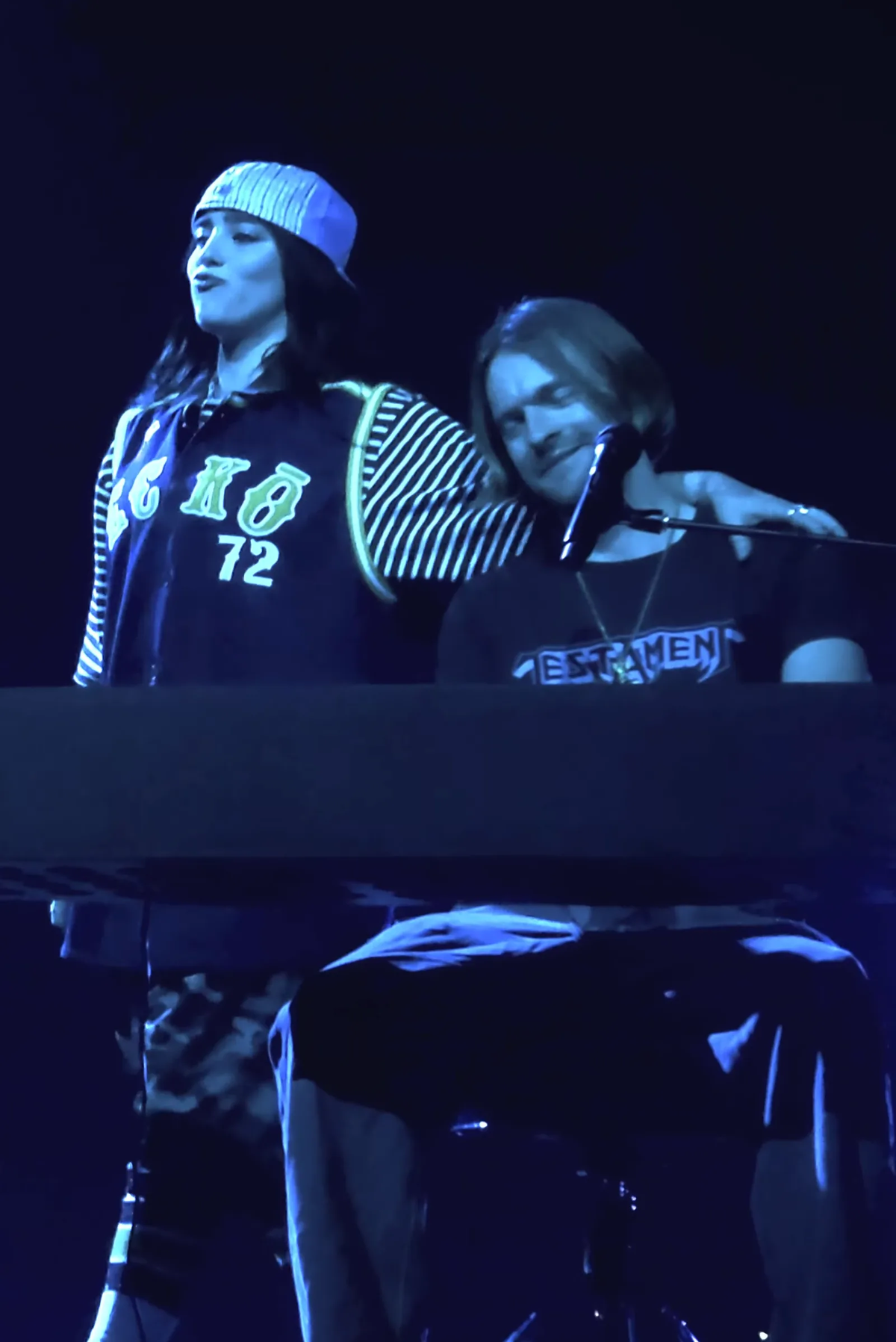
What you just heard was made by two siblings in a house. Hit Me Hard and Soft, the album that song comes from, was recorded between October 2022 and February 2024 in Finneas O'Connell's home studio in Los Angeles. No orchestra behind it, no room booked by the hour.
Compare that with what Sweet Home Alabama required. A building with the right reverberation, a mixing desk that cost as much as a flat, an engineer, and a whole band playing at once without making mistakes. A studio was a place, and somebody had to pay for it.
You can hear the difference in one specific thing: the voice sits very close and sings very quietly. In a room with drums and amplifiers you cannot whisper, because nobody would hear you. In a bedroom you can. That is why so many current songs are sung almost at speaking volume, and why the rest of the production leaves so much empty space.
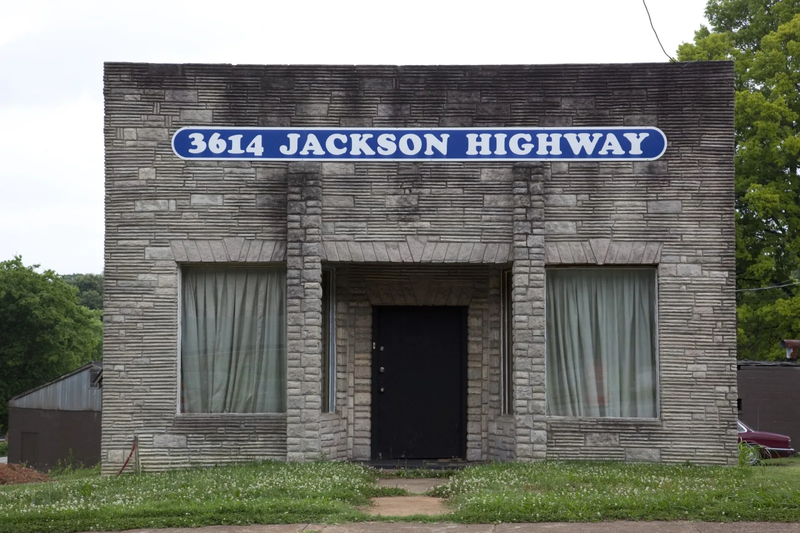
El estudio donde se grababa el sonido del sur de Estados Unidos en los setenta. Foto: Carol M. Highsmith, Library of Congress, dominio público, vía Wikimedia Commons
The second half of the change is the one you counted on the board. A researcher at Ohio State University, Hubert Léveillé Gauvin, analysed 303 US top-10 singles released between 1986 and 2015. Intros went from averaging more than twenty seconds in the mid-eighties to around five seconds. Average tempo rose by eight per cent, and the song title now arrives eighteen per cent earlier.
The reason is not musical, it is economic. On Spotify an artist gets paid once the listener stays for at least thirty seconds. Skipping costs you nothing, so the intro stopped being a preparation and became a risk. What people do now is the opposite: hook first, everything else behind it.
Songs got shorter too. The average length on the Billboard Hot 100 peaked in 1992 at four minutes and twenty-one seconds, and has been drifting towards three ever since. People often call this decline, and I think that reading is lazy. The same thing happened with the shellac disc, with radio and with vinyl: the format has always trimmed the music.
That said, one thing is genuinely lost, and it deserves a name: the bridge. That section that showed up once and changed the air of a song is now the first to go. Whether that matters is for you to decide; to me it is the one real loss in all of this.
Hard facts: intros from twenty seconds down to five, between 1986 and 2015. Peak average length in 1992, four minutes twenty-one seconds. Thirty seconds is Spotify's paying threshold. Birds of a Feather was the most-streamed song on Spotify in 2024.
The same device elsewhere
The underlying idea is not new: the shape of a piece of music is decided by who listens and on what machine. Three cases far apart in time say the same thing.
- Million Dollar Baby, Tommy Richman (2024) — the catchy part existed as a vertical video before it was a song. The teaser had over nine and a half million TikTok views in under a week, and the record came out afterwards.
- Beethoven's Fifth Symphony (1808) — it opens with the motif and nothing else. No slow introduction, no warm-up: four notes and you are in. There was no skip button in 1808, but the decision is identical.
- Gauhar Jaan, in Calcutta (1902) — she recorded for the Gramophone Company by compressing a Hindustani khayal that lasted an hour live into three and a half minutes. The masters were pressed in Germany, so she closed each disc by announcing her own name, to tell the technicians whose record they were labelling.
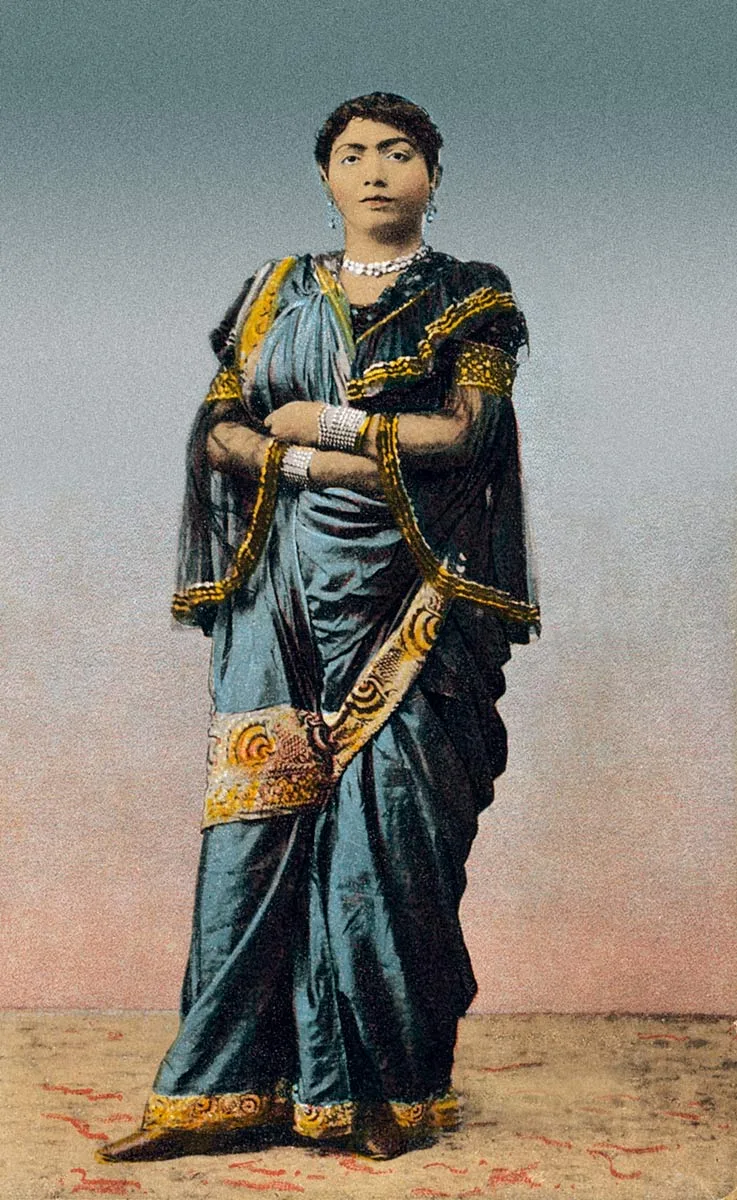
Gauhar Jaan (1873-1930), una de las primeras artistas grabadas en la India. Postal de D. A. Ahuja, Rangún, hacia 1910, CC BY 4.0, vía Wikimedia Commons
None of the three is better than the others. All three do the same job: accept that the format is in charge, and write the music knowing it.
And here at home?
In Spain the home-recording scene has young names. Rusowsky (Ruslán Mediavilla, born 1999, raised in Fuenlabrada, Madrid) produces himself, and his entry describes him plainly as bedroom pop. His first album, Daisy, came out in May 2025 with thirteen tracks, went gold and earned a Latin Grammy nomination.
The clearest case of the other half is Quevedo with Bizarrap. "Bzrp Music Sessions, Vol. 52" was released on 6 July 2022, recorded in the producer's studio in Ramos Mejía, on the edge of Buenos Aires. It spent more than thirty days at number one on Spotify's global chart and reached a billion streams in 212 days.
In Aragón what is documented is the other route: record it yourself and stop waiting for a phone call. Kase.O, born in Zaragoza in 1980, released his first cassette demo, Rompecabezas, in 1994, aged thirteen. The next one, Dos Rombos, included "Soy de Aragón". The nineties cassette circuit was self-publishing with different hardware.
And Amaral, also from Zaragoza, did the same thing from the other end of a career: in 2011 they left the major label, set up their own, Discos Antártida, and released Hacia lo salvaje on 27 September 2011.
One piece is missing, and I would rather say so than invent it: I found no documented case of an Aragonese song that got big through the algorithm. If you know one, bring it to class with a date and a source.
Classroom activities
- While Birds of a Feather plays: raise your hand at the exact moment the voice comes in. Then, with the song still running, count how many separate layers you can pull apart.
- While Calm Down plays: raise your hand every time the chorus comes back. Afterwards we compare counts, which will not match, and we argue about why.
- While La Gozadera plays: the song names one country after another. Write the order down as it happens, and ask yourself who that list is aimed at.
- Play: we build Birds of a Feather with the band. The full-band chart and the tab are attached to its own article.
- Create: record fifteen seconds on your phone, in one take, that hold up on their own. No intro. That is the constraint everybody works under now.
Key vocabulary
- Production — producción: todas las decisiones sobre cómo suena una grabación
- Home studio — estudio doméstico: un estudio montado en una casa, con un portátil y pocos aparatos
- Intro — introducción: lo que suena antes de que entre la voz
- Hook — gancho: el trozo por el que reconoces la canción
- Form — forma: el orden en que se suceden las partes de una canción
Resources
The songs in this unit are in the library, each with its own article, full-band chart and tab: Birds of a Feather, Saturn, Calm Down, Million Dollar Baby, La Gozadera.
The songs of the unit — all of them are in the library, each with its article, its full-band chart and its tab: Birds of a Feather (Billie Eilish, 2024), Million Dollar Baby (Tommy Richman, 2024), Saturn (SZA, 2024), Calm Down (Rema, 2022), La Gozadera (Gente de Zona, 2015) and Sweet Home Alabama (Lynyrd Skynyrd, 1974).
The song that opens the unit — Birds of a Feather, official video.
The two authors explaining how they made it — "Story of My Song", on Billie Eilish's channel. You can see the room it was recorded in.
The song that starts without waiting — Million Dollar Baby, official video.
The song that does make you wait — Sweet Home Alabama, official lyric video. It is one half of the counting exercise.
The case that travelled on streaming — Calm Down, by Rema, recorded in Lagos and turned into the first African song to spend a full year on the US chart.
The Latin case, before TikTok — La Gozadera, from 2015, when the vehicle was the YouTube video.
- Before this one — "Who plays the drums on this song?", the unit on the drum machine, in the library.
- The song released on its own — Saturn, by SZA, premiered in an advert during the Grammy ceremony and surprise-released eighteen days later, with no album behind it. It is in the library.
Nos preguntamos
- ¿Cuánto tarda una canción en convencerte de que no la saltes?
- ¿Quién ha decidido que una canción dure tres minutos y no siete?
- Si grabar hoy cuesta casi nada, ¿por qué no conoces a más gente que publique?
- ¿Una canción hecha en una habitación suena peor que una hecha en un estudio?
- ¿Por qué casi ninguna canción de ahora empieza con un solo de guitarra?
- La canción que te gusta, ¿la has elegido tú o te la han puesto delante?
No las respondas todavía. Al final de la unidad volvemos a ellas.
El fragmento
Todavía no escuchamos una canción entera. Primero contamos.
La clase se parte en dos mitades. Suena el principio de Sweet Home Alabama, de 1974, y una mitad cuenta por lo bajo, de cuatro en cuatro, desde el primer sonido hasta la primera palabra cantada. No hace falta reloj: el pulso de la propia canción sirve de unidad.
Después suena el principio de Million Dollar Baby, de 2024, y cuenta la otra mitad, exactamente igual. Los dos números van a la pizarra.
La diferencia entre esos dos números es el tema de esta unidad. No la expliques todavía: que cada uno diga con sus palabras qué cree que ha pasado ahí.
Ahora sí, Birds of a Feather entera y sin comentarios por encima.
Qué cambió
Lo que acabas de oír lo hicieron dos hermanos en una casa. Hit Me Hard and Soft, el disco del que sale esa canción, se grabó entre octubre de 2022 y febrero de 2024 en el estudio de la casa de Finneas O'Connell, en Los Ángeles. No hay una orquesta detrás, ni una sala alquilada por horas.
Compáralo con lo que hacía falta para grabar Sweet Home Alabama. Un edificio con la reverberación adecuada, una mesa de mezclas que costaba lo que un piso, un ingeniero, y un grupo entero tocando a la vez sin equivocarse. El estudio era un sitio, y había que pagarlo.
Esto se oye, y se oye en un detalle concreto: la voz está muy cerca y canta muy bajo. En una sala con batería y amplificadores no puedes susurrar, porque no te oye nadie. En una habitación sí. Por eso tantas canciones de ahora se cantan casi hablando, y por eso el resto de la producción deja tanto sitio vacío.
El estudio donde se grababa el sonido del sur de Estados Unidos en los setenta. Foto: Carol M. Highsmith, Library of Congress, dominio público, vía Wikimedia Commons
La segunda mitad del cambio es la que has contado en la pizarra. Un investigador de la Universidad Estatal de Ohio, Hubert Léveillé Gauvin, analizó 303 sencillos del top-10 estadounidense entre 1986 y 2015.
Las introducciones pasaron de durar más de veinte segundos de media a mediados de los ochenta a unos cinco segundos. El tempo medio subió un ocho por ciento, y el título de la canción aparece un dieciocho por ciento antes.
La razón no es musical, es económica. En Spotify el artista cobra cuando el oyente aguanta al menos treinta segundos. Saltar de canción no te cuesta nada, así que la introducción pasó de ser una preparación a ser un riesgo. Lo que se hace ahora es al revés: el gancho primero, y lo demás detrás.
La canción también encogió. La duración media en el Billboard Hot 100 tocó techo en 1992, con cuatro minutos y veintiún segundos, y desde entonces baja hacia los tres. A esto se le llama muchas veces decadencia, y creo que es una lectura perezosa. Lo mismo pasó con el disco de pizarra, con la radio y con el vinilo: el soporte siempre ha recortado la música.
Dicho eso, sí se pierde algo concreto, y conviene nombrarlo: el puente. Esa sección que aparecía una sola vez y cambiaba el aire de la canción es hoy la primera que se cae. Tú decides si eso te importa; a mí me parece la pérdida real de todo este asunto.
Datos duros: introducciones de veinte segundos a cinco, entre 1986 y 2015. Duración media máxima en 1992, cuatro minutos y veintiún segundos. Treinta segundos es el mínimo que Spotify paga. Birds of a Feather fue la canción más escuchada de Spotify en 2024.
El mismo recurso en otros sitios
La idea de fondo no es de ahora: la forma de una canción la decide quién escucha y con qué aparato. Tres casos muy separados entre sí lo dicen igual.
- Million Dollar Baby, de Tommy Richman (2024) — el trozo que engancha existió como vídeo vertical antes que la canción. El adelanto llevaba más de nueve millones y medio de visualizaciones en TikTok en menos de una semana, y la canción se publicó después.
- La Quinta sinfonía de Beethoven (1808) — empieza con el motivo y nada más. Ni introducción lenta ni presentación: cuatro notas y ya estás dentro. En 1808 no había botón de saltar, pero la decisión es la misma.
- Gauhar Jaan, en Calcuta (1902) — grabó para la Gramophone Company metiendo en tres minutos y medio un khayal hindustaní que en directo duraba una hora. Las matrices se prensaban en Alemania, así que cerraba cada disco diciendo su nombre para que los técnicos supieran a quién estaban etiquetando.
Gauhar Jaan (1873-1930), una de las primeras artistas grabadas en la India. Postal de D. A. Ahuja, Rangún, hacia 1910, CC BY 4.0, vía Wikimedia Commons
Ninguno de los tres es mejor que los otros. Los tres hacen lo mismo: aceptar que el soporte manda y escribir la música contando con eso.
Y aquí, ¿qué?
En España la escena de las canciones hechas en casa tiene nombres jóvenes. Rusowsky (Ruslán Mediavilla, nacido en 1999 y criado en Fuenlabrada) se produce él mismo, y su ficha lo describe directamente como bedroom pop. Su primer disco, Daisy, salió en mayo de 2025 con trece canciones, consiguió disco de oro y una nominación al Latin Grammy.
El caso más claro de la otra mitad es Quevedo con Bizarrap. La «Bzrp Music Sessions, Vol. 52» se publicó el 6 de julio de 2022, grabada en el estudio que el productor tiene en Ramos Mejía, a las afueras de Buenos Aires. Estuvo más de treinta días en el número uno global de Spotify y llegó a mil millones de reproducciones en 212 días.
En Aragón lo que hay documentado es la otra vía: grabar por tu cuenta, sin esperar a que te llame nadie. Kase.O, zaragozano nacido en 1980, sacó su primera maqueta en casete, Rompecabezas, en 1994, con trece años. La siguiente, Dos Rombos, incluía «Soy de Aragón». El circuito de casetes de los noventa era el autoeditarse de entonces, con otro aparato.
Y Amaral, también de Zaragoza, hizo lo mismo por el otro extremo de la carrera: en 2011 dejaron la multinacional, montaron su propio sello, Discos Antártida, y publicaron Hacia lo salvaje el 27 de septiembre de 2011.
Falta la otra pieza, y lo digo en vez de rellenarlo: no he encontrado ningún caso aragonés documentado de una canción que se haga grande por la vía del algoritmo. Si tú conoces uno, tráelo a clase con la fecha y la fuente.
Para hacer en clase
- Durante Birds of a Feather: levanta la mano en el momento exacto en que entra la voz. Luego, con la canción todavía sonando, cuenta cuántas capas distintas eres capaz de separar.
- Durante Calm Down: levanta la mano cada vez que vuelve el estribillo. Al terminar comparamos los recuentos, que no van a coincidir, y discutimos por qué.
- Durante La Gozadera: la canción va nombrando países uno detrás de otro. Apunta el orden mientras suena y pregúntate para quién está hecha esa lista.
- Tocar: montamos Birds of a Feather con la banda. El chart de banda y la tablatura están en su artículo.
- Crear: graba con el móvil, de una sola toma, un trozo de quince segundos que se sostenga solo. Sin introducción. Es la restricción con la que trabaja todo el mundo ahora.
Vocabulario fundamental
- Producción — Todas las decisiones sobre cómo suena una grabación: qué instrumentos, cuánto de cada uno, cómo de cerca está la voz. No es lo mismo que componer.
- Estudio doméstico — Un estudio montado en una casa, normalmente con un ordenador portátil y unos pocos aparatos. Sirve para grabar un disco que se escucha en todo el mundo.
- Introducción — Lo que suena antes de que entre la voz. Es la parte que más ha encogido en los últimos cuarenta años.
- Gancho — El trozo que se te queda pegado y por el que reconoces la canción. Hoy se coloca al principio en vez de al final.
- Forma — El orden en que se suceden las partes de una canción. No es un dato fijo del estilo: cambia según dónde se escuche la música.
Recursos
Las canciones de esta unidad están en la biblioteca, cada una con su artículo, su chart de banda y su tablatura: Birds of a Feather, Saturn, Calm Down, Million Dollar Baby, La Gozadera.
Las canciones de la unidad — todas están en la biblioteca, con su artículo, su chart de banda y su tablatura: Birds of a Feather (Billie Eilish, 2024), Million Dollar Baby (Tommy Richman, 2024), Saturn (SZA, 2024), Calm Down (Rema, 2022), La Gozadera (Gente de Zona, 2015) y Sweet Home Alabama (Lynyrd Skynyrd, 1974).
La canción que abre la unidad — Birds of a Feather, videoclip oficial.
Los dos autores explicando cómo la hicieron — «Story of My Song», en el canal de Billie Eilish. Se ve el sitio donde se grabó.
La canción que empieza sin esperar — Million Dollar Baby, videoclip oficial.
La canción que sí te hace esperar — Sweet Home Alabama, vídeo oficial con la letra. Es la mitad del recuento del fragmento.
El caso que viaja por streaming — Calm Down, de Rema, grabada en Lagos y convertida en la primera canción africana que pasa un año entero en la lista estadounidense.
El caso latino, antes de TikTok — La Gozadera, de 2015, cuando el vehículo era el videoclip de YouTube.
- Antes que esto — «¿Quién toca la batería en esta canción?», la unidad sobre la caja de ritmos, en la biblioteca.
- La canción que se publicó sola — Saturn, de SZA, estrenada en un anuncio durante los Grammy y publicada por sorpresa dieciocho días después, sin disco detrás. Está en la biblioteca.
We ask ourselves
- How long does a song get to convince you not to skip it?
- Who decided that a song lasts three minutes and not seven?
- If recording costs almost nothing now, why don't you know more people who release music?
- Does a song made in a bedroom sound worse than one made in a studio?
- Why does almost no current song open with a guitar solo?
- The song you like: did you choose it, or was it put in front of you?
Don't answer yet. We come back to these at the end.
The fragment
We are not listening to a whole song yet. First we count.
Split the class in two. The opening of Sweet Home Alabama, from 1974, plays, and one half counts under their breath, in fours, from the first sound until the first sung word. No clock is needed: the song's own pulse is the unit of measurement.
Then the opening of Million Dollar Baby, from 2024, plays, and the other half counts in exactly the same way. Both numbers go on the board.
The gap between those two numbers is what this unit is about. Don't explain it yet: let everyone say, in their own words, what they think happened there.
Now play Birds of a Feather, all of it, with nobody talking over it.
What changed
What you just heard was made by two siblings in a house. Hit Me Hard and Soft, the album that song comes from, was recorded between October 2022 and February 2024 in Finneas O'Connell's home studio in Los Angeles. No orchestra behind it, no room booked by the hour.
Compare that with what Sweet Home Alabama required. A building with the right reverberation, a mixing desk that cost as much as a flat, an engineer, and a whole band playing at once without making mistakes. A studio was a place, and somebody had to pay for it.
You can hear the difference in one specific thing: the voice sits very close and sings very quietly. In a room with drums and amplifiers you cannot whisper, because nobody would hear you. In a bedroom you can. That is why so many current songs are sung almost at speaking volume, and why the rest of the production leaves so much empty space.
El estudio donde se grababa el sonido del sur de Estados Unidos en los setenta. Foto: Carol M. Highsmith, Library of Congress, dominio público, vía Wikimedia Commons
The second half of the change is the one you counted on the board. A researcher at Ohio State University, Hubert Léveillé Gauvin, analysed 303 US top-10 singles released between 1986 and 2015. Intros went from averaging more than twenty seconds in the mid-eighties to around five seconds. Average tempo rose by eight per cent, and the song title now arrives eighteen per cent earlier.
The reason is not musical, it is economic. On Spotify an artist gets paid once the listener stays for at least thirty seconds. Skipping costs you nothing, so the intro stopped being a preparation and became a risk. What people do now is the opposite: hook first, everything else behind it.
Songs got shorter too. The average length on the Billboard Hot 100 peaked in 1992 at four minutes and twenty-one seconds, and has been drifting towards three ever since. People often call this decline, and I think that reading is lazy. The same thing happened with the shellac disc, with radio and with vinyl: the format has always trimmed the music.
That said, one thing is genuinely lost, and it deserves a name: the bridge. That section that showed up once and changed the air of a song is now the first to go. Whether that matters is for you to decide; to me it is the one real loss in all of this.
Hard facts: intros from twenty seconds down to five, between 1986 and 2015. Peak average length in 1992, four minutes twenty-one seconds. Thirty seconds is Spotify's paying threshold. Birds of a Feather was the most-streamed song on Spotify in 2024.
The same device elsewhere
The underlying idea is not new: the shape of a piece of music is decided by who listens and on what machine. Three cases far apart in time say the same thing.
- Million Dollar Baby, Tommy Richman (2024) — the catchy part existed as a vertical video before it was a song. The teaser had over nine and a half million TikTok views in under a week, and the record came out afterwards.
- Beethoven's Fifth Symphony (1808) — it opens with the motif and nothing else. No slow introduction, no warm-up: four notes and you are in. There was no skip button in 1808, but the decision is identical.
- Gauhar Jaan, in Calcutta (1902) — she recorded for the Gramophone Company by compressing a Hindustani khayal that lasted an hour live into three and a half minutes. The masters were pressed in Germany, so she closed each disc by announcing her own name, to tell the technicians whose record they were labelling.
Gauhar Jaan (1873-1930), una de las primeras artistas grabadas en la India. Postal de D. A. Ahuja, Rangún, hacia 1910, CC BY 4.0, vía Wikimedia Commons
None of the three is better than the others. All three do the same job: accept that the format is in charge, and write the music knowing it.
And here at home?
In Spain the home-recording scene has young names. Rusowsky (Ruslán Mediavilla, born 1999, raised in Fuenlabrada, Madrid) produces himself, and his entry describes him plainly as bedroom pop. His first album, Daisy, came out in May 2025 with thirteen tracks, went gold and earned a Latin Grammy nomination.
The clearest case of the other half is Quevedo with Bizarrap. "Bzrp Music Sessions, Vol. 52" was released on 6 July 2022, recorded in the producer's studio in Ramos Mejía, on the edge of Buenos Aires. It spent more than thirty days at number one on Spotify's global chart and reached a billion streams in 212 days.
In Aragón what is documented is the other route: record it yourself and stop waiting for a phone call. Kase.O, born in Zaragoza in 1980, released his first cassette demo, Rompecabezas, in 1994, aged thirteen. The next one, Dos Rombos, included "Soy de Aragón". The nineties cassette circuit was self-publishing with different hardware.
And Amaral, also from Zaragoza, did the same thing from the other end of a career: in 2011 they left the major label, set up their own, Discos Antártida, and released Hacia lo salvaje on 27 September 2011.
One piece is missing, and I would rather say so than invent it: I found no documented case of an Aragonese song that got big through the algorithm. If you know one, bring it to class with a date and a source.
Classroom activities
- While Birds of a Feather plays: raise your hand at the exact moment the voice comes in. Then, with the song still running, count how many separate layers you can pull apart.
- While Calm Down plays: raise your hand every time the chorus comes back. Afterwards we compare counts, which will not match, and we argue about why.
- While La Gozadera plays: the song names one country after another. Write the order down as it happens, and ask yourself who that list is aimed at.
- Play: we build Birds of a Feather with the band. The full-band chart and the tab are attached to its own article.
- Create: record fifteen seconds on your phone, in one take, that hold up on their own. No intro. That is the constraint everybody works under now.
Key vocabulary
- Production — producción: todas las decisiones sobre cómo suena una grabación
- Home studio — estudio doméstico: un estudio montado en una casa, con un portátil y pocos aparatos
- Intro — introducción: lo que suena antes de que entre la voz
- Hook — gancho: el trozo por el que reconoces la canción
- Form — forma: el orden en que se suceden las partes de una canción
Resources
The songs in this unit are in the library, each with its own article, full-band chart and tab: Birds of a Feather, Saturn, Calm Down, Million Dollar Baby, La Gozadera.
The songs of the unit — all of them are in the library, each with its article, its full-band chart and its tab: Birds of a Feather (Billie Eilish, 2024), Million Dollar Baby (Tommy Richman, 2024), Saturn (SZA, 2024), Calm Down (Rema, 2022), La Gozadera (Gente de Zona, 2015) and Sweet Home Alabama (Lynyrd Skynyrd, 1974).
The song that opens the unit — Birds of a Feather, official video.
The two authors explaining how they made it — "Story of My Song", on Billie Eilish's channel. You can see the room it was recorded in.
The song that starts without waiting — Million Dollar Baby, official video.
The song that does make you wait — Sweet Home Alabama, official lyric video. It is one half of the counting exercise.
The case that travelled on streaming — Calm Down, by Rema, recorded in Lagos and turned into the first African song to spend a full year on the US chart.
The Latin case, before TikTok — La Gozadera, from 2015, when the vehicle was the YouTube video.
- Before this one — "Who plays the drums on this song?", the unit on the drum machine, in the library.
- The song released on its own — Saturn, by SZA, premiered in an advert during the Grammy ceremony and surprise-released eighteen days later, with no album behind it. It is in the library.