Contenidos
Vivir mi vida — Marc Anthony (2013)
A French-language song by an Algerian singer that ended up as the most awarded salsa track of 2013. Four chords, a piano that never stops and a chorus you sing laughing.
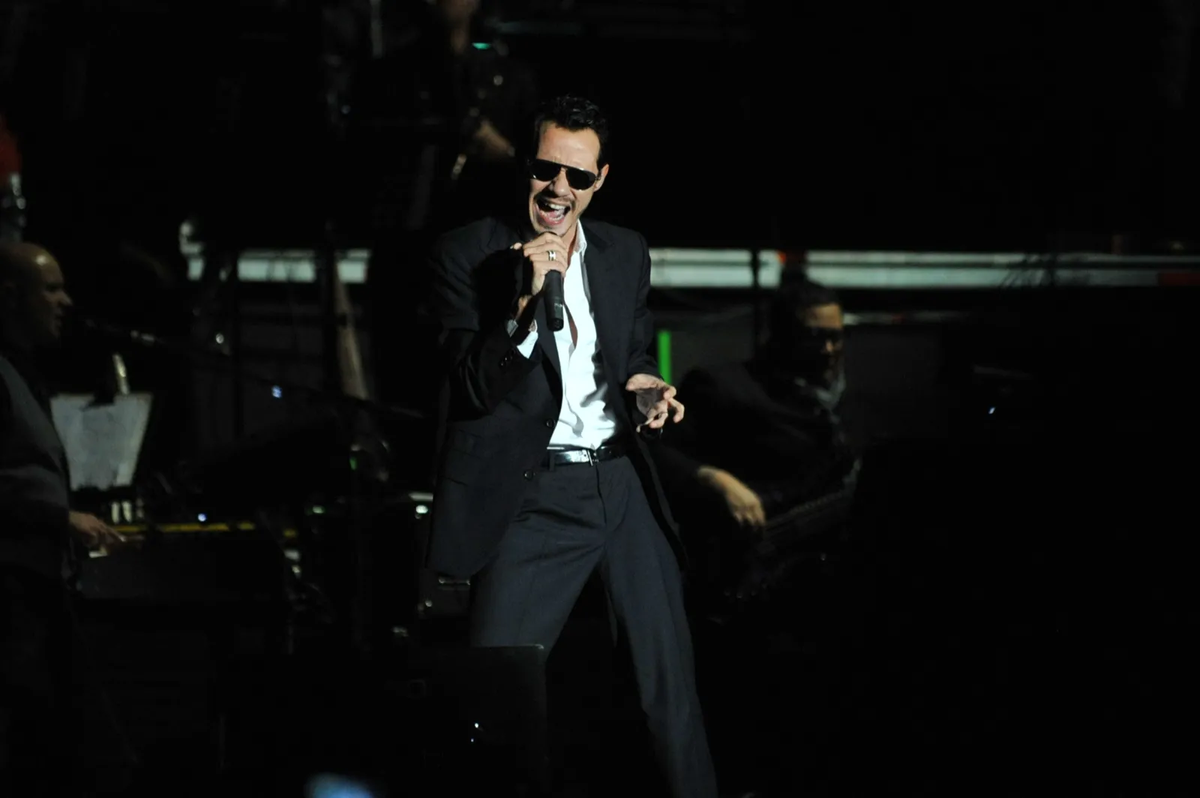
🏷️ Ficha musical
Why it's in this book
"Vivir mi vida" is January's second song, the one that goes with "Despacito". Both are in Spanish and use the same loop, i–VI–III–VII, this year's chord family: in class, A minor, F, C and G, the same four chords as "Zombie", "Bailando" and "El universo sobre mí". With "Despacito" you learn the reggaeton dembow; with this one, the same loop as salsa. That way you check that the style isn't decided by the chords but by the rhythm and the instruments. The chorus has a narrow range, good for breaking voices. In the room with no instruments, the clave goes in claps and the choir sings in two voices. In the ukulele room, the four chords. In the music room, the drums play the clave and the keyboard a simple montuno.
Why this song
If you have been to a wedding, a village party or a dance class in the last ten years, you have very probably danced to this. The chorus says he is going to laugh and dance, and that is exactly what people do when it comes on.
The question on this page is: what does it take to turn a song into salsa? Here's the proof, because the original wasn't salsa. It was a song by an Algerian singer, in French.
Historical context
In 2012 the Algerian singer Khaled released "C'est la vie", "that's life". Khaled is the biggest name in raï, a popular music from Algeria that mixes Arabic singing with electric instruments. It was produced by RedOne, a Moroccan producer who had worked with Lady Gaga. It reached number 4 in France.
A year later, Marc Anthony recorded it in Spanish, as salsa. Marc Anthony was born in New York in 1968 to Puerto Rican parents, and he is one of the great salsa voices of recent decades. It was produced by Sergio George, one of the most important salsa producers, and recorded in Miami. It came out on 26 April 2013, on the album 3.0.
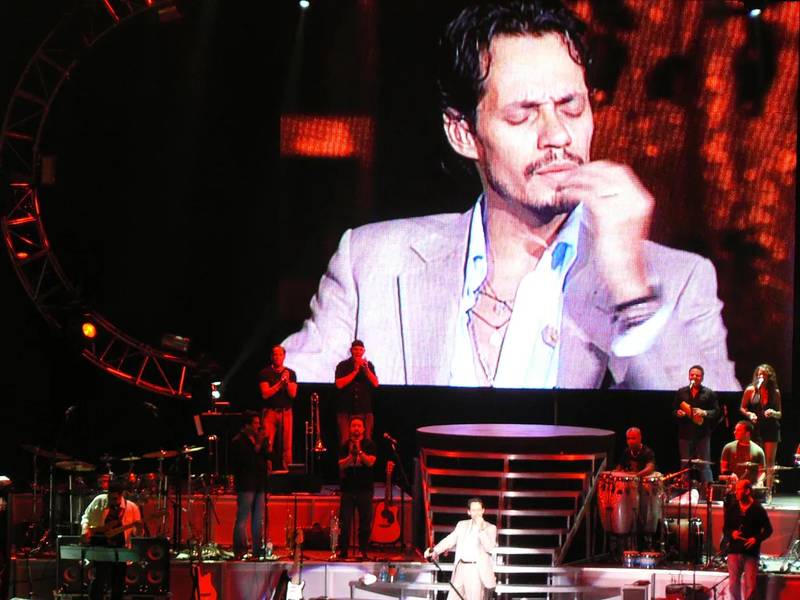
Foto: miggell1, CC BY 2.0, vía Wikimedia Commons
Marc Anthony in concert in Texas in 2006. Look at the orchestra below: congas, drums, trombone, backing singers. A salsa orchestra is almost a class band, only bigger.
It went to number 1 on the US Latin chart and number 2 in Spain. That same year it won the Latin Grammy for Record of the Year, the top award for a recorded song.
Musical characteristics
Four familiar chords. Underneath everything there is a loop: C minor, A flat, E flat, B flat, over and over. It is the chord loop i–VI–III–VII, the same as "Despacito", "Zombie" and "Bailando". What makes this sound like salsa is not the chords.
The skeleton: the clave. All salsa rests on a pattern of five hits spread over two bars, with uneven gaps. It's called the clave. Sometimes a pair of wooden sticks plays it, sometimes nobody plays it out loud, but every musician carries it in their head and fits their rhythms to it.
A piano that spins. Listen to the piano. It doesn't play long chords: it repeats a quick, bouncy figure that keeps circling over the four chords. That repeated figure on the salsa piano is called a montuno. It is the song's engine.
Starting at the end. The song doesn't open with a quiet verse: it goes straight into the chorus. Before you know what it's about, you're already singing the catchiest part.
Slower than the original. Khaled's version runs at about 130 beats per minute; Marc Anthony's at 105. Salsa doesn't need to rush: the clave and the piano provide the movement.
In class. The record is in C minor. In class we take it down to A minor: A minor, F, C and G.
Hard facts: C minor, 4/4, 105 beats per minute, 4:11. The form: chorus, verse, chorus, verse, chorus, verse and chorus.
Guided listening
Play the official audio, which is the album version. The music video runs longer than the record.
At the start, check that the song goes straight into the chorus. How many times does the title line come round before the first verse arrives?
During the verse, listen only to the piano. Try humming its figure: that's the montuno.
When the chorus comes back, sing "C minor, A flat, E flat, B flat" in your head. Check that it is the same loop as in the verse.
Listen for the brass. Does it play while Marc Anthony sings, or in the gaps the voice leaves?
Towards the end, listen for whether the choir and Marc Anthony take turns. Who repeats the same thing, and who changes it each time?
Trivia and curiosities
- From Algeria to Miami. The song was born in French, sung by an Algerian and produced by a Moroccan, and became a hit in Spanish, sung by a New Yorker and recorded in Miami.
- The big prize. It won the 2013 Latin Grammy for Record of the Year. That is the award for the best recording, not the best salsa: it was up against every style.
- A pop producer behind it. RedOne, who made the original, had produced songs for Lady Gaga and Jennifer Lopez. That's why the chorus sounds like pop even though the orchestra is a salsa one.
- Slower and more danceable. Marc Anthony's version is about 25 beats per minute slower than Khaled's. Play them back to back and notice how the dance changes.
Classroom activities
- The clave in your hands. In the room with no instruments: feet keep the beat and hands clap the clave, five hits over two bars. When it works, half the class sings the chorus and the other half keeps the clave going.
- Four chords, two styles. Ukulele: A minor, F, C, G. Play eight bars with the "Despacito" strum and, without stopping, eight with a short, muted salsa strum. Same chords, another dance.
- Salsa choir. The chorus in two voices: half sings the melody and the other half three notes above. The rest of the song, a soloist.
- Band. In the music room: the drums play the clave on the snare rim, the keyboard plays a simple montuno repeating the notes of each chord, the bass plays the note that names each chord, and everyone else stays on ukulele.
- Compare. Listen to thirty seconds of Khaled's original and thirty of this one. Write down three things that change and one that doesn't.
Key vocabulary
- Raï — raï: popular music from Algeria
- Chord loop — bucle armónico
- Clave — clave: the five-hit pattern that holds salsa together
- Montuno — montuno: the repeated salsa piano figure
- Chorus — estribillo
Resources
Official music video — Directed by Carlos Pérez, 2013. It runs longer than the album version.
Official audio — The album version, the one that opens with the chorus. Use this for the guided listening.
Khaled's "C'est la vie" (2012), to compare — The original, in French and faster.
Ukulele — Txabi Ukelele. A play-along with the chords on screen.
Guitar tutorial — Eliana De Piero, in Spanish.
Piano tutorial — Alex Rivas Music, in Spanish. A guide for salsa pianists.
Drums — Gábor Szöllősy. A drum version over the recording.
Por qué está en este libro
«Vivir mi vida» es la segunda canción de enero, la que acompaña a «Despacito». Las dos están en castellano y usan el mismo bucle, i–VI–III–VII, el de la familia de este curso: en clase, la menor, fa, do y sol, los mismos cuatro acordes que «Zombie», «Bailando» y «El universo sobre mí». Con «Despacito» aprendes el dembow del reguetón; con esta, el mismo bucle en salsa. Así compruebas que el estilo no lo deciden los acordes, sino el ritmo y los instrumentos. El estribillo tiene un ámbito corto, bueno para voces en muda. En el aula sin nada, la clave va en palmas y el coro a dos voces. En el aula de ukeleles, los cuatro acordes. En el aula de música, la batería toca la clave y el teclado un montuno sencillo.
Por dónde entrar
Si has estado en una boda, una fiesta de pueblo o una clase de baile en los últimos diez años, es muy probable que hayas bailado esto. El estribillo dice que va a reír y a bailar, y es exactamente lo que hace la gente cuando suena.
La pregunta de esta página es: ¿qué hace falta para convertir una canción en salsa? Aquí tienes la prueba, porque la original no era salsa. Era una canción de un cantante argelino, en francés.
Contexto histórico
En 2012, el cantante argelino Khaled sacó «C'est la vie», «así es la vida». Khaled es el gran nombre del raï, una música popular de Argelia que mezcla canto árabe con instrumentos eléctricos. La produjo RedOne, un productor marroquí que había trabajado con Lady Gaga. Fue número 4 en Francia.
Un año después, Marc Anthony la grabó en castellano y en salsa. Marc Anthony nació en Nueva York en 1968, hijo de padres puertorriqueños, y es una de las grandes voces de la salsa de las últimas décadas. La produjo Sergio George, uno de los productores de salsa más importantes, y se grabó en Miami. Salió el 26 de abril de 2013, en el disco 3.0.
Foto: miggell1, CC BY 2.0, vía Wikimedia Commons
Marc Anthony en concierto en Texas, en 2006. Fíjate en la orquesta de abajo: congas, batería, trombón, coristas. Una orquesta de salsa es casi una banda de clase en grande.
Fue número 1 en la lista latina de Estados Unidos y número 2 en España. Ese mismo año ganó el Grammy Latino a la Grabación del Año, el premio más importante a una canción grabada.
Cómo suena
Cuatro acordes conocidos. Debajo de todo hay un bucle: do menor, la bemol, mi bemol, si bemol, una y otra vez. Es el bucle armónico i–VI–III–VII, el mismo de «Despacito», «Zombie» y «Bailando». Lo que hace que esto suene a salsa no son los acordes.
El esqueleto: la clave. Toda la salsa se apoya en un patrón de cinco golpes repartidos en dos compases, con huecos desiguales. Se llama clave. A veces la tocan unas claves de madera, a veces no suena nadie tocándola, pero todos los músicos la llevan en la cabeza y encajan sus ritmos con ella.
Un piano que gira. Escucha el piano. No toca acordes largos: repite un dibujo rápido, saltarín, que da vueltas sobre los cuatro acordes sin parar. Ese dibujo repetido del piano de salsa se llama montuno. Es el motor de la canción.
Empezar por el final. La canción no empieza con una estrofa tranquila: empieza directamente por el estribillo. Antes de que sepas de qué va, ya estás cantando la parte más pegadiza.
Más lenta que la original. La versión de Khaled va a unos 130 pulsos por minuto; la de Marc Anthony, a 105. La salsa no necesita correr: el movimiento lo ponen la clave y el piano.
En clase. El disco está en Do menor. En clase la bajamos a La menor: la menor, fa, do y sol.
Datos duros: Do menor, 4/4, 105 pulsos por minuto, 4:11. La forma: estribillo, estrofa, estribillo, estrofa, estribillo, estrofa y estribillo.
Escucha guiada
Pon el audio oficial, que es la versión del disco. El videoclip dura más que el disco.
Al principio, comprueba que la canción arranca directamente con el estribillo. ¿Cuántas veces se repite la frase del título antes de que llegue la primera estrofa?
Durante la estrofa, escucha solo el piano. Intenta tararear su dibujo: es el montuno.
Cuando vuelva el estribillo, canta por dentro «do menor, la bemol, mi bemol, si bemol». Comprueba que es la misma vuelta que en la estrofa.
Busca los metales. ¿Suenan mientras canta Marc Anthony o en los huecos que deja la voz?
Hacia el final, escucha si el coro y Marc Anthony se turnan. ¿Quién repite lo mismo y quién cambia cada vez?
Curiosidades
- De Argelia a Miami. La canción nació en francés, cantada por un argelino y producida por un marroquí, y triunfó en castellano, cantada por un neoyorquino y grabada en Miami.
- El premio gordo. Ganó el Grammy Latino a la Grabación del Año en 2013. Es el premio a la mejor grabación, no a la mejor salsa: competía con todos los estilos.
- El mismo productor de pop. RedOne, que hizo la original, había producido canciones de Lady Gaga y de Jennifer Lopez. Por eso el estribillo suena a pop aunque la orquesta sea de salsa.
- Más lenta y más bailable. La versión de Marc Anthony va unos 25 pulsos por minuto más despacio que la de Khaled. Ponlas seguidas y verás cómo cambia el baile.
Para hacer en clase
- La clave con las manos. En el aula sin nada: los pies marcan el pulso y las palmas tocan la clave, cinco golpes en dos compases. Cuando salga, la mitad canta el estribillo y la otra mitad sigue con la clave.
- Cuatro acordes, dos estilos. Ukelele: la menor, fa, do, sol. Tocad ocho compases con el rasgueo de «Despacito» y, sin parar, ocho con un rasgueo de salsa, apagado y corto. Mismos acordes, otro baile.
- Coro de salsa. El estribillo a dos voces: una mitad canta la melodía y la otra, tres notas por encima. El resto de la canción, un solista.
- Banda. En el aula de música: la batería toca la clave en el aro de la caja, el teclado hace un montuno sencillo repitiendo las notas de cada acorde, el bajo toca la nota que da nombre a cada acorde y el resto sigue con ukelele.
- Comparar. Escuchad treinta segundos de la original de Khaled y treinta de esta. Anotad tres cosas que cambian y una que no.
Vocabulario fundamental
- Raï — Música popular de Argelia que mezcla canto árabe con instrumentos eléctricos.
- Bucle armónico — Una serie de acordes que se repite. Aquí, do menor, la bemol, mi bemol, si bemol.
- Clave — Un patrón de cinco golpes en dos compases, el esqueleto de la salsa.
- Montuno — El dibujo repetido del piano en la salsa.
- Estribillo — La parte que vuelve con la misma letra. Aquí, abre la canción.
Recursos
Videoclip oficial — Dirigido por Carlos Pérez, de 2013. Dura más que la versión del disco.
Audio oficial — La versión del disco, la que empieza por el estribillo. Para la escucha guiada, usa esta.
«C'est la vie», de Khaled (2012), para comparar — La original, en francés y más rápida.
Ukelele — Txabi Ukelele. Para tocar encima, con los acordes en pantalla.
Tutorial de guitarra — Eliana De Piero, en castellano.
Tutorial de piano — Alex Rivas Music, en castellano. Una guía para pianistas de salsa.
Batería — Gábor Szöllősy. Versión de batería sobre la grabación.
Why it's in this book
"Vivir mi vida" is January's second song, the one that goes with "Despacito". Both are in Spanish and use the same loop, i–VI–III–VII, this year's chord family: in class, A minor, F, C and G, the same four chords as "Zombie", "Bailando" and "El universo sobre mí". With "Despacito" you learn the reggaeton dembow; with this one, the same loop as salsa. That way you check that the style isn't decided by the chords but by the rhythm and the instruments. The chorus has a narrow range, good for breaking voices. In the room with no instruments, the clave goes in claps and the choir sings in two voices. In the ukulele room, the four chords. In the music room, the drums play the clave and the keyboard a simple montuno.
Why this song
If you have been to a wedding, a village party or a dance class in the last ten years, you have very probably danced to this. The chorus says he is going to laugh and dance, and that is exactly what people do when it comes on.
The question on this page is: what does it take to turn a song into salsa? Here's the proof, because the original wasn't salsa. It was a song by an Algerian singer, in French.
Historical context
In 2012 the Algerian singer Khaled released "C'est la vie", "that's life". Khaled is the biggest name in raï, a popular music from Algeria that mixes Arabic singing with electric instruments. It was produced by RedOne, a Moroccan producer who had worked with Lady Gaga. It reached number 4 in France.
A year later, Marc Anthony recorded it in Spanish, as salsa. Marc Anthony was born in New York in 1968 to Puerto Rican parents, and he is one of the great salsa voices of recent decades. It was produced by Sergio George, one of the most important salsa producers, and recorded in Miami. It came out on 26 April 2013, on the album 3.0.
Foto: miggell1, CC BY 2.0, vía Wikimedia Commons
Marc Anthony in concert in Texas in 2006. Look at the orchestra below: congas, drums, trombone, backing singers. A salsa orchestra is almost a class band, only bigger.
It went to number 1 on the US Latin chart and number 2 in Spain. That same year it won the Latin Grammy for Record of the Year, the top award for a recorded song.
Musical characteristics
Four familiar chords. Underneath everything there is a loop: C minor, A flat, E flat, B flat, over and over. It is the chord loop i–VI–III–VII, the same as "Despacito", "Zombie" and "Bailando". What makes this sound like salsa is not the chords.
The skeleton: the clave. All salsa rests on a pattern of five hits spread over two bars, with uneven gaps. It's called the clave. Sometimes a pair of wooden sticks plays it, sometimes nobody plays it out loud, but every musician carries it in their head and fits their rhythms to it.
A piano that spins. Listen to the piano. It doesn't play long chords: it repeats a quick, bouncy figure that keeps circling over the four chords. That repeated figure on the salsa piano is called a montuno. It is the song's engine.
Starting at the end. The song doesn't open with a quiet verse: it goes straight into the chorus. Before you know what it's about, you're already singing the catchiest part.
Slower than the original. Khaled's version runs at about 130 beats per minute; Marc Anthony's at 105. Salsa doesn't need to rush: the clave and the piano provide the movement.
In class. The record is in C minor. In class we take it down to A minor: A minor, F, C and G.
Hard facts: C minor, 4/4, 105 beats per minute, 4:11. The form: chorus, verse, chorus, verse, chorus, verse and chorus.
Guided listening
Play the official audio, which is the album version. The music video runs longer than the record.
At the start, check that the song goes straight into the chorus. How many times does the title line come round before the first verse arrives?
During the verse, listen only to the piano. Try humming its figure: that's the montuno.
When the chorus comes back, sing "C minor, A flat, E flat, B flat" in your head. Check that it is the same loop as in the verse.
Listen for the brass. Does it play while Marc Anthony sings, or in the gaps the voice leaves?
Towards the end, listen for whether the choir and Marc Anthony take turns. Who repeats the same thing, and who changes it each time?
Trivia and curiosities
- From Algeria to Miami. The song was born in French, sung by an Algerian and produced by a Moroccan, and became a hit in Spanish, sung by a New Yorker and recorded in Miami.
- The big prize. It won the 2013 Latin Grammy for Record of the Year. That is the award for the best recording, not the best salsa: it was up against every style.
- A pop producer behind it. RedOne, who made the original, had produced songs for Lady Gaga and Jennifer Lopez. That's why the chorus sounds like pop even though the orchestra is a salsa one.
- Slower and more danceable. Marc Anthony's version is about 25 beats per minute slower than Khaled's. Play them back to back and notice how the dance changes.
Classroom activities
- The clave in your hands. In the room with no instruments: feet keep the beat and hands clap the clave, five hits over two bars. When it works, half the class sings the chorus and the other half keeps the clave going.
- Four chords, two styles. Ukulele: A minor, F, C, G. Play eight bars with the "Despacito" strum and, without stopping, eight with a short, muted salsa strum. Same chords, another dance.
- Salsa choir. The chorus in two voices: half sings the melody and the other half three notes above. The rest of the song, a soloist.
- Band. In the music room: the drums play the clave on the snare rim, the keyboard plays a simple montuno repeating the notes of each chord, the bass plays the note that names each chord, and everyone else stays on ukulele.
- Compare. Listen to thirty seconds of Khaled's original and thirty of this one. Write down three things that change and one that doesn't.
Key vocabulary
- Raï — raï: popular music from Algeria
- Chord loop — bucle armónico
- Clave — clave: the five-hit pattern that holds salsa together
- Montuno — montuno: the repeated salsa piano figure
- Chorus — estribillo
Resources
Official music video — Directed by Carlos Pérez, 2013. It runs longer than the album version.
Official audio — The album version, the one that opens with the chorus. Use this for the guided listening.
Khaled's "C'est la vie" (2012), to compare — The original, in French and faster.
Ukulele — Txabi Ukelele. A play-along with the chords on screen.
Guitar tutorial — Eliana De Piero, in Spanish.
Piano tutorial — Alex Rivas Music, in Spanish. A guide for salsa pianists.
Drums — Gábor Szöllősy. A drum version over the recording.