Contenidos
Three Little Birds — Bob Marley and the Wailers (1977)
Three chords, a guitar that hits off the beat and a message that fits in one sentence: everything is going to be all right. It is the best-known reggae song there is.
🏷️ Ficha musical
Why it's in this book
"Three Little Birds" comes in October, at the start of the year, because it uses only three chords: C, F and G. That is the I–IV–V family, the same as "Lean On Me" and "Siyahamba" in this book, and as lots of rock and roll songs you will meet later. With it you learn the reggae skank: the off-beat hit, in claps and on the ukulele. It is also your first improvisation: on the xylophone you play the pentatonic scale on top, where there are no wrong notes. In your classroom with no instruments, you clap the skank off the beat and the choir answers "singing don't worry". With ukuleles, the three chords with the reggae strum. In the music room, the drums play the one drop and the keyboard plays off the beat.
Why this song
You have probably heard "don't worry about a thing" without knowing where it came from. It turns up in adverts, films and chill-out playlists. Many people think the song is called "Don't Worry About a Thing". It is not: it is called "Three Little Birds".
Put the song on and clap. You will probably clap on the beat, as in any song. Now listen to the guitar: it does not play on the beat. It plays exactly in between.
The question on this page is: what happens when a song puts its hits where you do not expect them?
Historical context
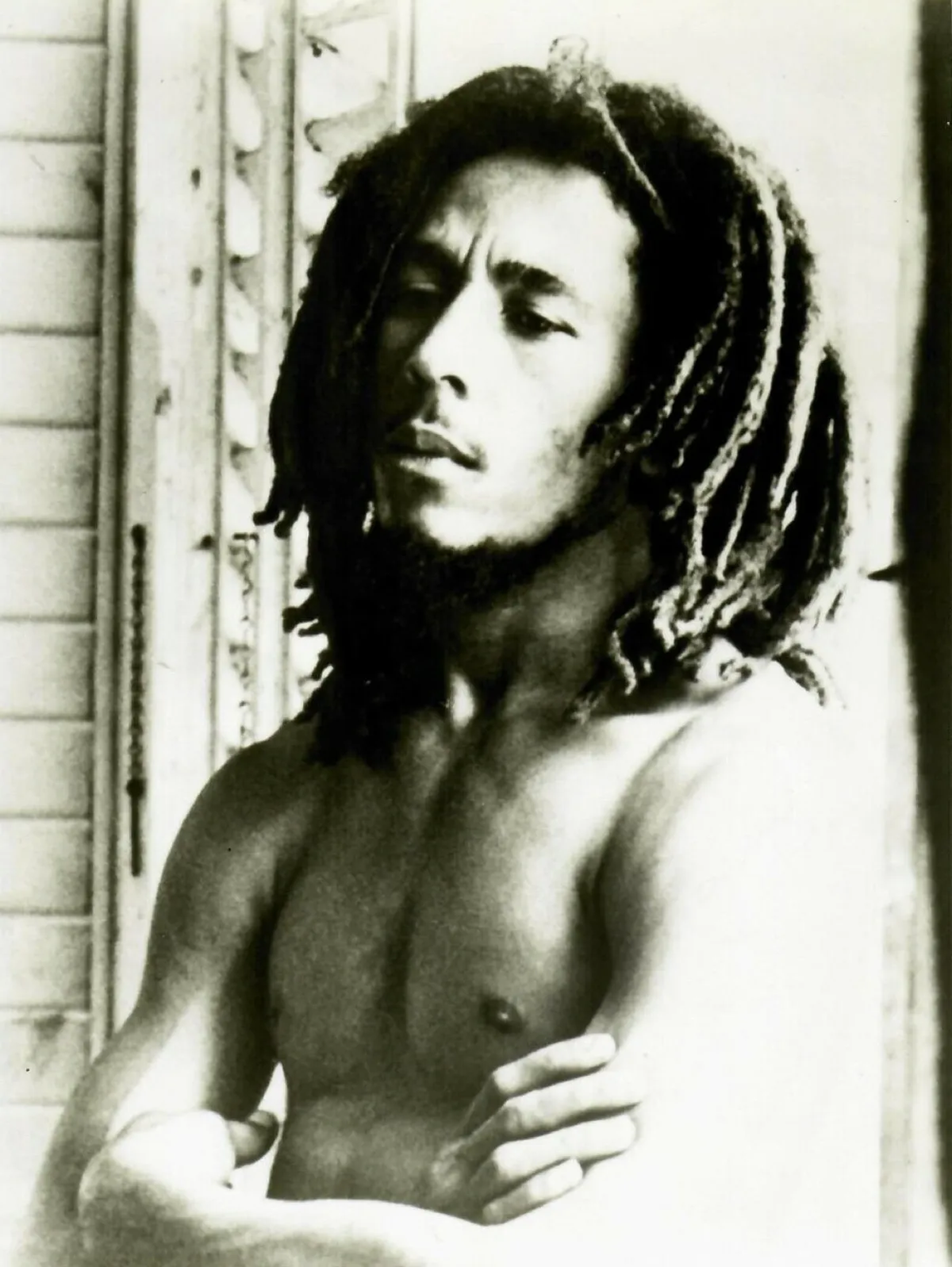
Bob Marley was born in Jamaica in 1945. With his band, The Wailers, he took reggae, the music of his island, to the whole world.
In December 1976, Jamaica was in the middle of an election campaign and deeply divided. Two days before a free concert he was due to give, Smile Jamaica, armed men broke into Marley's house and shot him. He survived, played the concert and then went to live in London. There, in 1977, he recorded the album Exodus. "Three Little Birds" is one of its songs.
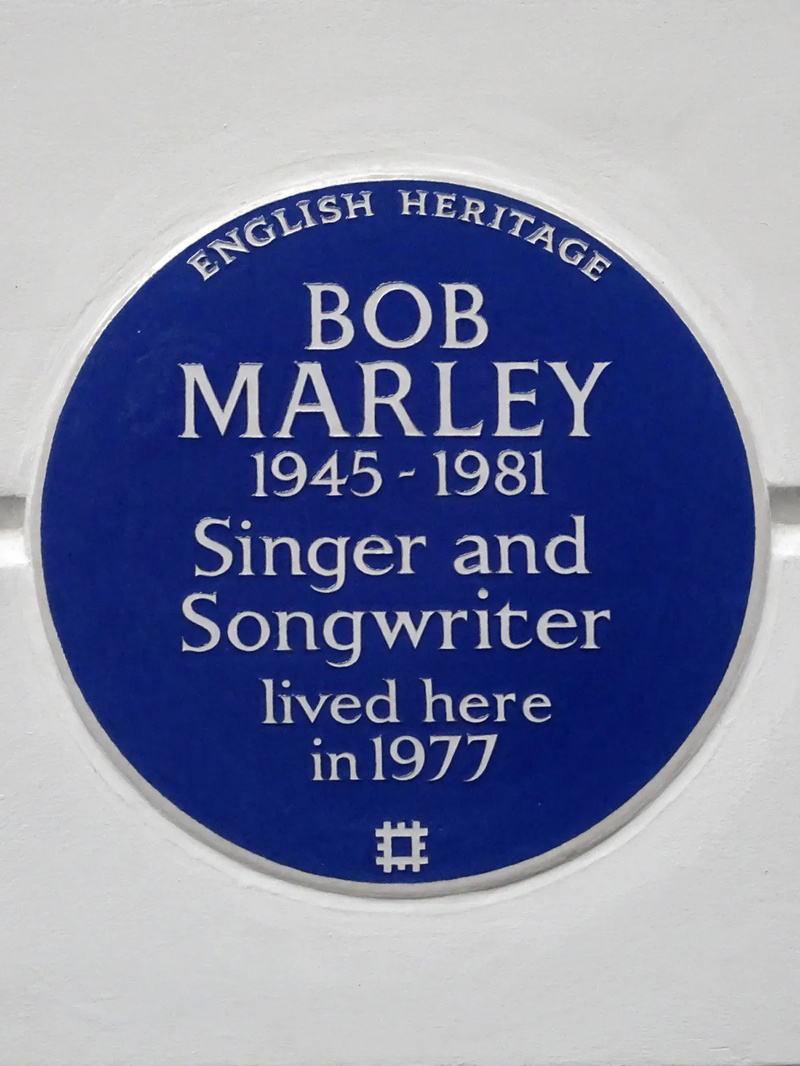
Foto: Spudgun67, CC BY-SA 4.0, vía Wikimedia Commons
In London, blue plaques mark the houses where important people lived. This one is at 42 Oakley Street, in Chelsea: "Bob Marley lived here in 1977". It went up in 2019.
It is striking: after such a hard year, Marley recorded one of the calmest songs ever made. Nobody is sure who the three little birds were. A friend of his says they were canaries that landed on his windowsill. The three singers in his backing group, the I Threes, say it was them.

Foto: Eddie Mallin, CC BY 2.0, vía Wikimedia Commons
The I Threes at a Bob Marley concert in Dublin, in July 1980. From left to right, Judy Mowatt, Rita Marley and Marcia Griffiths. Marcia said that after this song, Marley always called them his three little birds.
Musical characteristics
Hits in the wrong place. Count out loud "one, two, three, four". The guitar and the keyboard do not play on the numbers: they play in between, on the "ands". That is playing off the beat. In reggae, that short, dry off-beat hit has its own name: the skank.
A drum beat that skips the one. In almost all pop music, the bass drum hits hard on beat one. In this reggae, it does not. The drums leave beat one empty and put everything on beat three. That rhythm is called the one drop. That is why the song sounds so relaxed: it seems in no hurry to get anywhere.
Three chords. The song turns around three chords, which in class are C, F and G. That is the I–IV–V progression, the base of thousands of rock, blues and pop songs. With these three chords you can play many others.
A question and its answer. Listen to the chorus: Marley sings a line and the I Threes answer him. This is called call and response. It is one of the oldest ways of singing together.
No wrong notes. If you play only C, D, E, G and A on the xylophone, every note sounds good over this song. That five-note scale is called the pentatonic scale. That makes it the best place to start improvising: making up music on the spot without being afraid of mistakes.
A warning for when you play. The record is in A major: A–D–E. In class you play it in C major, C–F–G, because those chords are easier on the ukulele. Moving a song to another pitch is called transposing. If you play in C along with the record, it will not fit.
Hard facts: A major on the record and C major in class, 4/4, 74 beats per minute, 3:01. The form, probably: chorus, verse, chorus, verse and a final chorus that repeats as it fades.
Guided listening
Play the music video. At first, clap on the beat. Then move your claps to the middle, where the guitar plays. Which is harder?
Listen to the bass drum. Does it hit on beat one or beat three?
When the chorus arrives, separate the two parts: Marley's voice and the three singers answering him. Who sings first?
In the last chorus, notice how the song ends. Does it stop suddenly or fade away?
Trivia and curiosities
- Many people search for the song as "Don't Worry About a Thing" or "Every Little Thing Is Gonna Be Alright". The chorus is so easy to remember that it swallows the title.
- It came out on the album in 1977, but was not released as a single until 1980. It reached number 17 in the UK.
- The bass and drums were played by two brothers: Aston and Carlton Barrett. Carlton is one of the drummers who made the one drop famous.
- Exodus is the Marley album with the most songs on his big greatest-hits collection, Legend.
Classroom activities
- The skank with your body. The class taps the beat with their feet and claps only in between, off the beat. When it works, put the record on and keep it going.
- Call and response. One person sings the line from the chorus; the class answers "singing don't worry". Take turns leading the call.
- Three chords with a reggae strum. Ukulele: C, F, G. Only short downstrokes, off the beat, muting the strings with your hand straight after.
- Improvise in pentatonic. Xylophones with only C, D, E, G and A (take off F and B). While the others play the chords, each person makes up a four-bar phrase.
- The one drop. In the music room: the drums play the one drop, the keyboard plays the skank and the ukebass plays the three chords.
Key vocabulary
- Off the beat — a contratiempo: en medio de los pulsos
- Skank — skank: el golpe corto a contratiempo del reggae
- One drop — one drop: el ritmo de batería que carga el tercer pulso
- Call and response — llamada y respuesta
- Pentatonic scale — escala pentatónica: escala de cinco notas
Resources
Official music video — From Bob Marley's official channel.
Ukulele tutorial — SpicyUke. The three chords and the reggae strum.
Guitar tutorial — JustinGuitar. Play along with the song from day one.
Keyboard tutorial — Piano with Nate. The chords and the off-beat rhythm.
Drum tutorial — Ryan Alexander Bloom. The one drop for beginners, using this song.
Por qué está en este libro
«Three Little Birds» llega en octubre, al principio del curso, porque usa solo tres acordes: do, fa y sol. Es la familia I–IV–V, la misma de «Lean On Me» y «Siyahamba» en este libro, y de muchas canciones de rock and roll que veréis más adelante. Con ella aprendéis el skank del reggae: el golpe a contratiempo, en las palmas y en el ukelele. También es vuestra primera improvisación: con el xilófono tocáis la escala pentatónica encima, donde no hay nota mala. En tu aula, sin instrumentos, hacéis el skank con palmas a contratiempo y el coro responde «singing don't worry». Con el ukelele, los tres acordes con el rasgueo del reggae. En el aula de música, la batería toca el one drop y el teclado va a contratiempo.
Por dónde entrar
Probablemente has oído «don't worry about a thing» sin saber de dónde salía. Está en anuncios, películas y listas de canciones para estar tranquilo. Mucha gente cree que la canción se llama así, «Don't Worry About a Thing». No: se llama «Three Little Birds», tres pajaritos.
Pon la canción y da palmas. Lo normal es que las des en el pulso, como en cualquier canción. Ahora fíjate en la guitarra: no toca en el pulso. Toca justo en medio.
La pregunta de esta página es: ¿qué pasa si una canción pone los golpes donde no los esperas?
Contexto histórico
Bob Marley nació en Jamaica en 1945. Con su banda, The Wailers, llevó el reggae, la música de su isla, a todo el mundo.
En diciembre de 1976, Jamaica estaba en plena campaña electoral y muy dividida. Dos días antes de un concierto gratuito que iba a dar, Smile Jamaica, unos hombres armados entraron en casa de Marley y le dispararon. Sobrevivió, tocó en el concierto y después se fue a vivir a Londres. Allí grabó en 1977 el disco Exodus. «Three Little Birds» es una de sus canciones.
Foto: Spudgun67, CC BY-SA 4.0, vía Wikimedia Commons
En Londres ponen placas azules en las casas donde vivió gente importante. Esta está en el número 42 de Oakley Street, en el barrio de Chelsea: «Bob Marley vivió aquí en 1977». La pusieron en 2019.
Es curioso: después de un año tan duro, Marley grabó una de las canciones más tranquilas que existen. No está claro quiénes eran los tres pajaritos. Un amigo suyo dice que eran unos canarios que se posaban en su ventana. Las tres cantantes de su coro, las I Threes, dicen que eran ellas.
Foto: Eddie Mallin, CC BY 2.0, vía Wikimedia Commons
Las I Threes en un concierto de Bob Marley en Dublín, en julio de 1980. De izquierda a derecha, Judy Mowatt, Rita Marley y Marcia Griffiths. Marcia contó que, después de esta canción, Marley las llamaba siempre «mis tres pajaritos».
Cómo suena
Golpes donde no toca. Cuenta en voz alta «un, dos, tres, cuatro». La guitarra y el teclado no tocan en los números: tocan en medio, en los «y». Eso es tocar a contratiempo. En el reggae, ese golpe corto y seco a contratiempo tiene nombre propio: el skank.
Una batería que se salta el uno. En casi toda la música pop, el bombo suena fuerte en el primer pulso. En este reggae, no. La batería deja el primer pulso vacío y lo da todo en el tercero. Ese ritmo se llama one drop, "una sola caída". Por eso la canción suena tan relajada: parece que no tiene prisa por llegar.
Tres acordes. La canción gira sobre tres acordes, que en clase son do, fa y sol. Es la progresión I–IV–V, la base de miles de canciones de rock, blues y pop. Con estos tres acordes podéis tocar muchas otras.
Una pregunta y su respuesta. Escucha el coro: Marley canta una frase y las I Threes le contestan. A esto se le llama llamada y respuesta. Es una de las formas más antiguas de cantar juntos.
Sin nota mala. Si tocas con el xilófono solo las notas do, re, mi, sol y la, todas suenan bien encima de esta canción. Esa escala de cinco notas se llama escala pentatónica. Por eso es el mejor sitio para empezar a improvisar: inventar música en el momento sin miedo a equivocarte.
Un aviso para cuando toques. El disco está en la mayor: A–D–E. En clase lo tocáis en do mayor, C–F–G, porque en ukelele esos acordes son más fáciles. Pasar una canción a otra altura se llama transportar. Si tocáis encima del disco en do, no encajará.
Datos duros: la mayor en el disco y do mayor en clase, 4/4, 74 pulsos por minuto, 3:01. La forma, probablemente: estribillo, estrofa, estribillo, estrofa y un estribillo final que se repite mientras se apaga.
Escucha guiada
Pon el videoclip. Al principio, da palmas en el pulso. Luego cámbialas al medio, donde toca la guitarra. ¿Cuál cuesta más?
Escucha el bombo de la batería. ¿Suena en el primer pulso o en el tercero?
Cuando llegue el coro, separa las dos voces: la de Marley y la de las tres cantantes que le contestan. ¿Quién canta primero?
En el último estribillo, fíjate en cómo se acaba la canción. ¿Termina de golpe o se apaga poco a poco?
Curiosidades
- Mucha gente busca la canción como «Don't Worry About a Thing» o «Every Little Thing Is Gonna Be Alright». Es tan fácil de recordar el estribillo que se come al título.
- Salió en el disco en 1977, pero como sencillo no se publicó hasta 1980. Llegó al número 17 en el Reino Unido.
- El bajo y la batería los tocaban dos hermanos: Aston y Carlton Barrett. Carlton es uno de los bateristas que hicieron famoso el one drop.
- Exodus es el disco de Marley con más canciones en su gran recopilatorio de éxitos, Legend.
Para hacer en clase
- El skank con el cuerpo. La clase marca el pulso con los pies y da palmas solo en medio, a contratiempo. Cuando salga, se pone el disco y se mantiene.
- Llamada y respuesta. Una persona canta la frase del estribillo; la clase contesta «singing don't worry». Turnaos quién lanza la llamada.
- Tres acordes con rasgueo de reggae. Ukelele: do, fa, sol. Solo golpes cortos hacia abajo, a contratiempo, y apagando las cuerdas con la mano justo después.
- Improvisar en pentatónica. Xilófonos con solo do, re, mi, sol y la (quitad fa y si). Mientras el resto toca los acordes, cada uno inventa una frase de cuatro compases.
- El one drop. En el aula de música: la batería toca el one drop, el teclado hace el skank y el ukebajo los tres acordes.
Vocabulario fundamental
- Contratiempo — Tocar en medio de los pulsos, no encima.
- Skank — El golpe corto y seco a contratiempo de la guitarra y el teclado en el reggae.
- One drop — El ritmo de batería del reggae que deja vacío el primer pulso y carga el tercero.
- Llamada y respuesta — Una voz canta y otra le contesta.
- Escala pentatónica — Una escala de cinco notas en la que, sobre esta canción, no hay nota mala.
Recursos
Videoclip oficial — Del canal oficial de Bob Marley.
Tutorial de ukelele — SpicyUke. Los tres acordes y el rasgueo del reggae.
Tutorial de guitarra — JustinGuitar. Para tocar con la canción desde el primer día.
Tutorial de teclado — Piano with Nate. Los acordes y el ritmo a contratiempo.
Tutorial de batería — Ryan Alexander Bloom. El one drop para principiantes, con esta canción.
Why it's in this book
"Three Little Birds" comes in October, at the start of the year, because it uses only three chords: C, F and G. That is the I–IV–V family, the same as "Lean On Me" and "Siyahamba" in this book, and as lots of rock and roll songs you will meet later. With it you learn the reggae skank: the off-beat hit, in claps and on the ukulele. It is also your first improvisation: on the xylophone you play the pentatonic scale on top, where there are no wrong notes. In your classroom with no instruments, you clap the skank off the beat and the choir answers "singing don't worry". With ukuleles, the three chords with the reggae strum. In the music room, the drums play the one drop and the keyboard plays off the beat.
Why this song
You have probably heard "don't worry about a thing" without knowing where it came from. It turns up in adverts, films and chill-out playlists. Many people think the song is called "Don't Worry About a Thing". It is not: it is called "Three Little Birds".
Put the song on and clap. You will probably clap on the beat, as in any song. Now listen to the guitar: it does not play on the beat. It plays exactly in between.
The question on this page is: what happens when a song puts its hits where you do not expect them?
Historical context
Bob Marley was born in Jamaica in 1945. With his band, The Wailers, he took reggae, the music of his island, to the whole world.
In December 1976, Jamaica was in the middle of an election campaign and deeply divided. Two days before a free concert he was due to give, Smile Jamaica, armed men broke into Marley's house and shot him. He survived, played the concert and then went to live in London. There, in 1977, he recorded the album Exodus. "Three Little Birds" is one of its songs.
Foto: Spudgun67, CC BY-SA 4.0, vía Wikimedia Commons
In London, blue plaques mark the houses where important people lived. This one is at 42 Oakley Street, in Chelsea: "Bob Marley lived here in 1977". It went up in 2019.
It is striking: after such a hard year, Marley recorded one of the calmest songs ever made. Nobody is sure who the three little birds were. A friend of his says they were canaries that landed on his windowsill. The three singers in his backing group, the I Threes, say it was them.
Foto: Eddie Mallin, CC BY 2.0, vía Wikimedia Commons
The I Threes at a Bob Marley concert in Dublin, in July 1980. From left to right, Judy Mowatt, Rita Marley and Marcia Griffiths. Marcia said that after this song, Marley always called them his three little birds.
Musical characteristics
Hits in the wrong place. Count out loud "one, two, three, four". The guitar and the keyboard do not play on the numbers: they play in between, on the "ands". That is playing off the beat. In reggae, that short, dry off-beat hit has its own name: the skank.
A drum beat that skips the one. In almost all pop music, the bass drum hits hard on beat one. In this reggae, it does not. The drums leave beat one empty and put everything on beat three. That rhythm is called the one drop. That is why the song sounds so relaxed: it seems in no hurry to get anywhere.
Three chords. The song turns around three chords, which in class are C, F and G. That is the I–IV–V progression, the base of thousands of rock, blues and pop songs. With these three chords you can play many others.
A question and its answer. Listen to the chorus: Marley sings a line and the I Threes answer him. This is called call and response. It is one of the oldest ways of singing together.
No wrong notes. If you play only C, D, E, G and A on the xylophone, every note sounds good over this song. That five-note scale is called the pentatonic scale. That makes it the best place to start improvising: making up music on the spot without being afraid of mistakes.
A warning for when you play. The record is in A major: A–D–E. In class you play it in C major, C–F–G, because those chords are easier on the ukulele. Moving a song to another pitch is called transposing. If you play in C along with the record, it will not fit.
Hard facts: A major on the record and C major in class, 4/4, 74 beats per minute, 3:01. The form, probably: chorus, verse, chorus, verse and a final chorus that repeats as it fades.
Guided listening
Play the music video. At first, clap on the beat. Then move your claps to the middle, where the guitar plays. Which is harder?
Listen to the bass drum. Does it hit on beat one or beat three?
When the chorus arrives, separate the two parts: Marley's voice and the three singers answering him. Who sings first?
In the last chorus, notice how the song ends. Does it stop suddenly or fade away?
Trivia and curiosities
- Many people search for the song as "Don't Worry About a Thing" or "Every Little Thing Is Gonna Be Alright". The chorus is so easy to remember that it swallows the title.
- It came out on the album in 1977, but was not released as a single until 1980. It reached number 17 in the UK.
- The bass and drums were played by two brothers: Aston and Carlton Barrett. Carlton is one of the drummers who made the one drop famous.
- Exodus is the Marley album with the most songs on his big greatest-hits collection, Legend.
Classroom activities
- The skank with your body. The class taps the beat with their feet and claps only in between, off the beat. When it works, put the record on and keep it going.
- Call and response. One person sings the line from the chorus; the class answers "singing don't worry". Take turns leading the call.
- Three chords with a reggae strum. Ukulele: C, F, G. Only short downstrokes, off the beat, muting the strings with your hand straight after.
- Improvise in pentatonic. Xylophones with only C, D, E, G and A (take off F and B). While the others play the chords, each person makes up a four-bar phrase.
- The one drop. In the music room: the drums play the one drop, the keyboard plays the skank and the ukebass plays the three chords.
Key vocabulary
- Off the beat — a contratiempo: en medio de los pulsos
- Skank — skank: el golpe corto a contratiempo del reggae
- One drop — one drop: el ritmo de batería que carga el tercer pulso
- Call and response — llamada y respuesta
- Pentatonic scale — escala pentatónica: escala de cinco notas
Resources
Official music video — From Bob Marley's official channel.
Ukulele tutorial — SpicyUke. The three chords and the reggae strum.
Guitar tutorial — JustinGuitar. Play along with the song from day one.
Keyboard tutorial — Piano with Nate. The chords and the off-beat rhythm.
Drum tutorial — Ryan Alexander Bloom. The one drop for beginners, using this song.