Contenidos
Stand by Me — Ben E. King (1961)
You recognise it from the bass, before anyone sings. And underneath that bass there are four chords you will meet in dozens of other songs.
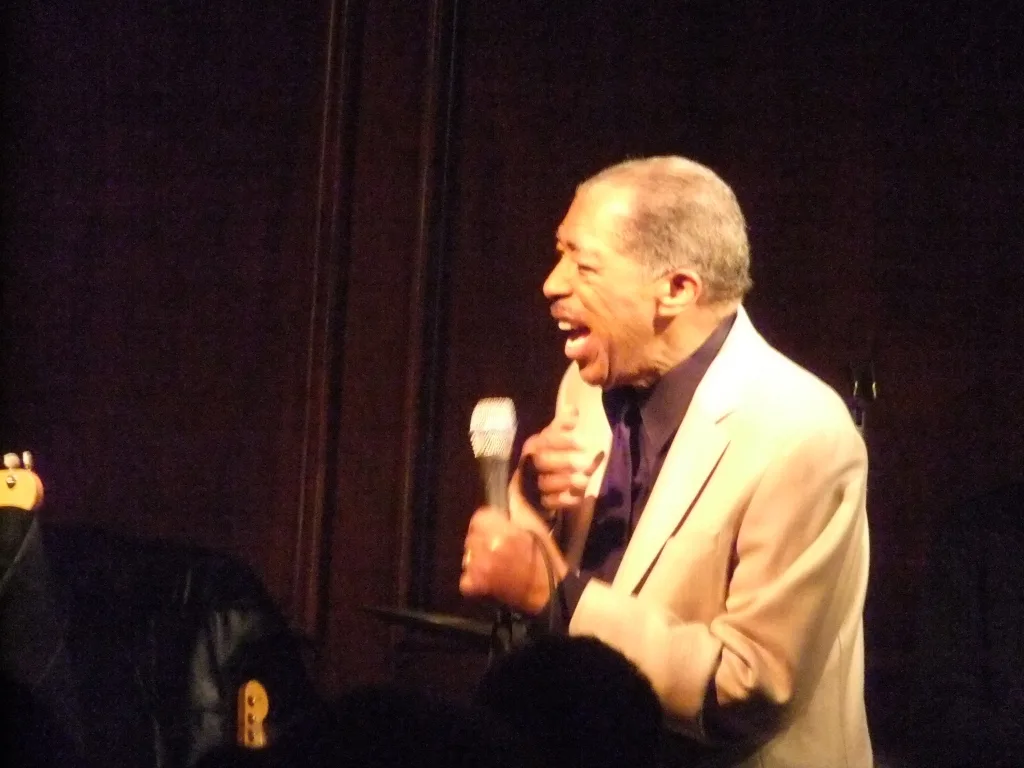
🏷️ Ficha musical
Why this song
These four chords have a nickname: people call them "the Stand by Me changes". That is odd, because the pattern is older than the song. It was everywhere in the 1950s, in hundreds of records.
So a song from 1961 ended up giving its name to something it did not invent. It became the clearest example, and the example won.
Learn the four chords here and you get the other songs for free.
Historical context
Before it was a radio song, Stand by Me was a church hymn. Charles Albert Tindley wrote it early in the twentieth century, from Psalm 46. The title reached Ben E. King by another route: a spiritual by Sam Cooke and J. W. Alexander, Stand by Me Father, recorded by the Soul Stirrers.
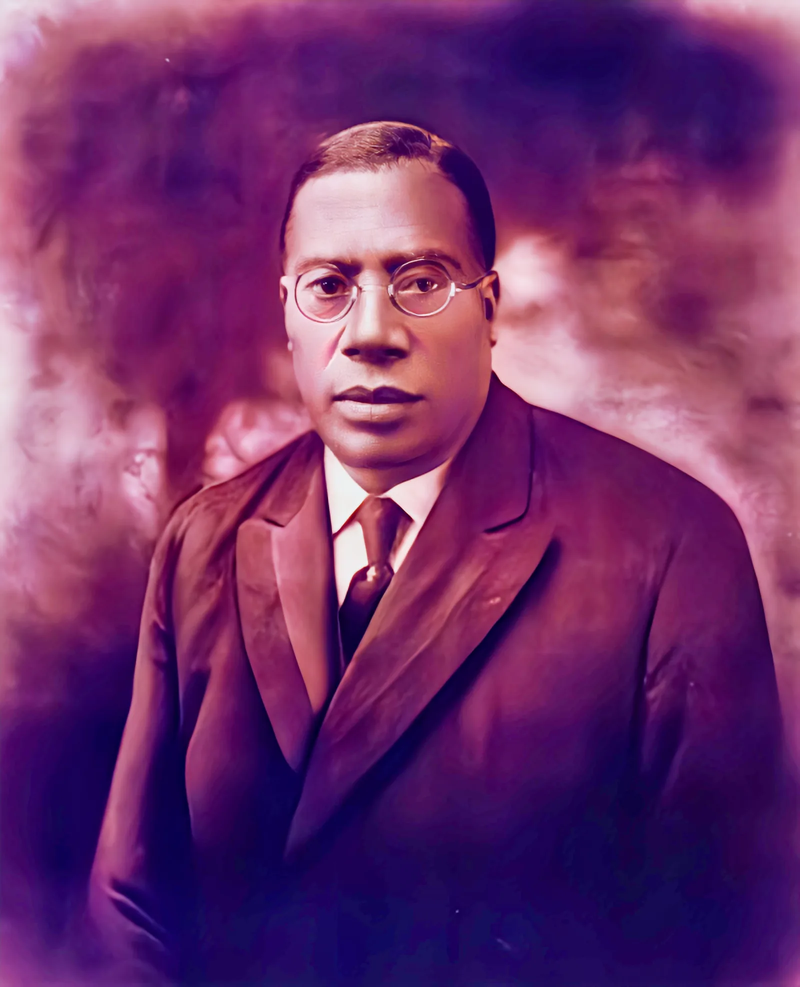
Foto: cortesía de Tindley Temple, dominio público, vía Wikimedia Commons
The recording is from 27 October 1960, in New York. King had just left the Drifters. He had finished recording Spanish Harlem and there was studio time left over. The producers, Jerry Leiber and Mike Stoller, asked whether he had anything else.
King had written it for the Drifters and they had turned it down. He played it on the piano right there. Stoller went to the other piano, worked out the chords and invented the bass line.
He later put it in one sentence: it was in the key of A, and then he created a bass line. The credits split it up: King half, Leiber and Stoller a quarter each.
It came out in 1961 and reached number 4 in the United States. That was not the end. In 1986 a film used it as its theme and the song went back on the charts. In the United Kingdom it hit number 1 in January 1987, pushed by a Levi's 501 jeans advert. Back in 1961 it had only got to number 27 there.
Musical characteristics
Start with what comes in first.
That bass is a double bass, the big standing string instrument, played by Lloyd Trotman. It repeats the same figure over and over while everything else comes in on top. A figure a bass repeats like that is called a bass line, and this is one of the most recognisable there is.
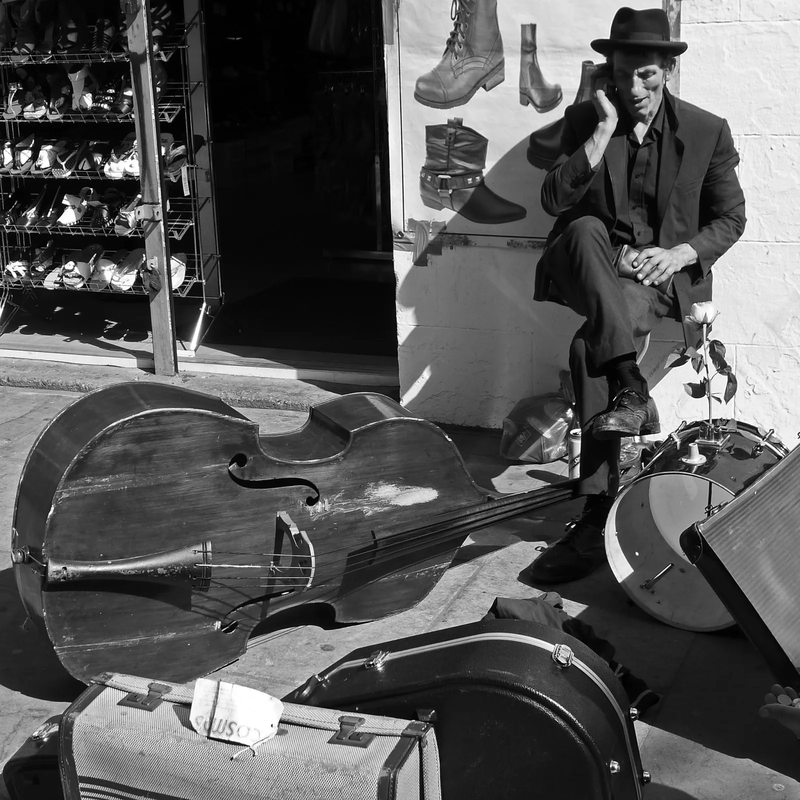
Foto: Chris Brown, CC BY-SA 3.0, vía Wikimedia Commons
Notice something. That line does not belong to the person who signed the song. Stoller added it in the studio. And when Stanley Applebaum later wrote the string parts, he built them by copying that same bass line. The bit you recognise arrived last, and somebody else brought it.
Now the chords. One idea unlocks them, and it is the most profitable idea in the whole course.
Take the A major scale and number the notes: A is 1, B is 2, C# is 3, D is 4, E is 5, F# is 6, G# is 7. Build a chord on each one. You now have the seven chords of that key, each with its number attached. That number is the degree, written as a Roman numeral.
Degrees go in capitals when the chord is major and in lower case when it is minor. In A major: I is A, vi is F# minor, IV is D, V is E.
Stand by Me is I – vi – IV – V. In A: A – F#m – D – E. That is all of it. There is no fifth chord hidden anywhere.
The useful part is that the numbers travel and the names do not. Those same four degrees in G major are G – Em – C – D, which sit far better under the fingers on ukulele and guitar. Same song, different key: same degrees, different notes.
This four-chord turnaround was repeated so often in the fifties that it collected several names: the fifties progression, the doo-wop changes and, because of this record, "the Stand by Me changes".
There are more people behind that bass than you would guess: saxophone, piano, two guitars, percussion, drums, a wordless choir and a string section. None of that is what you remember. You remember the bass.
The voice is planned too. In the verse the melody moves between A3 and F#4: six notes, which is why almost anyone can sing it. The chorus climbs to A4. That difference is a decision, not an accident.
Hard facts: A major, 4/4, 120 BPM, 2:57. Verse and chorus take turns, but the four chords are the same in both.
So the harmony does not tell you where you are in the song; the words and the number of players do. That is exactly the problem in ¿Cómo sabes por dónde vas en una música que oyes por primera vez?.
Trivia and curiosities
- King wrote the song for the Drifters, his old group, and they said no. He recorded it himself with studio time left over from another session. Songs that last sixty years do not always come from a plan.
- The part everyone recognises, the bass, was not written by the song's author but by the producer, on the spot. Then the strings were built by copying that bass. A song is not only the property of whoever signs it.
- The hymn it comes from was sung in churches long before records existed, and reached King by word of mouth, through other groups. That journey is the subject of ¿Cómo mandas una canción a mil kilómetros sin poder escribirla?.
- In 1999 the songwriters' society BMI worked out it was the fourth most-performed song of the twentieth century: around seven million logged performances.
- In 2015 the United States Library of Congress added King's original to its National Recording Registry, five weeks before he died. The same recording had once been an offcut at the end of a session.
Classroom activities
- Play: the whole turnaround in G major — G, Em, C, D, on a loop. On ukulele and electric guitar these are four easy shapes and none of them needs a barre. On bass, start with just the note each chord is named after (G, E, C, D), then move to the full line once that is automatic. Drums: only what is needed to hold it up.
- Sing: the verse fits in six notes. A comfortable place to sing together while voices are changing, because nobody has to stretch. The chorus goes higher; save it until the verse is solid.
- Analyse: two questions with checkable answers. First, with the song playing, count how many beats each of the four chords lasts. Do they all last the same? Second, if you play it in G major and the chords are G, Em, C and D, write the Roman numeral for each one.
- Create: take those same four degrees, I – vi – IV – V, move them to another key and write a melody over them that sounds nothing like this one. Steal the skeleton, not the song.
Key vocabulary
- Bass line — línea de bajo: la figura que el bajo repite por debajo de todo
- Degree — grado (el número del acorde dentro de la escala, en cifra romana)
- Chord progression — progresión de acordes
- Key — tonalidad
- Doo-wop — doo-wop: el estilo vocal de los años cincuenta que repitió esta vuelta de acordes
Resources
Official video — RHINO, the label that holds the catalogue.
Guitar tutorial — guitarraviva, step by step, in Spanish.
Ukulele tutorial — Louise Anderson, in G major, the key you will play it in class.
Bass tutorial — BassBassBass. Slow, and it takes the whole line apart.
Drums — Claude Hoffmann. A simplified beginner version rather than a copy of the record, with the score posted free.
- Tab — the button opens it in Songsterr.
Por dónde entrar
Pon la canción. Lo primero que suena no es la voz: es el bajo, solo, con una figura que baja y vuelve a subir. Casi todo el mundo reconoce la canción ahí, antes de la primera palabra.
Debajo de esa figura hay cuatro acordes. Solo cuatro, siempre en el mismo orden, de principio a fin. Si los aprendes aquí, los tienes aprendidos para muchas canciones más.
Por eso esta canción sale tan barata: se paga una vez y sirve muchas veces.
Contexto histórico
Antes de ser una canción de radio, Stand by Me era un himno de iglesia. Lo escribió Charles Albert Tindley a principios del siglo XX, a partir del salmo 46. El título le llegó a Ben E. King por otro camino: un espiritual de Sam Cooke y J. W. Alexander, Stand by Me Father, que grabaron los Soul Stirrers.
Foto: cortesía de Tindley Temple, dominio público, vía Wikimedia Commons
La grabación es del 27 de octubre de 1960, en Nueva York. King acababa de dejar los Drifters. Había terminado de grabar Spanish Harlem y sobraba tiempo de estudio. Los productores, Jerry Leiber y Mike Stoller, le preguntaron si tenía algo más.
King la había escrito para los Drifters y ellos la habían rechazado. La tocó al piano allí mismo. Stoller se sentó al otro piano, buscó los acordes y se inventó la línea de bajo.
Contándolo años después lo dejó en una frase: estaba en tonalidad de La, y entonces creó una línea de bajo. La firma del sencillo repartió el resultado: King la mitad, Leiber y Stoller un cuarto cada uno.
Salió en 1961 y llegó al número 4 en Estados Unidos. Y ahí no se acabó. En 1986 una película la usó como tema —Cuenta conmigo, que en inglés se llama igual que la canción— y volvió a las listas.
En el Reino Unido llegó al número 1 en enero de 1987, empujada por un anuncio de vaqueros Levi's 501. En 1961 allí no había pasado del número 27.
Cómo suena
Empecemos por lo que entra primero.
Lo que toca ese bajo es un contrabajo, el instrumento grande de cuerda que se toca de pie. Lo tocó Lloyd Trotman. Repite la misma figura una y otra vez mientras los demás van entrando encima. A esa figura que un bajo repite se le llama línea de bajo, y esta es de las más reconocibles que existen.
Foto: Chris Brown, CC BY-SA 3.0, vía Wikimedia Commons
Fíjate en una cosa: esa línea no es de quien firma la canción. La puso Stoller en el estudio. Y cuando más tarde Stanley Applebaum escribió la parte de las cuerdas, la construyó copiando esa misma línea de bajo. Lo que reconoces de la canción llegó el último y lo trajo otra persona.
Ahora los acordes. Para entenderlos hace falta una idea, y es la idea que más partido te va a dar en todo el curso.
Coge la escala de La mayor y numera sus notas: La es 1, Si es 2, Do# es 3, Re es 4, Mi es 5, Fa# es 6, Sol# es 7. Construye un acorde encima de cada una. Ya tienes los siete acordes de esa tonalidad, y cada uno lleva su número puesto. Ese número es el grado, y se escribe con cifra romana.
Los grados se escriben en mayúscula cuando el acorde es mayor y en minúscula cuando es menor. En La mayor: I es La, vi es Fa# menor, IV es Re, V es Mi.
Stand by Me es I – vi – IV – V. En La: La – Fa#m – Re – Mi. Y ya está. No hay un quinto acorde escondido en ninguna parte.
Lo valioso es que los números viajan y los nombres no. Esos mismos cuatro grados en Sol mayor son Sol – Mim – Do – Re, que en ukelele y en guitarra caen mucho mejor bajo los dedos. Es la misma canción cambiada de tonalidad: mismos grados, otras notas.
Esta vuelta de cuatro acordes se repitió tanto en los años cincuenta que acabó con varios nombres: progresión de los cincuenta, vuelta doo-wop y, precisamente por esta canción, «los acordes de Stand by Me». Una canción de 1961 acabó dando nombre a un patrón más viejo que ella.
Detrás del bajo hay más gente de la que parece: saxo, piano, dos guitarras, percusión, batería, un coro sin letra y una sección de cuerdas. Nada de eso es lo que recuerdas. Recuerdas el bajo.
La voz también está pensada. En la estrofa, la melodía se mueve entre La3 y Fa#4: cabe en seis notas, y por eso la puede cantar casi cualquiera. En el estribillo sube hasta La4. Esa diferencia es una decisión, no un descuido.
Datos duros: La mayor, 4/4, 120 BPM, 2:57. Estrofa y estribillo se van turnando, pero los cuatro acordes son los mismos en las dos partes.
Eso quiere decir que la armonía no te dice por dónde vas en la canción; te lo dicen la letra y cuánta gente está tocando. Es justo el problema del que trata ¿Cómo sabes por dónde vas en una música que oyes por primera vez?.
Curiosidades
- King escribió la canción para los Drifters, su antiguo grupo, y le dijeron que no. La grabó él con el tiempo de estudio que había sobrado de otra sesión. Las canciones que duran sesenta años no siempre nacen de un plan.
- La parte que todo el mundo reconoce, el bajo, no la escribió el autor de la canción sino el productor, en el estudio y sobre la marcha. Y después las cuerdas se hicieron copiando ese bajo. Una canción no es solo de quien la firma.
- El himno del que sale se cantaba en las iglesias mucho antes de existir los discos, y llegó hasta King de boca en boca, pasando por otros grupos. Es el recorrido que se cuenta en ¿Cómo mandas una canción a mil kilómetros sin poder escribirla?.
- En 1961 en el Reino Unido se quedó en el puesto 27. En enero de 1987 fue número 1, veintiséis años después, gracias a una película y a un anuncio de pantalones. Una canción no termina el día que se publica.
- En 1999, la sociedad de autores BMI calculó que era la cuarta canción más interpretada del siglo XX: unos siete millones de interpretaciones registradas. En 2015 entró en el registro nacional de grabaciones de la Biblioteca del Congreso de Estados Unidos, cinco semanas antes de que King muriera.
Para hacer en clase
- Tocar: la vuelta entera en Sol mayor — Sol, Mim, Do, Re, en bucle. En ukelele y en guitarra eléctrica son cuatro posiciones fáciles y ninguna lleva cejilla. En el bajo, empieza tocando solo la nota que da nombre a cada acorde (sol, mi, do, re) y, cuando eso salga solo, pasa a la línea completa. La batería, lo justo para sostener: no hace falta más.
- Cantar: la estrofa cabe en seis notas. Es un sitio cómodo para cantar en grupo con las voces en plena muda, porque nadie tiene que estirarse. El estribillo sube un poco; déjalo para cuando la estrofa esté firme.
- Analizar: dos preguntas con respuesta comprobable. Primera: con la canción sonando, cuenta cuántos tiempos dura cada uno de los cuatro acordes. ¿Duran todos lo mismo? Segunda: si la tocas en Sol mayor y los acordes son Sol, Mim, Do y Re, escribe el grado de cada uno en cifra romana.
- Crear: coge esos mismos cuatro grados, I – vi – IV – V, cámbialos a otra tonalidad y escribe encima una melodía que no se parezca a esta. Se trata de robar el esqueleto, no la canción.
Vocabulario fundamental
- Línea de bajo — La figura que el bajo repite por debajo de todo lo demás. Aquí es lo primero que entra y lo que reconoces antes que la voz.
- Grado — El número que le toca a cada acorde según su posición en la escala. Se escribe en cifra romana: mayúscula si el acorde es mayor, minúscula si es menor.
- Progresión de acordes — El orden en que se suceden los acordes. La de esta canción es I – vi – IV – V y no cambia nunca.
- Tonalidad — La nota que manda y la escala que se usa. Cambiarla mueve todas las notas, pero deja los grados donde estaban.
- Doo-wop — El estilo vocal de finales de los cincuenta que repitió tanto esta vuelta de acordes que acabó dándole nombre.
Recursos
Videoclip oficial — canal RHINO, el sello que tiene el catálogo.
Tutorial de guitarra — guitarraviva, explicado en castellano y paso a paso.
Tutorial de ukelele — Louise Anderson, en Sol mayor, que es la tonalidad con la que vas a tocarla en clase.
Tutorial de bajo — BassBassBass. Va despacio y desmonta la línea entera.
Batería — Claude Hoffmann. Es una versión sencilla para empezar, no una copia del disco, y la partitura está colgada gratis.
- Tablatura — el botón la abre en Songsterr.
Why this song
These four chords have a nickname: people call them "the Stand by Me changes". That is odd, because the pattern is older than the song. It was everywhere in the 1950s, in hundreds of records.
So a song from 1961 ended up giving its name to something it did not invent. It became the clearest example, and the example won.
Learn the four chords here and you get the other songs for free.
Historical context
Before it was a radio song, Stand by Me was a church hymn. Charles Albert Tindley wrote it early in the twentieth century, from Psalm 46. The title reached Ben E. King by another route: a spiritual by Sam Cooke and J. W. Alexander, Stand by Me Father, recorded by the Soul Stirrers.
Foto: cortesía de Tindley Temple, dominio público, vía Wikimedia Commons
The recording is from 27 October 1960, in New York. King had just left the Drifters. He had finished recording Spanish Harlem and there was studio time left over. The producers, Jerry Leiber and Mike Stoller, asked whether he had anything else.
King had written it for the Drifters and they had turned it down. He played it on the piano right there. Stoller went to the other piano, worked out the chords and invented the bass line.
He later put it in one sentence: it was in the key of A, and then he created a bass line. The credits split it up: King half, Leiber and Stoller a quarter each.
It came out in 1961 and reached number 4 in the United States. That was not the end. In 1986 a film used it as its theme and the song went back on the charts. In the United Kingdom it hit number 1 in January 1987, pushed by a Levi's 501 jeans advert. Back in 1961 it had only got to number 27 there.
Musical characteristics
Start with what comes in first.
That bass is a double bass, the big standing string instrument, played by Lloyd Trotman. It repeats the same figure over and over while everything else comes in on top. A figure a bass repeats like that is called a bass line, and this is one of the most recognisable there is.
Foto: Chris Brown, CC BY-SA 3.0, vía Wikimedia Commons
Notice something. That line does not belong to the person who signed the song. Stoller added it in the studio. And when Stanley Applebaum later wrote the string parts, he built them by copying that same bass line. The bit you recognise arrived last, and somebody else brought it.
Now the chords. One idea unlocks them, and it is the most profitable idea in the whole course.
Take the A major scale and number the notes: A is 1, B is 2, C# is 3, D is 4, E is 5, F# is 6, G# is 7. Build a chord on each one. You now have the seven chords of that key, each with its number attached. That number is the degree, written as a Roman numeral.
Degrees go in capitals when the chord is major and in lower case when it is minor. In A major: I is A, vi is F# minor, IV is D, V is E.
Stand by Me is I – vi – IV – V. In A: A – F#m – D – E. That is all of it. There is no fifth chord hidden anywhere.
The useful part is that the numbers travel and the names do not. Those same four degrees in G major are G – Em – C – D, which sit far better under the fingers on ukulele and guitar. Same song, different key: same degrees, different notes.
This four-chord turnaround was repeated so often in the fifties that it collected several names: the fifties progression, the doo-wop changes and, because of this record, "the Stand by Me changes".
There are more people behind that bass than you would guess: saxophone, piano, two guitars, percussion, drums, a wordless choir and a string section. None of that is what you remember. You remember the bass.
The voice is planned too. In the verse the melody moves between A3 and F#4: six notes, which is why almost anyone can sing it. The chorus climbs to A4. That difference is a decision, not an accident.
Hard facts: A major, 4/4, 120 BPM, 2:57. Verse and chorus take turns, but the four chords are the same in both.
So the harmony does not tell you where you are in the song; the words and the number of players do. That is exactly the problem in ¿Cómo sabes por dónde vas en una música que oyes por primera vez?.
Trivia and curiosities
- King wrote the song for the Drifters, his old group, and they said no. He recorded it himself with studio time left over from another session. Songs that last sixty years do not always come from a plan.
- The part everyone recognises, the bass, was not written by the song's author but by the producer, on the spot. Then the strings were built by copying that bass. A song is not only the property of whoever signs it.
- The hymn it comes from was sung in churches long before records existed, and reached King by word of mouth, through other groups. That journey is the subject of ¿Cómo mandas una canción a mil kilómetros sin poder escribirla?.
- In 1999 the songwriters' society BMI worked out it was the fourth most-performed song of the twentieth century: around seven million logged performances.
- In 2015 the United States Library of Congress added King's original to its National Recording Registry, five weeks before he died. The same recording had once been an offcut at the end of a session.
Classroom activities
- Play: the whole turnaround in G major — G, Em, C, D, on a loop. On ukulele and electric guitar these are four easy shapes and none of them needs a barre. On bass, start with just the note each chord is named after (G, E, C, D), then move to the full line once that is automatic. Drums: only what is needed to hold it up.
- Sing: the verse fits in six notes. A comfortable place to sing together while voices are changing, because nobody has to stretch. The chorus goes higher; save it until the verse is solid.
- Analyse: two questions with checkable answers. First, with the song playing, count how many beats each of the four chords lasts. Do they all last the same? Second, if you play it in G major and the chords are G, Em, C and D, write the Roman numeral for each one.
- Create: take those same four degrees, I – vi – IV – V, move them to another key and write a melody over them that sounds nothing like this one. Steal the skeleton, not the song.
Key vocabulary
- Bass line — línea de bajo: la figura que el bajo repite por debajo de todo
- Degree — grado (el número del acorde dentro de la escala, en cifra romana)
- Chord progression — progresión de acordes
- Key — tonalidad
- Doo-wop — doo-wop: el estilo vocal de los años cincuenta que repitió esta vuelta de acordes
Resources
Official video — RHINO, the label that holds the catalogue.
Guitar tutorial — guitarraviva, step by step, in Spanish.
Ukulele tutorial — Louise Anderson, in G major, the key you will play it in class.
Bass tutorial — BassBassBass. Slow, and it takes the whole line apart.
Drums — Claude Hoffmann. A simplified beginner version rather than a copy of the record, with the score posted free.
- Tab — the button opens it in Songsterr.