Contenidos
Sofía — Álvaro Soler (2016)
A song in Spanish, by a singer from Barcelona, that went to number 1 in Italy before Spain. Four chords and a name the whole class can sing.
🏷️ Ficha musical
Why it's in this book
"Sofía" is the April song. It is Latin pop in Spanish, with a chorus the whole class sings, and the second voice adds a third right on the word "Sofía". Its chords in class are F, C, G and D minor: three of them belong to the loop you already play in "Love Story" or "Waka Waka", but the fourth changes, D minor instead of A minor. This month you do not just sing it: you write your own text over its loop, your own lyrics. In your classroom with no instruments, you sing the chorus and keep the rhythm with claps. With ukuleles, the four chords. In the music room, the drums play the clapping pattern and the ukebass follows the chords.
Why this song
In 2016, a song with a girl's name was playing everywhere: "Sofía". The odd thing is where it played first. Not in Spain, but in Italy, where it reached number 1 in three weeks.
The singer, Álvaro Soler, is from Sant Cugat del Vallès, near Barcelona. But he lived in Berlin, had grown up in Japan and spoke several languages.
The question on this page is: what does it take for a song in Spanish to succeed in countries where people do not speak Spanish?
Historical context
Álvaro Soler was born in 1991. His father is German and his mother is Spanish-Belgian. At 10 he moved with his family to Japan, and stayed there until he was 17. That is where he had his first piano lessons.
Back in Barcelona he had a band with his brother and some friends. In 2014 he left it to go solo, and moved to Berlin. His first hit, "El mismo sol", came out in 2015 and went to number 1 in Italy and Switzerland.

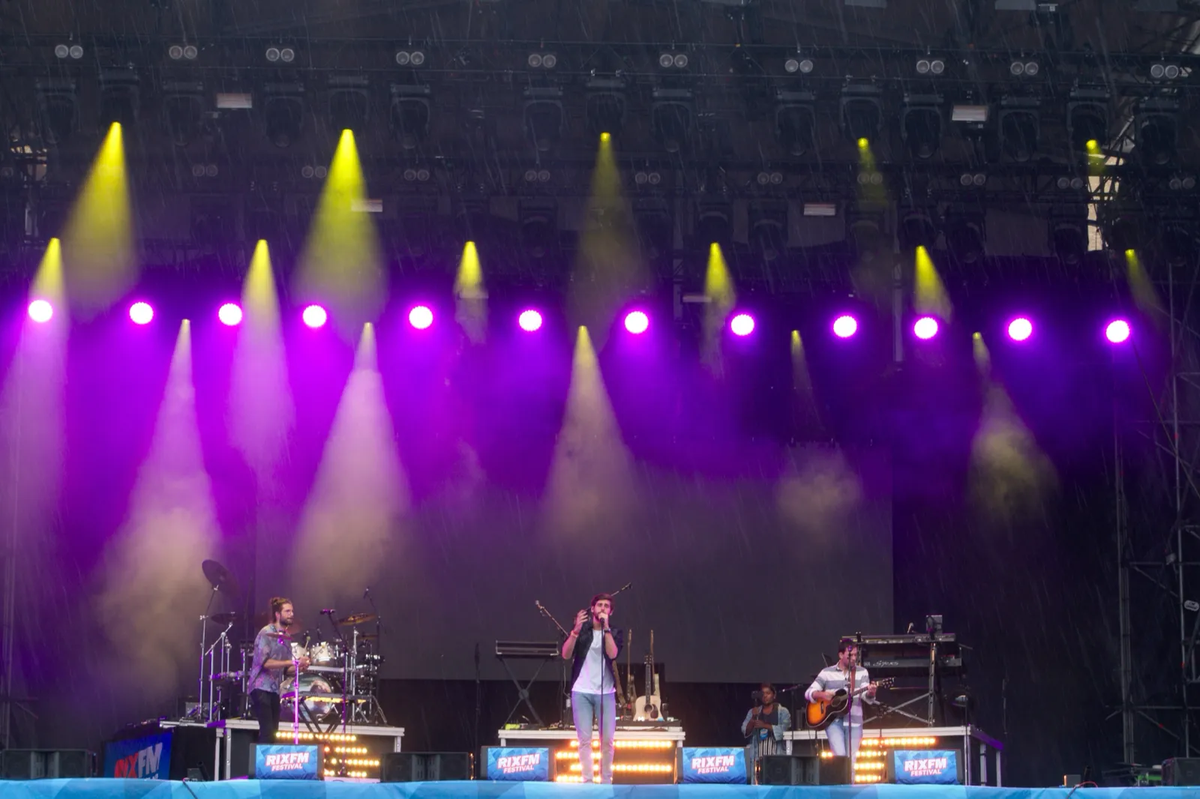
Foto: Sandro Halank, CC BY-SA 3.0, vía Wikimedia Commons
Álvaro Soler at a festival in Löbau, Germany, in September 2017. Much of his audience is in Germany, Italy and Poland.
"Sofía" came out in April 2016. He wrote it with four songwriters and producers from Germany, Morocco and Sweden. It went to number 1 in Italy, Poland, Switzerland and Belgium. The video was filmed in Havana, Cuba.
Musical characteristics
Four chords on a loop. The song turns around four chords that never change. In class they are F, C, G and D minor. A series of chords that repeats goes round like a loop: when it ends, it starts again.
Almost the usual loop. If you already play "Love Story" or "Waka Waka", you know three of these chords: F, C and G. What changes is the fourth: here it is not A minor but D minor. With just one different chord, the song has a different colour. This series is called a chord progression: IV–I–V–ii.
A chorus made for everyone. The chorus repeats a name, "Sofía", and a few words. You can learn it the first time you hear it. The chorus is the part that comes back the same several times and that everybody sings.
A third on the name. For the second voice, the plan is a third right on "Sofía". A third is the distance of skipping one note: from C to E. Two voices in thirds sound sweet and never clash.
A clapping rhythm. The song has a cheerful beat that makes you want to clap. In the music room, the drums play that same pattern.
A warning for when you play. The record is in D major: G, D, A, E minor. In class you play it in C major, one tone lower: F, C, G, D minor. Those chords are easier on the ukulele. Moving a song to another pitch is called transposing.
Hard facts: D major on the record and C major in class, 4/4, 128 beats per minute, 3:30. The form: verses and a chorus that comes back several times, always over the same loop.
Guided listening
Play the music video. In the first verse, count the chords on your fingers. How many are there before they repeat?
When the chorus arrives, sing along from the second time. Have you learnt it already?
Listen to the beat: clap along and find where the strongest hits fall.
In the last chorus, notice whether anything has changed since the first: more voices, more instruments, or nothing.
Trivia and curiosities
- Soler speaks Spanish, Catalan, German, English, Italian, French and Japanese. That makes it easy for him to give interviews and concerts in so many countries.
- He was a judge on the talent show X Factor in Italy in 2016, the same year as "Sofía".
- The song was not on the first edition of his album, Eterno agosto, from 2015. It was added later, on the international edition.
- "Sofía" is the most-watched video on his YouTube channel, ahead of his first hit, "El mismo sol".
Classroom activities
- Two-part chorus. The whole class sings the chorus. When it works, one group adds the third on "Sofía".
- The four chords. Ukulele: F, C, G, D minor, one chord per bar. Then swap D minor for A minor. Which song from the book do you get now?
- Your own text. In groups of three, write a new four-line verse over the same loop. The topic is up to you; you can swap the name in the chorus for another three-syllable name.
- With the band. In the music room: drums with the clapping pattern, ukebass on the chords, ukuleles and voices. Sing your verse between two choruses.
Key vocabulary
- Loop — bucle
- Chord progression — progresión de acordes
- Chorus — estribillo
- Third — tercera: la distancia de saltarse una nota
- Transposing — transportar: pasar la canción entera a otra altura
Resources
Official music video — From Álvaro Soler's channel. Filmed in Havana.
Ukulele tutorial — Miguel Villalba, in Spanish. Step by step.
Guitar tutorial — camposmusic, in Spanish. Chords and rhythm.
Piano tutorial — MUSICALE, in Spanish. An easy version.
Drums — The Drum Covers. Hear what the drums play, hit by hit.
Por qué está en este libro
«Sofía» es la canción de abril. Es pop latino en castellano, con un estribillo que canta la clase entera, y la segunda voz hace una tercera justo en la palabra «Sofía». Sus acordes en clase son fa, do, sol y re menor: tres de ellos son los del bucle que ya tocáis en «Love Story» o «Waka Waka», pero el cuarto cambia, re menor en lugar de la menor. Este mes no solo la cantáis: escribís un texto propio encima de su bucle, vuestra propia letra. En tu aula, sin instrumentos, cantáis el estribillo y lleváis el ritmo con palmas. Con el ukelele, los cuatro acordes. En el aula de música, la batería toca el patrón de palmas y el ukebajo va con los acordes.
Por dónde entrar
En 2016 sonaba en todas partes una canción con nombre de chica: «Sofía». Lo raro es dónde sonaba primero. No fue en España, sino en Italia, donde llegó al número 1 en tres semanas.
El cantante, Álvaro Soler, es de Sant Cugat del Vallès, cerca de Barcelona. Pero vivía en Berlín, había crecido en Japón y hablaba varias lenguas.
La pregunta de esta página es: ¿qué hace falta para que una canción en castellano triunfe en países donde no se habla castellano?
Contexto histórico
Álvaro Soler nació en 1991. Su padre es alemán y su madre, hispano-belga. Con 10 años se fue con su familia a vivir a Japón, y allí estuvo hasta los 17. Allí recibió sus primeras clases de piano.
De vuelta en Barcelona tuvo un grupo con su hermano y unos amigos. En 2014 lo dejó para empezar solo, y se instaló en Berlín. Su primer éxito, «El mismo sol», salió en 2015 y fue número 1 en Italia y en Suiza.
Foto: Sandro Halank, CC BY-SA 3.0, vía Wikimedia Commons
Álvaro Soler en un festival en Löbau (Alemania), en septiembre de 2017. Gran parte de su público está en Alemania, Italia y Polonia.
«Sofía» salió en abril de 2016. La escribió junto a cuatro compositores y productores de Alemania, Marruecos y Suecia. Fue número 1 en Italia, Polonia, Suiza y Bélgica. El videoclip se rodó en La Habana, en Cuba.
Cómo suena
Cuatro acordes en bucle. La canción gira sobre cuatro acordes que no cambian nunca. En clase son fa, do, sol y re menor. Una serie de acordes que se repite da vueltas como un bucle: cuando acaba, vuelve a empezar.
Casi el bucle de siempre. Si ya tocas «Love Story» o «Waka Waka», tres de estos acordes los conoces: fa, do y sol. Lo que cambia es el cuarto: aquí no es la menor, sino re menor. Con un solo acorde distinto, la canción ya tiene otro color. A esta serie se la llama progresión de acordes: IV–I–V–ii.
Un estribillo hecho para cantarlo todos. El estribillo repite un nombre, «Sofía», y unas pocas palabras. Es fácil de aprender a la primera escucha. El estribillo es la parte que vuelve igual varias veces y que todo el mundo canta.
Una tercera en el nombre. Para la segunda voz, la programación propone una tercera justo en «Sofía». Una tercera es la distancia de saltarse una nota: de do a mi. Dos voces en terceras suenan dulces y no chocan.
Ritmo de palmas. La canción tiene un ritmo alegre que invita a dar palmas. En el aula de música, la batería toca ese mismo patrón.
Un aviso para cuando toques. El disco está en re mayor: sol, re, la, mi menor. En clase lo tocáis en do mayor, un tono más grave: fa, do, sol, re menor. Son acordes más fáciles en ukelele. Pasar una canción a otra altura se llama transportar.
Datos duros: re mayor en el disco y do mayor en clase, 4/4, 128 pulsos por minuto, 3:30. La forma: estrofas y un estribillo que vuelve varias veces, siempre sobre el mismo bucle.
Escucha guiada
Pon el videoclip. En la primera estrofa, cuenta los acordes con los dedos. ¿Cuántos hay antes de que se repitan?
Cuando llegue el estribillo, cántalo con él desde la segunda vez. ¿Te lo has aprendido ya?
Escucha el ritmo: da palmas con la canción y busca dónde caen los golpes más fuertes.
En el último estribillo, fíjate si cambia algo respecto al primero: más voces, más instrumentos o nada.
Curiosidades
- Soler habla castellano, catalán, alemán, inglés, italiano, francés y japonés. Por eso le es fácil hacer entrevistas y conciertos en tantos países.
- Fue jurado del programa de talentos X Factor en Italia en 2016, el mismo año de «Sofía».
- La canción no estaba en la primera edición de su disco, Eterno agosto, de 2015. Se añadió después, en la edición internacional.
- «Sofía» es el vídeo más visto de su canal de YouTube, por delante de su primer éxito, «El mismo sol».
Para hacer en clase
- Estribillo a dos voces. Toda la clase canta el estribillo. Cuando salga, un grupo hace la tercera en «Sofía».
- Los cuatro acordes. Ukelele: fa, do, sol, re menor, un acorde por compás. Después, cambiad re menor por la menor. ¿Qué canción del libro os sale ahora?
- Texto propio. En grupos de tres, escribid una estrofa nueva de cuatro frases sobre el mismo bucle. El tema es libre; el nombre del estribillo podéis cambiarlo por otro de tres sílabas.
- Con la banda. En el aula de música: batería con el patrón de palmas, ukebajo con los acordes, ukeleles y voces. Cantad vuestra estrofa entre dos estribillos.
Vocabulario fundamental
- Bucle — Una serie de acordes que da vueltas sin parar: cuando acaba, vuelve a empezar.
- Progresión de acordes — Una serie de acordes que se repite en el mismo orden. Aquí, fa, do, sol, re menor.
- Estribillo — La parte que vuelve igual varias veces y que todo el mundo canta.
- Tercera — La distancia de saltarse una nota, de do a mi.
- Transportar — Pasar una canción entera a otra altura sin cambiar nada más.
Recursos
Videoclip oficial — Del canal de Álvaro Soler. Rodado en La Habana.
Tutorial de ukelele — Miguel Villalba, en castellano. Cómo tocarla paso a paso.
Tutorial de guitarra — camposmusic, en castellano. Acordes y ritmo.
Tutorial de piano — MUSICALE, en castellano. Versión fácil.
Batería — The Drum Covers. Para escuchar qué toca la batería, golpe a golpe.
Why it's in this book
"Sofía" is the April song. It is Latin pop in Spanish, with a chorus the whole class sings, and the second voice adds a third right on the word "Sofía". Its chords in class are F, C, G and D minor: three of them belong to the loop you already play in "Love Story" or "Waka Waka", but the fourth changes, D minor instead of A minor. This month you do not just sing it: you write your own text over its loop, your own lyrics. In your classroom with no instruments, you sing the chorus and keep the rhythm with claps. With ukuleles, the four chords. In the music room, the drums play the clapping pattern and the ukebass follows the chords.
Why this song
In 2016, a song with a girl's name was playing everywhere: "Sofía". The odd thing is where it played first. Not in Spain, but in Italy, where it reached number 1 in three weeks.
The singer, Álvaro Soler, is from Sant Cugat del Vallès, near Barcelona. But he lived in Berlin, had grown up in Japan and spoke several languages.
The question on this page is: what does it take for a song in Spanish to succeed in countries where people do not speak Spanish?
Historical context
Álvaro Soler was born in 1991. His father is German and his mother is Spanish-Belgian. At 10 he moved with his family to Japan, and stayed there until he was 17. That is where he had his first piano lessons.
Back in Barcelona he had a band with his brother and some friends. In 2014 he left it to go solo, and moved to Berlin. His first hit, "El mismo sol", came out in 2015 and went to number 1 in Italy and Switzerland.
Foto: Sandro Halank, CC BY-SA 3.0, vía Wikimedia Commons
Álvaro Soler at a festival in Löbau, Germany, in September 2017. Much of his audience is in Germany, Italy and Poland.
"Sofía" came out in April 2016. He wrote it with four songwriters and producers from Germany, Morocco and Sweden. It went to number 1 in Italy, Poland, Switzerland and Belgium. The video was filmed in Havana, Cuba.
Musical characteristics
Four chords on a loop. The song turns around four chords that never change. In class they are F, C, G and D minor. A series of chords that repeats goes round like a loop: when it ends, it starts again.
Almost the usual loop. If you already play "Love Story" or "Waka Waka", you know three of these chords: F, C and G. What changes is the fourth: here it is not A minor but D minor. With just one different chord, the song has a different colour. This series is called a chord progression: IV–I–V–ii.
A chorus made for everyone. The chorus repeats a name, "Sofía", and a few words. You can learn it the first time you hear it. The chorus is the part that comes back the same several times and that everybody sings.
A third on the name. For the second voice, the plan is a third right on "Sofía". A third is the distance of skipping one note: from C to E. Two voices in thirds sound sweet and never clash.
A clapping rhythm. The song has a cheerful beat that makes you want to clap. In the music room, the drums play that same pattern.
A warning for when you play. The record is in D major: G, D, A, E minor. In class you play it in C major, one tone lower: F, C, G, D minor. Those chords are easier on the ukulele. Moving a song to another pitch is called transposing.
Hard facts: D major on the record and C major in class, 4/4, 128 beats per minute, 3:30. The form: verses and a chorus that comes back several times, always over the same loop.
Guided listening
Play the music video. In the first verse, count the chords on your fingers. How many are there before they repeat?
When the chorus arrives, sing along from the second time. Have you learnt it already?
Listen to the beat: clap along and find where the strongest hits fall.
In the last chorus, notice whether anything has changed since the first: more voices, more instruments, or nothing.
Trivia and curiosities
- Soler speaks Spanish, Catalan, German, English, Italian, French and Japanese. That makes it easy for him to give interviews and concerts in so many countries.
- He was a judge on the talent show X Factor in Italy in 2016, the same year as "Sofía".
- The song was not on the first edition of his album, Eterno agosto, from 2015. It was added later, on the international edition.
- "Sofía" is the most-watched video on his YouTube channel, ahead of his first hit, "El mismo sol".
Classroom activities
- Two-part chorus. The whole class sings the chorus. When it works, one group adds the third on "Sofía".
- The four chords. Ukulele: F, C, G, D minor, one chord per bar. Then swap D minor for A minor. Which song from the book do you get now?
- Your own text. In groups of three, write a new four-line verse over the same loop. The topic is up to you; you can swap the name in the chorus for another three-syllable name.
- With the band. In the music room: drums with the clapping pattern, ukebass on the chords, ukuleles and voices. Sing your verse between two choruses.
Key vocabulary
- Loop — bucle
- Chord progression — progresión de acordes
- Chorus — estribillo
- Third — tercera: la distancia de saltarse una nota
- Transposing — transportar: pasar la canción entera a otra altura
Resources
Official music video — From Álvaro Soler's channel. Filmed in Havana.
Ukulele tutorial — Miguel Villalba, in Spanish. Step by step.
Guitar tutorial — camposmusic, in Spanish. Chords and rhythm.
Piano tutorial — MUSICALE, in Spanish. An easy version.
Drums — The Drum Covers. Hear what the drums play, hit by hit.