Contenidos
Smoke on the Water — Deep Purple (1972)
A fire in a Swiss casino, a lake full of smoke and four notes. Almost everyone learns electric guitar with them, and with them your band learns to build a song layer by layer.
🏷️ Ficha musical
Why it's in this book
It shares December with Seven Nation Army and belongs to the same family: songs where the riff is in charge. Here the riff is harder, because it is played in parallel fourths, two notes at once. To be straight with you: this song does not hold up sung a cappella, which is why it is not in Year 7 or Year 9. It lives in Year 10 because in the music room a five-piece band can handle it: guitar and keyboard double the riff, bass and drums come in layer by layer, and the electric guitar improvises over G minor and F. In the room with no instruments you work on the form and the beat with body percussion; with ukuleles, the riff on a single string and the chords G minor and F. There is no second voice: this is band work.
Why this song
Ask anyone who plays electric guitar to show you the first thing they learned. There is a good chance it is these four notes. They are in almost every beginner's method.
The question on this page is a different one: how do four notes become a song almost six minutes long? The answer lies in the order in which the band comes in.
Historical context
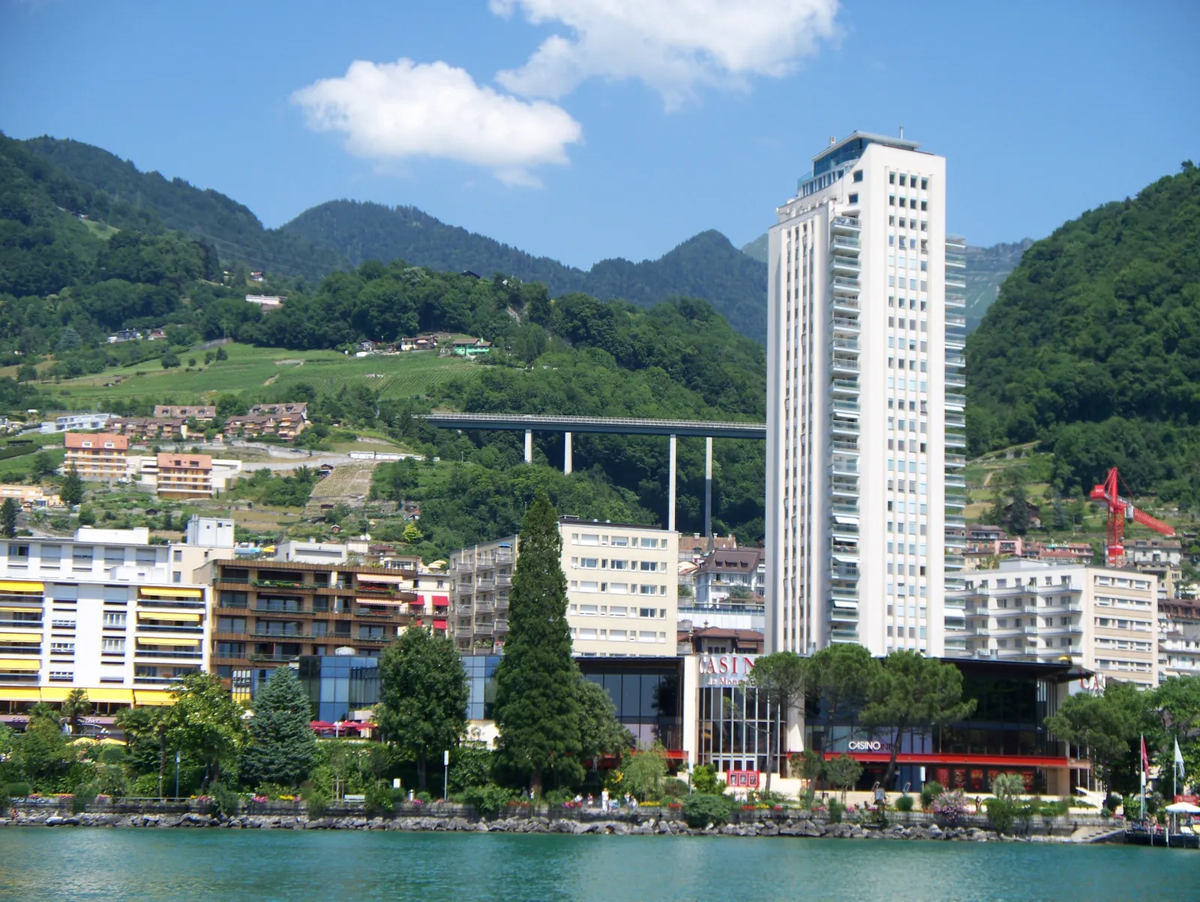
In December 1971, Deep Purple travelled to Montreux, in Switzerland, to record an album in the town's casino. They brought a studio built inside a truck, rented from the Rolling Stones.
The night before they started, the casino hosted the last concert of the season: Frank Zappa and his band. In the middle of the show, someone in the audience fired a flare gun at the ceiling. The whole building burned down. Nobody was seriously hurt, but the casino was destroyed.
Deep Purple watched from their hotel as the smoke spread over Lake Geneva. A few days later, bass player Roger Glover woke up with a phrase in his head: "smoke on the water".
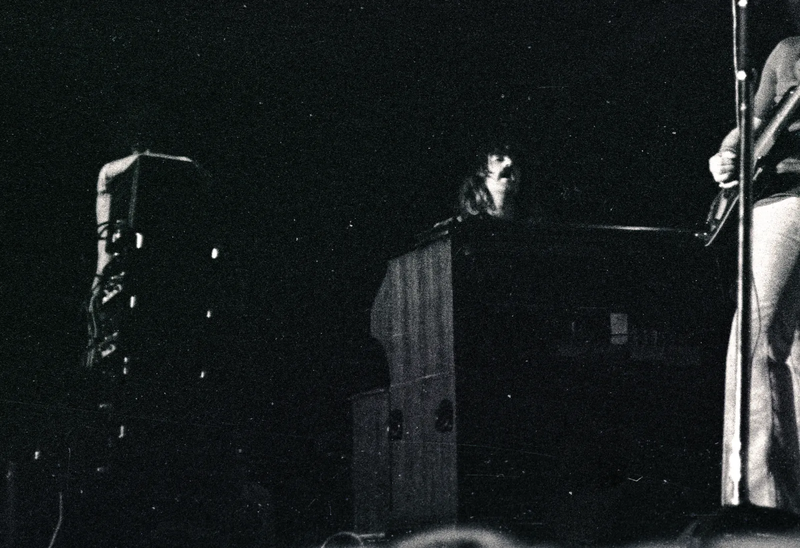
Foto: W. W. Thaler y H. Weber, CC BY-SA 3.0, vía Wikimedia Commons
This is the band a year earlier, in Hannover, Germany, in December 1970. In the middle, Jon Lord behind his organ. That organ is half the sound of the song: Lord played a Hammond plugged into a distorted guitar amp, which is why it sounds almost the same as the guitar.
With no casino, the band looked for somewhere else. They started recording in a theatre, but the neighbours complained about the noise and the police turned up. They had just enough time to record the backing track for one song, provisionally called "Title No. 1". They recorded the rest of the album in the corridors and stairwells of a big, almost empty hotel. The lyrics tell the whole story: the fire, the smoke, the search.
They did not expect a hit. It came out as a single in 1973, a year after the album, and reached number 4 in the United States.
Musical characteristics
Four notes. The riff uses only four pitches: G, B flat, C and D flat. They come from the G blues scale, which is the minor pentatonic plus one extra note, the one that sounds "bent": here, the D flat. That passing note gives the riff its pull.
Two notes at once. Blackmore does not play the riff on a single note. He plays two at a time, always the same distance apart, a fourth. The two voices move together, in parallel. This is called parallel fourths, and it is what makes the riff sound wide and heavy.
The band comes in layer by layer. At first you hear the guitar alone. Then the hi-hat and the organ join in. Then the rest of the drums. Then the bass. And only then the voice. Each new layer changes the texture: how many things sound at once and how they are shared out. It is an arranging lesson for a five-piece band.
Verse and chorus. The verse stays on G minor, with the odd move to F. In the chorus two new chords appear, C and A flat, and the song drops back into the riff.
Where the solo goes. On the record, Blackmore has a solo around the middle of the song. In class, the solo goes over G minor and F, using the G pentatonic or blues scale.
Hard facts: G minor, 4/4, 114 beats per minute, 5:41 on the album. The form: layered intro, verse, chorus, riff, verse, chorus, guitar solo, verse, chorus and an ending on the riff.
Guided listening
Play the music video and do not miss the intro. Raise a finger every time a new instrument comes in. By the time Gillan starts singing, you should have four or five fingers up.
In the intro riff, try to hear the two notes at once. If you sing the top one, someone next to you can try singing the lower one.
When the chorus arrives, listen to the change of chords. C and A flat sound different from everything you have heard so far.
In the guitar solo, notice that the band does not stop: bass and drums keep playing underneath. That base is what will hold up your solo turns in class.
Trivia and curiosities
- The "Funky Claude" in the lyrics is real: Claude Nobs, director of the Montreux Jazz Festival, who helped get people out of the burning casino. The album is dedicated to him.
- The band's friends thought the riff was too simple. Blackmore answered by comparing it to Beethoven's Fifth Symphony, which is also built on four notes.
- The song had no official music video until 2024. It arrived 52 years after the album, and it is animated.
- Montreux once had a sculpture by the lake with the riff written in notes. It is gone, but the new casino has the riff as decoration on a balustrade.
Classroom activities
- Build the intro in layers. Music room: the guitar starts alone with the riff. Every four bars someone joins in: hi-hat, keyboard, full drums, bass. In the end, everyone. Record it and check whether each entry can be heard.
- Riff in fourths. Electric guitar and keyboard: first the top voice alone (G, B♭, C; G, B♭, D♭, C; G, B♭, C, B♭, G). Then the lower voice, a fourth below. Then both together.
- Ukulele and body. Ukulele room: the riff on a single string and the chords G minor and F for the verse. Room with no instruments: the beat with your feet and the layered entry with body percussion, one group per instrument.
- Solo turns. A base of G minor and F. Each soloist gets two bars with the G blues scale. The D flat only in passing.
Key vocabulary
- Blues scale — escala de blues
- Fourth — cuarta: dos notas separadas por cuatro grados, como do y fa
- Parallel fourths — cuartas paralelas
- Texture — textura: cuántas cosas suenan a la vez y cómo se reparten
- Solo — solo
Resources
Official music video — Animated, released in 2024, 52 years after the album. It is a longer version than the album one.
Guitar tutorial — JustinGuitar. An easy version, made for beginners.
Ukulele tutorial — Andy Guitar. An easy version of the riff.
Keyboard tutorial — Online Rock Piano Lessons. How to play the riff on keys, which is what Jon Lord does on the organ.
Drum tutorial — Jack Young. A short version to learn the song's beat.
Bass tutorial — Dan Hawkins. A beginner lesson, step by step.
- Harmonic analysis — Hooktheory: https://www.hooktheory.com/theorytab/view/deep-purple/smoke-on-the-water
Por qué está en este libro
Comparte diciembre con Seven Nation Army y es de la misma familia: canciones en las que manda el riff. Aquí el riff es más difícil, porque va en cuartas paralelas, dos notas a la vez. Os lo decimos claro: esta canción no se sostiene cantada a capela, y por eso no está en 1º ni en 3º. Vive en 4º porque en el aula de música la banda de cinco puede con ella: guitarra y teclado doblan el riff, el bajo y la batería entran por capas, y la eléctrica improvisa sobre sol menor y fa. En el aula sin instrumentos trabajáis la forma y el pulso con percusión corporal; con ukelele, el riff a una sola cuerda y los acordes de sol menor y fa. No hay segunda voz: el trabajo es de la banda.
Por dónde entrar
Pide a cualquiera que toque la guitarra eléctrica que te enseñe lo primero que aprendió. Hay muchas posibilidades de que sean estas cuatro notas. Están en casi todos los métodos para principiantes.
La pregunta de esta página es otra: ¿cómo se convierten cuatro notas en una canción de casi seis minutos? La respuesta está en el orden en que va entrando la banda.
Contexto histórico
En diciembre de 1971, Deep Purple viajó a Montreux, en Suiza, para grabar un disco en el casino de la ciudad. Iban con un estudio montado dentro de un camión, alquilado a los Rolling Stones.
La víspera de empezar, el casino acogía el último concierto de la temporada: Frank Zappa y su banda. A mitad del concierto, alguien del público disparó una bengala al techo. El edificio entero ardió. No hubo heridos graves, pero el casino quedó destruido.
Los de Deep Purple lo vieron desde su hotel: el humo se extendía sobre el lago Lemán. Unos días después, el bajista Roger Glover se despertó con una frase en la cabeza: «smoke on the water», humo sobre el agua.
Foto: W. W. Thaler y H. Weber, CC BY-SA 3.0, vía Wikimedia Commons
Así sonaba la banda un año antes, en Hannover (Alemania), en diciembre de 1970. En el centro, Jon Lord detrás del órgano. Ese órgano es la mitad del sonido de la canción: Lord tocaba un Hammond conectado a un amplificador de guitarra distorsionado, y por eso suena casi igual que la guitarra.
Sin casino, la banda buscó otro sitio. Empezaron a grabar en un teatro, pero los vecinos se quejaron del ruido y llegó la policía. Les dio tiempo a dejar grabada la base de una sola canción, que se llamaba provisionalmente «Title No. 1». El resto del disco lo grabaron en los pasillos y escaleras de un gran hotel casi vacío. La letra cuenta todo esto: el incendio, el humo, la búsqueda.
No esperaban que fuera un éxito. Salió como sencillo en 1973, un año después que el disco, y llegó al número 4 en Estados Unidos.
Cómo suena
Cuatro notas. El riff usa solo cuatro alturas: sol, si bemol, do y re bemol. Son notas de la escala de blues de sol, que es la pentatónica menor con una nota más, la que suena «torcida»: aquí, el re bemol. Esa nota de paso es la que da al riff su tirón.
Dos notas a la vez. Blackmore no toca el riff con una sola nota. Toca dos a la vez, separadas siempre por la misma distancia, una cuarta. Las dos voces se mueven juntas, en paralelo. A eso se le llama cuartas paralelas, y es lo que hace que el riff suene ancho y pesado.
La banda entra por capas. Al principio suena la guitarra sola. Después se suman el charles de la batería y el órgano. Después, el resto de la batería. Después, el bajo. Y solo entonces, la voz. Cada capa nueva cambia la textura: cuántas cosas suenan a la vez y cómo se reparten. Es una lección de arreglo para una banda de cinco.
Estrofa y estribillo. La estrofa se queda en sol menor, con algún paso por fa. En el estribillo aparecen dos acordes nuevos, do y la bemol, y la canción cae de nuevo en el riff.
Dónde va el solo. En el disco, Blackmore tiene un solo hacia la mitad de la canción. En clase, el solo va sobre sol menor y fa, con la pentatónica o la escala de blues de sol.
Datos duros: sol menor, 4/4, 114 pulsos por minuto, 5:41 en el álbum. La forma: intro por capas, estrofa, estribillo, riff, estrofa, estribillo, solo de guitarra, estrofa, estribillo y final con el riff.
Escucha guiada
Pon el videoclip y no te pierdas la intro. Levanta un dedo cada vez que entre un instrumento nuevo. Cuando empiece a cantar Gillan, deberías tener cuatro o cinco dedos arriba.
En el riff de la intro, intenta oír las dos notas a la vez. Si cantas la de arriba, alguien de tu lado puede intentar cantar la de abajo.
Cuando llegue el estribillo, escucha el cambio de acordes. Do y la bemol suenan distintos a todo lo que llevabas oído.
En el solo de guitarra, fíjate en que la banda no para: el bajo y la batería siguen tocando por debajo. Esa base es la que en clase sostendrá vuestros turnos de solo.
Curiosidades
- La «Funky Claude» de la letra existe: es Claude Nobs, el director del Festival de Jazz de Montreux, que ayudó a sacar gente del casino en llamas. El disco está dedicado a él.
- A los amigos de la banda el riff les parecía demasiado simple. Blackmore les contestó comparándolo con la Quinta Sinfonía de Beethoven, que también se construye sobre cuatro notas.
- Hasta 2024 la canción no tuvo videoclip oficial. Llegó 52 años después del disco, y es animado.
- En Montreux hubo una escultura junto al lago con el riff escrito en notas. Ya no está, pero el casino nuevo lleva el riff de adorno en una barandilla.
Para hacer en clase
- Montar la intro por capas. Aula de música: la guitarra empieza sola con el riff. Cada cuatro compases entra alguien: charles, teclado, batería completa, bajo. Al final, todos. Grabadlo y comprobad si se oye cada entrada.
- Riff en cuartas. Guitarra eléctrica y teclado: primero la voz de arriba sola (sol, si♭, do; sol, si♭, re♭, do; sol, si♭, do, si♭, sol). Después la de abajo, una cuarta más grave. Después, las dos.
- Ukelele y cuerpo. Aula con ukelele: el riff en una sola cuerda y los acordes de sol menor y fa para la estrofa. Aula sin instrumentos: el pulso con los pies y la entrada por capas con percusión corporal, un grupo por instrumento.
- Solos por turnos. Base de sol menor y fa. Cada solista, dos compases con la escala de blues de sol. La nota re bemol, solo de paso.
Vocabulario fundamental
- Escala de blues — La pentatónica menor con una nota más, la que suena torcida. En sol: sol, si♭, do, re♭, re, fa.
- Cuarta — La distancia entre dos notas separadas por cuatro grados, como do y fa.
- Cuartas paralelas — Dos voces que se mueven juntas sin dejar de estar a una cuarta. Suenan anchas y pesadas.
- Textura — Cuántas cosas suenan a la vez y cómo se reparten. Aquí crece por capas.
- Solo — Pasaje en el que un instrumento improvisa y el resto lo sostiene.
Recursos
Videoclip oficial — Animado y publicado en 2024, 52 años después del disco. Es una versión más larga que la del álbum.
Tutorial de guitarra — JustinGuitar. Versión fácil, pensada para quien empieza.
Tutorial de ukelele — Andy Guitar. Versión fácil del riff.
Tutorial de teclado — Online Rock Piano Lessons. Cómo tocar el riff en el teclado, que es lo que hace Jon Lord con el órgano.
Tutorial de batería — Jack Young. Versión corta para aprender el ritmo de la canción.
Tutorial de bajo — Dan Hawkins. Lección para principiantes, paso a paso.
- Análisis armónico — Hooktheory: https://www.hooktheory.com/theorytab/view/deep-purple/smoke-on-the-water
Why it's in this book
It shares December with Seven Nation Army and belongs to the same family: songs where the riff is in charge. Here the riff is harder, because it is played in parallel fourths, two notes at once. To be straight with you: this song does not hold up sung a cappella, which is why it is not in Year 7 or Year 9. It lives in Year 10 because in the music room a five-piece band can handle it: guitar and keyboard double the riff, bass and drums come in layer by layer, and the electric guitar improvises over G minor and F. In the room with no instruments you work on the form and the beat with body percussion; with ukuleles, the riff on a single string and the chords G minor and F. There is no second voice: this is band work.
Why this song
Ask anyone who plays electric guitar to show you the first thing they learned. There is a good chance it is these four notes. They are in almost every beginner's method.
The question on this page is a different one: how do four notes become a song almost six minutes long? The answer lies in the order in which the band comes in.
Historical context
In December 1971, Deep Purple travelled to Montreux, in Switzerland, to record an album in the town's casino. They brought a studio built inside a truck, rented from the Rolling Stones.
The night before they started, the casino hosted the last concert of the season: Frank Zappa and his band. In the middle of the show, someone in the audience fired a flare gun at the ceiling. The whole building burned down. Nobody was seriously hurt, but the casino was destroyed.
Deep Purple watched from their hotel as the smoke spread over Lake Geneva. A few days later, bass player Roger Glover woke up with a phrase in his head: "smoke on the water".
Foto: W. W. Thaler y H. Weber, CC BY-SA 3.0, vía Wikimedia Commons
This is the band a year earlier, in Hannover, Germany, in December 1970. In the middle, Jon Lord behind his organ. That organ is half the sound of the song: Lord played a Hammond plugged into a distorted guitar amp, which is why it sounds almost the same as the guitar.
With no casino, the band looked for somewhere else. They started recording in a theatre, but the neighbours complained about the noise and the police turned up. They had just enough time to record the backing track for one song, provisionally called "Title No. 1". They recorded the rest of the album in the corridors and stairwells of a big, almost empty hotel. The lyrics tell the whole story: the fire, the smoke, the search.
They did not expect a hit. It came out as a single in 1973, a year after the album, and reached number 4 in the United States.
Musical characteristics
Four notes. The riff uses only four pitches: G, B flat, C and D flat. They come from the G blues scale, which is the minor pentatonic plus one extra note, the one that sounds "bent": here, the D flat. That passing note gives the riff its pull.
Two notes at once. Blackmore does not play the riff on a single note. He plays two at a time, always the same distance apart, a fourth. The two voices move together, in parallel. This is called parallel fourths, and it is what makes the riff sound wide and heavy.
The band comes in layer by layer. At first you hear the guitar alone. Then the hi-hat and the organ join in. Then the rest of the drums. Then the bass. And only then the voice. Each new layer changes the texture: how many things sound at once and how they are shared out. It is an arranging lesson for a five-piece band.
Verse and chorus. The verse stays on G minor, with the odd move to F. In the chorus two new chords appear, C and A flat, and the song drops back into the riff.
Where the solo goes. On the record, Blackmore has a solo around the middle of the song. In class, the solo goes over G minor and F, using the G pentatonic or blues scale.
Hard facts: G minor, 4/4, 114 beats per minute, 5:41 on the album. The form: layered intro, verse, chorus, riff, verse, chorus, guitar solo, verse, chorus and an ending on the riff.
Guided listening
Play the music video and do not miss the intro. Raise a finger every time a new instrument comes in. By the time Gillan starts singing, you should have four or five fingers up.
In the intro riff, try to hear the two notes at once. If you sing the top one, someone next to you can try singing the lower one.
When the chorus arrives, listen to the change of chords. C and A flat sound different from everything you have heard so far.
In the guitar solo, notice that the band does not stop: bass and drums keep playing underneath. That base is what will hold up your solo turns in class.
Trivia and curiosities
- The "Funky Claude" in the lyrics is real: Claude Nobs, director of the Montreux Jazz Festival, who helped get people out of the burning casino. The album is dedicated to him.
- The band's friends thought the riff was too simple. Blackmore answered by comparing it to Beethoven's Fifth Symphony, which is also built on four notes.
- The song had no official music video until 2024. It arrived 52 years after the album, and it is animated.
- Montreux once had a sculpture by the lake with the riff written in notes. It is gone, but the new casino has the riff as decoration on a balustrade.
Classroom activities
- Build the intro in layers. Music room: the guitar starts alone with the riff. Every four bars someone joins in: hi-hat, keyboard, full drums, bass. In the end, everyone. Record it and check whether each entry can be heard.
- Riff in fourths. Electric guitar and keyboard: first the top voice alone (G, B♭, C; G, B♭, D♭, C; G, B♭, C, B♭, G). Then the lower voice, a fourth below. Then both together.
- Ukulele and body. Ukulele room: the riff on a single string and the chords G minor and F for the verse. Room with no instruments: the beat with your feet and the layered entry with body percussion, one group per instrument.
- Solo turns. A base of G minor and F. Each soloist gets two bars with the G blues scale. The D flat only in passing.
Key vocabulary
- Blues scale — escala de blues
- Fourth — cuarta: dos notas separadas por cuatro grados, como do y fa
- Parallel fourths — cuartas paralelas
- Texture — textura: cuántas cosas suenan a la vez y cómo se reparten
- Solo — solo
Resources
Official music video — Animated, released in 2024, 52 years after the album. It is a longer version than the album one.
Guitar tutorial — JustinGuitar. An easy version, made for beginners.
Ukulele tutorial — Andy Guitar. An easy version of the riff.
Keyboard tutorial — Online Rock Piano Lessons. How to play the riff on keys, which is what Jon Lord does on the organ.
Drum tutorial — Jack Young. A short version to learn the song's beat.
Bass tutorial — Dan Hawkins. A beginner lesson, step by step.
- Harmonic analysis — Hooktheory: https://www.hooktheory.com/theorytab/view/deep-purple/smoke-on-the-water