Contenidos
Rise — Eddie Vedder (2007)
Three chords, two and a half minutes and a mandolin. What makes this song big is everything it decides not to do.
🏷️ Ficha musical
Why this song
If you have ever played G, C and D, you already know this whole song. There is no fourth chord. Not in the chorus, not in the bridge, not anywhere.
The question is why it doesn't feel short. Because you keep waiting for something, and the song spends two and a half minutes not giving it to you.
Historical context
In 2007 Sean Penn was making Into the Wild, the film about Christopher McCandless, the young man who burned his money, left his family without a word and walked into Alaska. Penn picked Eddie Vedder — the singer of Pearl Jam — to write the whole soundtrack. Not one song: all of it.
It was recorded at Studio X in Seattle, produced by Adam Kasper. Vedder played almost everything himself: vocals, guitar, bass, mandolin, banjo, piano, organ, drums and percussion. That explains the sound better than any adjective: there is no band playing together, there is one person stacking layers.
Rise lasts 2:36. That is shorter than almost anything on the radio, and it is not an offcut: it was nominated for a Grammy in 2009.
Musical characteristics
The three chords are the first, fourth and fifth degrees of G major: the three pillars half of Western music is built on. That is called a I–IV–V progression.
What matters is what the choice does to you. Because the harmony never surprises, your ear stops watching it and goes somewhere else: to the voice and to the strumming. The song doesn't move forward by where it goes, but by how much weight is put on top.
The instrument is not an accident either. A mandolin has its strings in pairs, tuned the same, and they never sound at exactly the same instant: that is why the sound seems to shiver, even though nobody is adding vibrato.
And here is something people rarely check: the song is in three, not four. Count along and you get one-two-three, one-two-three. It is the metre of a waltz, in a song that sounds nothing like one.
Hard facts: G major, 3/4, 173 BPM according to the chart we use in class, 2:36 long. Form: intro, verse, chorus, bridge, verse. That 173 is misleading, because the chords change slowly: the hand is fast, the harmony is not.
Trivia and curiosities
- Vedder recorded almost every instrument on the album alone. The soundtrack is not a Pearl Jam record even if it sounds like one, and you can hear it: nobody answers anybody, because there is nobody else in the room.
- Four years later he released Ukulele Songs (2011), a whole album played on the ukulele. Going small was not a one-off idea for a film.
- The album won a Golden Globe in 2008 for a different song, Guaranteed. A soundtrack that wins prizes on its own usually means the songs work without the pictures, and this one does.
Guided listening
Five things to listen for, in the order they arrive:
- The mandolin alone, at the start. Notice the sound shivering while nobody moves a finger: that is the double strings, not an effect.
- The voice coming in. The harmony has not changed at all: still G.
- Count the beat while it plays. You get one-two-three, not one-two-three-four.
- "Gonna rise up". This is as high as the song goes, and it gets there on the same three chords as before.
- The bridge. The chords come faster here; it is the only place where the harmony really moves.
Classroom activities
- Play: G, C and D on ukulele or guitar, with the strumming pattern from the chart. With three chords everyone plays it in the first session.
- Sing: the chorus. Watch the range: Vedder sings low, and pushing that low with a changing voice does not work. Move it up if you need to.
- Analyse: a closed question. How many different chords are there in the whole song? Now count them in your favourite song on the radio. Which of the two sticks in your head first?
- Create: write a new verse over those same three chords. Reuse the procedure, not the song.
Key vocabulary
- I–IV–V progression — progresión de primer, cuarto y quinto grado
- Mandolin — mandolina
- Soundtrack — banda sonora
- Bridge — puente
- Strumming pattern — patrón de rasgueo
Resources
Full song (Eddie Vedder's official channel)
Ukulele tutorial — The Ukulele Teacher. The clearest way in: three chords and go.
Acoustic guitar tutorial — Billsounds, with the chords on screen.
Mandolin tutorial — rjtaweel. The instrument on the record, for the original sound.
- Tab — attached below; the button opens it in Songsterr with playback
- Chords — https://tabs.ultimate-guitar.com/tab/eddie-vedder/rise-chords-626436
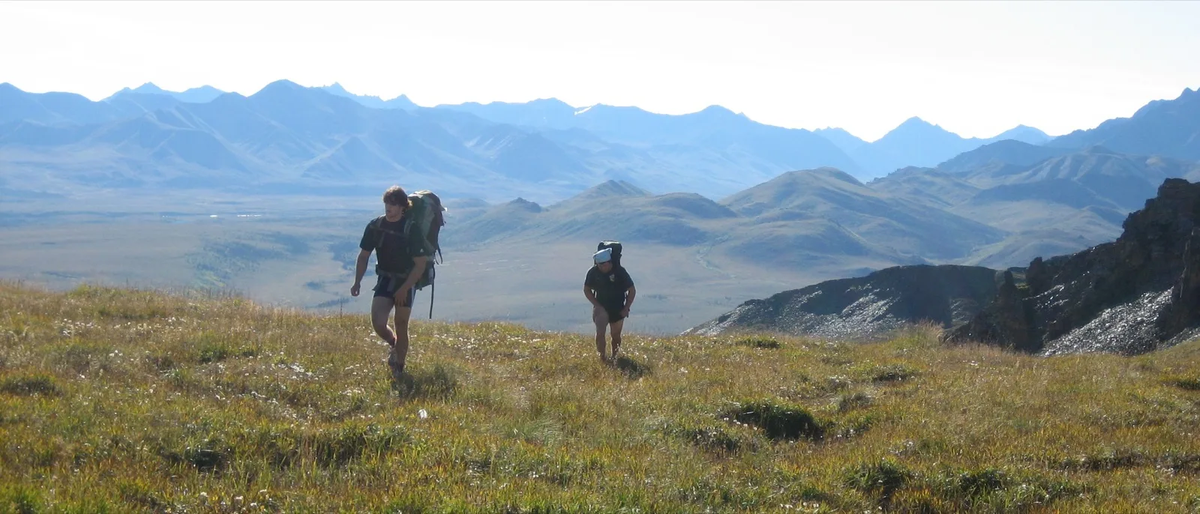
- Cover image — Cruzando la cordillera camino del autobús 142, parque nacional de Denali (Alaska). Foto: Paxson Woelber, CC BY 2.0, vía Wikimedia Commons
Por dónde entrar
Si alguna vez has tocado Sol, Do y Re, ya te sabes esta canción entera. No hay un cuarto acorde. No aparece en el estribillo, no aparece en el puente, no aparece nunca.
La pregunta es por qué no se hace corta. Porque tú esperas que llegue algo, y la canción se pasa dos minutos y medio no dándotelo.
Contexto histórico
En 2007 Sean Penn estaba montando Into the Wild, la película de Christopher McCandless, el chico que quemó su dinero, dejó a su familia sin decir nada y se fue a Alaska. Penn eligió a Eddie Vedder —el cantante de Pearl Jam— para que hiciera la banda sonora entera. No una canción: entera.
Se grabó en Studio X, en Seattle, con Adam Kasper de productor. Vedder tocó casi todo él solo: voz, guitarra, bajo, mandolina, banjo, piano, órgano, batería y percusión. Eso explica el sonido del disco mejor que cualquier adjetivo: no hay una banda tocando a la vez, hay una persona apilando capas.
Rise dura 2:36. Es más corta que casi todo lo que suena en la radio, y no es un descarte: la nominaron al Grammy en 2009.
Cómo suena
Los tres acordes son el primer grado, el cuarto y el quinto de Sol mayor: los tres pilares sobre los que está construida la mitad de la música occidental. A eso se le llama progresión I–IV–V.
Lo interesante es lo que produce esa decisión. Como la armonía no sorprende nunca, tu oído deja de vigilarla y se va a otro sitio: a la voz y al rasgueo. La canción no avanza por dónde va, sino por cuánta fuerza se pone encima.
El instrumento tampoco es casual. La mandolina lleva las cuerdas por parejas, afinadas igual, y nunca suenan exactamente a la vez: por eso el sonido parece que tiembla, aunque nadie esté haciendo vibrato.
Y hay una cosa que no se suele mirar: la canción va en compás de tres, no de cuatro. Cuenta con ella y te sale uno-dos-tres, uno-dos-tres. Es el compás del vals, en una canción que no suena a vals en absoluto.
Datos duros: Sol mayor, 3/4, 173 BPM según la partitura que usamos en clase, 2:36 de duración. Forma: intro, estrofa, estribillo, puente, estrofa. Ese 173 engaña, porque los acordes cambian despacio: lo que va rápido es la mano, no la armonía.
Curiosidades
- Vedder grabó él solo casi todos los instrumentos del disco. La banda sonora no es de Pearl Jam aunque lo parezca, y eso se oye: nadie contesta a nadie, porque no hay nadie más en la sala.
- Cuatro años después publicó Ukulele Songs (2011), un disco entero tocado con ukelele. Lo de irse a un instrumento pequeño no fue un capricho de una película.
- El disco ganó el Globo de Oro en 2008 con otra canción, Guaranteed. Una banda sonora que gana premios por sí sola suele significar que las canciones funcionan sin las imágenes, y esta funciona.
Escucha guiada
Cinco cosas que buscar, en el orden en que llegan:
- La mandolina sola, al principio. Fíjate en que el sonido tiembla sin que nadie mueva el dedo: son las cuerdas dobles, no un efecto.
- La entrada de la voz. La armonía no ha cambiado nada: sigue el mismo Sol.
- Cuenta el pulso mientras suena. Sale uno-dos-tres, no uno-dos-tres-cuatro.
- «Gonna rise up». Es lo más alto que llega la canción, y llega con los mismos tres acordes de antes.
- El puente. Aquí los acordes van más seguidos; es el único sitio donde la armonía se mueve de verdad.
Para hacer en clase
- Tocar: Sol, Do y Re en ukelele o guitarra, con el patrón de rasgueo de la partitura. Con tres acordes toca todo el mundo a la primera sesión.
- Cantar: el estribillo. Ojo a la tesitura: Vedder canta grave, y forzar ese grave con la voz en muda no sale bien. Súbelo si hace falta.
- Analizar: pregunta cerrada. ¿Cuántos acordes distintos hay en toda la canción? Cuenta ahora los de tu canción favorita de la radio. ¿Cuál de las dos se te queda antes?
- Crear: escribe una estrofa nueva sobre esos mismos tres acordes. Se trata de reutilizar el procedimiento, no la canción.
Vocabulario fundamental
- Progresión I–IV–V — Los acordes construidos sobre el primer, cuarto y quinto grado de la escala. Es el esqueleto de media música popular.
- Mandolina — Instrumento de cuerda pulsada con las cuerdas por parejas, lo que le da ese sonido que parece temblar.
- Banda sonora — La música compuesta para una película, que aquí funciona también sin ella.
- Puente — La sección que rompe la repetición entre dos partes iguales.
- Rasgueo — El patrón de golpes de la mano derecha; es lo que da el pulso cuando la armonía no se mueve.
Recursos
Canción completa (canal oficial de Eddie Vedder)
Tutorial de ukelele — The Ukulele Teacher. El más claro para empezar: tres acordes y a tocar.
Tutorial de guitarra acústica — Billsounds, con los acordes en pantalla.
Tutorial de mandolina — rjtaweel. El instrumento del disco, para quien quiera el sonido original.
- Tablatura — está adjunta abajo, y el botón la abre en Songsterr para tocarla con reproducción
- Acordes — https://tabs.ultimate-guitar.com/tab/eddie-vedder/rise-chords-626436
- Imagen de portada — Cruzando la cordillera camino del autobús 142, parque nacional de Denali (Alaska). Foto: Paxson Woelber, CC BY 2.0, vía Wikimedia Commons
Why this song
If you have ever played G, C and D, you already know this whole song. There is no fourth chord. Not in the chorus, not in the bridge, not anywhere.
The question is why it doesn't feel short. Because you keep waiting for something, and the song spends two and a half minutes not giving it to you.
Historical context
In 2007 Sean Penn was making Into the Wild, the film about Christopher McCandless, the young man who burned his money, left his family without a word and walked into Alaska. Penn picked Eddie Vedder — the singer of Pearl Jam — to write the whole soundtrack. Not one song: all of it.
It was recorded at Studio X in Seattle, produced by Adam Kasper. Vedder played almost everything himself: vocals, guitar, bass, mandolin, banjo, piano, organ, drums and percussion. That explains the sound better than any adjective: there is no band playing together, there is one person stacking layers.
Rise lasts 2:36. That is shorter than almost anything on the radio, and it is not an offcut: it was nominated for a Grammy in 2009.
Musical characteristics
The three chords are the first, fourth and fifth degrees of G major: the three pillars half of Western music is built on. That is called a I–IV–V progression.
What matters is what the choice does to you. Because the harmony never surprises, your ear stops watching it and goes somewhere else: to the voice and to the strumming. The song doesn't move forward by where it goes, but by how much weight is put on top.
The instrument is not an accident either. A mandolin has its strings in pairs, tuned the same, and they never sound at exactly the same instant: that is why the sound seems to shiver, even though nobody is adding vibrato.
And here is something people rarely check: the song is in three, not four. Count along and you get one-two-three, one-two-three. It is the metre of a waltz, in a song that sounds nothing like one.
Hard facts: G major, 3/4, 173 BPM according to the chart we use in class, 2:36 long. Form: intro, verse, chorus, bridge, verse. That 173 is misleading, because the chords change slowly: the hand is fast, the harmony is not.
Trivia and curiosities
- Vedder recorded almost every instrument on the album alone. The soundtrack is not a Pearl Jam record even if it sounds like one, and you can hear it: nobody answers anybody, because there is nobody else in the room.
- Four years later he released Ukulele Songs (2011), a whole album played on the ukulele. Going small was not a one-off idea for a film.
- The album won a Golden Globe in 2008 for a different song, Guaranteed. A soundtrack that wins prizes on its own usually means the songs work without the pictures, and this one does.
Guided listening
Five things to listen for, in the order they arrive:
- The mandolin alone, at the start. Notice the sound shivering while nobody moves a finger: that is the double strings, not an effect.
- The voice coming in. The harmony has not changed at all: still G.
- Count the beat while it plays. You get one-two-three, not one-two-three-four.
- "Gonna rise up". This is as high as the song goes, and it gets there on the same three chords as before.
- The bridge. The chords come faster here; it is the only place where the harmony really moves.
Classroom activities
- Play: G, C and D on ukulele or guitar, with the strumming pattern from the chart. With three chords everyone plays it in the first session.
- Sing: the chorus. Watch the range: Vedder sings low, and pushing that low with a changing voice does not work. Move it up if you need to.
- Analyse: a closed question. How many different chords are there in the whole song? Now count them in your favourite song on the radio. Which of the two sticks in your head first?
- Create: write a new verse over those same three chords. Reuse the procedure, not the song.
Key vocabulary
- I–IV–V progression — progresión de primer, cuarto y quinto grado
- Mandolin — mandolina
- Soundtrack — banda sonora
- Bridge — puente
- Strumming pattern — patrón de rasgueo
Resources
Full song (Eddie Vedder's official channel)
Ukulele tutorial — The Ukulele Teacher. The clearest way in: three chords and go.
Acoustic guitar tutorial — Billsounds, with the chords on screen.
Mandolin tutorial — rjtaweel. The instrument on the record, for the original sound.
- Tab — attached below; the button opens it in Songsterr with playback
- Chords — https://tabs.ultimate-guitar.com/tab/eddie-vedder/rise-chords-626436
- Cover image — Cruzando la cordillera camino del autobús 142, parque nacional de Denali (Alaska). Foto: Paxson Woelber, CC BY 2.0, vía Wikimedia Commons