Contenidos
Los que lo convirtieron en arte: Stomp, Barbatuques, Keith Terry y compañía
Before you clapped in class, people were filling theatres with this. Here are the ones who turned it into art, to watch, copy and above all analyse: what they do and why it works.
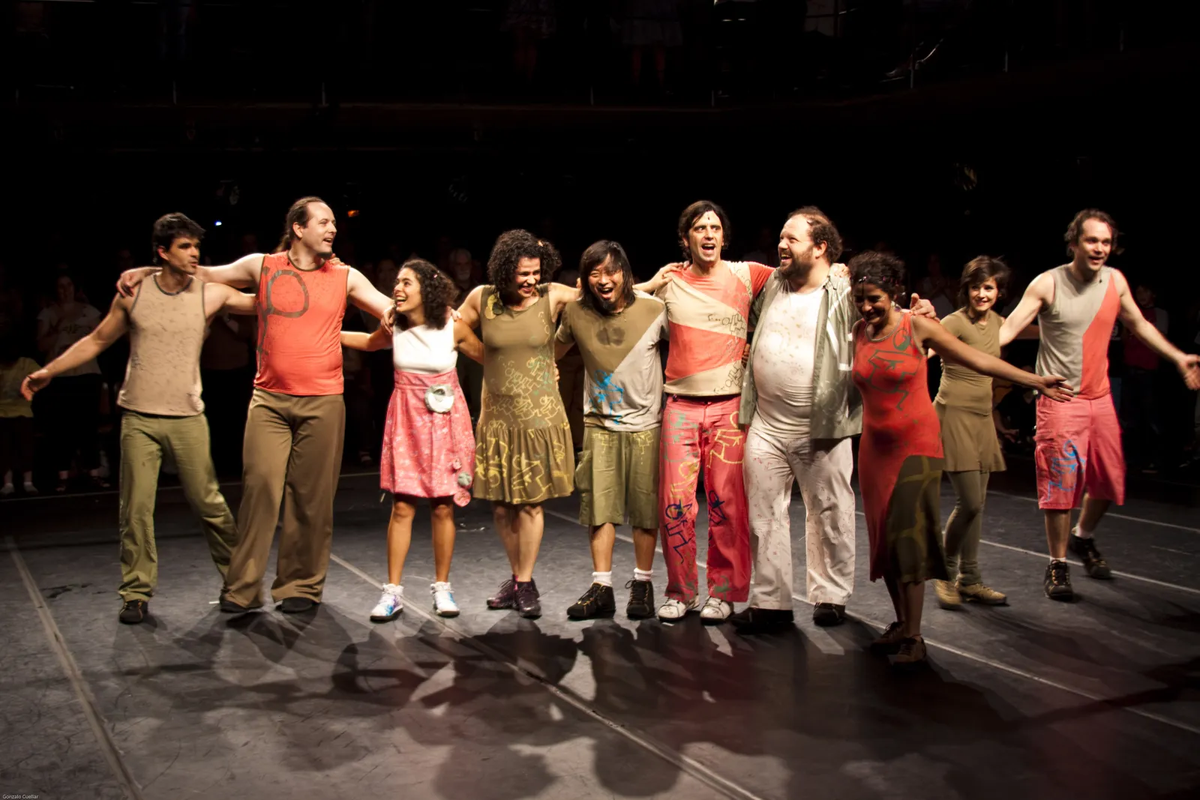
Stomp: bins and brooms
Stomp was born in Brighton, England, and premiered at the Edinburgh festival in 1991. Three years later it reached New York and ran until 2023: almost thirty years. Its idea is simple: everything on a street makes a sound. Brooms, bins, lids, plastic bags, lighters. And the body, of course. These two videos explain how they do it, hands and feet first, bags second.
How to Stomp: hands and feet
How to Stomp: bags
And the opening scene of their film, "Stomp Out Loud". Notice how many different sounds they get out of a broom.
Stomp Out Loud, opening scene
Barbatuques: the whole body sings
Barbatuques is a group from São Paulo, Brazil, founded in the mid-nineties by Fernando Barba, who died in 2021. They are twelve people and carry no instruments: claps, chest, snaps, mouth, whistles and stamping, and they sing on top. They played at the closing ceremony of the Rio 2016 Olympics and on the soundtrack of the film "Rio 2". They are the world reference for what is called body music.
Baianá
Barbapapa's Groove
Tum Pá
This Brazilian TV report shows how they teach body percussion to children.
Report: meet body percussion
Keith Terry: the one who named it
Keith Terry is a jazz drummer from Texas. In the seventies he played in a tap dance group and realised his drum patterns could move to claps and feet. He coined the term "body music": "music you can see, dance you can hear". In 2008 he founded the International Body Music Festival, which has travelled to Brazil, Turkey, Indonesia, Ghana, Italy, Greece and France. Here, a solo of his at the festival and a fragment of his course.
Keith Terry, festival solo
Fragment of the "Body Music" course
Steve Reich: a concert piece with claps only
In 1972 the composer Steve Reich saw flamenco hand-clappers in Brussels and wrote "Clapping Music": two performers, one twelve-note pattern, and one of them moves one eighth note ahead every few bars until they meet again. It is a concert piece played all over the world and it can be done in class. Here, for five.
Clapping Music, for five
Mayumana: the show
Mayumana is a company from Tel Aviv founded in 1996. Its name comes from the Hebrew for "skill". It mixes dance, song and percussion on boxes, buckets and floors, and has given more than five thousand performances in thirty countries. It is the closest thing to Stomp there is, with more light and more choreography.
Mayumana, "Pop Art"
Santi Serratosa: the reference from here
Santi Serratosa is a Catalan drummer and music therapist. He trained with Keith Terry and Fernando Barba, created his own method and directs a body percussion "big band", the SSM BigHand. His tutorials are in the 3rd and 4th-year chapters. Here, a Catalan secondary school playing one of his pieces, to see that students your age do this.
"Quan calla la ciutat", by the students of INS Santiago Sobrequés
And his full performance on Billie Eilish's "Therefore I Am".
Therefore I Am, by Santi Serratosa
And the pen guy
Lennie Simo, "Lenstrumental", is the Instagram creator who plays a whole drum kit with two pens. He has his own chapter in this book.
Classroom activities
- Analysis. Watch "Baianá" and answer in writing: how many different sounds can you tell apart, which part of the body makes them, who keeps the pulse.
- Compare. Stomp and Barbatuques do similar things with different means. What does the object (the broom) give that the body does not, and the other way round.
- From the street to the classroom. Each group brings an object from home that makes a sound (a bag, a box, a bottle) and gets three different sounds out of it. Then one bar with each.
- Review. Write a one-minute review, like a newspaper one, of one of these videos. What you liked, what you did not, what you would copy.
Key vocabulary
- Body music: Keith Terry's term for music made with the body.
- Object percussion: rhythm with everyday things; what Stomp does.
- Phasing: one voice gradually moves ahead of an identical one; the idea behind "Clapping Music".
- Timbre: the colour of a sound; what tells a clap from a chest hit.
Stomp: cubos de basura y escobas
Stomp nació en Brighton, en Inglaterra, y se estrenó en el festival de Edimburgo en 1991. Tres años después llegó a Nueva York y estuvo en cartel hasta 2023: casi treinta años. Su idea es simple: todo lo que hay en una calle suena. Escobas, cubos, tapas, bolsas de plástico, mecheros. Y el cuerpo, claro. Estos dos vídeos explican cómo lo hacen, con manos y pies primero y con bolsas después.
Cómo hacer Stomp: manos y pies
Cómo hacer Stomp: bolsas
Y la escena de apertura de su película, «Stomp Out Loud». Fíjate en cuántos sonidos distintos sacan de una escoba.
Stomp Out Loud, escena inicial
Barbatuques: el cuerpo entero canta
Barbatuques es un grupo de São Paulo, en Brasil, fundado a mediados de los noventa por Fernando Barba, que murió en 2021. Son doce personas y no llevan ningún instrumento: palmas, pecho, chasquidos, boca, silbidos y zapateado, y encima cantan. Tocaron en la clausura de los Juegos Olímpicos de Río 2016 y en la banda sonora de la película «Río 2». Es la referencia mundial de lo que se llama música corporal.
Baianá
Barbapapa's Groove
Tum Pá
En este reportaje de la televisión brasileña se ve cómo enseñan la percusión corporal a niños.
Reportaje: conoce la percusión corporal
Keith Terry: el que le puso nombre
Keith Terry es un batería de jazz de Texas. En los años setenta tocaba en un grupo de claqué y se dio cuenta de que sus patrones de batería podían pasar a las palmas y a los pies. Inventó el término «body music», música corporal: «música que se ve, danza que se oye». En 2008 fundó el International Body Music Festival, que ha pasado por Brasil, Turquía, Indonesia, Ghana, Italia, Grecia y Francia. Aquí, un solo suyo en el festival y un fragmento de su curso.
Keith Terry, solo en el festival
Fragmento del curso «Body Music»
Steve Reich: una obra de concierto solo con palmas
En 1972 el compositor Steve Reich vio a unos palmeros flamencos en Bruselas y escribió «Clapping Music»: dos intérpretes, un solo patrón de doce corcheas, y uno de los dos se adelanta una corchea cada varios compases hasta que vuelven a coincidir. Es una obra de concierto que se toca en todo el mundo y que se puede hacer en clase. Aquí, para cinco.
Clapping Music, para cinco
Mayumana: el espectáculo
Mayumana es una compañía de Tel Aviv fundada en 1996. Su nombre viene del hebreo «destreza». Mezcla danza, canto y percusión sobre cajas, cubos y suelos, y ha hecho más de cinco mil funciones en treinta países. Es lo más parecido a Stomp que hay, con más luz y más coreografía.
Mayumana, «Pop Art»
Santi Serratosa: el referente de aquí
Santi Serratosa es batería y musicoterapeuta catalán. Se formó con Keith Terry y con Fernando Barba, creó su propio método y dirige una «big band» de percusión corporal, la SSM BigHand. Sus tutoriales están en los capítulos de 3.º y 4.º. Aquí, un instituto catalán tocando una pieza suya, para ver que esto lo hacen alumnos de vuestra edad.
«Quan calla la ciutat», por el alumnado del INS Santiago Sobrequés
Y su actuación completa sobre «Therefore I Am», de Billie Eilish.
Therefore I Am, por Santi Serratosa
Y el de los bolígrafos
Lennie Simo, «Lenstrumental», es el creador de Instagram que hace una batería entera con dos bolígrafos. Tiene su propio capítulo en este libro.
Para hacer en clase
- Análisis. Ver «Baianá» y contestar por escrito: cuántos sonidos distintos distingues, qué parte del cuerpo los hace, quién lleva el pulso.
- Comparar. Stomp y Barbatuques hacen cosas parecidas con medios distintos. Qué aporta el objeto (la escoba) que no da el cuerpo, y al revés.
- De la calle al aula. Cada grupo trae un objeto de casa que suene (una bolsa, una caja, una botella) y le saca tres sonidos distintos. Luego, un compás con cada uno.
- Crítica. Escribir una reseña de un minuto, como la de un periódico, de uno de estos vídeos. Qué te gustó, qué no, qué copiarías.
Vocabulario fundamental
- Música corporal (body music): término de Keith Terry para la música hecha con el cuerpo.
- Percusión con objetos: ritmo con cosas cotidianas; lo que hace Stomp.
- Desfase: una voz se adelanta poco a poco respecto a otra igual; la idea de «Clapping Music».
- Timbre: el color del sonido; lo que distingue una palma de un golpe en el pecho.
Stomp: bins and brooms
Stomp was born in Brighton, England, and premiered at the Edinburgh festival in 1991. Three years later it reached New York and ran until 2023: almost thirty years. Its idea is simple: everything on a street makes a sound. Brooms, bins, lids, plastic bags, lighters. And the body, of course. These two videos explain how they do it, hands and feet first, bags second.
How to Stomp: hands and feet
How to Stomp: bags
And the opening scene of their film, "Stomp Out Loud". Notice how many different sounds they get out of a broom.
Stomp Out Loud, opening scene
Barbatuques: the whole body sings
Barbatuques is a group from São Paulo, Brazil, founded in the mid-nineties by Fernando Barba, who died in 2021. They are twelve people and carry no instruments: claps, chest, snaps, mouth, whistles and stamping, and they sing on top. They played at the closing ceremony of the Rio 2016 Olympics and on the soundtrack of the film "Rio 2". They are the world reference for what is called body music.
Baianá
Barbapapa's Groove
Tum Pá
This Brazilian TV report shows how they teach body percussion to children.
Report: meet body percussion
Keith Terry: the one who named it
Keith Terry is a jazz drummer from Texas. In the seventies he played in a tap dance group and realised his drum patterns could move to claps and feet. He coined the term "body music": "music you can see, dance you can hear". In 2008 he founded the International Body Music Festival, which has travelled to Brazil, Turkey, Indonesia, Ghana, Italy, Greece and France. Here, a solo of his at the festival and a fragment of his course.
Keith Terry, festival solo
Fragment of the "Body Music" course
Steve Reich: a concert piece with claps only
In 1972 the composer Steve Reich saw flamenco hand-clappers in Brussels and wrote "Clapping Music": two performers, one twelve-note pattern, and one of them moves one eighth note ahead every few bars until they meet again. It is a concert piece played all over the world and it can be done in class. Here, for five.
Clapping Music, for five
Mayumana: the show
Mayumana is a company from Tel Aviv founded in 1996. Its name comes from the Hebrew for "skill". It mixes dance, song and percussion on boxes, buckets and floors, and has given more than five thousand performances in thirty countries. It is the closest thing to Stomp there is, with more light and more choreography.
Mayumana, "Pop Art"
Santi Serratosa: the reference from here
Santi Serratosa is a Catalan drummer and music therapist. He trained with Keith Terry and Fernando Barba, created his own method and directs a body percussion "big band", the SSM BigHand. His tutorials are in the 3rd and 4th-year chapters. Here, a Catalan secondary school playing one of his pieces, to see that students your age do this.
"Quan calla la ciutat", by the students of INS Santiago Sobrequés
And his full performance on Billie Eilish's "Therefore I Am".
Therefore I Am, by Santi Serratosa
And the pen guy
Lennie Simo, "Lenstrumental", is the Instagram creator who plays a whole drum kit with two pens. He has his own chapter in this book.
Classroom activities
- Analysis. Watch "Baianá" and answer in writing: how many different sounds can you tell apart, which part of the body makes them, who keeps the pulse.
- Compare. Stomp and Barbatuques do similar things with different means. What does the object (the broom) give that the body does not, and the other way round.
- From the street to the classroom. Each group brings an object from home that makes a sound (a bag, a box, a bottle) and gets three different sounds out of it. Then one bar with each.
- Review. Write a one-minute review, like a newspaper one, of one of these videos. What you liked, what you did not, what you would copy.
Key vocabulary
- Body music: Keith Terry's term for music made with the body.
- Object percussion: rhythm with everyday things; what Stomp does.
- Phasing: one voice gradually moves ahead of an identical one; the idea behind "Clapping Music".
- Timbre: the colour of a sound; what tells a clap from a chest hit.