Contenidos
¿Por qué en 1980 las canciones dejaron de sonar a traducción?
If you sing in English, this was never your problem. Between 1979 and 1988 Spain built, from nothing, the labels, venues, radio stations and magazines a scene needs. This unit is about that machinery, and about the one thing it changed in the ear.
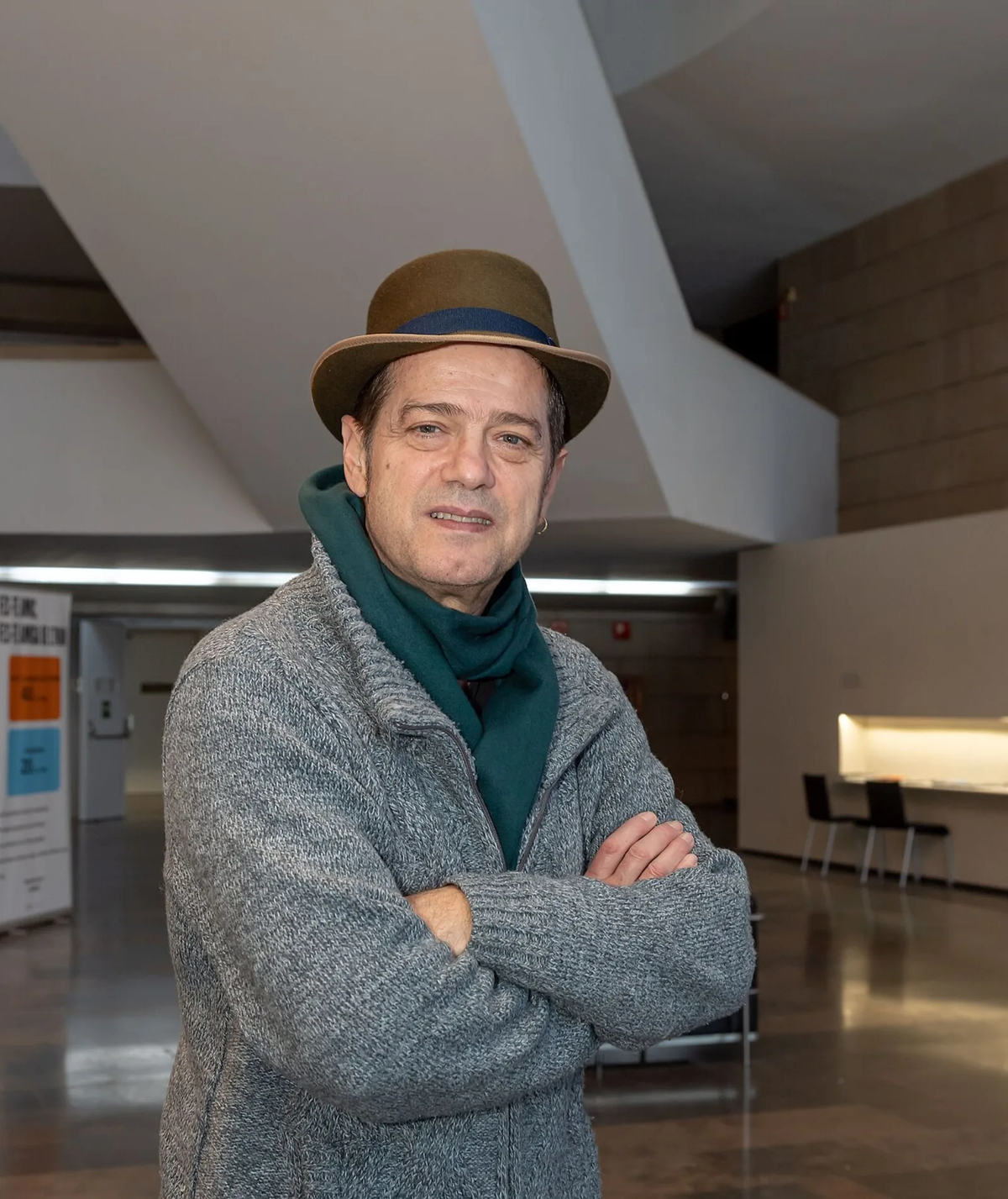
We ask ourselves
- Why is almost all the music you like in English?
- Is it actually harder to sing rock in Spanish, or does it only seem harder?
- Who decides which songs get heard at all?
- How much does it cost to record a record, and who puts up that money?
- If a band in your town does something good, how does anyone elsewhere find out?
- Why does almost no song name the place where you live?
Don't answer yet. We come back to these at the end.
The fragment
Before playing any song, we build a four-bar loop. Five people is plenty.
- Drums: kick on 1 and 3, snare on 2 and 4. Nothing else.
- Bass: the root of the chord on every beat.
- Guitar 1: two bars of A minor, two bars of G, in quarter notes.
- Guitar 2: the same, no decoration.
- Voice: silent for now.
Now the rest of the class joins in. Everyone writes one sentence of their own, six to ten syllables: a street, a time of day, a habit. They say it over the loop with one rule: the strong syllable of the last word must land on the snare, on beat four.
To manage that you have to decide which syllable you start on. That decision, and nothing else, is what a lyricist does.
Then try the same sentence in English. It will fit almost by itself: English swallows weak syllables and stretches them at will. Spanish pronounces nearly all of them. That is the problem these bands had to solve.
Now play Chica de ayer, all of it, with nobody talking over it.
What changed
The first change cannot be heard: it is who gets to record. Before 1980, a Spanish band without a major-label deal had a demo tape and little else. In 1982 Servando Carballar, of the band Aviador Dro, set up DRO to release his own records, and it ended up being the country's first independent label.
With a small label behind you, a song can be recorded in two afternoons and be out in weeks. That allows mistakes. It also allows releasing things no multinational would have considered worth the money.
The second change is that places to hear it appear. Radio 3 went on air on 1 July 1979, first as a late-night slot and from 1981 as a full station; Diario Pop started in 1982. On television, La edad de oro held a slot on La 2 from 17 May 1983 to 2 April 1985, presented by Paloma Chamorro, putting bands who sold almost nothing in front of a national audience.
And now the part you can hear. Before this, a Spanish band wanting to sound modern either sang in English or sang Spanish over melodies designed for English: long phrases, swallowed syllables, stresses in the wrong place. From 1980 the records that work do the opposite. The melody is written along the stress of Spanish, not against it.
The effect is specific. Phrases get shorter. There are more syllables per bar and nearly all of them sound. The text sits closer to speech, and that is why the lyrics start naming local things: Chica de ayer mentions El Penta, a Madrid bar, and Más Birras called a record Al este del Moncayo, after the mountain north of Zaragoza. The music stops being set in an imaginary America.
My own view, and I say it so you can argue with it: a lot of what was recorded in those years is clumsily played. What matters is not that it sounded good. It is that it sounded like 1982 and like Spain, instead of like 1972 and somewhere else.
Hard facts: DRO, 1982, absorbed Tres Cipreses in 1983 and bought GASA in 1984. Radio 3, 1 July 1979; a full station from 1981. The Canito tribute concert, 9 February 1980, at the Madrid school of civil engineering, is taken as the starting gun. The Spring Concert, 23 May 1981, drew more than 15,000 people at the school of architecture.
The same device elsewhere
Fitting your own language into a bar of music was not invented in 1980. These three solve it in different ways, and they are worth hearing back to back:
- La Gozadera, Gente de Zona and Marc Anthony (2015) — the chorus is a list of countries. Each name has to fit a fixed slot, so the names work as percussion.
- La verbena de la Paloma, by Tomás Bretón (1894) — in the habanera "¿Dónde vas con mantón de Manila?" two characters argue. The text runs close to how Madrid actually spoke, and the music bends to it.
- Konnakol, from southern India — the syllables do not accompany the rhythm: they are the rhythm. You learn a cycle by saying it aloud before you play it.
None is better than the others. In all three the stress of the language is in charge, and the music goes where the language leaves room.
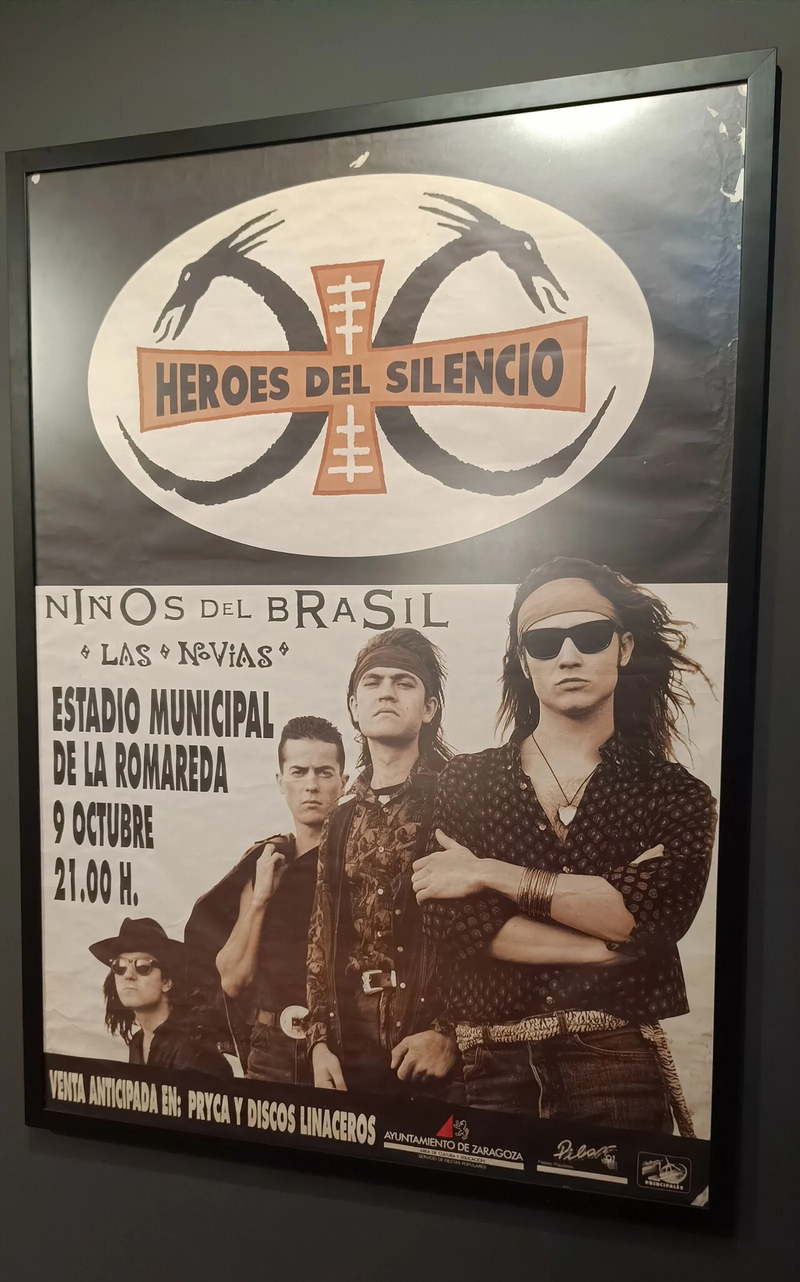
Foto: Goldorak, CC BY-SA 4.0, vía Wikimedia Commons
And here at home?
Start with the honest part: "movida aragonesa" is a label applied afterwards. The Aragonese curriculum uses it, but the sources from here talk about the bands and, above all, about the Muestra. Spanish Wikipedia has an article on the Madrid movida and none on the Aragonese one.
Before any of this, song in Aragón was something else. The Nueva Canción Aragonesa, led by José Antonio Labordeta: a guitar, a text and almost no production. Canto a la libertad is from 1975. The Aragonese parliament rejected it as the official anthem on 15 September 2011, by 36 votes to 26.
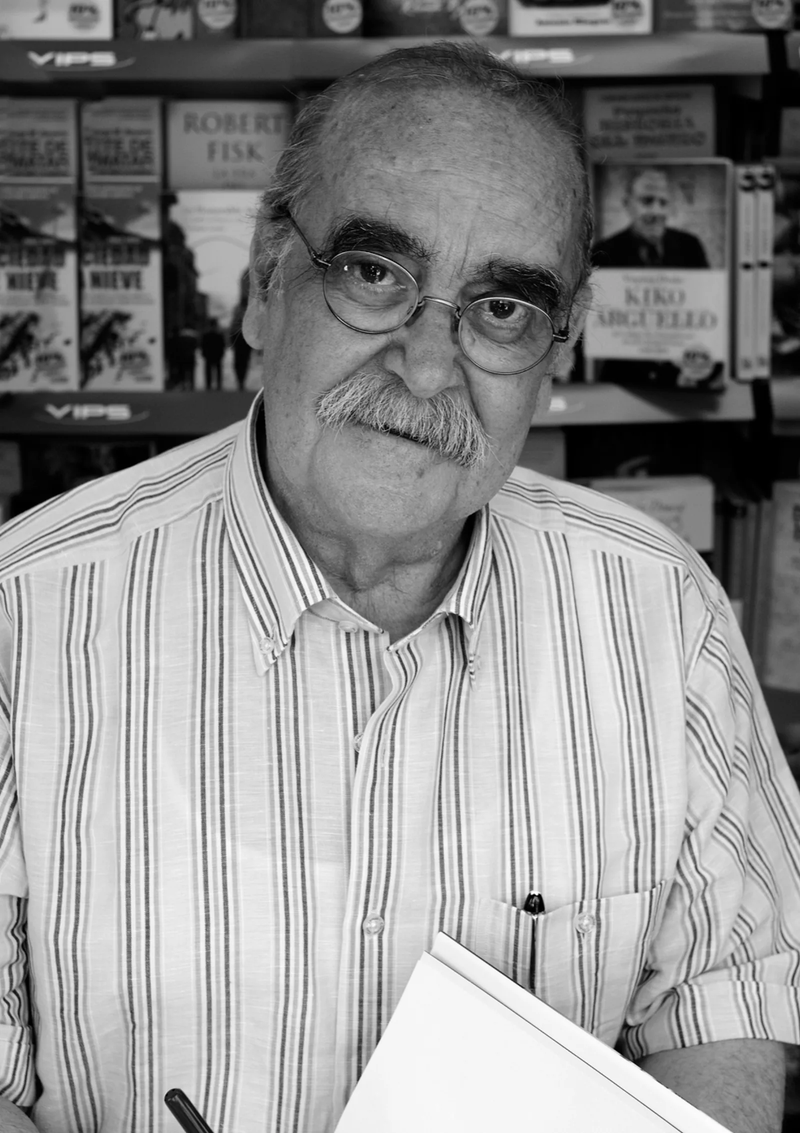
Foto: Gregorio López, CC BY 2.0, vía Wikimedia Commons
The date that matters here is a different one. From 23 to 25 March 1984, in the French Pavilion of Zaragoza's old trade-fair ground, the I Muestra de Pop, Rock y Otros Rollos was held: around fifty Aragonese bands and more than 25,000 people over three days. It was organised by the GOM, a group of young people, with the city council's youth department.
It was not only music. Five of the city's free radio stations made their first joint broadcast there: Radio Antena, Radio La Sabina, Radio Cero, Radio Dharma and Canal 13. It is the same machinery as in Madrid, built by different people.
On that bill, separately and without knowing it, were the future Héroes del Silencio: the Valdivia brothers played in Zumo de Vidrio and Enrique Bunbury in Proceso Entrópico. They joined forces that same year, 1984. The band's name appeared in 1985, on the way to Radio Zaragoza with their first demo.
Also on the bill were the Golden Zippers, a rockabilly band who became Más Birras. Their singer was Mauricio Aznar. In 1987 they released Al este del Moncayo, and "Apuesta por el rock and roll" got out of Zaragoza because it was played on Diario Pop, on Radio 3. A Madrid radio show took a local band out of its neighbourhood: that is how the machine worked.
The venues arrived after the bands. En Bruto opened on 4 September 1986 on Calle Comandante Santa Pau. The council shut it four days later for lacking permits, and it reopened after public protest. That street is now called Calle Héroes del Silencio.
And there is a bridge between the two cities that hardly anyone mentions: Santiago Auserón was born in Zaragoza on 25 July 1954. He sang and wrote in Radio Futura, the Madrid band often called the creative peak of the movida. The voice of that peak was from Zaragoza.
A warning about the sound. Here the guitar, rockabilly and urban rock counted for more than the synthesiser. If you expect the Aragonese movida to sound like Mecano, it will not.
And one thing we do not hide. Heroin took many people of that generation across Spain. Mauricio Aznar died in Zaragoza on 2 October 2000, aged 36, of an overdose. It is not the subject of this unit, but it is part of its history, and leaving it out would be a lie.
Classroom activities
- While Chica de ayer plays: raise a hand every time the lyric names something concrete — a place, a time, an object. Afterwards we count the hands and say what each one was for.
- While Enamorado de la moda juvenil plays: half the class keeps the pulse with a foot. The other half counts how many times the title comes back. Compare the two numbers.
- While Apuesta por el rock and roll plays: clap along with the snare and notice whether the voice comes in before, on, or after that hit. There is no single right answer; the interesting part is that it does not always do the same thing.
- Play: build the four-bar loop from "The fragment" with the five of you, while the rest of the class throws their sentences over the top. Then La Gozadera: its full-band chart and tab are attached to its own article in the library, and it is the same problem solved in a different Spanish.
- Create: write eight lines about a street in your neighbourhood, with one condition: the last word of each line must be stressed on its final, penultimate or antepenultimate syllable depending on where you want the hit to land. Steal the procedure, not the song.
Key vocabulary
- Stressed syllable — sílaba tónica: la sílaba que se pronuncia con más fuerza y que debe caer en el golpe
- Snare hit / backbeat — golpe de caja: el acento en los tiempos 2 y 4
- Loop — bucle: una figura corta que se repite igual y hace de suelo
- Demo — maqueta: grabación barata que se manda a radios y sellos, no se vende
- Independent label — sello independiente: compañía pequeña, sin multinacional detrás
Resources
The songs in this unit are in the library, each with its own article, full-band chart and tab: Maquillaje, by Mecano.
The song of the unit — Chica de ayer, Nacha Pop (1980), written by Antonio Vega.
The other side of 1980 — Enamorado de la moda juvenil, Radio Futura, from their first album, Música moderna (1980).
What came out of Zaragoza — Apuesta por el rock and roll, Más Birras (1987), from the mini-LP Al este del Moncayo.
What followed the Muestra — Héroes del Silencio, Entre dos tierras, live in 1993 for RTVE.
Before the movida, in Aragón — Canto a la libertad, by José Antonio Labordeta (1975).
The same problem in Cuban Spanish — La Gozadera, Gente de Zona with Marc Anthony (2015).
The same problem in 1894 — "¿Dónde vas con mantón de Manila?", from La verbena de la Paloma, by Tomás Bretón.
Syllables as rhythm — an introduction to konnakol, with B. R. Somashekar Jois.
- More from this era — "The 1980s Musical Revolution: Synths, Screens and Sequencers", in the library.
- The other Madrid of 1982 — "Maquillaje", Mecano, in the library.
- Twenty years later, in Spanish — "Jesucristo García" and "La vereda de la puerta de atrás", by Extremoduro, in the library.
Nos preguntamos
- ¿Por qué casi toda la música que te gusta está en inglés?
- ¿Es más difícil cantar rock en castellano que en inglés, o solo lo parece?
- ¿Quién decide qué canciones llegan a oírse y cuáles no?
- ¿Cuánto cuesta grabar un disco y quién pone ese dinero?
- Si un grupo de tu ciudad hace algo bueno, ¿cómo se entera alguien de fuera?
- ¿Por qué casi ninguna canción nombra el sitio donde vives?
No las respondas todavía. Al final de la unidad volvemos a ellas.
El fragmento
Antes de poner ninguna canción, montamos un bucle de cuatro compases. Con cinco personas llega de sobra.
- Batería: bombo en el 1 y el 3, caja en el 2 y el 4. Nada más.
- Bajo: la raíz del acorde en cada tiempo.
- Guitarra 1: dos compases de La menor y dos de Sol, a negras.
- Guitarra 2: lo mismo, sin adornos.
- Voz: de momento, callada.
Ahora entra el resto de la clase. Cada uno escribe una frase suya de seis a diez sílabas: una calle, una hora, una manía. Y la dice encima del bucle con una sola regla: la sílaba fuerte de la última palabra tiene que caer en el golpe de caja del cuarto tiempo.
Para conseguirlo hay que decidir en qué sílaba empiezas a hablar. Eso, y no otra cosa, es lo que hace un letrista.
Después probad lo mismo con la frase traducida al inglés. Notaréis que encaja casi sola: el inglés se come las sílabas débiles y las estira a conveniencia. El castellano las pronuncia casi todas. Ese es el problema que estos grupos tuvieron que resolver.
Ahora sí, Chica de ayer entera y sin comentarios por encima.
Qué cambió
Lo primero que cambia no se oye: es quién puede grabar. Hasta 1980, un grupo español sin contrato de multinacional tenía maqueta y poco más. En 1982 Servando Carballar, del grupo Aviador Dro, monta DRO para autoeditarse, y acaba siendo la primera compañía independiente del país.
Con un sello pequeño detrás, una canción puede grabarse en dos tardes y salir en unas semanas. Eso permite equivocarse. Y permite publicar cosas que a una multinacional no le habrían parecido rentables.
Lo segundo es que aparece por dónde oírlo. Radio 3 empieza a emitir el 1 de julio de 1979, primero como una franja de noche y desde 1981 como emisora entera; en 1982 arranca Diario Pop. En televisión, La edad de oro ocupa La 2 desde el 17 de mayo de 1983 hasta el 2 de abril de 1985, con Paloma Chamorro, y mete en horario de máxima audiencia a grupos que no vendían casi nada.
Y ahora lo que sí se oye. Antes, un grupo español que quisiera sonar moderno cantaba en inglés o cantaba en castellano con melodías pensadas para el inglés: frases largas, sílabas comidas, acentos donde no toca. Desde 1980 las canciones que funcionan hacen lo contrario. Escriben la melodía sobre el acento del castellano, no contra él.
El efecto es concreto. Las frases se acortan. Hay más sílabas por compás y casi todas suenan. El texto queda más cerca de cómo se habla, y por eso las letras empiezan a nombrar cosas de aquí: Chica de ayer menciona El Penta, un bar de Madrid, y Más Birras titulan un disco Al este del Moncayo. Deja de ser música ambientada en una América imaginaria.
Mi opinión, y la digo para que la discutáis: mucho de lo que se grabó en esos años está tocado con torpeza. Lo interesante no es que sonara bien; es que sonaba a 1982 y a España, en vez de a 1972 y a otro sitio.
Datos duros: DRO, 1982, absorbe Tres Cipreses en 1983 y compra GASA en 1984. Radio 3, 1 de julio de 1979; emisora completa en 1981. El concierto homenaje a Canito, 9 de febrero de 1980, en la Escuela de Caminos de Madrid, se toma como pistoletazo de salida. El Concierto de Primavera, 23 de mayo de 1981, juntó a más de 15.000 personas en la Escuela de Arquitectura.
El mismo recurso en otros sitios
Encajar la propia lengua en el compás no lo inventó nadie en 1980. Estos tres lo resuelven de maneras distintas, y conviene oírlos seguidos:
- La Gozadera, Gente de Zona y Marc Anthony (2015) — el estribillo es una lista de países. Cada nombre tiene que caber en un hueco fijo, así que los nombres funcionan como percusión.
- La verbena de la Paloma, de Tomás Bretón (1894) — en la habanera «¿Dónde vas con mantón de Manila?» dos personajes discuten. El texto va casi como se hablaba en Madrid, y la música se pliega a eso.
- El konnakol, del sur de la India — las sílabas no acompañan al ritmo: son el ritmo. Se aprende un compás diciéndolo en voz alta antes de tocarlo.
Ninguno es mejor que otro. En los tres manda el acento de la lengua, y la música se coloca donde la lengua la deja.
Foto: Goldorak, CC BY-SA 4.0, vía Wikimedia Commons
Y aquí, ¿qué?
Empecemos por lo honesto: «movida aragonesa» es una etiqueta puesta después. El currículo de Aragón la usa, pero las fuentes de aquí hablan de los grupos y, sobre todo, de la Muestra. La Wikipedia en castellano tiene artículo para la movida madrileña y no lo tiene para la aragonesa.
Antes de todo esto, en Aragón la canción era otra cosa. La Nueva Canción Aragonesa, con José Antonio Labordeta a la cabeza: guitarra, texto y poca producción. Canto a la libertad es de 1975. Las Cortes de Aragón lo rechazaron como himno oficial el 15 de septiembre de 2011, por 36 votos contra 26.
Foto: Gregorio López, CC BY 2.0, vía Wikimedia Commons
La fecha que importa aquí es otra. Del 23 al 25 de marzo de 1984, en el Pabellón Francés de la antigua Feria de Muestras de Zaragoza, se celebra la I Muestra de Pop, Rock y Otros Rollos: unos cincuenta grupos aragoneses y más de 25.000 asistentes en tres días. La organiza el GOM, un grupo de jóvenes, con la Delegación de Juventud del Ayuntamiento.
No fue solo música. Allí hicieron su primera emisión conjunta cinco radios libres de la ciudad: Radio Antena, Radio La Sabina, Radio Cero, Radio Dharma y Canal 13. Es exactamente la misma maquinaria que en Madrid, montada por otra gente.
En aquel cartel estaban, por separado y sin saberlo, los que luego serían Héroes del Silencio: los hermanos Valdivia tocaban en Zumo de Vidrio y Enrique Bunbury en Proceso Entrópico. Se juntan ese mismo 1984. El nombre del grupo aparece en 1985, camino de Radio Zaragoza con la primera maqueta.
También tocaron los Golden Zippers, que hacían rockabilly y acabaron llamándose Más Birras. Su cantante era Mauricio Aznar. En 1987 publican Al este del Moncayo, y «Apuesta por el rock and roll» sale de Zaragoza porque suena en Diario Pop, en Radio 3. Una radio de Madrid saca del barrio a un grupo de aquí: así funcionaba la máquina.
Las salas llegan después que los grupos. En Bruto abre el 4 de septiembre de 1986 en la calle Comandante Santa Pau. El Ayuntamiento la cierra a los cuatro días por falta de permisos y reabre tras las protestas. Esa calle hoy se llama calle Héroes del Silencio.
Y hay un puente entre las dos ciudades que casi nadie cuenta: Santiago Auserón nació en Zaragoza el 25 de julio de 1954. Cantaba y escribía en Radio Futura, el grupo de Madrid al que se ha llamado la cumbre creativa de la movida. La voz de esa cumbre era zaragozana.
Un aviso sobre lo que sonaba. Aquí pesaron más la guitarra, el rockabilly y el rock urbano que el sintetizador. Si esperas que la movida aragonesa suene como Mecano, no va a sonar así.
Y una cosa que no se esconde. La heroína se llevó a mucha gente de esa generación en toda España. Mauricio Aznar murió en Zaragoza el 2 de octubre de 2000, a los 36 años, de sobredosis. No es el tema de esta unidad, pero está en su historia y callarlo sería mentir.
Para hacer en clase
- Durante Chica de ayer: levanta la mano cada vez que la letra nombre algo concreto: un sitio, una hora, un objeto. Al terminar contamos cuántas manos hubo y qué nombró cada una.
- Durante Enamorado de la moda juvenil: la mitad de la clase marca el pulso con el pie. La otra mitad cuenta cuántas veces se repite el título. Comparad los dos números.
- Durante Apuesta por el rock and roll: seguid el golpe de caja con una palmada y fijaos en si la voz entra antes, encima o después de ese golpe. No hay respuesta única; lo interesante es que no siempre hace lo mismo.
- Tocar: montad el bucle de cuatro compases del apartado «El fragmento» con los cinco, mientras el resto de la clase va soltando sus frases encima. Después, La Gozadera: su chart de banda y su tablatura están en su artículo de la biblioteca, y es el mismo problema resuelto en otro castellano.
- Crear: escribid ocho versos sobre una calle de vuestro barrio con una sola condición: la última palabra de cada verso tiene que ser aguda, llana o esdrújula según donde queráis que caiga el golpe. Se trata de robar el procedimiento, no la canción.
Vocabulario fundamental
- Sílaba tónica — La sílaba que se pronuncia con más fuerza dentro de una palabra. En una canción es la que tiene que caer en el golpe.
- Golpe de caja — El acento de la caja en los tiempos 2 y 4 del compás. Es la referencia contra la que colocas la letra.
- Bucle — Una figura de pocos compases que se repite igual. Sirve de suelo fijo para probar frases encima.
- Maqueta — Una grabación casera o barata que un grupo manda a radios y sellos para que le hagan caso. No se vende.
- Sello independiente — Una compañía de discos pequeña, sin una multinacional detrás, que publica lo que quiere y asume el riesgo.
Recursos
Las canciones de esta unidad están en la biblioteca, cada una con su artículo, su chart de banda y su tablatura: Maquillaje, de Mecano.
La canción de la unidad — Chica de ayer, Nacha Pop (1980). La escribió Antonio Vega.
La otra cara de 1980 — Enamorado de la moda juvenil, Radio Futura, de su primer disco, Música moderna (1980).
Lo que salió de Zaragoza — Apuesta por el rock and roll, Más Birras (1987), del mini-LP Al este del Moncayo.
Lo que vino después de la Muestra — Héroes del Silencio, Entre dos tierras, en directo en 1993 para RTVE.
Antes de la movida, en Aragón — Canto a la libertad, de José Antonio Labordeta (1975).
El mismo problema en castellano de Cuba — La Gozadera, Gente de Zona con Marc Anthony (2015).
El mismo problema en 1894 — «¿Dónde vas con mantón de Manila?», de La verbena de la Paloma, de Tomás Bretón.
Las sílabas como ritmo — introducción al konnakol, con B. R. Somashekar Jois.
- De esta misma época — «The 1980s Musical Revolution: Synths, Screens and Sequencers», en la biblioteca.
- El otro Madrid de 1982 — «Maquillaje», Mecano, en la biblioteca.
- Veinte años después, en castellano — «Jesucristo García» y «La vereda de la puerta de atrás», de Extremoduro, en la biblioteca.
We ask ourselves
- Why is almost all the music you like in English?
- Is it actually harder to sing rock in Spanish, or does it only seem harder?
- Who decides which songs get heard at all?
- How much does it cost to record a record, and who puts up that money?
- If a band in your town does something good, how does anyone elsewhere find out?
- Why does almost no song name the place where you live?
Don't answer yet. We come back to these at the end.
The fragment
Before playing any song, we build a four-bar loop. Five people is plenty.
- Drums: kick on 1 and 3, snare on 2 and 4. Nothing else.
- Bass: the root of the chord on every beat.
- Guitar 1: two bars of A minor, two bars of G, in quarter notes.
- Guitar 2: the same, no decoration.
- Voice: silent for now.
Now the rest of the class joins in. Everyone writes one sentence of their own, six to ten syllables: a street, a time of day, a habit. They say it over the loop with one rule: the strong syllable of the last word must land on the snare, on beat four.
To manage that you have to decide which syllable you start on. That decision, and nothing else, is what a lyricist does.
Then try the same sentence in English. It will fit almost by itself: English swallows weak syllables and stretches them at will. Spanish pronounces nearly all of them. That is the problem these bands had to solve.
Now play Chica de ayer, all of it, with nobody talking over it.
What changed
The first change cannot be heard: it is who gets to record. Before 1980, a Spanish band without a major-label deal had a demo tape and little else. In 1982 Servando Carballar, of the band Aviador Dro, set up DRO to release his own records, and it ended up being the country's first independent label.
With a small label behind you, a song can be recorded in two afternoons and be out in weeks. That allows mistakes. It also allows releasing things no multinational would have considered worth the money.
The second change is that places to hear it appear. Radio 3 went on air on 1 July 1979, first as a late-night slot and from 1981 as a full station; Diario Pop started in 1982. On television, La edad de oro held a slot on La 2 from 17 May 1983 to 2 April 1985, presented by Paloma Chamorro, putting bands who sold almost nothing in front of a national audience.
And now the part you can hear. Before this, a Spanish band wanting to sound modern either sang in English or sang Spanish over melodies designed for English: long phrases, swallowed syllables, stresses in the wrong place. From 1980 the records that work do the opposite. The melody is written along the stress of Spanish, not against it.
The effect is specific. Phrases get shorter. There are more syllables per bar and nearly all of them sound. The text sits closer to speech, and that is why the lyrics start naming local things: Chica de ayer mentions El Penta, a Madrid bar, and Más Birras called a record Al este del Moncayo, after the mountain north of Zaragoza. The music stops being set in an imaginary America.
My own view, and I say it so you can argue with it: a lot of what was recorded in those years is clumsily played. What matters is not that it sounded good. It is that it sounded like 1982 and like Spain, instead of like 1972 and somewhere else.
Hard facts: DRO, 1982, absorbed Tres Cipreses in 1983 and bought GASA in 1984. Radio 3, 1 July 1979; a full station from 1981. The Canito tribute concert, 9 February 1980, at the Madrid school of civil engineering, is taken as the starting gun. The Spring Concert, 23 May 1981, drew more than 15,000 people at the school of architecture.
The same device elsewhere
Fitting your own language into a bar of music was not invented in 1980. These three solve it in different ways, and they are worth hearing back to back:
- La Gozadera, Gente de Zona and Marc Anthony (2015) — the chorus is a list of countries. Each name has to fit a fixed slot, so the names work as percussion.
- La verbena de la Paloma, by Tomás Bretón (1894) — in the habanera "¿Dónde vas con mantón de Manila?" two characters argue. The text runs close to how Madrid actually spoke, and the music bends to it.
- Konnakol, from southern India — the syllables do not accompany the rhythm: they are the rhythm. You learn a cycle by saying it aloud before you play it.
None is better than the others. In all three the stress of the language is in charge, and the music goes where the language leaves room.
Foto: Goldorak, CC BY-SA 4.0, vía Wikimedia Commons
And here at home?
Start with the honest part: "movida aragonesa" is a label applied afterwards. The Aragonese curriculum uses it, but the sources from here talk about the bands and, above all, about the Muestra. Spanish Wikipedia has an article on the Madrid movida and none on the Aragonese one.
Before any of this, song in Aragón was something else. The Nueva Canción Aragonesa, led by José Antonio Labordeta: a guitar, a text and almost no production. Canto a la libertad is from 1975. The Aragonese parliament rejected it as the official anthem on 15 September 2011, by 36 votes to 26.
Foto: Gregorio López, CC BY 2.0, vía Wikimedia Commons
The date that matters here is a different one. From 23 to 25 March 1984, in the French Pavilion of Zaragoza's old trade-fair ground, the I Muestra de Pop, Rock y Otros Rollos was held: around fifty Aragonese bands and more than 25,000 people over three days. It was organised by the GOM, a group of young people, with the city council's youth department.
It was not only music. Five of the city's free radio stations made their first joint broadcast there: Radio Antena, Radio La Sabina, Radio Cero, Radio Dharma and Canal 13. It is the same machinery as in Madrid, built by different people.
On that bill, separately and without knowing it, were the future Héroes del Silencio: the Valdivia brothers played in Zumo de Vidrio and Enrique Bunbury in Proceso Entrópico. They joined forces that same year, 1984. The band's name appeared in 1985, on the way to Radio Zaragoza with their first demo.
Also on the bill were the Golden Zippers, a rockabilly band who became Más Birras. Their singer was Mauricio Aznar. In 1987 they released Al este del Moncayo, and "Apuesta por el rock and roll" got out of Zaragoza because it was played on Diario Pop, on Radio 3. A Madrid radio show took a local band out of its neighbourhood: that is how the machine worked.
The venues arrived after the bands. En Bruto opened on 4 September 1986 on Calle Comandante Santa Pau. The council shut it four days later for lacking permits, and it reopened after public protest. That street is now called Calle Héroes del Silencio.
And there is a bridge between the two cities that hardly anyone mentions: Santiago Auserón was born in Zaragoza on 25 July 1954. He sang and wrote in Radio Futura, the Madrid band often called the creative peak of the movida. The voice of that peak was from Zaragoza.
A warning about the sound. Here the guitar, rockabilly and urban rock counted for more than the synthesiser. If you expect the Aragonese movida to sound like Mecano, it will not.
And one thing we do not hide. Heroin took many people of that generation across Spain. Mauricio Aznar died in Zaragoza on 2 October 2000, aged 36, of an overdose. It is not the subject of this unit, but it is part of its history, and leaving it out would be a lie.
Classroom activities
- While Chica de ayer plays: raise a hand every time the lyric names something concrete — a place, a time, an object. Afterwards we count the hands and say what each one was for.
- While Enamorado de la moda juvenil plays: half the class keeps the pulse with a foot. The other half counts how many times the title comes back. Compare the two numbers.
- While Apuesta por el rock and roll plays: clap along with the snare and notice whether the voice comes in before, on, or after that hit. There is no single right answer; the interesting part is that it does not always do the same thing.
- Play: build the four-bar loop from "The fragment" with the five of you, while the rest of the class throws their sentences over the top. Then La Gozadera: its full-band chart and tab are attached to its own article in the library, and it is the same problem solved in a different Spanish.
- Create: write eight lines about a street in your neighbourhood, with one condition: the last word of each line must be stressed on its final, penultimate or antepenultimate syllable depending on where you want the hit to land. Steal the procedure, not the song.
Key vocabulary
- Stressed syllable — sílaba tónica: la sílaba que se pronuncia con más fuerza y que debe caer en el golpe
- Snare hit / backbeat — golpe de caja: el acento en los tiempos 2 y 4
- Loop — bucle: una figura corta que se repite igual y hace de suelo
- Demo — maqueta: grabación barata que se manda a radios y sellos, no se vende
- Independent label — sello independiente: compañía pequeña, sin multinacional detrás
Resources
The songs in this unit are in the library, each with its own article, full-band chart and tab: Maquillaje, by Mecano.
The song of the unit — Chica de ayer, Nacha Pop (1980), written by Antonio Vega.
The other side of 1980 — Enamorado de la moda juvenil, Radio Futura, from their first album, Música moderna (1980).
What came out of Zaragoza — Apuesta por el rock and roll, Más Birras (1987), from the mini-LP Al este del Moncayo.
What followed the Muestra — Héroes del Silencio, Entre dos tierras, live in 1993 for RTVE.
Before the movida, in Aragón — Canto a la libertad, by José Antonio Labordeta (1975).
The same problem in Cuban Spanish — La Gozadera, Gente de Zona with Marc Anthony (2015).
The same problem in 1894 — "¿Dónde vas con mantón de Manila?", from La verbena de la Paloma, by Tomás Bretón.
Syllables as rhythm — an introduction to konnakol, with B. R. Somashekar Jois.
- More from this era — "The 1980s Musical Revolution: Synths, Screens and Sequencers", in the library.
- The other Madrid of 1982 — "Maquillaje", Mecano, in the library.
- Twenty years later, in Spanish — "Jesucristo García" and "La vereda de la puerta de atrás", by Extremoduro, in the library.