Contenidos
Megalovania — Toby Fox (2015)
Four notes are enough to recognise it. Toby Fox wrote it for an EarthBound mod, recycled it in a web comic and turned it into the most feared fight in Undertale.

🏷️ Ficha musical
Why this song
If you have played Undertale, you link it to a grinning skeleton waiting at the end of the game's cruellest route. If you haven't, you have still heard it: in memes, in remixes, in Smash Bros. In 2024 Guinness certified it as the most-streamed video game track on Spotify.
The strange part is that you know it after four notes. So here is the question: what do those four notes have that means nothing else is needed?
Historical context
Toby Fox started out writing music for mods, fan-made reworkings of existing games. In 2008 he was making one for a Halloween contest based on EarthBound, a Super Nintendo role-playing game. For the final boss he wanted a track from another game, but it was too hard to transcribe. So he wrote a new one.
The title blends two words: megalomania and Transylvania, for Halloween. Three years later he brought it back, arranged with guitars, for the web comic Homestuck.
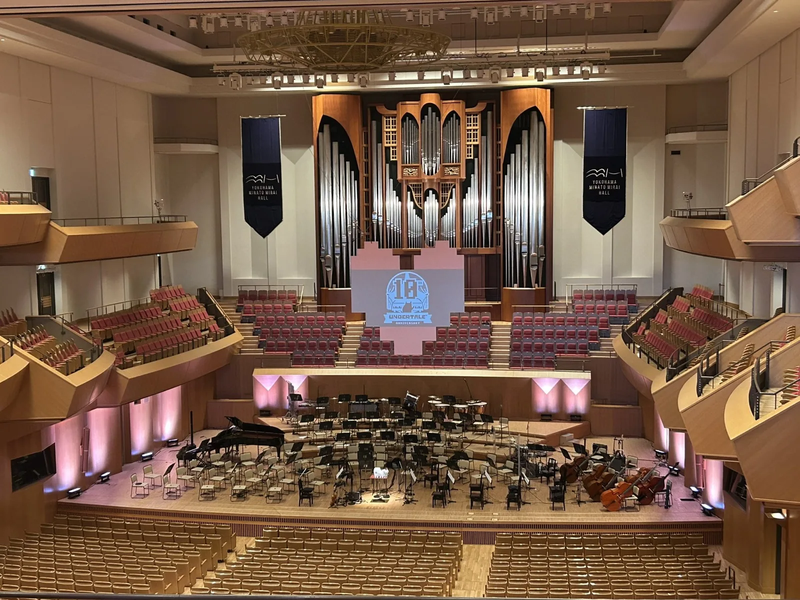
Photo: Monathephantom, CC BY 4.0, via Wikimedia Commons
In 2015 he released Undertale. He had made almost all of it alone: the design, the writing and every piece of music, composed in FL Studio, a computer program, with no formal music training. Megalovania became the theme of Sans, the skeleton you fight at the end of the route where you kill everyone. The soundtrack came out the same day as the game.
Musical characteristics
It opens with a synthesizer bass on its own. Listen to what it does: two identical notes, a jump to a much higher note, and a quick fall. A short gesture that you recognise at once and that keeps coming back is a riff.
Now follow the first note of each round. The top part stays the same, but the starting note drops a little every bar: D, C, B, B flat. Four steps right next to each other, one per bar. Stepping down like that, without skipping any note, builds tension, because the ear expects the staircase to end.
The riff never stops. When a figure repeats over and over while everything else changes above it, it is called an ostinato. Here it is the floor the whole piece stands on.
Sixteen seconds in, everything else arrives: drums, more synths and a melody on top. The riff has not changed; what has changed is how many parts are playing. Sharing the same music out between different instruments is the arrangement, and that is why this piece can work for orchestra, rock band or synthesizer without getting lost.
The sound looks back to the Super Nintendo role-playing games that influenced Fox, like EarthBound: dry, bright, synthetic timbres. That style is called chiptune.
Hard data: D minor, 4/4, 120 BPM, 2:36. The form is a chain of sections over the same riff, which loops back to the start at the end.
Trivia and curiosities
- The riff existed seven years before the game. The same idea appears in the 2008 mod, in Homestuck in 2011 and in Undertale in 2015, arranged differently each time. A good theme can be recycled if you change how you dress it.
- It was born from failing to transcribe something else. Fox wanted to use "Megalomania" from Live A Live and couldn't work it out by ear. He wrote his own, inspired by the final-boss theme of Brandish 2. Composing by imitation is a method, not cheating.
- The melody started as yelling. Fox said he recorded himself yelling whatever he felt like and then transcribed it. The transcription took "forever"; the composing, about thirty minutes. The voice is the first instrument, even for someone who composes on a computer.
- The end is exactly the beginning. The last seconds are the riff alone again, at the same volume as the start. It is built to join onto itself: in the game the fight lasts as long as you take, and the music can't run out first.
- It has been played by a circus, an orchestra and electric guitars. There is a rock version for the rhythm game Gitadora, orchestral concert versions, and a circus company performed it for Pope Francis in 2022. If a riff survives all those arrangements, the musical idea was strong.
Guided listening
The timings are from the official audio in Resources.
- 0:00 — the riff, alone. A single low synthesizer. Notice how the first note of each round drops one step: D, C, B, B flat.
- 0:16 — everything comes in at once. Eight bars later the volume jumps. The riff is still underneath, unchanged: what is new is the drums and what plays on top. That is arrangement.
- 1:52 — the colour changes. A new, more restrained section starts and a guitar takes the lead. Listen for whether the riff is still underneath.
- 2:24 — back to the start. The riff alone again, at the same volume as second zero. It is ready to begin again without you hearing the join.
Classroom activities
- Play: the riff on bass or keyboard, only the four starting notes of each bar, D, C, B and B flat, in crotchets. Once that works, add the high jump. The full ensemble score is in the class resources.
- Rhythm: while half the class plays the riff, the other half keeps a rock beat with body percussion: stomp on 1 and 3, clap on 2 and 4.
- Analyse: a closed question. Listen from 0:00 to 0:30 and say what changes at second 16 and what doesn't. Justify it with what you hear, not with what you see.
- Create: invent a four-note riff and repeat it, moving the first note one step down each time. Steal the procedure, not the piece.
Key vocabulary
- Riff — riff (un gesto corto que se repite y se reconoce)
- Ostinato — ostinato (un motivo que se repite sin parar)
- Arrangement — arreglo
- Chiptune — chiptune (el sonido de los videojuegos antiguos)
Resources
Official audio — Toby Fox – Topic channel, from the Undertale soundtrack (Materia Collective).
Piano tutorial, easy version — PHianonize. Start with the right hand without drowning.
Guitar tutorial — Marin Music Center, a thirteen-minute explained lesson.
Bass tutorial — Chris Marolf, just the riff, which is exactly what to learn first.
Drum tutorial — EasyDrumLesson.
- Ensemble score — Fantasy Sheets arrangement on MuseScore: https://musescore.com/fantasysheets/scores/3383276
- Images — Toby Fox in 2016, photo by Stephen Georg, CC BY-SA 4.0; hall for the Undertale tenth anniversary concert, photo by Monathephantom, CC BY 4.0. Both via Wikimedia Commons.
Por dónde entrar
Si has jugado a Undertale, la asocias a un esqueleto con sonrisa fija que te espera al final de la ruta más cruel del juego. Si no has jugado, la has oído igual: en memes, en remixes y en el Smash Bros. En 2024 Guinness la certificó como la pieza de banda sonora de videojuego más escuchada en Spotify.
Lo curioso es que se reconoce en cuatro notas. Así que la pregunta es esta: ¿qué tienen esas cuatro notas para que no haga falta más?
Contexto histórico
Toby Fox empezó haciendo música para mods, versiones de videojuegos retocadas por fans. En 2008 preparaba una para un concurso de Halloween sobre EarthBound, un juego de rol de Super Nintendo. Para el jefe final quería usar un tema de otro juego, pero era demasiado difícil de transcribir. Así que escribió uno nuevo.
El título mezcla dos palabras: megalomanía y Transilvania, por lo de Halloween. Tres años después la volvió a sacar, arreglada con guitarras, para el cómic web Homestuck.
Foto: Monathephantom, CC BY 4.0, vía Wikimedia Commons
En 2015 publicó Undertale. Lo había hecho casi todo él solo: el diseño, el guion y toda la música, compuesta en FL Studio, un programa de ordenador, sin estudios de música. Megalovania quedó como tema de Sans, el esqueleto del combate final de la ruta en la que matas a todo el mundo. La banda sonora salió el mismo día que el juego.
Cómo suena
Empieza solo el bajo de un sintetizador. Escucha lo que hace: dos notas iguales, un salto hasta una nota mucho más aguda y una caída rápida. Ese gesto corto, que se reconoce al instante y se repite, es un riff.
Ahora fíjate en la primera nota de cada vuelta. Lo de arriba se queda igual, pero la nota con la que arranca baja un poco cada compás: re, do, si, si bemol. Cuatro escalones pegados, uno por compás. Bajar así, nota a nota, sin saltarse ninguna, crea tensión, porque el oído espera que la escalera se acabe.
Ese riff no para en toda la pieza. Cuando un motivo se repite una y otra vez mientras todo lo demás cambia encima, se llama ostinato. Aquí es el suelo sobre el que se construye todo.
A los dieciséis segundos entra el resto: batería, más sintetizadores y una melodía arriba. El riff no ha cambiado; lo que ha cambiado es cuánta gente toca a la vez. Repartir una misma música entre instrumentos distintos es el arreglo, y por eso esta pieza ha podido sonar con orquesta, con rock y con sintetizador sin perderse.
El sonido mira a los juegos de rol de Super Nintendo que influyeron a Fox, como EarthBound: timbres sintéticos, secos y muy brillantes. Esa estética se llama chiptune.
Datos duros: Re menor, 4/4, 120 BPM, 2:36. La forma es una cadena de secciones sobre el mismo riff, que al final vuelve al principio para repetirse en bucle.
Curiosidades
- El riff ya existía siete años antes del juego. La misma idea aparece en el mod de 2008, en Homestuck en 2011 y en Undertale en 2015, cada vez arreglada de otra manera. Un tema bueno se puede reciclar si cambias cómo lo vistes.
- Nació de no saber transcribir otra cosa. Fox quería usar «Megalomania», de Live A Live, y no supo sacarla de oído. Escribió una propia y se inspiró en el tema del jefe final de Brandish 2. Componer imitando es un método, no una trampa.
- La melodía salió gritando. Fox contó que se grabó gritando lo que le apetecía y luego lo transcribió. Transcribir le costó «una eternidad»; componer, unos treinta minutos. La voz es el primer instrumento, también para quien compone con ordenador.
- Al final vuelve exactamente al principio. Los últimos segundos son otra vez el riff solo, al mismo volumen que al empezar. Está hecha para enlazar consigo misma: en el juego la pelea dura lo que tú tardes, y la música no puede acabarse antes.
- Ha sonado con circo, con orquesta y con guitarras eléctricas. Hay versión de rock para el juego de ritmo Gitadora, versión orquestal en conciertos y una compañía de circo la tocó ante el papa Francisco en 2022. Si un riff sobrevive a todos esos arreglos, la idea musical era fuerte.
Escucha guiada
Los minutos son los del audio oficial que tienes en Recursos.
- 0:00 — el riff, solo. Un único sintetizador grave. Fíjate en cómo la primera nota de cada vuelta baja un escalón: re, do, si, si bemol.
- 0:16 — entra todo a la vez. Ocho compases después, el volumen salta de golpe. El riff sigue debajo, idéntico: lo nuevo es la batería y lo que suena encima. Eso es el arreglo.
- 1:52 — cambia el color. Empieza otra sección, más contenida, y una guitarra toma el protagonismo. Escucha si el riff sigue ahí debajo.
- 2:24 — vuelve el principio. Otra vez el riff solo, al mismo volumen que en el segundo cero. Está preparado para empezar de nuevo sin que se note el corte.
Para hacer en clase
- Tocar: el riff con el bajo o el teclado, solo las cuatro notas de salida de cada compás, re, do, si y si bemol, a negras. Cuando salga, se añade el salto agudo. La partitura completa para conjunto está entre los recursos de clase.
- Ritmo: mientras una mitad toca el riff, la otra marca un ritmo de rock con el cuerpo: pisotón en 1 y 3, palmada en 2 y 4.
- Analizar: pregunta cerrada. Escuchad del 0:00 al 0:30 y decid qué cambia en el segundo 16 y qué no cambia. Justificadlo con lo que oís, no con lo que veis en el vídeo.
- Crear: inventad un riff de cuatro notas y repetidlo bajando la primera nota un escalón cada vez. Se roba el procedimiento, no la pieza.
Vocabulario fundamental
- Riff — Un gesto musical corto que se reconoce al instante y se repite. Aquí son cuatro notas.
- Ostinato — Un motivo que se repite sin parar mientras lo demás cambia encima. Es el suelo de toda la pieza.
- Arreglo — Cómo se reparte una misma música entre instrumentos distintos. Por eso Megalovania puede sonar a orquesta o a rock.
- Chiptune — El sonido de los videojuegos antiguos: timbres sintéticos, secos y brillantes.
Recursos
Audio oficial — canal Toby Fox – Topic, de la banda sonora de Undertale (Materia Collective).
Tutorial de piano, versión fácil — PHianonize. Para empezar por la mano derecha sin ahogarse.
Tutorial de guitarra — Marin Music Center, lección explicada de trece minutos.
Tutorial de bajo — Chris Marolf, solo el riff, que es justo lo que hay que tocar primero.
Tutorial de batería — EasyDrumLesson.
- Partitura para conjunto — arreglo de Fantasy Sheets en MuseScore: https://musescore.com/fantasysheets/scores/3383276
- Imágenes — Toby Fox en 2016, foto de Stephen Georg, CC BY-SA 4.0; sala del concierto del décimo aniversario de Undertale, foto de Monathephantom, CC BY 4.0. Las dos vía Wikimedia Commons.
Why this song
If you have played Undertale, you link it to a grinning skeleton waiting at the end of the game's cruellest route. If you haven't, you have still heard it: in memes, in remixes, in Smash Bros. In 2024 Guinness certified it as the most-streamed video game track on Spotify.
The strange part is that you know it after four notes. So here is the question: what do those four notes have that means nothing else is needed?
Historical context
Toby Fox started out writing music for mods, fan-made reworkings of existing games. In 2008 he was making one for a Halloween contest based on EarthBound, a Super Nintendo role-playing game. For the final boss he wanted a track from another game, but it was too hard to transcribe. So he wrote a new one.
The title blends two words: megalomania and Transylvania, for Halloween. Three years later he brought it back, arranged with guitars, for the web comic Homestuck.
Photo: Monathephantom, CC BY 4.0, via Wikimedia Commons
In 2015 he released Undertale. He had made almost all of it alone: the design, the writing and every piece of music, composed in FL Studio, a computer program, with no formal music training. Megalovania became the theme of Sans, the skeleton you fight at the end of the route where you kill everyone. The soundtrack came out the same day as the game.
Musical characteristics
It opens with a synthesizer bass on its own. Listen to what it does: two identical notes, a jump to a much higher note, and a quick fall. A short gesture that you recognise at once and that keeps coming back is a riff.
Now follow the first note of each round. The top part stays the same, but the starting note drops a little every bar: D, C, B, B flat. Four steps right next to each other, one per bar. Stepping down like that, without skipping any note, builds tension, because the ear expects the staircase to end.
The riff never stops. When a figure repeats over and over while everything else changes above it, it is called an ostinato. Here it is the floor the whole piece stands on.
Sixteen seconds in, everything else arrives: drums, more synths and a melody on top. The riff has not changed; what has changed is how many parts are playing. Sharing the same music out between different instruments is the arrangement, and that is why this piece can work for orchestra, rock band or synthesizer without getting lost.
The sound looks back to the Super Nintendo role-playing games that influenced Fox, like EarthBound: dry, bright, synthetic timbres. That style is called chiptune.
Hard data: D minor, 4/4, 120 BPM, 2:36. The form is a chain of sections over the same riff, which loops back to the start at the end.
Trivia and curiosities
- The riff existed seven years before the game. The same idea appears in the 2008 mod, in Homestuck in 2011 and in Undertale in 2015, arranged differently each time. A good theme can be recycled if you change how you dress it.
- It was born from failing to transcribe something else. Fox wanted to use "Megalomania" from Live A Live and couldn't work it out by ear. He wrote his own, inspired by the final-boss theme of Brandish 2. Composing by imitation is a method, not cheating.
- The melody started as yelling. Fox said he recorded himself yelling whatever he felt like and then transcribed it. The transcription took "forever"; the composing, about thirty minutes. The voice is the first instrument, even for someone who composes on a computer.
- The end is exactly the beginning. The last seconds are the riff alone again, at the same volume as the start. It is built to join onto itself: in the game the fight lasts as long as you take, and the music can't run out first.
- It has been played by a circus, an orchestra and electric guitars. There is a rock version for the rhythm game Gitadora, orchestral concert versions, and a circus company performed it for Pope Francis in 2022. If a riff survives all those arrangements, the musical idea was strong.
Guided listening
The timings are from the official audio in Resources.
- 0:00 — the riff, alone. A single low synthesizer. Notice how the first note of each round drops one step: D, C, B, B flat.
- 0:16 — everything comes in at once. Eight bars later the volume jumps. The riff is still underneath, unchanged: what is new is the drums and what plays on top. That is arrangement.
- 1:52 — the colour changes. A new, more restrained section starts and a guitar takes the lead. Listen for whether the riff is still underneath.
- 2:24 — back to the start. The riff alone again, at the same volume as second zero. It is ready to begin again without you hearing the join.
Classroom activities
- Play: the riff on bass or keyboard, only the four starting notes of each bar, D, C, B and B flat, in crotchets. Once that works, add the high jump. The full ensemble score is in the class resources.
- Rhythm: while half the class plays the riff, the other half keeps a rock beat with body percussion: stomp on 1 and 3, clap on 2 and 4.
- Analyse: a closed question. Listen from 0:00 to 0:30 and say what changes at second 16 and what doesn't. Justify it with what you hear, not with what you see.
- Create: invent a four-note riff and repeat it, moving the first note one step down each time. Steal the procedure, not the piece.
Key vocabulary
- Riff — riff (un gesto corto que se repite y se reconoce)
- Ostinato — ostinato (un motivo que se repite sin parar)
- Arrangement — arreglo
- Chiptune — chiptune (el sonido de los videojuegos antiguos)
Resources
Official audio — Toby Fox – Topic channel, from the Undertale soundtrack (Materia Collective).
Piano tutorial, easy version — PHianonize. Start with the right hand without drowning.
Guitar tutorial — Marin Music Center, a thirteen-minute explained lesson.
Bass tutorial — Chris Marolf, just the riff, which is exactly what to learn first.
Drum tutorial — EasyDrumLesson.
- Ensemble score — Fantasy Sheets arrangement on MuseScore: https://musescore.com/fantasysheets/scores/3383276
- Images — Toby Fox in 2016, photo by Stephen Georg, CC BY-SA 4.0; hall for the Undertale tenth anniversary concert, photo by Monathephantom, CC BY 4.0. Both via Wikimedia Commons.