Contenidos
La Bamba — Ritchie Valens (1958)
Three chords repeated from start to finish, and a song that was already centuries old when it was recorded. With C, F and G on the ukulele you can play the whole thing.
🏷️ Ficha musical
Why this song
You have probably heard it at a wedding, a street party or in an advert, and sung along without thinking about where it came from. Here is the strange part: the boy who made it famous around the world did not speak Spanish. He learned the words by ear, the way you learn a song in a language you do not understand.
Historical context
Nobody we know of wrote La Bamba. It is a son jarocho, the traditional music of southern Veracruz, in Mexico. It mixes Spanish, Indigenous and African roots, and it is played at parties called fandangos.
A fandango has small string instruments like the jarana and the requinto, and sometimes a harp. And it has one instrument you would not expect: a wooden platform, the tarima, where people dance by stamping their feet. The feet make music too.
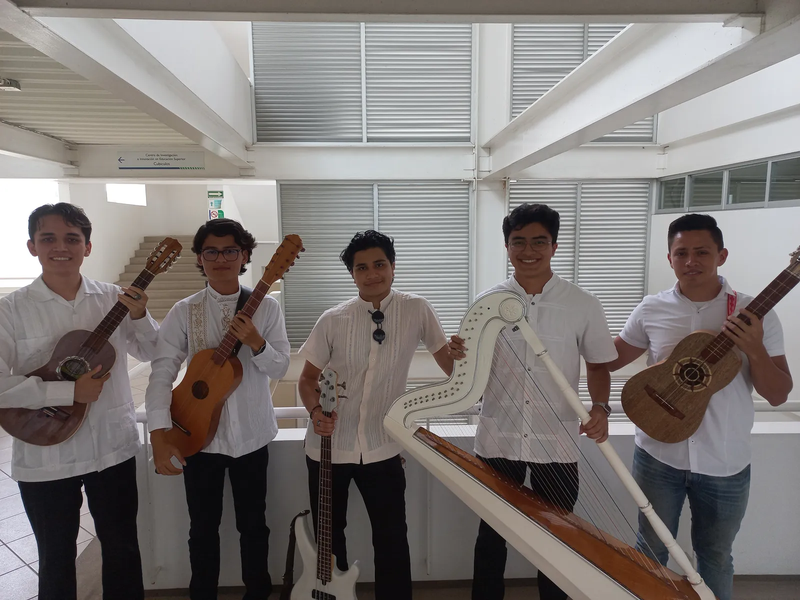
Photo: B.jars, CC BY-SA 4.0, via Wikimedia Commons
In son jarocho the tune stays the same, but the verses are made up on the spot. Every fandango has a different Bamba.
In 1958 Ritchie Valens, a 17-year-old from Los Angeles with a Mexican family, recorded it as rock and roll. The opposite happened to his version: it was fixed forever on a record. It came out as the B-side of another song, Donna. Donna reached number 2 in the US charts and La Bamba only reached 22.
A few months later, on 3 February 1959, Valens died in a small plane crash together with Buddy Holly and The Big Bopper. He was 17. People call it "the day the music died".
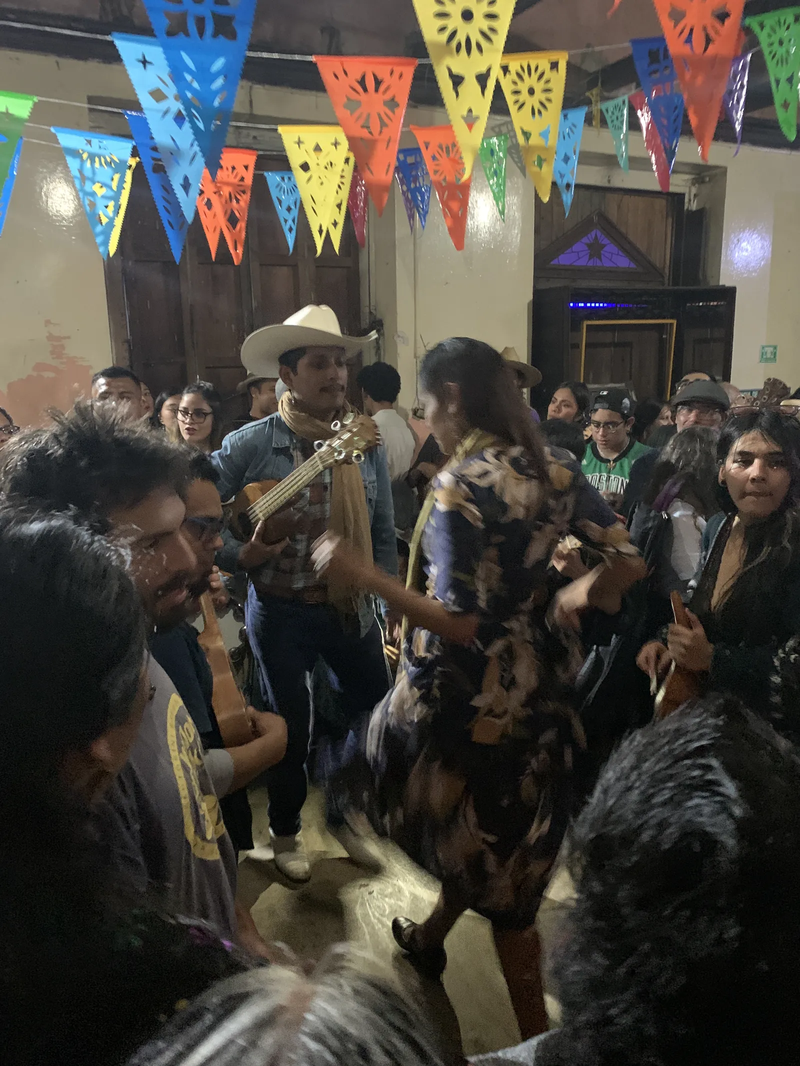
Photo: Koffermejia, CC BY-SA 4.0, via Wikimedia Commons
Musical characteristics
Play the song and count out loud: one, two, three, four. That steady beat you feel is the pulse, and here it moves fast.
Now listen to the guitar at the start. Before anyone sings, it plays a short, catchy phrase. Then it repeats it again and again under the voice. A short instrumental phrase that repeats and that you recognise straight away is called a riff.
What holds everything up is three chords: several notes sounding together, like a cushion under the melody. Here they are C, F and G, always in that order, without stopping. C sounds like home. F moves a little away. G pulls back towards home and leaves you wanting C again. That is why the loop never gets boring: every round asks for the next one. That path of chords is called a chord progression. This one uses the first, fourth and fifth degrees, written I – IV – V.
One more thing. In Veracruz this son uses a rhythm that mixes groups of three and two, called sesquiáltera. Valens put it into rock's four-beat bar. The tune is the same, but the step is different.
Facts: C major, 4/4, about 152 BPM, 2:07. Form: guitar intro, verses and chorus sung over the same loop, a guitar solo in the middle, then back to singing.
Trivia and curiosities
- The B-side won. Donna went higher in the charts, but La Bamba is the one in the US Library of Congress National Recording Registry. A chart position does not tell you how long a song will last.
- He sang in a language he did not speak. His aunt taught him the words, and he learned them by their sound. A song can carry a family's culture even when the singer no longer speaks the language.
- Same chords, different song. Twist and Shout, the one the Beatles covered, runs on the same C – F – G loop. What you learn here lets you play both.
- In 1987 it was number 1 again. The band Los Lobos recorded it for a film about Valens' life, also called La Bamba, and it reached number 1 in the US and in the UK. A cover can travel further than the original.
Guided listening
On the official audio linked in Resources (2:07).
- 0:00 — The guitar plays the riff alone. Nobody is singing yet, but the chord loop is already there.
- 0:05 — The voice comes in. The chords do not change: it is the same loop as the intro with the melody on top.
- 1:05 — The voice stops and the guitar plays a solo. Listen underneath: the C – F – G loop carries on while the guitar improvises over it.
- 1:30 — The voice returns. Until the end (2:04) there is not a single new chord. The song stops dead, with no fade-out.
Classroom activities
- Play: C – F – G – F on the ukulele, one chord per bar, and round again. Slowly at first, counting four on each chord. When it works, speed up until you can play along with the recording. The lyrics with chords are in the class session.
- Sing: the chorus is short and comes back a lot. A good place for the whole group to sing while half of them play.
- Analyse: listen to the whole song and put your hand up every time you think the chord changes. Is there any moment with a chord that is not C, F or G?
- Create: make up a new verse together over the same loop, the way they do at fandangos in Veracruz.
Key vocabulary
- Pulse — pulso
- Riff — riff: una frase corta de un instrumento que se repite
- Chord — acorde
- Chord progression — progresión de acordes
- Solo — solo
Resources
Official audio — the original 1958 recording, uploaded by the label.
Ukulele tutorial — Club Ukelele Valencia. In Spanish: the strum and an easy riff.
Ukulele tutorial with C, F and G7 — Bernadette Teaches Music. Just the three chords you need.
Guitar tutorial — JustinGuitar. The opening riff, the chords and the strumming, step by step.
Bass tutorial — Eoin Leonard. Under three minutes.
Drum tutorial — Total Drummer. Earl Palmer's groove on the 1958 record, with the Latin cowbell.
A real fandango — La Bamba in Tlacotalpan (Veracruz), with jaranas and stamping on the tarima. Compare it with Valens' version.
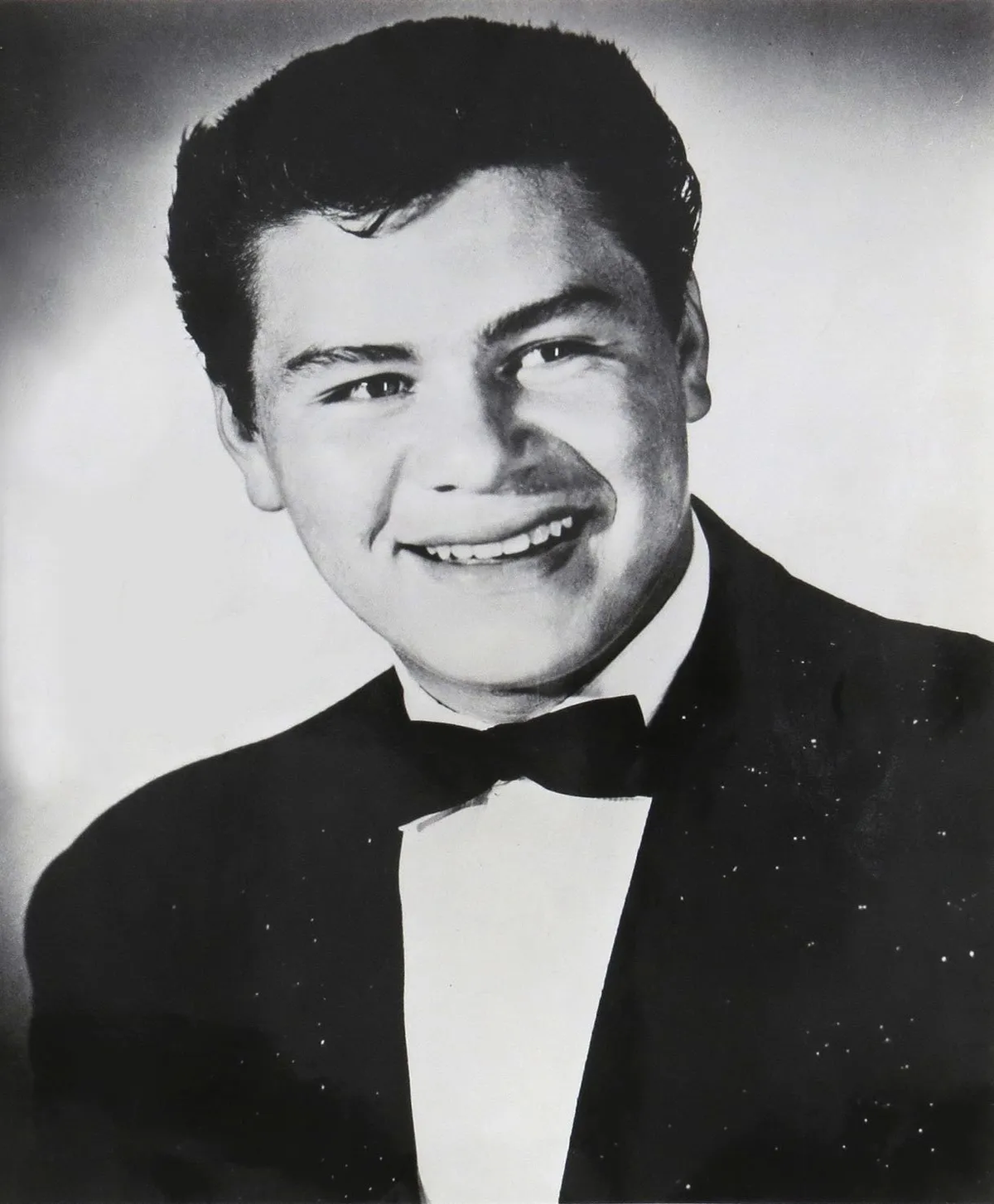
- Cover image — Ritchie Valens in a 1959 promotional photo. Foto: General Artists Corporation, dominio público, vía Wikimedia Commons
Por dónde entrar
Seguramente la has oído en una boda, en una verbena o en un anuncio, y la has cantado sin pensar de dónde venía. Lo raro es esto: el chico que la hizo famosa en todo el mundo no hablaba español. Se aprendió la letra de oído, como quien se aprende una canción en un idioma que no entiende.
Contexto histórico
La Bamba no la inventó nadie que conozcamos. Es un son jarocho, la música tradicional del sur de Veracruz, en México. Mezcla raíces españolas, indígenas y africanas, y se toca en fiestas llamadas fandangos.
En un fandango hay instrumentos de cuerda pequeños, como la jarana y el requinto, y a veces un arpa. Y hay otro instrumento que no esperarías: una plataforma de madera, la tarima, sobre la que se baila zapateando. Los pies también hacen música.
Foto: B.jars, CC BY-SA 4.0, vía Wikimedia Commons
En el son jarocho la melodía es fija, pero las estrofas se inventan en el momento. Cada fandango tiene una Bamba distinta.
En 1958, Ritchie Valens, un chico de 17 años de Los Ángeles con familia mexicana, la grabó en versión rock and roll. Le pasó lo contrario que a los músicos de Veracruz: su versión quedó fija para siempre en un disco. Salió como cara B de otra canción, Donna. Donna llegó al número 2 de las listas de Estados Unidos y La Bamba solo al 22.
Pocos meses después, el 3 de febrero de 1959, Valens murió en un accidente de avioneta junto a Buddy Holly y The Big Bopper. Tenía 17 años. A ese día lo llamaron «el día que murió la música».
Foto: Koffermejia, CC BY-SA 4.0, vía Wikimedia Commons
Cómo suena
Empieza a sonar la canción y cuenta en voz alta: uno, dos, tres, cuatro. Ese golpe regular que sientes es el pulso, y aquí va rápido.
Ahora fíjate en la guitarra del principio. Antes de que cante nadie toca una frase corta y pegadiza. Luego la repite una y otra vez por debajo de la voz. Una frase de instrumento que se repite y que reconoces enseguida se llama riff.
Lo que sostiene todo son tres acordes: varias notas que suenan a la vez y hacen de colchón para la melodía. Aquí son Do, Fa y Sol, siempre en ese orden y sin parar. Do suena a casa. Fa se aleja un poco. Sol tira hacia casa otra vez y te deja con ganas de volver a Do. Por eso el bucle no cansa: cada vuelta acaba pidiendo la siguiente. A ese camino de acordes se le llama progresión de acordes. Esta en concreto, primero, cuarto y quinto grado, se escribe I – IV – V.
Una cosa más. En Veracruz este son va en un ritmo que mezcla grupos de tres y de dos, el sesquiáltero. Valens lo pasó al compás de cuatro del rock. La melodía es la misma, pero el paso es otro.
Datos: Do mayor, 4/4, unos 152 BPM, 2:07. Forma: introducción de guitarra, estrofas y estribillo cantados sobre el mismo bucle, un solo de guitarra en el centro y vuelta a cantar.
Curiosidades
- La cara B ganó. Donna subió más alto en las listas, pero La Bamba es la que entró en el Registro Nacional de Grabaciones de la Biblioteca del Congreso de Estados Unidos. El puesto en la lista de ventas no dice cuánto va a durar una canción.
- Cantó en una lengua que no hablaba. Su tía le enseñó la letra, y él la aprendió por cómo sonaba. Una canción puede llevar la cultura de una familia aunque el cantante ya no hable el idioma.
- Mismos acordes, otra canción. Twist and Shout, la que versionaron los Beatles, va sobre el mismo bucle Do – Fa – Sol. Con lo que vas a aprender aquí puedes tocar las dos.
- En 1987 volvió a ser número 1. El grupo Los Lobos la grabó para una película sobre la vida de Valens, también llamada La Bamba, y llegó al número 1 en Estados Unidos y en el Reino Unido. Una versión puede llegar más lejos que el original.
Escucha guiada
Sobre el audio oficial enlazado en Recursos (2:07).
- 0:00 — La guitarra sola toca el riff. Todavía no canta nadie, pero ya suena el bucle de acordes.
- 0:05 — Entra la voz. Los acordes no cambian: es el mismo bucle de la introducción con la melodía encima.
- 1:05 — La voz se calla y la guitarra hace un solo. Escucha por debajo: el bucle Do – Fa – Sol sigue igual mientras la guitarra improvisa encima.
- 1:30 — Vuelve la voz. Hasta el final (2:04) no hay ni un acorde nuevo. La canción se termina de golpe, sin bajar el volumen.
Para hacer en clase
- Tocar: Do – Fa – Sol – Fa en el ukelele, un acorde por compás, y vuelta a empezar. Primero lento, contando cuatro en cada acorde. Cuando salga, sube el tempo hasta acompañar el audio. La letra con acordes está en la sesión de clase.
- Cantar: el estribillo es corto y se repite mucho. Es un buen sitio para que cante todo el grupo mientras la mitad toca.
- Analizar: escucha la canción entera y levanta la mano cada vez que creas que cambia el acorde. ¿Hay algún momento en el que aparezca un acorde que no sea Do, Fa o Sol?
- Crear: inventad entre todos una estrofa nueva sobre el mismo bucle, como se hace en los fandangos de Veracruz.
Vocabulario fundamental
- Pulso — El golpe regular que sientes al escuchar música y que marcas con el pie.
- Riff — Una frase corta de un instrumento que se repite y se reconoce enseguida.
- Acorde — Varias notas que suenan a la vez y hacen de colchón para la melodía.
- Progresión de acordes — El camino de acordes que se repite en una canción. Aquí, I – IV – V: Do, Fa y Sol.
- Solo — El momento en que un instrumento toca la melodía principal, o improvisa, mientras los demás lo acompañan.
Recursos
Audio oficial — la grabación original de 1958, subida por el sello.
Tutorial de ukelele — Club Ukelele Valencia. En castellano: el rasgueo y un riff sencillo.
Tutorial de ukelele con Do, Fa y Sol7 — Bernadette Teaches Music. En inglés, pero con los tres acordes justos.
Tutorial de guitarra — JustinGuitar. El riff del principio, los acordes y el rasgueo, por partes.
Tutorial de bajo — Eoin Leonard. Menos de tres minutos.
Tutorial de batería — Total Drummer. El ritmo de Earl Palmer en el disco de 1958, con el cencerro latino.
Un fandango de verdad — La Bamba en Tlacotalpan (Veracruz), con jaranas y zapateado en la tarima. Compárala con la de Valens.
- Portada — Ritchie Valens en una foto de promoción de 1959. Foto: General Artists Corporation, dominio público, vía Wikimedia Commons
Why this song
You have probably heard it at a wedding, a street party or in an advert, and sung along without thinking about where it came from. Here is the strange part: the boy who made it famous around the world did not speak Spanish. He learned the words by ear, the way you learn a song in a language you do not understand.
Historical context
Nobody we know of wrote La Bamba. It is a son jarocho, the traditional music of southern Veracruz, in Mexico. It mixes Spanish, Indigenous and African roots, and it is played at parties called fandangos.
A fandango has small string instruments like the jarana and the requinto, and sometimes a harp. And it has one instrument you would not expect: a wooden platform, the tarima, where people dance by stamping their feet. The feet make music too.
Photo: B.jars, CC BY-SA 4.0, via Wikimedia Commons
In son jarocho the tune stays the same, but the verses are made up on the spot. Every fandango has a different Bamba.
In 1958 Ritchie Valens, a 17-year-old from Los Angeles with a Mexican family, recorded it as rock and roll. The opposite happened to his version: it was fixed forever on a record. It came out as the B-side of another song, Donna. Donna reached number 2 in the US charts and La Bamba only reached 22.
A few months later, on 3 February 1959, Valens died in a small plane crash together with Buddy Holly and The Big Bopper. He was 17. People call it "the day the music died".
Photo: Koffermejia, CC BY-SA 4.0, via Wikimedia Commons
Musical characteristics
Play the song and count out loud: one, two, three, four. That steady beat you feel is the pulse, and here it moves fast.
Now listen to the guitar at the start. Before anyone sings, it plays a short, catchy phrase. Then it repeats it again and again under the voice. A short instrumental phrase that repeats and that you recognise straight away is called a riff.
What holds everything up is three chords: several notes sounding together, like a cushion under the melody. Here they are C, F and G, always in that order, without stopping. C sounds like home. F moves a little away. G pulls back towards home and leaves you wanting C again. That is why the loop never gets boring: every round asks for the next one. That path of chords is called a chord progression. This one uses the first, fourth and fifth degrees, written I – IV – V.
One more thing. In Veracruz this son uses a rhythm that mixes groups of three and two, called sesquiáltera. Valens put it into rock's four-beat bar. The tune is the same, but the step is different.
Facts: C major, 4/4, about 152 BPM, 2:07. Form: guitar intro, verses and chorus sung over the same loop, a guitar solo in the middle, then back to singing.
Trivia and curiosities
- The B-side won. Donna went higher in the charts, but La Bamba is the one in the US Library of Congress National Recording Registry. A chart position does not tell you how long a song will last.
- He sang in a language he did not speak. His aunt taught him the words, and he learned them by their sound. A song can carry a family's culture even when the singer no longer speaks the language.
- Same chords, different song. Twist and Shout, the one the Beatles covered, runs on the same C – F – G loop. What you learn here lets you play both.
- In 1987 it was number 1 again. The band Los Lobos recorded it for a film about Valens' life, also called La Bamba, and it reached number 1 in the US and in the UK. A cover can travel further than the original.
Guided listening
On the official audio linked in Resources (2:07).
- 0:00 — The guitar plays the riff alone. Nobody is singing yet, but the chord loop is already there.
- 0:05 — The voice comes in. The chords do not change: it is the same loop as the intro with the melody on top.
- 1:05 — The voice stops and the guitar plays a solo. Listen underneath: the C – F – G loop carries on while the guitar improvises over it.
- 1:30 — The voice returns. Until the end (2:04) there is not a single new chord. The song stops dead, with no fade-out.
Classroom activities
- Play: C – F – G – F on the ukulele, one chord per bar, and round again. Slowly at first, counting four on each chord. When it works, speed up until you can play along with the recording. The lyrics with chords are in the class session.
- Sing: the chorus is short and comes back a lot. A good place for the whole group to sing while half of them play.
- Analyse: listen to the whole song and put your hand up every time you think the chord changes. Is there any moment with a chord that is not C, F or G?
- Create: make up a new verse together over the same loop, the way they do at fandangos in Veracruz.
Key vocabulary
- Pulse — pulso
- Riff — riff: una frase corta de un instrumento que se repite
- Chord — acorde
- Chord progression — progresión de acordes
- Solo — solo
Resources
Official audio — the original 1958 recording, uploaded by the label.
Ukulele tutorial — Club Ukelele Valencia. In Spanish: the strum and an easy riff.
Ukulele tutorial with C, F and G7 — Bernadette Teaches Music. Just the three chords you need.
Guitar tutorial — JustinGuitar. The opening riff, the chords and the strumming, step by step.
Bass tutorial — Eoin Leonard. Under three minutes.
Drum tutorial — Total Drummer. Earl Palmer's groove on the 1958 record, with the Latin cowbell.
A real fandango — La Bamba in Tlacotalpan (Veracruz), with jaranas and stamping on the tarima. Compare it with Valens' version.
- Cover image — Ritchie Valens in a 1959 promotional photo. Foto: General Artists Corporation, dominio público, vía Wikimedia Commons