Contenidos
Knockin' on Heaven's Door — Bob Dylan (1973)
A two-and-a-half-minute song written for one scene in a western. Two short verses, four chords and a chorus that repeats one line: that is enough for everyone from Dylan to Guns N' Roses to sing it.
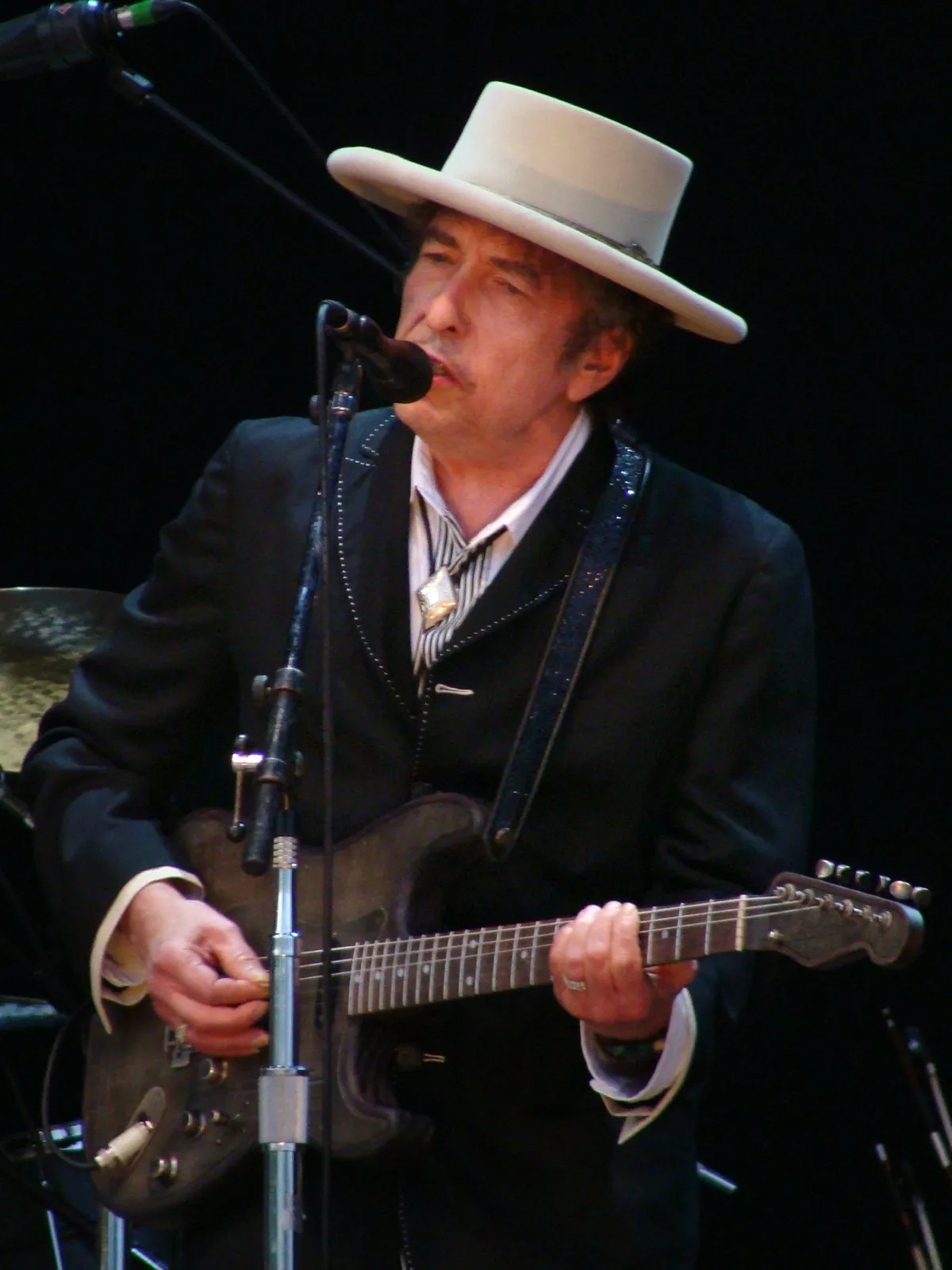
🏷️ Ficha musical
Why it's in this book
In November the Year 9 (3º ESO) anchor song is "Stand by Me", and the month's second song is chosen by the band on duty. "Knockin' on Heaven's Door" is one of the two candidates, together with "Let It Be". It used to be in Year 10 (4º ESO), but it is more of a choir song than a band song, so it has moved down to Year 9. It is slow, it has four chords and a chorus that is crying out for a second part: "knock, knock, knockin'" in two voices. In class we play it in G, just like Dylan's record: G, D, A minor and C. Nothing needs transposing. In the room with nothing, we sing the chorus a cappella, first in unison and then in two parts, with a slow beat marked with body percussion; in the ukulele room, we play the four chords; in the music room, the electric guitar plays the chords as arpeggios, note by note, and the keyboard holds the harmony.
Why this song
You have probably heard it in the Guns N' Roses version, with electric guitars and more than five minutes long. The original is by Bob Dylan, from 1973, and it lasts less than half that: two and a half minutes.
The question on this page is: how can such a short, simple song end up in the repertoire of such different bands?
Historical context
Bob Dylan is an American singer-songwriter. In the 1960s he became famous with protest songs, an acoustic guitar and a harmonica. In 2016 he was awarded the Nobel Prize in Literature, the first ever given to a musician.
In 1973 the director Sam Peckinpah made a western, "Pat Garrett and Billy the Kid". Dylan wrote the soundtrack. "Knockin' on Heaven's Door" was written for one specific scene: a sheriff is dying, shot, by a river, and his wife is watching him. The lyrics are what that man might be thinking. That is why it is so short: it lasts as long as the scene.
Dylan's biographer Clinton Heylin described it as "an exercise in splendid simplicity". It came out as a single in August 1973 and reached the top 10 in several countries.
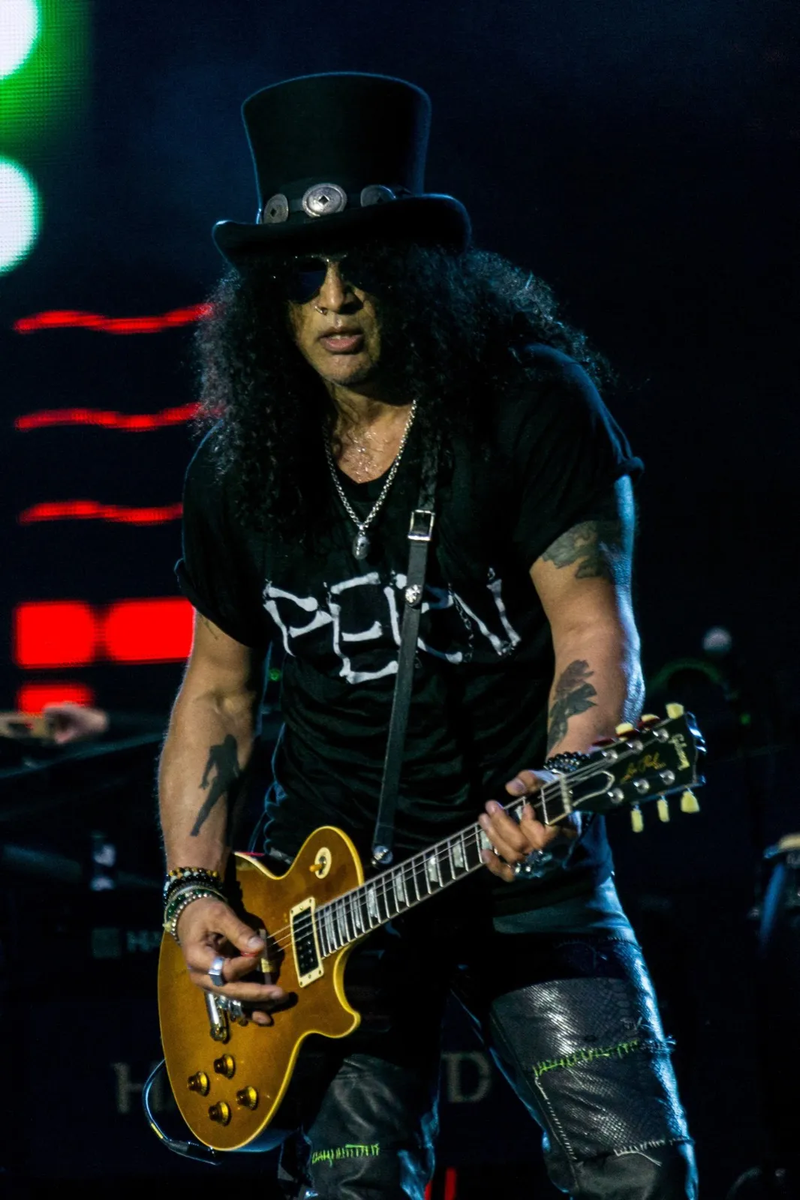
Foto: Raph_PH, CC BY 2.0, vía Wikimedia Commons
This is Slash, the Guns N' Roses guitarist, at a 2017 concert. The band started playing the song live in 1987. They recorded it in the studio in 1990 and released it on their album "Use Your Illusion II" in 1991. Their version reached number 2 in the UK and number 1 in several European countries.
Musical characteristics
Four chords in two phrases. The whole song rests on four chords: G, D and A minor, then G, D and C. The first phrase ends on A minor, which sounds open, like a question. The second ends on C, which sounds more closed. This chord progression never changes: verse and chorus use the same one.
A chorus that is one single line. The chorus repeats "knock, knock, knockin' on heaven's door" four times. There are no other words. A short line, repeated, with a held note: that is what lets an audience sing it without ever having learned it. On Dylan's record, three backing singers sing the chorus with him.
Few instruments. The 1973 recording has an acoustic guitar, another guitar, a bass, very soft drums and a harmonium, a small pump organ that sounds like a village church. Everything is slow: 70 beats per minute.
The Guns N' Roses version. The same four chords, but with electric guitars and hard-hitting drums. The song is twice as long, has guitar solos and sounds a semitone lower, in F sharp. It is the same song, turned into a stadium anthem. A new recording of a song that already exists is called a cover.
How the class band plays it. The electric guitar does not strum: it plays the chords as arpeggios, the notes of the chord one after another, not all at once. That leaves room for the voices in the chorus.
Hard facts: G major, 4/4, 70 beats per minute, 2:32. Form: intro, verse, chorus, verse, chorus.
Guided listening
Play Dylan's audio first. In the intro, listen to the chords and say quietly "G, D, A" and then "G, D, C".
In the first verse, look for the harmonium: a long sound, like a small organ, under the voice.
When the chorus arrives, count how many times the line repeats. Notice who sings it: Dylan is not alone.
Now play the Guns N' Roses version. Listen to the lead guitar between the sung lines: what is it doing that was not there in Dylan's version?
Compare the two choruses. Which one sounds more like something a stadium would sing?
Trivia and curiosities
- The song was written for a scene that lasts a few minutes. That is why it only has two verses: it did not need more.
- Eric Clapton recorded it in 1975 in a reggae style. Same chords, a different rhythm. A simple song can survive style changes that a complicated one could not.
- Guns N' Roses first recorded it for the soundtrack of "Days of Thunder", a 1990 car-racing film with Tom Cruise. A year later it came out on their album.
- In 2004 Rolling Stone magazine placed it at number 190 in its list of the 500 greatest songs of all time.
Classroom activities
- Chorus in unison. The whole class sings the chorus a cappella, in unison. Boys an octave lower. A slow beat with your feet: 70 per minute.
- "Knock, knock, knockin'" in two parts. One group sings the melody. The other sings the same line a third lower. Hint: the note for the third is in the chord playing at that moment.
- The four chords on ukulele. G, D, A minor; G, D, C. One chord per bar. Start with one strum per beat. When it works, sing on top.
- Compare versions. Listen to both versions and fill in a three-row table: length, instruments and what the guitar does. What has changed and what has stayed the same?
- Band. In the music room, the electric guitar plays the chords as arpeggios and the keyboard holds them with long notes, like Dylan's harmonium.
Key vocabulary
- Chord progression — progresión de acordes
- Harmonium — armonio: pequeño órgano de fuelle
- Arpeggio — arpegio: las notas del acorde una detrás de otra
- Cover — versión
Resources
Bob Dylan's official audio — The 1973 recording. There is no music video for this version.
Guns N' Roses version, to compare — On the band's official channel.
Ukulele tutorial — Ukulele Underground. Play and sing along.
Guitar tutorial — Andy Guitar. The four chords, explained for beginners.
Piano tutorial — Piano with Nate. An easy accompaniment.
Por qué está en este libro
En noviembre la canción ancla de 3º es «Stand by Me», y la segunda canción del mes la elige la banda del turno. «Knockin' on Heaven's Door» es una de las dos candidatas, junto a «Let It Be». Antes estaba en 4º, pero es una canción de coro más que de banda, y por eso ha bajado a 3º. Es lenta, tiene cuatro acordes y un estribillo que pide a gritos una segunda voz: «knock, knock, knockin'» a dos voces. En clase se toca en sol, igual que el disco de Dylan: sol, re, la menor y do. No hay que transportar nada. En el aula sin nada se canta el estribillo a capela, primero al unísono y luego a dos voces, con un pulso lento marcado con el cuerpo; en el aula con ukelele se tocan los cuatro acordes; en el aula de música, la guitarra eléctrica toca los acordes en arpegio, nota a nota, y el teclado sostiene la armonía.
Por dónde entrar
Es probable que la hayas oído en la versión de Guns N' Roses, con guitarras eléctricas y más de cinco minutos. La original es de Bob Dylan, de 1973, y dura menos de la mitad: dos minutos y medio.
La pregunta de esta página es: ¿cómo puede una canción tan corta y tan sencilla acabar en el repertorio de bandas tan distintas?
Contexto histórico
Bob Dylan es un cantautor estadounidense. En los años sesenta se hizo famoso con canciones de protesta, con una guitarra acústica y una armónica. En 2016 le dieron el Premio Nobel de Literatura, el primero para un músico.
En 1973 el director Sam Peckinpah rodó una película del Oeste, «Pat Garrett y Billy the Kid». Dylan escribió la banda sonora. «Knockin' on Heaven's Door» se escribió para una escena concreta: un sheriff está muriendo, herido de bala, junto a un río, y su mujer lo mira. La letra es lo que podría pensar ese hombre. Por eso es tan corta: dura lo que dura la escena.
El biógrafo de Dylan Clinton Heylin la describió como «un ejercicio de espléndida sencillez». Salió como sencillo en agosto de 1973 y llegó al top 10 en varios países.
Foto: Raph_PH, CC BY 2.0, vía Wikimedia Commons
Este es Slash, el guitarrista de Guns N' Roses, en un concierto de 2017. La banda empezó a tocar la canción en directo en 1987. La grabó en estudio en 1990 y la publicó en su disco «Use Your Illusion II» en 1991. Su versión llegó al número 2 en el Reino Unido y al número 1 en varios países de Europa.
Cómo suena
Cuatro acordes en dos frases. Toda la canción se apoya en cuatro acordes: sol, re y la menor, y después sol, re y do. La primera frase termina en la menor, que suena abierta, como una pregunta. La segunda termina en do, que suena más cerrada. Esta progresión de acordes no cambia en toda la canción: estrofa y estribillo usan la misma.
Un estribillo que es una sola frase. El estribillo repite «knock, knock, knockin' on heaven's door» cuatro veces. No hay más letra. Una frase corta, repetida, con una nota que se mantiene: eso es lo que hace que el público la cante sin haberla aprendido. En el disco de Dylan, tres coristas cantan el estribillo con él.
Pocos instrumentos. En la grabación de 1973 hay una guitarra acústica, otra guitarra, un bajo, una batería muy suave y un armonio, un pequeño órgano de fuelle que suena a iglesia de pueblo. Todo es lento: 70 pulsos por minuto.
La versión de Guns N' Roses. Los mismos cuatro acordes, pero con guitarras eléctricas y una batería que pega fuerte. La canción dura el doble, tiene solos de guitarra y suena un semitono más grave, en fa sostenido. Es la misma canción, convertida en himno de estadio. Una grabación nueva de una canción que ya existe se llama versión.
Cómo la toca la banda en clase. La guitarra eléctrica no rasguea: toca los acordes en arpegio, las notas del acorde una detrás de otra, no todas a la vez. Así deja sitio a las voces del estribillo.
Datos duros: sol mayor, 4/4, 70 pulsos por minuto, 2:32. Forma: intro, estrofa, estribillo, estrofa, estribillo.
Escucha guiada
Pon primero el audio de Dylan. En la intro, escucha los acordes y di en voz baja «sol, re, la» y luego «sol, re, do».
En la primera estrofa, busca el armonio: un sonido largo, como de órgano pequeño, debajo de la voz.
Cuando llegue el estribillo, cuenta cuántas veces se repite la frase. Fíjate en quién la canta: Dylan no está solo.
Ahora pon la versión de Guns N' Roses. Escucha la guitarra solista entre frase y frase: ¿qué hace que en la de Dylan no estaba?
Compara los dos estribillos. ¿Cuál se parece más a algo que cantaría un estadio?
Curiosidades
- La canción se escribió para una escena que dura pocos minutos. Por eso tiene solo dos estrofas: no le hacía falta más.
- Eric Clapton la grabó en 1975 en estilo reggae. Mismos acordes, otro ritmo. Una canción sencilla aguanta cambios de estilo que una complicada no aguantaría.
- Guns N' Roses la grabó primero para la banda sonora de «Días de trueno», una película de carreras de coches con Tom Cruise, en 1990. Un año después salió en su disco.
- La revista Rolling Stone la incluyó en 2004 entre las 500 mejores canciones de todos los tiempos, en el puesto 190.
Para hacer en clase
- Estribillo al unísono. Toda la clase canta el estribillo a capela, al unísono. Chicos una octava abajo. Pulso lento con los pies: 70 por minuto.
- «Knock, knock, knockin'» a dos voces. Un grupo canta la melodía. El otro canta la misma frase una tercera por debajo. Pista: la nota de la tercera está en el acorde que suena en ese momento.
- Los cuatro acordes en ukelele. Sol, re, la menor; sol, re, do. Un acorde por compás. Empezad con un golpe por pulso. Cuando salga, cantad encima.
- Comparar versiones. Escuchad las dos versiones y rellenad una tabla de tres filas: duración, instrumentos y qué hace la guitarra. ¿Qué ha cambiado y qué se ha quedado igual?
- Banda. En el aula de música, la eléctrica toca los acordes en arpegio y el teclado los sostiene con notas largas, como el armonio de Dylan.
Vocabulario fundamental
- Progresión de acordes — Una serie de acordes que se repite en el mismo orden. Aquí: sol, re, la menor; sol, re, do.
- Armonio — Un pequeño órgano de fuelle. Suena a iglesia de pueblo.
- Arpegio — Tocar las notas de un acorde una detrás de otra, en lugar de todas a la vez.
- Versión — Una grabación nueva de una canción que ya existía, hecha por otros músicos.
Recursos
Audio oficial de Bob Dylan — La grabación de 1973. No hay videoclip de esta versión.
Versión de Guns N' Roses, para comparar — En el canal oficial de la banda.
Tutorial de ukelele — Ukulele Underground. Para tocar y cantar a la vez.
Tutorial de guitarra — Andy Guitar. Los cuatro acordes, explicados para principiantes.
Tutorial de piano — Piano with Nate. Acompañamiento fácil.
Why it's in this book
In November the Year 9 (3º ESO) anchor song is "Stand by Me", and the month's second song is chosen by the band on duty. "Knockin' on Heaven's Door" is one of the two candidates, together with "Let It Be". It used to be in Year 10 (4º ESO), but it is more of a choir song than a band song, so it has moved down to Year 9. It is slow, it has four chords and a chorus that is crying out for a second part: "knock, knock, knockin'" in two voices. In class we play it in G, just like Dylan's record: G, D, A minor and C. Nothing needs transposing. In the room with nothing, we sing the chorus a cappella, first in unison and then in two parts, with a slow beat marked with body percussion; in the ukulele room, we play the four chords; in the music room, the electric guitar plays the chords as arpeggios, note by note, and the keyboard holds the harmony.
Why this song
You have probably heard it in the Guns N' Roses version, with electric guitars and more than five minutes long. The original is by Bob Dylan, from 1973, and it lasts less than half that: two and a half minutes.
The question on this page is: how can such a short, simple song end up in the repertoire of such different bands?
Historical context
Bob Dylan is an American singer-songwriter. In the 1960s he became famous with protest songs, an acoustic guitar and a harmonica. In 2016 he was awarded the Nobel Prize in Literature, the first ever given to a musician.
In 1973 the director Sam Peckinpah made a western, "Pat Garrett and Billy the Kid". Dylan wrote the soundtrack. "Knockin' on Heaven's Door" was written for one specific scene: a sheriff is dying, shot, by a river, and his wife is watching him. The lyrics are what that man might be thinking. That is why it is so short: it lasts as long as the scene.
Dylan's biographer Clinton Heylin described it as "an exercise in splendid simplicity". It came out as a single in August 1973 and reached the top 10 in several countries.
Foto: Raph_PH, CC BY 2.0, vía Wikimedia Commons
This is Slash, the Guns N' Roses guitarist, at a 2017 concert. The band started playing the song live in 1987. They recorded it in the studio in 1990 and released it on their album "Use Your Illusion II" in 1991. Their version reached number 2 in the UK and number 1 in several European countries.
Musical characteristics
Four chords in two phrases. The whole song rests on four chords: G, D and A minor, then G, D and C. The first phrase ends on A minor, which sounds open, like a question. The second ends on C, which sounds more closed. This chord progression never changes: verse and chorus use the same one.
A chorus that is one single line. The chorus repeats "knock, knock, knockin' on heaven's door" four times. There are no other words. A short line, repeated, with a held note: that is what lets an audience sing it without ever having learned it. On Dylan's record, three backing singers sing the chorus with him.
Few instruments. The 1973 recording has an acoustic guitar, another guitar, a bass, very soft drums and a harmonium, a small pump organ that sounds like a village church. Everything is slow: 70 beats per minute.
The Guns N' Roses version. The same four chords, but with electric guitars and hard-hitting drums. The song is twice as long, has guitar solos and sounds a semitone lower, in F sharp. It is the same song, turned into a stadium anthem. A new recording of a song that already exists is called a cover.
How the class band plays it. The electric guitar does not strum: it plays the chords as arpeggios, the notes of the chord one after another, not all at once. That leaves room for the voices in the chorus.
Hard facts: G major, 4/4, 70 beats per minute, 2:32. Form: intro, verse, chorus, verse, chorus.
Guided listening
Play Dylan's audio first. In the intro, listen to the chords and say quietly "G, D, A" and then "G, D, C".
In the first verse, look for the harmonium: a long sound, like a small organ, under the voice.
When the chorus arrives, count how many times the line repeats. Notice who sings it: Dylan is not alone.
Now play the Guns N' Roses version. Listen to the lead guitar between the sung lines: what is it doing that was not there in Dylan's version?
Compare the two choruses. Which one sounds more like something a stadium would sing?
Trivia and curiosities
- The song was written for a scene that lasts a few minutes. That is why it only has two verses: it did not need more.
- Eric Clapton recorded it in 1975 in a reggae style. Same chords, a different rhythm. A simple song can survive style changes that a complicated one could not.
- Guns N' Roses first recorded it for the soundtrack of "Days of Thunder", a 1990 car-racing film with Tom Cruise. A year later it came out on their album.
- In 2004 Rolling Stone magazine placed it at number 190 in its list of the 500 greatest songs of all time.
Classroom activities
- Chorus in unison. The whole class sings the chorus a cappella, in unison. Boys an octave lower. A slow beat with your feet: 70 per minute.
- "Knock, knock, knockin'" in two parts. One group sings the melody. The other sings the same line a third lower. Hint: the note for the third is in the chord playing at that moment.
- The four chords on ukulele. G, D, A minor; G, D, C. One chord per bar. Start with one strum per beat. When it works, sing on top.
- Compare versions. Listen to both versions and fill in a three-row table: length, instruments and what the guitar does. What has changed and what has stayed the same?
- Band. In the music room, the electric guitar plays the chords as arpeggios and the keyboard holds them with long notes, like Dylan's harmonium.
Key vocabulary
- Chord progression — progresión de acordes
- Harmonium — armonio: pequeño órgano de fuelle
- Arpeggio — arpegio: las notas del acorde una detrás de otra
- Cover — versión
Resources
Bob Dylan's official audio — The 1973 recording. There is no music video for this version.
Guns N' Roses version, to compare — On the band's official channel.
Ukulele tutorial — Ukulele Underground. Play and sing along.
Guitar tutorial — Andy Guitar. The four chords, explained for beginners.
Piano tutorial — Piano with Nate. An easy accompaniment.