Contenidos
Hit the Road Jack — Ray Charles (1961)
Four chords walking downstairs, one step at a time, and a whole song built out of an argument: one person throws another out of the house, and the backing singers side with the one doing the throwing.
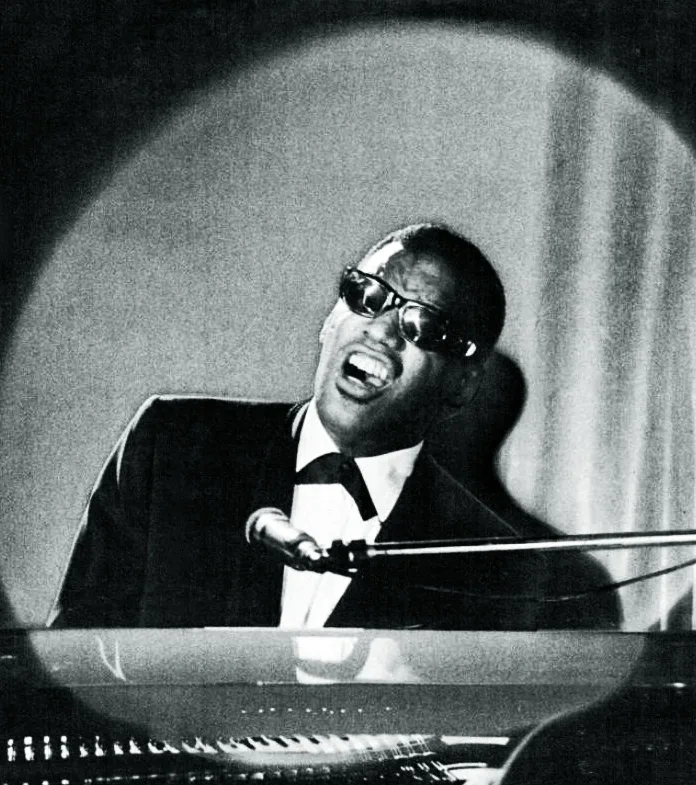
🏷️ Ficha musical
Why this song
Somebody is being thrown out, and he barely gets a word in. He sings a line; the backing singers answer. Count how many lines each side gets before the song ends.
That is the first thing to notice, because the chords are doing the same thing as the argument. They go down, down, down, and then they drop you back at the top to fall again. Nobody wins, and nothing settles.
Stand by Me, from the same year, is also built on four chords. That turn lifts you. This one drops you.
Historical context
Ray Charles recorded it in June 1961 and ABC-Paramount released it in August, with "The Danger Zone" on the B-side. Sid Feller produced it. On 9 October it reached number one in the United States and stayed two weeks; on the R&B chart it held for five.
The song was not his, though. Percy Mayfield wrote it — a rhythm and blues singer — and recorded it first, in 1960, as an a cappella demo: his voice alone, with no instrument behind it. He sent it like that to Art Rupe, a record executive. Everything you recognise today — the piano, the horns, the singers — was added afterwards.
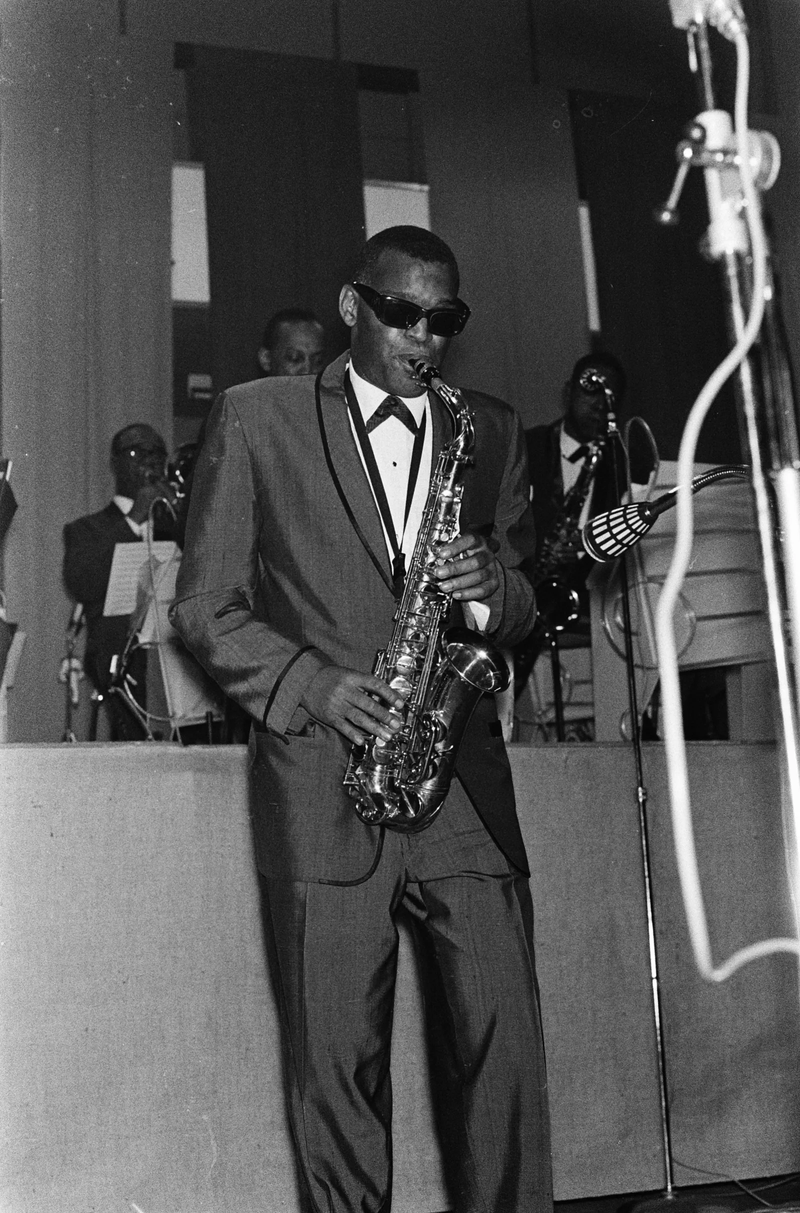
Concierto nocturno de Ray Charles en el RAI de Ámsterdam, 11 de mayo de 1963. Foto: Hugo van Gelderen / Anefo, CC0, vía Wikimedia Commons
Look behind Ray Charles in the photo: a full orchestra, with music stands and a horn section. In 1961 a record like this was not made by four friends in a rehearsal room. It was made by a payroll of musicians and a producer deciding who comes in and when.
Musical characteristics
Pick up an instrument and play four notes in a row: A, G, F, E. You go down four times, and each time you land on the note next door, never skipping one. That is exactly what the bass does for the whole two minutes.
On top of each of those notes there is a chord: Am – G – F – E. Moving like that, to the chord next door with no jumps, is called moving by step. And a string of chords one after another is a progression.
This particular progression is old, and it is Spanish. Flamenco plays it constantly and calls it playing por arriba: Am, G, F, E, the same four. Its name in the books is the Andalusian cadence.
There is no record of Ray Charles taking it from flamenco, and he probably never knew the name existed. The staircase is simple enough to turn up on its own in musics that have never met.
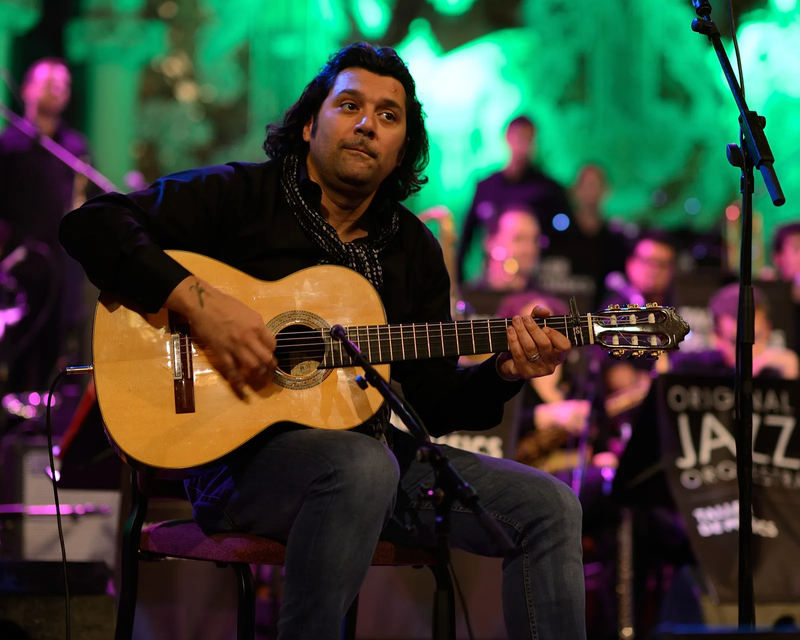
El guitarrista Josemi Carmona. Foto: Rai Fernandes Foto, CC BY 3.0, vía Wikimedia Commons
One detail explains the rest. The last chord, E, is major, even though the song is in A minor. To make it major you need a G sharp, and that G sharp does not belong to the A minor scale: it is a visitor. That outside note pulls towards A harder than any other, so the turn never finishes — it pushes you back to the start. That pulling note is the leading note.
The other half of the song is not in the chords, it is in the casting. Ray Charles sings a line. The backing singers answer with another. They never sing together: first one, then the others, like an argument where each side waits its turn. That is call and response.
And the voice answering is not filler. It is Margie Hendrix, one of the Raelettes, Ray Charles's backing group. Listen to which of the two sounds more certain.
Hard facts: A minor, 4/4, about 171 BPM, 2:00.
Trivia and curiosities
- The first version had no instruments at all. Percy Mayfield recorded it singing alone, a cappella, to show it to a record executive. A song exists before its arrangement: what gets written are the notes and the words, not the sound of the record.
- The person who wrote it and the person who sang it are not the same, and the one who gets the credit is the second. When you look up who made a song, the cover rarely tells you the whole story.
- The same four descending notes hold up the Lamento della Ninfa Monteverdi published in 1638, three centuries earlier, and they are the ones flamenco plays por arriba. A progression has no nationality and no date: it turns up in places that had never heard of each other, and almost always underneath somebody lamenting.
- The song got an answer on another record. A group called The Chantels released "Well, I Told You" replying to it, and it reached number 29. The call and response walked out of the studio and carried on in the shops.
- It lasts two minutes. In that time there is no new chorus, no change of key, no bridge: the same four chords from start to finish. Everything that happens, happens in the voices.
Classroom activities
- Play: the full turn, two beats per chord. On ukulele, Am – G – F – E; the bass plays only the four notes A, G, F, E, going down. Start at half speed and work up to 170 with the metronome.
- Split the class in two: half do the call, half do the response. Never together. Swap roles on the second time round, so everyone does both jobs.
- Analyse: a closed question. Of the four chords, which one contains a note that is not in the A minor scale? Find it by playing the scale and comparing, then say what that note does to your ear when the first chord comes back.
- Create: four chords of your own going down by step from a different note, for example Em – D – C – B. Over them, one line of call and one of response. You copy the procedure, not the song.
Key vocabulary
- Step (moving by step) — grados conjuntos: pasar a la nota o al acorde de al lado, sin saltar
- Progression — progresión: serie de acordes encadenados que se repite
- Andalusian cadence — cadencia andaluza: Lam – Sol – Fa – Mi, la vuelta que el flamenco toca por arriba
- Leading note — sensible: la nota que tira hacia el primer acorde
- Call and response — llamada y respuesta
Resources
In the theory and history book — these four chords fit ¿Cuándo empieza una melodía a decir de dónde eres?, because they belong to Andalusia and to Los Angeles at the same time; and the song works as an example in ¿Cómo sabes por dónde vas en una música que oyes por primera vez?, where what orients you is not the harmony but who is singing.
Official video
Ukulele tutorial — The Ukulele Teacher, easy version with the four chords.
Bass tutorial — BassLicks, beginner lesson. This is the line that goes down.
Guitar tutorial — Jon MacLennan, a complete free lesson.
Drums: full transcription — Jazz Drummer's Corner. Not a step-by-step lesson: it is the score scrolling on screen while the track plays, so you can copy the pattern.
- Tab — https://www.songsterr.com/a/wsa/ray-charles-hit-the-road-jack-tab-s51622
Por dónde entrar
Ponte esta canción justo después de Stand by Me. Son del mismo año, 1961, y las dos se hacen con cuatro acordes. No se parecen en nada.
La vuelta de Stand by Me te levanta: llegas al final y te apetece volver a empezar. Esta te deja caer. Los cuatro acordes van bajando escalón a escalón y, cuando llegas abajo, te devuelven arriba solo para volver a caer.
Prueba a tararear los dos finales seguidos. No hace falta saber teoría para notar que uno abre y el otro cierra una puerta.
Contexto histórico
Ray Charles la grabó en junio de 1961 y ABC-Paramount la publicó en agosto, con «The Danger Zone» en la cara B. La produjo Sid Feller. El 9 de octubre llegó al número uno de Estados Unidos y estuvo dos semanas ahí; en la lista de R&B aguantó cinco.
Pero la canción no era suya. La escribió Percy Mayfield, un cantante de rhythm and blues, y la grabó él primero, en 1960, en una maqueta a capela: su voz sola, sin un solo instrumento detrás. Se la mandó así a Art Rupe, un directivo de discos. Todo lo que hoy reconoces —el piano, los metales, las coristas— se añadió después.
Concierto nocturno de Ray Charles en el RAI de Ámsterdam, 11 de mayo de 1963. Foto: Hugo van Gelderen / Anefo, CC0, vía Wikimedia Commons
Fíjate en la foto: detrás de Ray Charles hay una orquesta entera, con sus atriles y su sección de metales. En 1961 un disco así no lo hacían cuatro amigos en un local. Lo hacía una plantilla de músicos a sueldo, con un productor decidiendo quién entra y cuándo.
Cómo suena
Coge un instrumento y toca estas cuatro notas seguidas: la, sol, fa, mi. Bajas cuatro veces, y cada vez caes a la nota de al lado, sin saltar ninguna. Eso es exactamente lo que hace el bajo de esta canción durante los dos minutos que dura.
Encima de cada una de esas notas hay un acorde: Lam – Sol – Fa – Mi. Moverse así, de un acorde al de al lado sin dar saltos, se llama ir por grados conjuntos. Y una serie de acordes encadenados es una progresión.
Esta progresión en concreto es vieja y es de aquí. El flamenco la toca constantemente y la llama tocar por arriba: Lam, Sol, Fa, Mi, los mismos cuatro. Su nombre en los libros es cadencia andaluza.
No está documentado que Ray Charles la cogiera del flamenco, y lo más probable es que ni siquiera supiera que ese nombre existía. La escalera es tan simple que aparece por su cuenta en músicas que no se conocen entre sí.
El guitarrista Josemi Carmona. Foto: Rai Fernandes Foto, CC BY 3.0, vía Wikimedia Commons
Hay un detalle que lo explica todo. El último acorde, Mi, es mayor, aunque la canción esté en La menor. Para que suene mayor hay que tocar un sol sostenido, y ese sol sostenido no está en la escala de La menor: es un invitado.
Esa nota de fuera tira hacia el La con una fuerza que no tiene ninguna otra. Por eso la vuelta no acaba nunca: te empuja otra vez al principio. A esa nota que tira se la llama sensible.
La otra mitad de la canción no está en los acordes, está en el reparto. Ray Charles canta una frase. Las coristas le contestan otra. Nunca cantan a la vez: primero uno, después las otras, como una discusión en la que cada uno espera su turno. Eso es llamada y respuesta.
Y la que contesta no es una voz de relleno. Es Margie Hendrix, una de las Raelettes, el grupo de coristas de Ray Charles. Escucha quién de los dos suena más convencido.
Datos duros: La menor, 4/4, unos 171 BPM, 2:00.
Curiosidades
- La versión original no tenía instrumentos. Percy Mayfield la grabó cantando solo, a capela, para enseñársela a un directivo de discos. Una canción existe antes que su arreglo: lo que se escribe son las notas y la letra, no el sonido del disco.
- El que la escribió y el que la cantó no son la misma persona, y el que se lleva el nombre es el segundo. Cuando busques quién hizo una canción, la portada casi nunca te lo dice entero.
- Las mismas cuatro notas que bajan aquí sostienen el Lamento della Ninfa que Monteverdi publicó en 1638, tres siglos antes, y son las que el flamenco toca por arriba. Una progresión no tiene nacionalidad ni fecha: aparece en sitios que no se conocían entre sí, y casi siempre debajo de alguien que se lamenta.
- La canción tuvo respuesta en otro disco. Un grupo, The Chantels, sacó «Well, I Told You» contestándole, y llegó al puesto 29. La llamada y respuesta se salió del estudio y siguió en las tiendas.
- Dura dos minutos. En ese tiempo no hay estribillo nuevo, ni cambio de tonalidad, ni puente: son los mismos cuatro acordes del principio al final. Todo lo que pasa, pasa en las voces.
Para hacer en clase
- Tocar: la vuelta completa, dos tiempos por acorde. En ukelele, Lam – Sol – Fa – Mi; el bajo hace solo las cuatro notas la, sol, fa, mi, bajando. Empezad a la mitad de velocidad y subid hasta los 170 con el metrónomo.
- Repartir el grupo en dos: media clase hace la llamada y la otra media la respuesta. No se canta a la vez nunca. Cambiad los papeles a la segunda vuelta, para que todos hagan las dos cosas.
- Analizar: pregunta cerrada. De los cuatro acordes, ¿cuál lleva una nota que no está en la escala de La menor? Búscala tocando la escala y comparando, y di qué le hace esa nota al oído cuando vuelve el primer acorde.
- Crear: cuatro acordes vuestros que bajen por grados conjuntos desde otra nota, por ejemplo Mim – Re – Do – Si. Encima, una frase de llamada y otra de respuesta. Lo que se copia es el procedimiento, no la canción.
Vocabulario fundamental
- Grados conjuntos — Moverse a la nota o al acorde de al lado, sin saltar. Es lo que hace que esto suene a escalera y no a salto.
- Progresión — Una serie de acordes encadenados que se repite. Aquí son cuatro y no cambian nunca.
- Cadencia andaluza — La progresión Lam – Sol – Fa – Mi, la que el flamenco toca por arriba. Suena a despedida porque todo en ella baja.
- Sensible — La nota que tira hacia el primer acorde. En el Mi mayor de esta canción es el sol sostenido, y es lo único que impide que la vuelta se pare.
- Llamada y respuesta — Uno canta una frase y otro le contesta, por turnos, sin pisarse.
Recursos
En el libro de teoría e historia — estos cuatro acordes vienen bien en ¿Cuándo empieza una melodía a decir de dónde eres?, porque son a la vez de Andalucía y de Los Ángeles; y la canción sirve de ejemplo en ¿Cómo sabes por dónde vas en una música que oyes por primera vez?, donde lo que te orienta no es la armonía sino quién canta.
Videoclip oficial
Tutorial de ukelele — The Ukulele Teacher, versión fácil con los cuatro acordes.
Tutorial de bajo — BassLicks, lección para principiantes. Es la línea que baja.
Tutorial de guitarra — Jon MacLennan, lección completa y gratuita.
Batería: transcripción completa — Jazz Drummer's Corner. No es una clase paso a paso: es la partitura pasando en pantalla mientras suena, para copiar el patrón.
- Tablatura — https://www.songsterr.com/a/wsa/ray-charles-hit-the-road-jack-tab-s51622
Why this song
Somebody is being thrown out, and he barely gets a word in. He sings a line; the backing singers answer. Count how many lines each side gets before the song ends.
That is the first thing to notice, because the chords are doing the same thing as the argument. They go down, down, down, and then they drop you back at the top to fall again. Nobody wins, and nothing settles.
Stand by Me, from the same year, is also built on four chords. That turn lifts you. This one drops you.
Historical context
Ray Charles recorded it in June 1961 and ABC-Paramount released it in August, with "The Danger Zone" on the B-side. Sid Feller produced it. On 9 October it reached number one in the United States and stayed two weeks; on the R&B chart it held for five.
The song was not his, though. Percy Mayfield wrote it — a rhythm and blues singer — and recorded it first, in 1960, as an a cappella demo: his voice alone, with no instrument behind it. He sent it like that to Art Rupe, a record executive. Everything you recognise today — the piano, the horns, the singers — was added afterwards.
Concierto nocturno de Ray Charles en el RAI de Ámsterdam, 11 de mayo de 1963. Foto: Hugo van Gelderen / Anefo, CC0, vía Wikimedia Commons
Look behind Ray Charles in the photo: a full orchestra, with music stands and a horn section. In 1961 a record like this was not made by four friends in a rehearsal room. It was made by a payroll of musicians and a producer deciding who comes in and when.
Musical characteristics
Pick up an instrument and play four notes in a row: A, G, F, E. You go down four times, and each time you land on the note next door, never skipping one. That is exactly what the bass does for the whole two minutes.
On top of each of those notes there is a chord: Am – G – F – E. Moving like that, to the chord next door with no jumps, is called moving by step. And a string of chords one after another is a progression.
This particular progression is old, and it is Spanish. Flamenco plays it constantly and calls it playing por arriba: Am, G, F, E, the same four. Its name in the books is the Andalusian cadence.
There is no record of Ray Charles taking it from flamenco, and he probably never knew the name existed. The staircase is simple enough to turn up on its own in musics that have never met.
El guitarrista Josemi Carmona. Foto: Rai Fernandes Foto, CC BY 3.0, vía Wikimedia Commons
One detail explains the rest. The last chord, E, is major, even though the song is in A minor. To make it major you need a G sharp, and that G sharp does not belong to the A minor scale: it is a visitor. That outside note pulls towards A harder than any other, so the turn never finishes — it pushes you back to the start. That pulling note is the leading note.
The other half of the song is not in the chords, it is in the casting. Ray Charles sings a line. The backing singers answer with another. They never sing together: first one, then the others, like an argument where each side waits its turn. That is call and response.
And the voice answering is not filler. It is Margie Hendrix, one of the Raelettes, Ray Charles's backing group. Listen to which of the two sounds more certain.
Hard facts: A minor, 4/4, about 171 BPM, 2:00.
Trivia and curiosities
- The first version had no instruments at all. Percy Mayfield recorded it singing alone, a cappella, to show it to a record executive. A song exists before its arrangement: what gets written are the notes and the words, not the sound of the record.
- The person who wrote it and the person who sang it are not the same, and the one who gets the credit is the second. When you look up who made a song, the cover rarely tells you the whole story.
- The same four descending notes hold up the Lamento della Ninfa Monteverdi published in 1638, three centuries earlier, and they are the ones flamenco plays por arriba. A progression has no nationality and no date: it turns up in places that had never heard of each other, and almost always underneath somebody lamenting.
- The song got an answer on another record. A group called The Chantels released "Well, I Told You" replying to it, and it reached number 29. The call and response walked out of the studio and carried on in the shops.
- It lasts two minutes. In that time there is no new chorus, no change of key, no bridge: the same four chords from start to finish. Everything that happens, happens in the voices.
Classroom activities
- Play: the full turn, two beats per chord. On ukulele, Am – G – F – E; the bass plays only the four notes A, G, F, E, going down. Start at half speed and work up to 170 with the metronome.
- Split the class in two: half do the call, half do the response. Never together. Swap roles on the second time round, so everyone does both jobs.
- Analyse: a closed question. Of the four chords, which one contains a note that is not in the A minor scale? Find it by playing the scale and comparing, then say what that note does to your ear when the first chord comes back.
- Create: four chords of your own going down by step from a different note, for example Em – D – C – B. Over them, one line of call and one of response. You copy the procedure, not the song.
Key vocabulary
- Step (moving by step) — grados conjuntos: pasar a la nota o al acorde de al lado, sin saltar
- Progression — progresión: serie de acordes encadenados que se repite
- Andalusian cadence — cadencia andaluza: Lam – Sol – Fa – Mi, la vuelta que el flamenco toca por arriba
- Leading note — sensible: la nota que tira hacia el primer acorde
- Call and response — llamada y respuesta
Resources
In the theory and history book — these four chords fit ¿Cuándo empieza una melodía a decir de dónde eres?, because they belong to Andalusia and to Los Angeles at the same time; and the song works as an example in ¿Cómo sabes por dónde vas en una música que oyes por primera vez?, where what orients you is not the harmony but who is singing.
Official video
Ukulele tutorial — The Ukulele Teacher, easy version with the four chords.
Bass tutorial — BassLicks, beginner lesson. This is the line that goes down.
Guitar tutorial — Jon MacLennan, a complete free lesson.
Drums: full transcription — Jazz Drummer's Corner. Not a step-by-step lesson: it is the score scrolling on screen while the track plays, so you can copy the pattern.
- Tab — https://www.songsterr.com/a/wsa/ray-charles-hit-the-road-jack-tab-s51622