Contenidos
Feel It Still — Portugal. The Man (2017)
Four chords, a bass that almost never lands where you expect, and a 2017 song that sounds like 1966. The bass is not backing anyone here: it leads.

🏷️ Ficha musical
Why this song
This song exists because somebody took a break.
John Gourley was mixing a different track, his ears got tired, and he walked into a side room with a bass in his hands. Producer Asa Taccone heard the line through the wall, asked to record it and put a microphone in front of him. Forty-five minutes later the song was finished.
The bass line came first, before the chords and before the words. You can hear it: that riff opens the record with nothing else around it.
Historical context
"Feel It Still" came out on 3 March 2017 on the album Woodstock, produced by John Hill and Asa Taccone. Portugal. The Man had been playing for eleven years by then. This was not a lucky debut; it was the tenth door.
For the sung melody Gourley reached for something he had known since childhood: "Please Mr. Postman" by The Marvelettes, 1961. He dropped it in as a placeholder while he looked for something better. He never found anything better, so it stayed.
The lyric names a year — 1966 — and the production backs it up: round bass, dry drums, distant backing vocals. None of that is accidental. It is a 2017 studio deliberately dressed as a 1960s one.
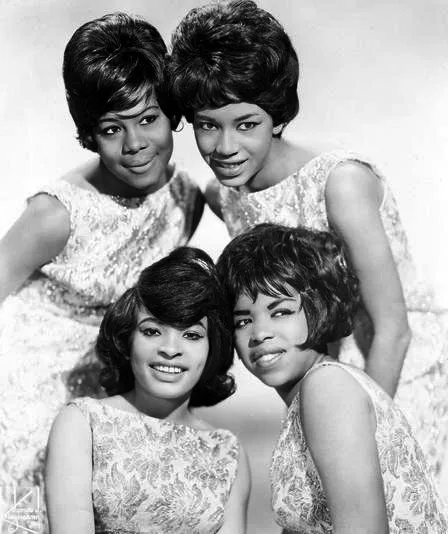
Foto: Motown/Tamla Records, James Kriegsmann (Nueva York), dominio público, vía Wikimedia Commons
Musical characteristics
Three separate steps are stacked here. They are easier to climb one at a time.
First: four chords, not three. The same four from start to finish, no exceptions in 2:43. The chorus does not arrive because the harmony changes — it never changes — but because voices come in and the singing goes up. Four chords looping like this are a chord progression, and this one has a family name: i–III–iv–VI.
Second: the key has accidentals. The original is in C sharp minor, which carries four sharps written at the start of the stave: that is the key signature. C#m, E, F#m, A.
Four sharps in class are four problems, so the whole thing moves down to A minor: Am, C, Dm, F. No accidentals at all. The distances between the four chords are identical, they just start somewhere else. Moving a song like that is called transposition.
Third: the bass does not land on the beat. This is the real step. Tap the pulse with your foot and play the bass line over it: almost no note meets your foot. They fall in the gaps, and several chord changes arrive slightly early, pushing. That deliberate mismatch is syncopation.
It is what makes the song feel like it is walking forward while repeating the same thing. It is also why the song is easy to play and hard to play well: the chords take ten minutes, the placement does not.
That short repeated bass phrase is a riff, and it is the lead voice of the record.
Hard facts: C sharp minor, 4/4, 160 BPM, 2:43. Form: intro, verse, chorus, verse, chorus, bridge, chorus.
Trivia and curiosities
- Three of the five writers of a 1961 song are credited on a 2017 one. That is what borrowing a melody costs, and it shows the line better than any explanation: new harmony and new rhythm do not make an old tune yours.
- "Please Mr. Postman" was Motown's first number one on the US pop chart, in December 1961. The song quoting it reached number 4 in 2017 and won a Grammy. Same melody, fifty-six years apart.
- Bassist Zach Carothers explained what the "1966" in the lyric stands for: civil rights movements and protest against the war. The date is chosen, not decorative.
- Gourley wrote the verses thinking about his daughter. In his words, it is hard to be a punk when you are thinking about your baby at home. The rebellion in the lyric is not about what it seems to be about.
Classroom activities
- Play: Am, C, Dm, F, one chord per bar, on a loop. Once it works, play the same four in the original key — C#m, E, F#m, A — and check that it is the same song. Transposition explains itself there.
- Play the bass: half the class claps the pulse, the other half plays the riff. Listen to how rarely they meet. Then swap.
- Analyse: a closed question. If the chords never change, what do you use to say where the chorus starts? List what does change: voices, register, instruments coming in.
- Create: take four chords of your own and place the notes off the pulse instead of on it. Steal the procedure — syncopation — not the song.
Key vocabulary
- Chord progression — progresión de acordes: la serie que se repite en bucle
- Key signature — armadura: las alteraciones escritas al principio del pentagrama
- Transposition — transposición: mover la canción entera a otra tonalidad
- Syncopation — síncopa: la nota cae entre los tiempos, no encima
- Riff — riff: frase corta que se repite y se reconoce sola
Resources
Where it is explained — this song is studied in ¿De quién es la melodía que estás cantando?, from the modern music history book.
The tutorials are in the original key, with sharps. The classroom version is in A minor: the fingers change, the song does not.
Official video
Guitar tutorial — Marty Music. He also covers the short lick that turns up a few times.
Keyboard tutorial — Marks Piano (PGN Piano). Chord-based, which is how it will be played in class.
Bass tutorial — Eric Blackmon. This is the one to watch closely: he plays the riff slowly and you can see where the notes fall.
Drums — Paolo Cantarella, with notation on screen and a simplified part.
- Chord and form sheet — https://jamzone.musicwill.org/songs/feel-it-still
- Tab — the button opens it in Songsterr
Por dónde entrar
Pon los primeros ocho segundos a alguien que no la conozca y pregúntale de qué año es. Casi nadie dice 2017.
La letra misma da la pista falsa: «I've been feeling it since 1966». El sonido va detrás de esa fecha —bajo redondo, batería seca, coros lejanos—, pero la grabación es de un estudio de 2017 y suena limpísima. La pregunta que responde la canción es esta: ¿cómo se consigue que algo nuevo suene antiguo a propósito?
Contexto histórico
«Feel It Still» salió el 3 de marzo de 2017 en el disco Woodstock, producido por John Hill y Asa Taccone. Portugal. The Man llevaba once años tocando cuando llegó: no fue un debut afortunado, fue la décima puerta.
La canción no estaba prevista. John Gourley estaba mezclando otro tema, necesitó descansar el oído y se metió en una sala de al lado con un bajo. Taccone lo oyó tocar esa línea desde la sala contigua, le pidió grabarla y le puso un micro delante. En cuarenta y cinco minutos estaba hecha.
Para la melodía cantada, Gourley echó mano de lo que tenía en la cabeza desde niño: «Please Mr. Postman», de The Marvelettes, 1961. Lo puso de relleno provisional mientras encontraba algo mejor. No encontró nada mejor y se quedó.
Foto: Motown/Tamla Records, James Kriegsmann (Nueva York), dominio público, vía Wikimedia Commons
Cómo suena
Aquí se juntan tres escalones que normalmente se suben de uno en uno. Conviene separarlos.
Primero: son cuatro acordes, no tres. Y son los mismos de principio a fin, sin una sola excepción en los 2:43. El estribillo no llega porque cambie la armonía —no cambia—, sino porque entran los coros y la voz sube. Cuando cuatro acordes se repiten en bucle así, se llama progresión, y esta tiene nombre de familia: i–III–iv–VI.
Segundo: la tonalidad tiene alteraciones. El original está en Do sostenido menor, que lleva cuatro sostenidos escritos al principio del pentagrama: eso es la armadura. Do#m, Mi, Fa#m, La.
Cuatro sostenidos en clase son cuatro problemas, así que se mueve entera a La menor: Lam, Do, Rem, Fa. Ninguna alteración. Las distancias entre los cuatro acordes son exactamente las mismas, solo que empezando desde otro sitio. Mover una canción así se llama transposición, y es lo que hace un profesor cada vez que dice «vamos a bajarla un tono».
Tercero: el bajo no cae en el tiempo. Este es el escalón de verdad. Marca el pulso con el pie y toca la línea del bajo encima: casi ninguna nota coincide con tu pie. Caen en los huecos, y varios cambios de acorde llegan un poco antes de tiempo, empujando. Ese desajuste voluntario entre lo que se toca y donde está el pulso es la síncopa.
Es lo que hace que la canción parezca que anda hacia delante aunque esté repitiendo lo mismo. También es la razón de que sea fácil de tocar y difícil de tocar bien: los acordes se aprenden en diez minutos, la colocación no.
Esa frase corta del bajo que se repite una y otra vez es un riff, y es el protagonista. Fíjate en que la canción empieza con él solo, sin nada más: es lo primero que se escribió y es lo que la sostiene entera.
Datos duros: Do sostenido menor, 4/4, 160 BPM, 2:43. Forma: intro, estrofa, estribillo, estrofa, estribillo, puente, estribillo.
Curiosidades
- La canción salió de un descanso. Gourley no estaba trabajando en ella: estaba mezclando otra cosa y se fue a otra sala a despejarse. La idea buena no era la que tenía sobre la mesa.
- La melodía que cantas no es suya. Al acreditarse la de «Please Mr. Postman», tres de los cinco autores de una canción de 1961 firman una de 2017. Una melodía tiene dueño aunque la armonía y el ritmo sean nuevos: eso se ve mejor en un crédito que en una explicación.
- «Please Mr. Postman» fue el primer número uno de Motown en la lista general de Estados Unidos, en diciembre de 1961. La canción que la cita llegó al número 4 en 2017 y ganó un Grammy. La misma melodía, cincuenta y seis años después.
- Sonar a los sesenta no fue casualidad ni nostalgia: fue una decisión de producción con medios de 2017. El bajista, Zach Carothers, explicó qué representa el «1966» de la letra —derechos civiles, protestas contra la guerra—; la fecha está elegida, no puesta al azar.
- Gourley escribió las estrofas pensando en su hija. Su frase: es difícil ser un punk cuando estás pensando en tu bebé en casa. La rebeldía de la letra no va de lo que parece.
Para hacer en clase
- Tocar: Lam, Do, Rem, Fa, un acorde por compás, en bucle. Cuando salga, tocad los mismos cuatro en la tonalidad original —Do#m, Mi, Fa#m, La— y comprobad que la canción es la misma. Ahí se entiende la transposición sin explicarla.
- Tocar el bajo: media clase da palmas en el pulso y la otra media toca el riff. Que se oiga bien que casi nunca coinciden. Después, cambio de papeles.
- Analizar: pregunta cerrada. Si los acordes no cambian nunca, ¿en qué te apoyas para decir dónde empieza el estribillo? Haz la lista de lo que sí cambia: voces, registro, instrumentos que entran.
- Crear: coged una progresión vuestra de cuatro acordes y colocad las notas fuera del pulso, no encima. Se trata de robar el procedimiento —la síncopa—, no la canción.
Vocabulario fundamental
- Progresión — La serie de acordes que se repite en bucle. Aquí son cuatro y no cambian en toda la canción.
- Armadura — Las alteraciones que se escriben al principio del pentagrama y valen para toda la pieza. Do sostenido menor lleva cuatro sostenidos.
- Transposición — Mover una canción entera a otra tonalidad manteniendo las distancias. De Do# menor a La menor: suena más grave, es la misma canción.
- Síncopa — La nota cae entre los tiempos, no encima. Es lo que empuja la canción hacia delante.
- Riff — Una frase corta e instrumental que se repite y se reconoce sola. La de este bajo abre la canción.
Recursos
Dónde se explica — esta canción se estudia en ¿De quién es la melodía que estás cantando?, del libro de historia de la música moderna.
Los tutoriales están en la tonalidad original, con sostenidos. La versión de clase va en La menor: los dedos cambian, la canción no.
Videoclip oficial
Tutorial de guitarra — Marty Music. Explica también el pequeño lick que aparece varias veces.
Tutorial de teclado — Marks Piano (PGN Piano). Va por acordes, que es como se va a tocar en clase.
Tutorial de bajo — Eric Blackmon. Es la parte que hay que mirar de cerca: toca el riff despacio y se ve dónde caen las notas.
Batería — Paolo Cantarella, con la notación en pantalla y la parte simplificada.
- Ficha de acordes y forma — https://jamzone.musicwill.org/songs/feel-it-still
- Tablatura — el botón la abre en Songsterr
Why this song
This song exists because somebody took a break.
John Gourley was mixing a different track, his ears got tired, and he walked into a side room with a bass in his hands. Producer Asa Taccone heard the line through the wall, asked to record it and put a microphone in front of him. Forty-five minutes later the song was finished.
The bass line came first, before the chords and before the words. You can hear it: that riff opens the record with nothing else around it.
Historical context
"Feel It Still" came out on 3 March 2017 on the album Woodstock, produced by John Hill and Asa Taccone. Portugal. The Man had been playing for eleven years by then. This was not a lucky debut; it was the tenth door.
For the sung melody Gourley reached for something he had known since childhood: "Please Mr. Postman" by The Marvelettes, 1961. He dropped it in as a placeholder while he looked for something better. He never found anything better, so it stayed.
The lyric names a year — 1966 — and the production backs it up: round bass, dry drums, distant backing vocals. None of that is accidental. It is a 2017 studio deliberately dressed as a 1960s one.
Foto: Motown/Tamla Records, James Kriegsmann (Nueva York), dominio público, vía Wikimedia Commons
Musical characteristics
Three separate steps are stacked here. They are easier to climb one at a time.
First: four chords, not three. The same four from start to finish, no exceptions in 2:43. The chorus does not arrive because the harmony changes — it never changes — but because voices come in and the singing goes up. Four chords looping like this are a chord progression, and this one has a family name: i–III–iv–VI.
Second: the key has accidentals. The original is in C sharp minor, which carries four sharps written at the start of the stave: that is the key signature. C#m, E, F#m, A.
Four sharps in class are four problems, so the whole thing moves down to A minor: Am, C, Dm, F. No accidentals at all. The distances between the four chords are identical, they just start somewhere else. Moving a song like that is called transposition.
Third: the bass does not land on the beat. This is the real step. Tap the pulse with your foot and play the bass line over it: almost no note meets your foot. They fall in the gaps, and several chord changes arrive slightly early, pushing. That deliberate mismatch is syncopation.
It is what makes the song feel like it is walking forward while repeating the same thing. It is also why the song is easy to play and hard to play well: the chords take ten minutes, the placement does not.
That short repeated bass phrase is a riff, and it is the lead voice of the record.
Hard facts: C sharp minor, 4/4, 160 BPM, 2:43. Form: intro, verse, chorus, verse, chorus, bridge, chorus.
Trivia and curiosities
- Three of the five writers of a 1961 song are credited on a 2017 one. That is what borrowing a melody costs, and it shows the line better than any explanation: new harmony and new rhythm do not make an old tune yours.
- "Please Mr. Postman" was Motown's first number one on the US pop chart, in December 1961. The song quoting it reached number 4 in 2017 and won a Grammy. Same melody, fifty-six years apart.
- Bassist Zach Carothers explained what the "1966" in the lyric stands for: civil rights movements and protest against the war. The date is chosen, not decorative.
- Gourley wrote the verses thinking about his daughter. In his words, it is hard to be a punk when you are thinking about your baby at home. The rebellion in the lyric is not about what it seems to be about.
Classroom activities
- Play: Am, C, Dm, F, one chord per bar, on a loop. Once it works, play the same four in the original key — C#m, E, F#m, A — and check that it is the same song. Transposition explains itself there.
- Play the bass: half the class claps the pulse, the other half plays the riff. Listen to how rarely they meet. Then swap.
- Analyse: a closed question. If the chords never change, what do you use to say where the chorus starts? List what does change: voices, register, instruments coming in.
- Create: take four chords of your own and place the notes off the pulse instead of on it. Steal the procedure — syncopation — not the song.
Key vocabulary
- Chord progression — progresión de acordes: la serie que se repite en bucle
- Key signature — armadura: las alteraciones escritas al principio del pentagrama
- Transposition — transposición: mover la canción entera a otra tonalidad
- Syncopation — síncopa: la nota cae entre los tiempos, no encima
- Riff — riff: frase corta que se repite y se reconoce sola
Resources
Where it is explained — this song is studied in ¿De quién es la melodía que estás cantando?, from the modern music history book.
The tutorials are in the original key, with sharps. The classroom version is in A minor: the fingers change, the song does not.
Official video
Guitar tutorial — Marty Music. He also covers the short lick that turns up a few times.
Keyboard tutorial — Marks Piano (PGN Piano). Chord-based, which is how it will be played in class.
Bass tutorial — Eric Blackmon. This is the one to watch closely: he plays the riff slowly and you can see where the notes fall.
Drums — Paolo Cantarella, with notation on screen and a simplified part.
- Chord and form sheet — https://jamzone.musicwill.org/songs/feel-it-still
- Tab — the button opens it in Songsterr