Contenidos
Eleanor Rigby — The Beatles (1966)
A Beatles song in which no Beatle plays anything. Just voices and eight string instruments, and in class you play it with two chords.
🏷️ Ficha musical
Why this song
Think of a rock band: guitars, bass, drums. Now take all of it away. In Eleanor Rigby there are no guitars, no bass and no drums. The only thing under the voices is violins, violas and cellos.
And yet it does not sound like calm classical music. It sounds tense, almost like a horror film. This song shows you why.
Historical context
By 1966 the Beatles had stopped playing to thousands of screaming fans: they had shut themselves in Abbey Road studio, in London, to try new things. Eleanor Rigby came out that summer on the album Revolver and, the same day, on a single with Yellow Submarine. In the UK it was number 1 for four weeks.
Paul McCartney wrote almost all of it. It tells the lives of two lonely people: a woman, Eleanor Rigby, and a priest, Father McKenzie. At first the priest was going to be called McCartney, but Paul changed it so nobody would think it was about his own father. He picked "McKenzie" from the phone book.
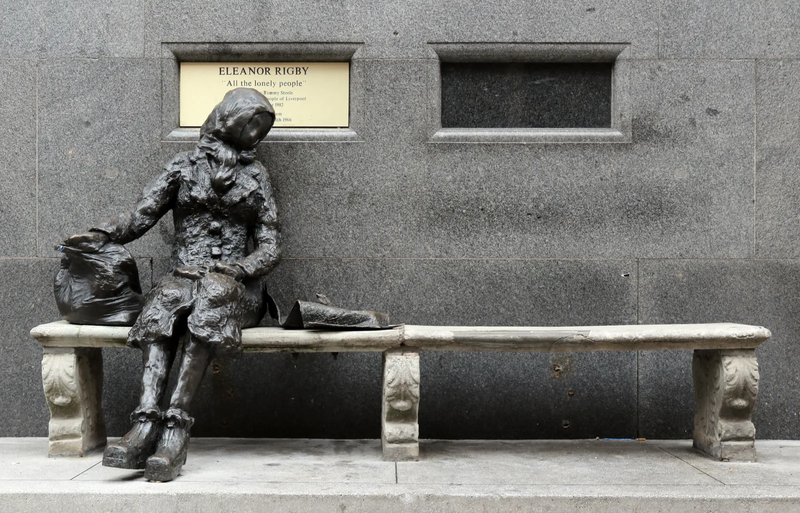
Photo: Rodhullandemu, CC BY-SA 4.0, via Wikimedia Commons
The accompaniment was written by George Martin, the band's producer. He took the idea from Bernard Herrmann's music for the film Psycho, which uses short string stabs to frighten you. Eight session musicians played it: four violins, two violas and two cellos. In fact it is a string quartet doubled, with two players on each part.
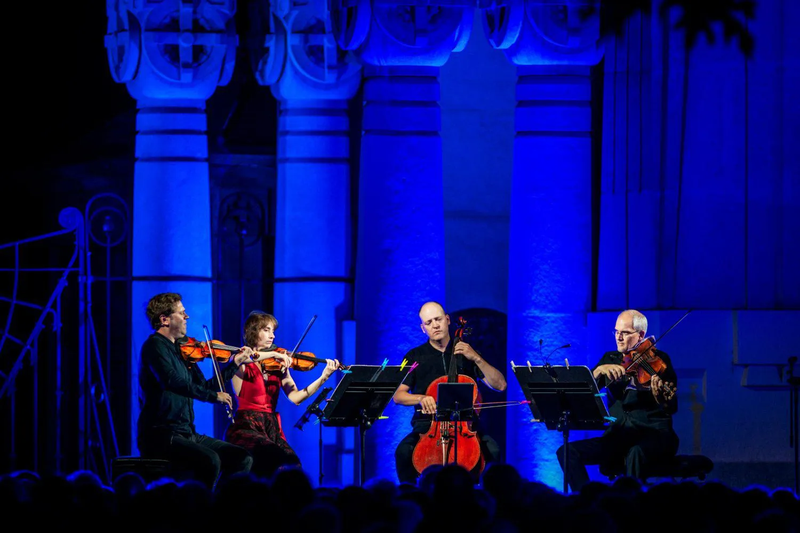
Photo: Diario de Madrid, CC BY 4.0, via Wikimedia Commons
Musical characteristics
Listen to the first few seconds. The voices sing a long phrase and the strings hold it up with long notes. Then the story begins and the strings change: now they play very short chords, one after another. Playing notes short and detached like that is called staccato. The opposite, long notes joined together, is legato. The same notes sound gentle in legato and tense in staccato.
And the bass? There is no bass guitar, but something does its job: the two cellos. They are the lowest instruments and hold the harmony up from below. Bass and rhythm are jobs in the music, not particular instruments.
The harmony is about as simple as it gets: two chords. On the record they are E minor and C. In class we move them down to A minor and F, which are easy on the ukulele. Moving every note to a different pitch while the song stays the same is called transposing.
At the end, Paul sings the opening phrase and the chorus at the same time, one on top of the other: he recorded it in another session, weeks later. Two different melodies sounding together and fitting: that is counterpoint.
Facts: E minor on the record, 4/4, about 137 BPM, 2:06. Form: sung introduction, three verses each with its chorus, and the opening phrase coming back before the third.
Trivia and curiosities
- The microphone plays too. Engineer Geoff Emerick put the microphones almost touching the instruments. The players complained and kept moving their chairs back until George Martin asked them to stop. That is why the strings sound so rough: the same notes change depending on how they are recorded.
- There is a real Eleanor Rigby, or so it seems. In the churchyard of St Peter's in Woolton, Liverpool, there is a gravestone with that name. John Lennon and Paul McCartney first met at that very church in July 1957. Paul says he does not remember ever seeing it. A tune or a name can stick in your head without you knowing.
- You can hear the strings on their own. In 1996 the Beatles released the take of the eight musicians without the voices. It is in Resources: you can clearly hear the staccato and the cellos doing the bass's job.
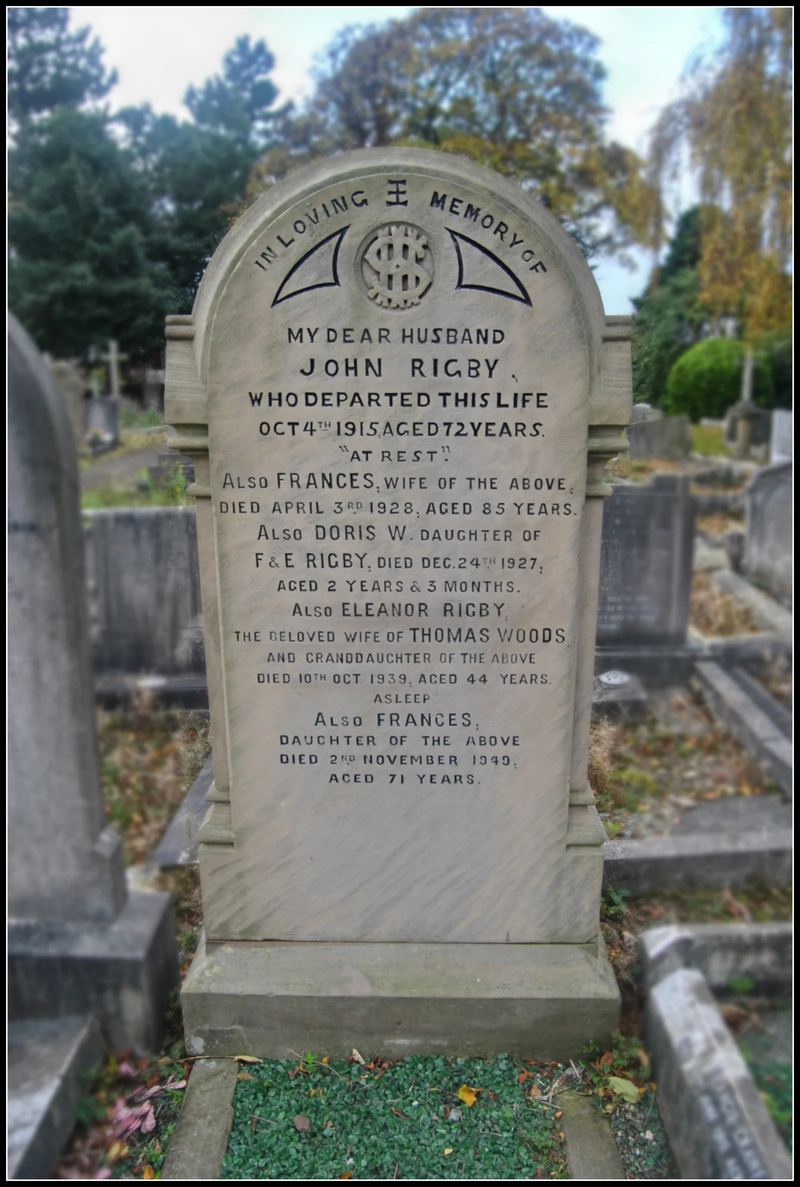
Photo: Loco Steve, CC BY-SA 2.0, via Wikimedia Commons
Guided listening
On the official audio linked in Resources (2:06).
- 0:00 — Voices and strings alone, with long notes. No steady beat yet.
- 0:13 — The first verse starts and the strings switch to staccato: short, dry chords that mark the beat without any drums.
- 1:26 — Just before the third verse, listen to the lowest sounds: the cellos, doing the bass's job.
- 1:47 — Last chorus. From here you hear two melodies at once, the opening one and the chorus: counterpoint. It is clearest around 1:54. The song ends at 2:03.
Classroom activities
- Play: A minor and F on the ukulele, first with long strums (legato), then with short strokes you damp with your hand (staccato). Same chords; listen to how the character changes. The lyrics with chords are in the class session.
- Sing: half the class sings the opening phrase and the other half the chorus, at the same time, like the end of the record.
- Analyse: listen to the strings-only take. How many times does the chord change in the first verse? Which instrument plays the lowest notes?
- Create: tell the story of someone who is alone in four lines and sing it over A minor and F.
Key vocabulary
- Staccato — staccato: notas cortas y separadas
- Legato — legato: notas largas y unidas
- Transpose — transportar
- Counterpoint — contrapunto
Resources
Official audio — the 1966 recording, uploaded by the label. The Guided listening timings follow this audio.
Music video — the sequence from the animated film Yellow Submarine (1968). It runs a few seconds behind the audio.
Strings only — take 14 by the eight musicians, without voices, released on Anthology 2 (1996).
Ukulele tutorial with A minor and F — Beginner Ukulele with Jewel. In the class key, with the two class chords.
Guitar tutorial — Lauren Bateman, in Spanish. The two chords, for beginners.
The three voices in the intro — DLD2 Music separates what Paul, John and George sing at the start. Under a minute.
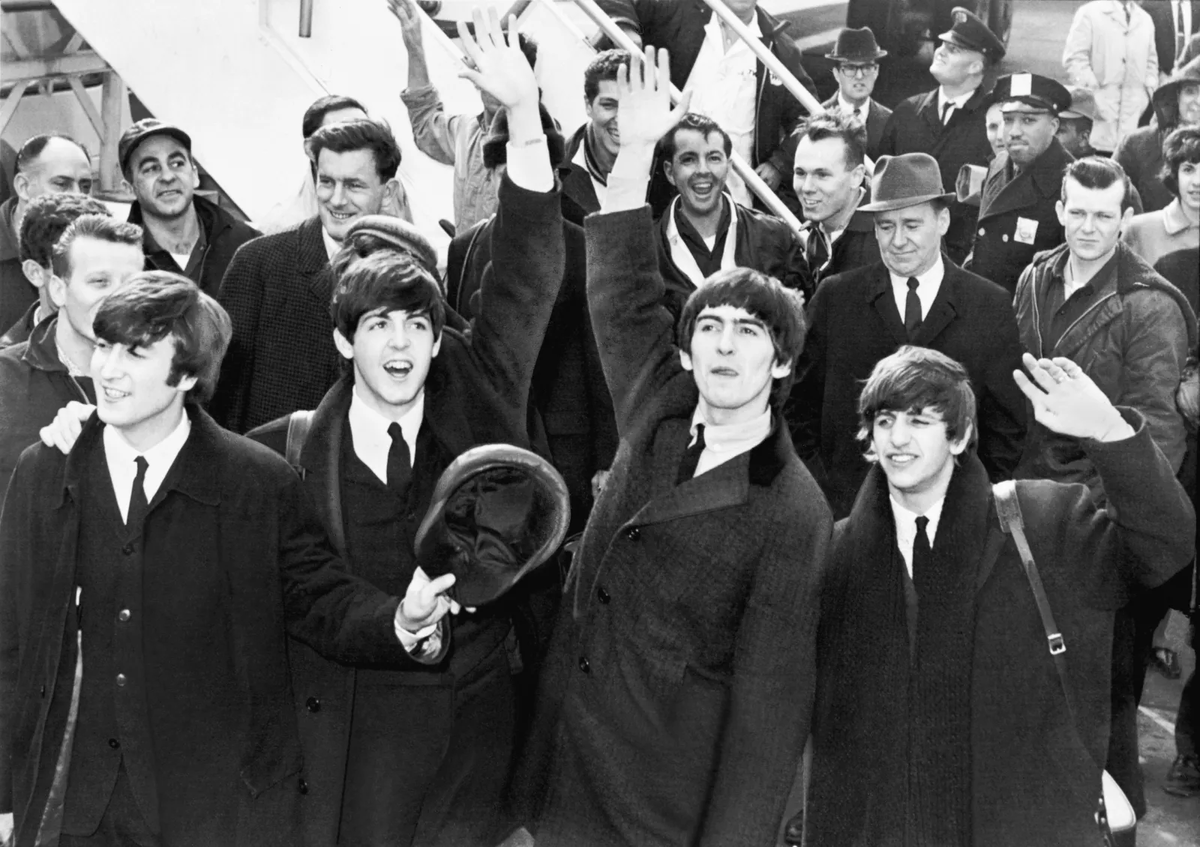
- Cover image — The Beatles arriving at JFK Airport, New York, 7 February 1964. Foto: United Press International, dominio público, vía Wikimedia Commons
Por dónde entrar
Piensa en un grupo de rock: guitarras, bajo, batería. Ahora quítalo todo. En Eleanor Rigby no hay guitarras, ni bajo, ni batería. Lo único que suena debajo de las voces son violines, violas y violonchelos.
Y aun así no suena a música clásica tranquila. Suena tensa, casi como una película de miedo. Esta canción explica por qué.
Contexto histórico
En 1966 los Beatles ya no tocaban en directo para miles de fans gritando: se habían encerrado en el estudio de Abbey Road, en Londres, a probar cosas. Eleanor Rigby salió ese verano en el disco Revolver y a la vez en un single con Yellow Submarine. En el Reino Unido fue número 1 durante cuatro semanas.
La escribió casi entera Paul McCartney. Cuenta la vida de dos personas que están solas: una mujer, Eleanor Rigby, y un cura, el padre McKenzie. Al principio el cura se iba a llamar McCartney, pero Paul lo cambió para que nadie pensara que hablaba de su padre. «McKenzie» lo sacó de la guía telefónica.
Foto: Rodhullandemu, CC BY-SA 4.0, vía Wikimedia Commons
El acompañamiento lo escribió George Martin, el productor del grupo. Se inspiró en la música de la película Psicosis, de Bernard Herrmann, que usa golpes cortos de cuerda para asustar. Lo tocaron ocho músicos de estudio: cuatro violines, dos violas y dos violonchelos. En realidad es un cuarteto de cuerda doblado, con dos instrumentistas en cada voz.
Foto: Diario de Madrid, CC BY 4.0, vía Wikimedia Commons
Cómo suena
Escucha los primeros segundos. Las voces cantan una frase larga y las cuerdas la sostienen con notas tenidas. Luego empieza la historia, y las cuerdas cambian: ahora tocan acordes muy cortos, como picados, uno detrás de otro. Esa forma de tocar las notas, separadas y secas, se llama staccato. Lo contrario, notas ligadas y largas, es el legato. Las mismas notas suenan tiernas en legato y tensas en staccato.
¿Y el bajo? No hay bajo eléctrico, pero sí hay algo que hace su trabajo: los dos violonchelos. Son los más graves y sostienen la armonía desde abajo. Bajo y ritmo son trabajos de la música, no instrumentos concretos.
La armonía es casi lo más sencillo que existe: dos acordes. En el disco, Mi menor y Do. En clase la bajamos a La menor y Fa, que se tocan fácil en el ukelele. Cambiar todas las notas a otra altura sin que la canción deje de ser la misma se llama transportar.
Al final, Paul canta la frase del principio y la del estribillo a la vez, una encima de la otra: la grabó en otra sesión, semanas después. Dos melodías distintas que suenan juntas y encajan: eso es contrapunto.
Datos: Mi menor en el disco, 4/4, unos 137 BPM, 2:06. Forma: introducción cantada, tres estrofas, cada una con su estribillo, y la frase de la introducción de vuelta antes de la tercera.
Curiosidades
- El micrófono también toca. El técnico Geoff Emerick puso los micrófonos casi pegados a los instrumentos. Los músicos protestaban y echaban la silla hacia atrás hasta que George Martin les pidió que dejaran de moverse. Por eso la cuerda suena tan áspera: las mismas notas cambian según cómo se graban.
- Existe una Eleanor Rigby de verdad, o eso parece. En el cementerio de la iglesia de St Peter, en Woolton (Liverpool), hay una lápida con ese nombre. Justo en esa iglesia se conocieron John Lennon y Paul McCartney en julio de 1957. Paul dice que no recuerda haberla visto nunca. Puede que una melodía o un nombre se te quede grabado sin que lo sepas.
- Se puede escuchar la cuerda sola. En 1996 los Beatles publicaron la toma de los ocho músicos sin las voces. Está en Recursos: con ella se oye perfectamente el staccato y a los violonchelos haciendo de bajo.
Foto: Loco Steve, CC BY-SA 2.0, vía Wikimedia Commons
Escucha guiada
Sobre el audio oficial enlazado en Recursos (2:06).
- 0:00 — Voces y cuerdas solas, con notas largas. Todavía no hay pulso marcado.
- 0:13 — Empieza la primera estrofa y las cuerdas pasan al staccato: acordes cortos y secos que marcan el pulso sin batería.
- 1:26 — Justo antes de la tercera estrofa, escucha lo más grave: son los violonchelos, haciendo el trabajo del bajo.
- 1:47 — Último estribillo. A partir de aquí se oyen dos melodías a la vez, la de la introducción y la del estribillo: contrapunto. Se distingue mejor hacia el 1:54. La canción acaba en el 2:03.
Para hacer en clase
- Tocar: La menor y Fa en el ukelele, primero con rasgueos largos (legato) y luego con golpes cortos que apagas con la mano (staccato). Son los mismos acordes; escucha cómo cambia el carácter. La letra con acordes está en la sesión de clase.
- Cantar: media clase canta la frase de la introducción y la otra media el estribillo, a la vez, como en el final del disco.
- Analizar: escucha la versión de solo cuerda. ¿Cuántas veces cambia el acorde en la primera estrofa? ¿Qué instrumento hace las notas más graves?
- Crear: cuenta en cuatro frases la historia de alguien que está solo y cántala sobre La menor y Fa.
Vocabulario fundamental
- Staccato — Notas cortas y separadas, como picadas. Hacen que la música suene tensa o con nervio.
- Legato — Notas largas y unidas, sin cortes entre ellas.
- Transportar — Pasar toda la canción a otra altura sin que deje de ser la misma.
- Contrapunto — Dos melodías distintas que suenan a la vez y encajan.
Recursos
Audio oficial — la grabación de 1966, subida por el sello. El minutaje de la Escucha guiada es sobre este audio.
Videoclip — la secuencia de la película de dibujos Yellow Submarine (1968). Va unos segundos por detrás del audio.
Solo las cuerdas — la toma 14 de los ocho músicos, sin voces, publicada en Anthology 2 (1996).
Tutorial de ukelele con La menor y Fa — Beginner Ukulele with Jewel. En inglés, pero en la tonalidad y con los dos acordes de clase.
Tutorial de guitarra — Lauren Bateman, en castellano. Los dos acordes, para principiantes.
Las tres voces del principio — DLD2 Music separa lo que cantan Paul, John y George en la introducción. Menos de un minuto.
- Portada — Los Beatles al llegar al aeropuerto JFK de Nueva York, 7 de febrero de 1964. Foto: United Press International, dominio público, vía Wikimedia Commons
Why this song
Think of a rock band: guitars, bass, drums. Now take all of it away. In Eleanor Rigby there are no guitars, no bass and no drums. The only thing under the voices is violins, violas and cellos.
And yet it does not sound like calm classical music. It sounds tense, almost like a horror film. This song shows you why.
Historical context
By 1966 the Beatles had stopped playing to thousands of screaming fans: they had shut themselves in Abbey Road studio, in London, to try new things. Eleanor Rigby came out that summer on the album Revolver and, the same day, on a single with Yellow Submarine. In the UK it was number 1 for four weeks.
Paul McCartney wrote almost all of it. It tells the lives of two lonely people: a woman, Eleanor Rigby, and a priest, Father McKenzie. At first the priest was going to be called McCartney, but Paul changed it so nobody would think it was about his own father. He picked "McKenzie" from the phone book.
Photo: Rodhullandemu, CC BY-SA 4.0, via Wikimedia Commons
The accompaniment was written by George Martin, the band's producer. He took the idea from Bernard Herrmann's music for the film Psycho, which uses short string stabs to frighten you. Eight session musicians played it: four violins, two violas and two cellos. In fact it is a string quartet doubled, with two players on each part.
Photo: Diario de Madrid, CC BY 4.0, via Wikimedia Commons
Musical characteristics
Listen to the first few seconds. The voices sing a long phrase and the strings hold it up with long notes. Then the story begins and the strings change: now they play very short chords, one after another. Playing notes short and detached like that is called staccato. The opposite, long notes joined together, is legato. The same notes sound gentle in legato and tense in staccato.
And the bass? There is no bass guitar, but something does its job: the two cellos. They are the lowest instruments and hold the harmony up from below. Bass and rhythm are jobs in the music, not particular instruments.
The harmony is about as simple as it gets: two chords. On the record they are E minor and C. In class we move them down to A minor and F, which are easy on the ukulele. Moving every note to a different pitch while the song stays the same is called transposing.
At the end, Paul sings the opening phrase and the chorus at the same time, one on top of the other: he recorded it in another session, weeks later. Two different melodies sounding together and fitting: that is counterpoint.
Facts: E minor on the record, 4/4, about 137 BPM, 2:06. Form: sung introduction, three verses each with its chorus, and the opening phrase coming back before the third.
Trivia and curiosities
- The microphone plays too. Engineer Geoff Emerick put the microphones almost touching the instruments. The players complained and kept moving their chairs back until George Martin asked them to stop. That is why the strings sound so rough: the same notes change depending on how they are recorded.
- There is a real Eleanor Rigby, or so it seems. In the churchyard of St Peter's in Woolton, Liverpool, there is a gravestone with that name. John Lennon and Paul McCartney first met at that very church in July 1957. Paul says he does not remember ever seeing it. A tune or a name can stick in your head without you knowing.
- You can hear the strings on their own. In 1996 the Beatles released the take of the eight musicians without the voices. It is in Resources: you can clearly hear the staccato and the cellos doing the bass's job.
Photo: Loco Steve, CC BY-SA 2.0, via Wikimedia Commons
Guided listening
On the official audio linked in Resources (2:06).
- 0:00 — Voices and strings alone, with long notes. No steady beat yet.
- 0:13 — The first verse starts and the strings switch to staccato: short, dry chords that mark the beat without any drums.
- 1:26 — Just before the third verse, listen to the lowest sounds: the cellos, doing the bass's job.
- 1:47 — Last chorus. From here you hear two melodies at once, the opening one and the chorus: counterpoint. It is clearest around 1:54. The song ends at 2:03.
Classroom activities
- Play: A minor and F on the ukulele, first with long strums (legato), then with short strokes you damp with your hand (staccato). Same chords; listen to how the character changes. The lyrics with chords are in the class session.
- Sing: half the class sings the opening phrase and the other half the chorus, at the same time, like the end of the record.
- Analyse: listen to the strings-only take. How many times does the chord change in the first verse? Which instrument plays the lowest notes?
- Create: tell the story of someone who is alone in four lines and sing it over A minor and F.
Key vocabulary
- Staccato — staccato: notas cortas y separadas
- Legato — legato: notas largas y unidas
- Transpose — transportar
- Counterpoint — contrapunto
Resources
Official audio — the 1966 recording, uploaded by the label. The Guided listening timings follow this audio.
Music video — the sequence from the animated film Yellow Submarine (1968). It runs a few seconds behind the audio.
Strings only — take 14 by the eight musicians, without voices, released on Anthology 2 (1996).
Ukulele tutorial with A minor and F — Beginner Ukulele with Jewel. In the class key, with the two class chords.
Guitar tutorial — Lauren Bateman, in Spanish. The two chords, for beginners.
The three voices in the intro — DLD2 Music separates what Paul, John and George sing at the start. Under a minute.
- Cover image — The Beatles arriving at JFK Airport, New York, 7 February 1964. Foto: United Press International, dominio público, vía Wikimedia Commons