Contenidos
Despechá — Rosalía (2022)
Two piano chords going back and forth, a rhythm from the Caribbean and a song the audience got to name. With it, the band learns that percussion can carry a song too.
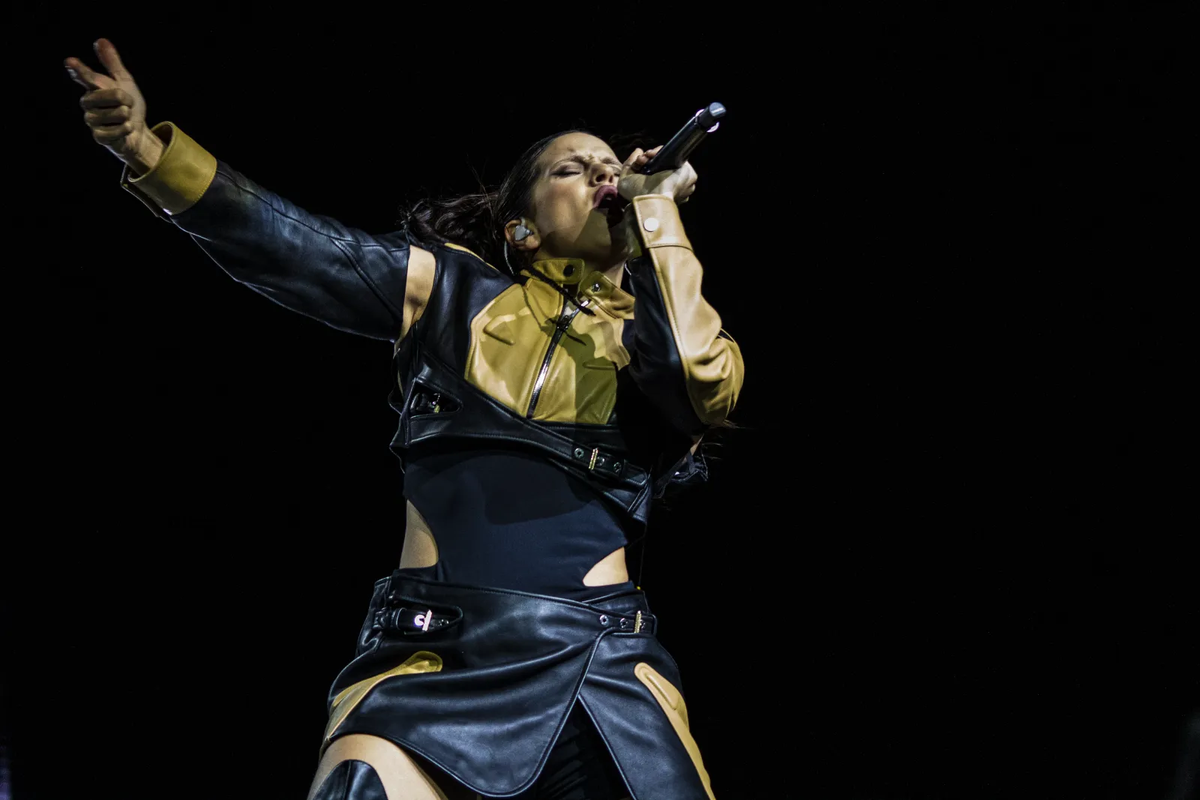
🏷️ Ficha musical
Why it's in this book
It is February's anchor song, and the month has a theme: the clave and the mambo. It opens family D, the Latin minor, with three chords that fit on the ukulele: A minor, G and D minor. In Year 9 you already played this move in Me gustas tú; in Year 10 you share it with Flowers and Bamboleo. In the room with no instruments you learn the clave with claps and sing it with the choir's answers, which are the second voice. With ukuleles, the swing from A minor to G and the D minor at the end. In the music room the drums play in clave, the keyboard holds the two chords and each soloist improvises over that vamp. It is the month's Spanish-language song: you understand the lyrics straight away, so all your attention can go to the rhythm.
Why this song
Before it existed as a record, the song was already famous. Rosalía sang it for the first time at a concert in Almería, Spain, in July 2022. The audience filmed it on their phones and the videos spread on TikTok before the song even had an official name.
In Madrid, Rosalía asked the crowd what it should be called. "Despechá" won. Three weeks after that first concert, it was on every platform.
Historical context
In 2022 Rosalía released Motomami, an album that left behind the flamenco of her previous work and dived into Latin music from its most experimental side. For the tour she prepared new songs. One of them was "Despechá".
She has explained where it comes from: the music of the Dominican Republic. She names three artists from there: Fefita la Grande, Juan Luis Guerra and Omega. Without them, she says, this song would not exist.
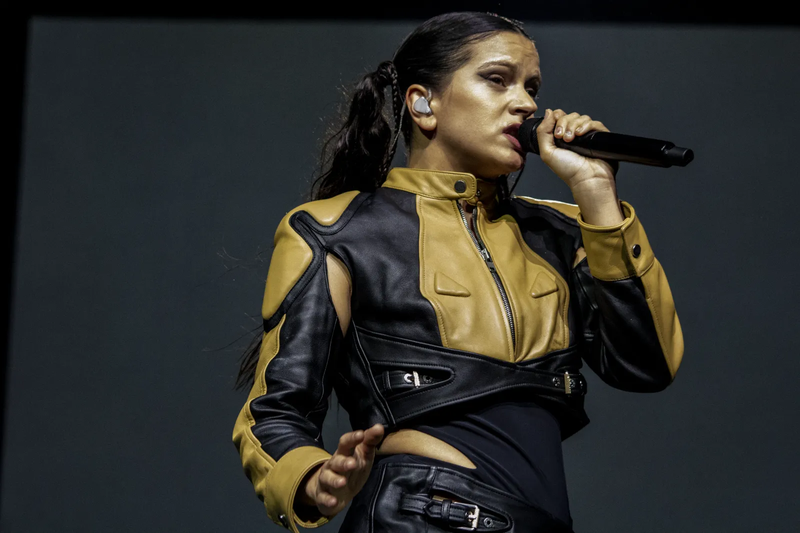
Foto: Andrés Ibarra, CC BY-SA 4.0, vía Wikimedia Commons
The photo is from the Motomami tour, in Santiago, Chile, a month after the song came out. On that tour "Despechá" came straight after a medley of classic reggaeton, and Rosalía brought twenty fans on stage to dance with her.
"Despechá" is a mambo: not the Cuban mambo of the 1950s, but the Dominican one, a fast, danceable relative of merengue. Rosalía adds synths and keeps it to two and a half minutes.
It went to number 1 in Spain. On Spotify it had the biggest debut ever for a Spanish-language song by a female artist.
Musical characteristics
Two chords going back and forth. The verse moves between two chords: A minor and G. One, the other, one, the other. A two-chord base that repeats so someone can sing or improvise on top is called a vamp. Pitchfork magazine described the song exactly like that: flitting back and forth between two springy piano chords.
The third chord. In the chorus, the back-and-forth breaks at the end with a new chord: D minor. That change marks the end of the phrase. A minor, G and D minor: as scale degrees, i, ♭VII and iv. It is family D's progression.
A rhythm that bounces. Dominican mambo is fast, at 130 beats per minute, and it puts the hits just before or just after where your foot expects them. That displacement is syncopation, and it is what makes you move.
The clave. In class we use the clave to organise all that rhythm. The clave is a pattern of five hits spread over two bars: three in the first and two in the second. It comes from Cuban music and is played on two wooden sticks, also called claves. If the clave is in place, the rest of the band always knows where they are.
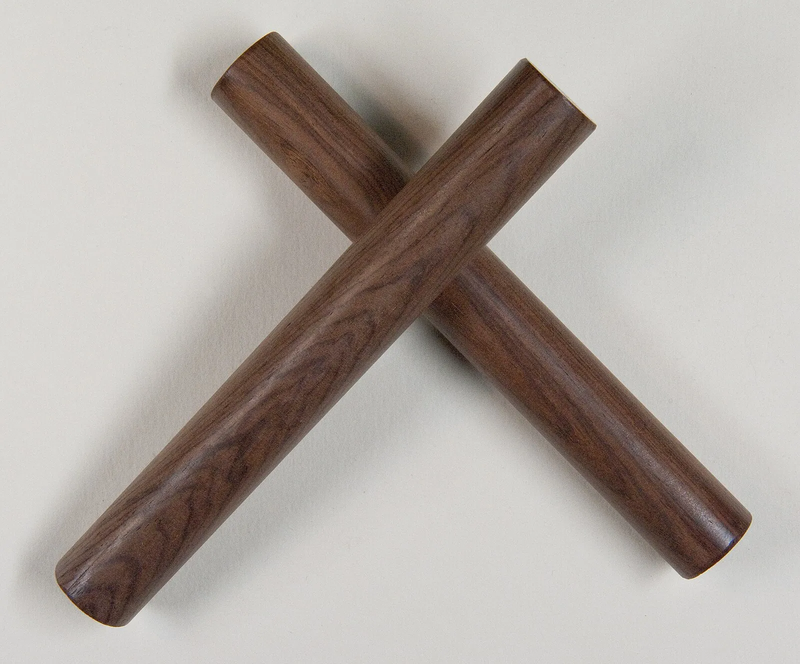
Foto: Hannes Grobe, CC BY 3.0, vía Wikimedia Commons
This is what claves look like: two sticks of hard wood. One rests in your hand, which acts as a sound box, and the other strikes it. In class, two drumsticks or two pencils will do.
The choir answers. Rosalía sings a line and a choir answers her. That is call and response, and it is the second voice you will do in class.
Hard facts: A minor, 4/4, 130 beats per minute, 2:37. The form is short and moves between three sections: verse, chorus and an instrumental part. Nothing wasted.
Guided listening
Play the music video. At the start, find the two piano chords. Say "one" when A minor sounds and "two" when G sounds. How long before it changes?
When the voice comes in, tap the beat with your foot and listen to the percussion. Do the hits land with your foot, or in between?
In the chorus, wait for the end of the phrase. That is where D minor comes in and the back-and-forth breaks for a moment.
In the instrumental part, the voice disappears and the rhythm is left. Try tapping the clave with two fingers on the desk over that section.
Trivia and curiosities
- Before it had an official title, fans called it "Lao a Lao". The final name was chosen by the audience at a concert in Madrid.
- The song was going to feature the Dominican singer Omega, one of the artists who inspired it. In the end it came out without him, but his name is still in the lyrics.
- The music video was filmed on a beach in Mallorca and copies the style of Martin Parr, a British photographer known for crowded beaches in very saturated colours.
- In December 2022 a version with the American rapper Cardi B came out. The base does not change: the same two chords hold up another voice and another language.
Classroom activities
- The clave with your body. Room with no instruments: half the class keeps the beat with their feet; the other half claps the clave (three hits, two hits). When it works, swap. Then sing the chorus on top, with the choir's answers.
- Three chords. Ukulele: A minor and G back and forth, one change per bar; D minor at the end of the chorus phrase. Short, dry strums, so it sounds like a piano.
- Drums in clave. Music room: the drummer plays the clave on the rim of the snare or on a block, and everyone plays on top: keyboard on the two chords, bass on the root of each chord.
- Solos over the vamp. While the band keeps A minor and G going, each soloist improvises two bars on the A minor pentatonic. Whoever is not playing keeps the clave.
Key vocabulary
- Dominican mambo — mambo dominicano: pariente rápido del merengue
- Vamp — vamp: base de dos acordes que se repite
- Syncopation — síncopa
- Clave — clave: patrón de cinco golpes en dos compases
- Call and response — llamada y respuesta
Resources
Official music video — Filmed on a beach in Mallorca.
Guitar tutorial — Sonido Propio. Easy chords.
Ukulele tutorial — Mica Amatti. In Spanish.
Ukulele and drumsticks, for the classroom — Simfonia de recursos. A version made for class: ukuleles and percussion with drumsticks.
Piano tutorial — HDpiano Español. In Spanish.
Drums, played along — Domino Santantonio for Thomann. Not a lesson, but you can clearly see how the rhythm is shared between snare, bass drum and cymbals.
Bass, played along — Ottmar Bassist. The bass line played over the record.
- Harmonic analysis — Hooktheory: https://www.hooktheory.com/theorytab/view/rosalia/despecha
Por qué está en este libro
Es la canción ancla de febrero, y el mes tiene un tema: la clave y el mambo. Abre la familia D, el menor latino, con tres acordes que caben en el ukelele: la menor, sol y re menor. En 3º ya tocasteis este movimiento en Me gustas tú; en 4º lo compartís con Flowers y Bamboleo. En el aula sin instrumentos aprendéis la clave con palmas y la cantáis con las respuestas del coro, que es la segunda voz. Con ukelele, el vaivén de la menor a sol y el re menor del final. En el aula de música la batería toca en clave, el teclado lleva los dos acordes y cada solista improvisa sobre ese vamp. Es la canción en castellano del mes: la letra la entendéis a la primera, así que toda la atención va al ritmo.
Por dónde entrar
Antes de que existiera en disco, la canción ya era famosa. Rosalía la cantó por primera vez en un concierto, en Almería, en julio de 2022. El público la grabó con el móvil y los vídeos corrieron por TikTok sin que la canción tuviera ni nombre oficial.
En Madrid, Rosalía preguntó al público cómo quería que se llamara. Ganó «Despechá». Tres semanas después de aquel primer concierto, estaba en todas las plataformas.
Contexto histórico
En 2022 Rosalía publicó Motomami, un disco que dejaba atrás el flamenco de su trabajo anterior y se metía en la música latina por el lado más experimental. Para la gira preparó canciones nuevas. Una era «Despechá».
Ella misma ha contado de dónde viene: de la música de la República Dominicana. Cita a tres artistas de allí: Fefita la Grande, Juan Luis Guerra y Omega. Sin ellos, dice, esta canción no existiría.
Foto: Andrés Ibarra, CC BY-SA 4.0, vía Wikimedia Commons
La foto es de la gira Motomami, en Santiago de Chile, un mes después de que saliera la canción. En esa gira «Despechá» iba justo después de un popurrí de reguetón clásico, y Rosalía subía al escenario a veinte fans a bailar con ella.
«Despechá» es un mambo: no el mambo cubano de los años cincuenta, sino el dominicano, un pariente rápido y bailable del merengue. Rosalía le añade sintetizadores y lo deja en dos minutos y medio.
Fue número 1 en España. En Spotify tuvo el mejor estreno de la historia para una canción en castellano cantada por una mujer.
Cómo suena
Dos acordes que van y vienen. La estrofa se mueve entre dos acordes: la menor y sol. Uno, otro, uno, otro. Una base de dos acordes que se repite para que alguien cante o improvise encima se llama vamp. La revista Pitchfork describió la canción justo así: un vaivén entre dos acordes de piano que rebotan.
El tercer acorde. En el estribillo, el vaivén se rompe al final con un acorde nuevo: re menor. Ese cambio marca el final de la frase. La menor, sol y re menor: en grados, i, ♭VII y iv. Es la progresión de la familia D.
Un ritmo que rebota. El mambo dominicano va rápido, a 130 pulsos por minuto, y pone los golpes justo antes o justo después de donde los espera tu pie. Ese desplazamiento es la síncopa, y es lo que hace que te muevas.
La clave. En clase usamos la clave para ordenar todo ese ritmo. La clave es un patrón de cinco golpes repartidos en dos compases: tres en el primero y dos en el segundo. Viene de la música cubana y se toca con dos palos de madera que también se llaman claves. Si la clave está bien puesta, el resto de la banda sabe siempre dónde está.
Foto: Hannes Grobe, CC BY 3.0, vía Wikimedia Commons
Así son las claves: dos palos de madera dura. Uno descansa en la mano, que hace de caja de resonancia, y el otro lo golpea. En clase valen dos baquetas o dos lápices.
El coro contesta. Rosalía canta una frase y un coro le responde. Es llamada y respuesta, y es la segunda voz que haréis en clase.
Datos duros: la menor, 4/4, 130 pulsos por minuto, 2:37. La forma es corta y se mueve entre tres secciones: estrofa, estribillo y una parte instrumental. No le sobra nada.
Escucha guiada
Pon el videoclip. Al principio, busca los dos acordes de piano. Di «uno» cuando suene la menor y «dos» cuando suene sol. ¿Cuánto tarda en cambiar?
Cuando entre la voz, marca el pulso con el pie y escucha la percusión. ¿Coinciden los golpes con tu pie, o caen entre medias?
En el estribillo, espera el final de la frase. Ahí entra el re menor y el vaivén se rompe un momento.
En la parte instrumental, la voz desaparece y queda el ritmo. Intenta tocar la clave con dos dedos sobre la mesa encima de esa parte.
Curiosidades
- Antes de tener título oficial, los fans la llamaban «Lao a Lao». El nombre definitivo lo eligió el público en un concierto de Madrid.
- La canción iba a llevar la voz del dominicano Omega, uno de los artistas que la inspiraron. Al final salió sin él, pero su nombre sigue dentro de la letra.
- El videoclip se rodó en una playa de Mallorca y copia el estilo de las fotos de Martin Parr, un fotógrafo británico que retrata playas llenas de gente con colores muy saturados.
- En diciembre de 2022 salió una versión con la rapera estadounidense Cardi B. La base no cambia: los mismos dos acordes aguantan otra voz y otro idioma.
Para hacer en clase
- La clave con el cuerpo. Aula sin instrumentos: media clase marca el pulso con los pies; la otra media hace la clave con palmas (tres golpes, dos golpes). Cuando salga, cambio. Después, encima, cantad el estribillo con las respuestas del coro.
- Tres acordes. Ukelele: la menor y sol en vaivén, un cambio por compás; re menor al final de la frase del estribillo. El rasgueo, corto y seco, para que suene a piano.
- Batería en clave. Aula de música: la batería mete la clave en el aro de la caja o en un bloque, y el resto toca encima: teclado con los dos acordes, bajo con la nota de cada acorde.
- Solos sobre el vamp. Mientras la banda mantiene la menor y sol, cada solista improvisa dos compases con la pentatónica de la menor. Quien no toca, mantiene la clave.
Vocabulario fundamental
- Mambo dominicano — Un pariente rápido del merengue, de la República Dominicana. Es el ritmo de esta canción.
- Vamp — Una base de dos acordes que se repite para que alguien cante o improvise encima.
- Síncopa — Un golpe que cae entre los pulsos, donde tu pie no lo espera.
- Clave — Patrón de cinco golpes en dos compases (tres y dos) que ordena el ritmo de la banda.
- Llamada y respuesta — Una voz canta y otra le contesta.
Recursos
Videoclip oficial — Rodado en una playa de Mallorca.
Tutorial de guitarra — Sonido Propio. Acordes en versión fácil.
Tutorial de ukelele — Mica Amatti. En castellano.
Ukelele y palillos, para el aula — Simfonia de recursos. Una versión pensada para clase: ukeleles y percusión con palillos.
Tutorial de piano — HDpiano Español. En castellano.
Batería, versión tocada — Domino Santantonio para Thomann. No es una lección, pero se ve bien cómo se reparte el ritmo entre caja, bombo y platos.
Bajo, versión tocada — Ottmar Bassist. La línea de bajo tocada encima del disco.
- Análisis armónico — Hooktheory: https://www.hooktheory.com/theorytab/view/rosalia/despecha
Why it's in this book
It is February's anchor song, and the month has a theme: the clave and the mambo. It opens family D, the Latin minor, with three chords that fit on the ukulele: A minor, G and D minor. In Year 9 you already played this move in Me gustas tú; in Year 10 you share it with Flowers and Bamboleo. In the room with no instruments you learn the clave with claps and sing it with the choir's answers, which are the second voice. With ukuleles, the swing from A minor to G and the D minor at the end. In the music room the drums play in clave, the keyboard holds the two chords and each soloist improvises over that vamp. It is the month's Spanish-language song: you understand the lyrics straight away, so all your attention can go to the rhythm.
Why this song
Before it existed as a record, the song was already famous. Rosalía sang it for the first time at a concert in Almería, Spain, in July 2022. The audience filmed it on their phones and the videos spread on TikTok before the song even had an official name.
In Madrid, Rosalía asked the crowd what it should be called. "Despechá" won. Three weeks after that first concert, it was on every platform.
Historical context
In 2022 Rosalía released Motomami, an album that left behind the flamenco of her previous work and dived into Latin music from its most experimental side. For the tour she prepared new songs. One of them was "Despechá".
She has explained where it comes from: the music of the Dominican Republic. She names three artists from there: Fefita la Grande, Juan Luis Guerra and Omega. Without them, she says, this song would not exist.
Foto: Andrés Ibarra, CC BY-SA 4.0, vía Wikimedia Commons
The photo is from the Motomami tour, in Santiago, Chile, a month after the song came out. On that tour "Despechá" came straight after a medley of classic reggaeton, and Rosalía brought twenty fans on stage to dance with her.
"Despechá" is a mambo: not the Cuban mambo of the 1950s, but the Dominican one, a fast, danceable relative of merengue. Rosalía adds synths and keeps it to two and a half minutes.
It went to number 1 in Spain. On Spotify it had the biggest debut ever for a Spanish-language song by a female artist.
Musical characteristics
Two chords going back and forth. The verse moves between two chords: A minor and G. One, the other, one, the other. A two-chord base that repeats so someone can sing or improvise on top is called a vamp. Pitchfork magazine described the song exactly like that: flitting back and forth between two springy piano chords.
The third chord. In the chorus, the back-and-forth breaks at the end with a new chord: D minor. That change marks the end of the phrase. A minor, G and D minor: as scale degrees, i, ♭VII and iv. It is family D's progression.
A rhythm that bounces. Dominican mambo is fast, at 130 beats per minute, and it puts the hits just before or just after where your foot expects them. That displacement is syncopation, and it is what makes you move.
The clave. In class we use the clave to organise all that rhythm. The clave is a pattern of five hits spread over two bars: three in the first and two in the second. It comes from Cuban music and is played on two wooden sticks, also called claves. If the clave is in place, the rest of the band always knows where they are.
Foto: Hannes Grobe, CC BY 3.0, vía Wikimedia Commons
This is what claves look like: two sticks of hard wood. One rests in your hand, which acts as a sound box, and the other strikes it. In class, two drumsticks or two pencils will do.
The choir answers. Rosalía sings a line and a choir answers her. That is call and response, and it is the second voice you will do in class.
Hard facts: A minor, 4/4, 130 beats per minute, 2:37. The form is short and moves between three sections: verse, chorus and an instrumental part. Nothing wasted.
Guided listening
Play the music video. At the start, find the two piano chords. Say "one" when A minor sounds and "two" when G sounds. How long before it changes?
When the voice comes in, tap the beat with your foot and listen to the percussion. Do the hits land with your foot, or in between?
In the chorus, wait for the end of the phrase. That is where D minor comes in and the back-and-forth breaks for a moment.
In the instrumental part, the voice disappears and the rhythm is left. Try tapping the clave with two fingers on the desk over that section.
Trivia and curiosities
- Before it had an official title, fans called it "Lao a Lao". The final name was chosen by the audience at a concert in Madrid.
- The song was going to feature the Dominican singer Omega, one of the artists who inspired it. In the end it came out without him, but his name is still in the lyrics.
- The music video was filmed on a beach in Mallorca and copies the style of Martin Parr, a British photographer known for crowded beaches in very saturated colours.
- In December 2022 a version with the American rapper Cardi B came out. The base does not change: the same two chords hold up another voice and another language.
Classroom activities
- The clave with your body. Room with no instruments: half the class keeps the beat with their feet; the other half claps the clave (three hits, two hits). When it works, swap. Then sing the chorus on top, with the choir's answers.
- Three chords. Ukulele: A minor and G back and forth, one change per bar; D minor at the end of the chorus phrase. Short, dry strums, so it sounds like a piano.
- Drums in clave. Music room: the drummer plays the clave on the rim of the snare or on a block, and everyone plays on top: keyboard on the two chords, bass on the root of each chord.
- Solos over the vamp. While the band keeps A minor and G going, each soloist improvises two bars on the A minor pentatonic. Whoever is not playing keeps the clave.
Key vocabulary
- Dominican mambo — mambo dominicano: pariente rápido del merengue
- Vamp — vamp: base de dos acordes que se repite
- Syncopation — síncopa
- Clave — clave: patrón de cinco golpes en dos compases
- Call and response — llamada y respuesta
Resources
Official music video — Filmed on a beach in Mallorca.
Guitar tutorial — Sonido Propio. Easy chords.
Ukulele tutorial — Mica Amatti. In Spanish.
Ukulele and drumsticks, for the classroom — Simfonia de recursos. A version made for class: ukuleles and percussion with drumsticks.
Piano tutorial — HDpiano Español. In Spanish.
Drums, played along — Domino Santantonio for Thomann. Not a lesson, but you can clearly see how the rhythm is shared between snare, bass drum and cymbals.
Bass, played along — Ottmar Bassist. The bass line played over the record.
- Harmonic analysis — Hooktheory: https://www.hooktheory.com/theorytab/view/rosalia/despecha