The 1980s Musical Revolution: Synths, Screens, and Sequencers
Technological breakthroughs of the 80s: synthesizers, drum machines, MTV, and MIDI forever changed how we create and experience music.
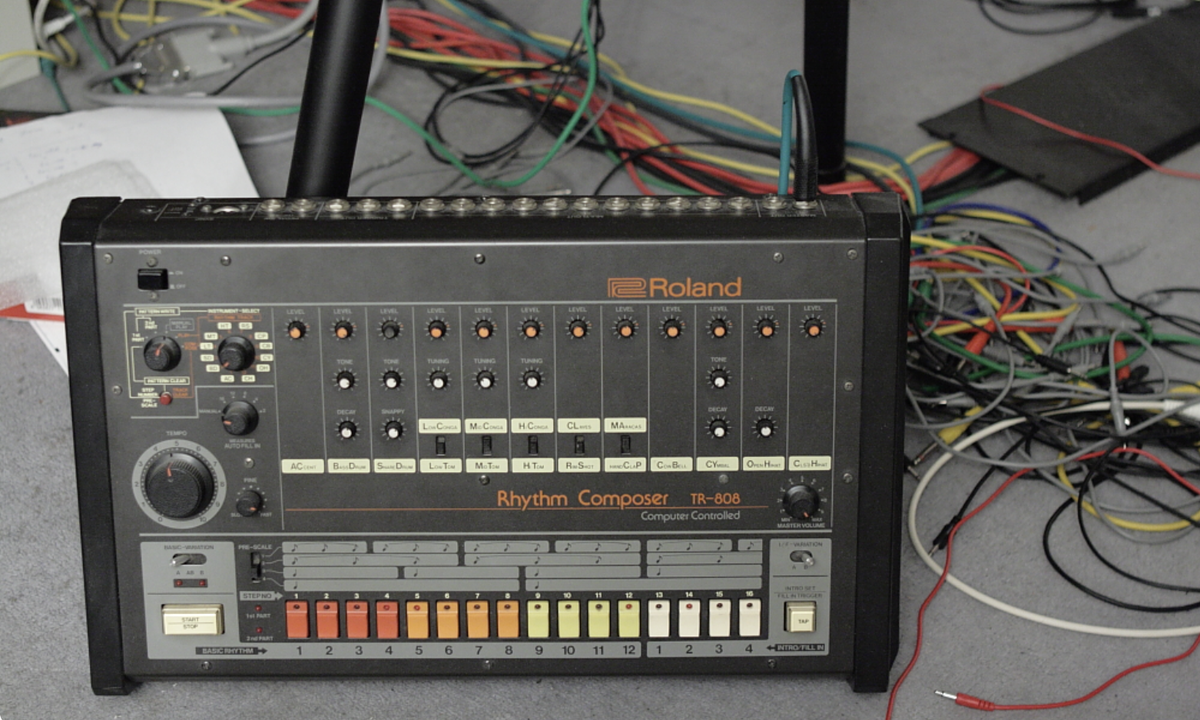
Roland TR-808 Rhythm Composer - la caja de ritmos que revolucionó la música electrónica
The 1980s marked a seismic shift in the musical landscape, driven by technological breakthroughs that forever changed how we hear and create music. The collision of affordable synthesizers, drum machines, and a new visual medium created an era of unprecedented innovation.
Synthesizers and Drum Machines: The Sound of the Future
Before the 80s, synthesizers were mostly massive modular systems or portable Minimoogs, strictly the domain of progressive rock virtuosos like Keith Emerson. But as the decade turned, new instruments democratized electronic music.
Consider the legendary Roland TR-808 Rhythm Composer, released in 1980. Ironically, it was initially a commercial failure because its analog synthesis did not sound like a real drum kit. In a fascinating technical quirk, its creator, Ikutaro Kakehashi, deliberately purchased faulty transistors to achieve its distinctive, "sizzling" sound. Despite poor early sales, its affordability on the used market and unique, booming bass drum gave it a cult following, profoundly shaping hip-hop and electronic music through artists like Afrika Bambaataa and Marvin Gaye.
Meanwhile, American designer Roger Linn took a different approach with the Linn LM-1, the first drum machine to use digital samples. In a brilliant personal acoustic experiment, Linn recorded the machine's iconic "phatt" snare drum simply by having a friend hit a snare inside a wardrobe to capture a dry sound. By 1983, the Yamaha DX7 popularized digital frequency modulation (FM) synthesis, introducing the "glassy" and "chilly" tones that defined pop hits by A-ha and Whitney Houston.
The MTV Era: Music Meets Vision
"Video Killed the Radio Star" de The Buggles - el primer vídeo emitido en MTV el 1 de agosto de 1981
On August 1, 1981, MTV launched with the prophetic words, "Ladies and gentlemen, rock and roll," followed by The Buggles' "Video Killed the Radio Star". Music was no longer just an auditory experience; it was highly visual. This 24-hour platform became the main catalyst for the "Second British Invasion". Acts like Duran Duran and The Human League utilized MTV's heavy rotation to conquer American charts with their glossy, image-conscious videos. Directors such as David Fincher, Spike Jonze, and Michel Gondry emerged as prominent auteurs, elevating these videos from mere promotional tools to complex audiovisual art forms.
New Wave and Post-Punk: Alienation and Synthesizers
Running parallel to glossy pop was the New Wave and Post-Punk movement. Emerging from the ashes of punk rock's raw rebellion, bands like Joy Division, Siouxsie and the Banshees, and Wire integrated new synthesizers and angular guitar riffs into their music. They abandoned simple three-chord punk anthems for complex narratives about urban alienation and modern disillusionment.
Siouxsie Sioux combined dark, theatrical fashion with haunting vocals, paving the way for goth rock, while Joy Division's Ian Curtis delivered deep, brooding melodies over mechanical drum machine pulses. This created a soundscape that felt both alien and intimately human, laying the DIY foundation for the indie music scene.
MIDI and Sequencers: The Universal Language
None of this electronic fusion would have been sustainable without a standard language. In 1982, Roland's Kakehashi collaborated with Dave Smith and Tom Oberheim to create MIDI (Musical Instrument Digital Interface). Instead of sending audio signals, MIDI transmits "event messages"—like pitch, tempo, and key velocity. Unlike early proprietary computer systems, MIDI was built on an open-architecture, allowing a Yamaha synthesizer to seamlessly "talk" to a Roland drum machine. This simple, universal digital interface became the ultimate sequencer tool, allowing solo producers to command entire digital orchestras from their bedrooms.
New Order interpretando "Blue Monday" en BBC's Top of the Pops, 31 de marzo de 1983 - un ejemplo perfecto de la fusión entre sintetizadores, secuenciadores y cajas de ritmos