Thinking about our future
Maybe you spend hours making beats on FL Studio. Maybe you dream of writing songs and performing them. Maybe you want to help other kids discover their musical talent someday. Good news: there are more ways than ever to build acareer in music.
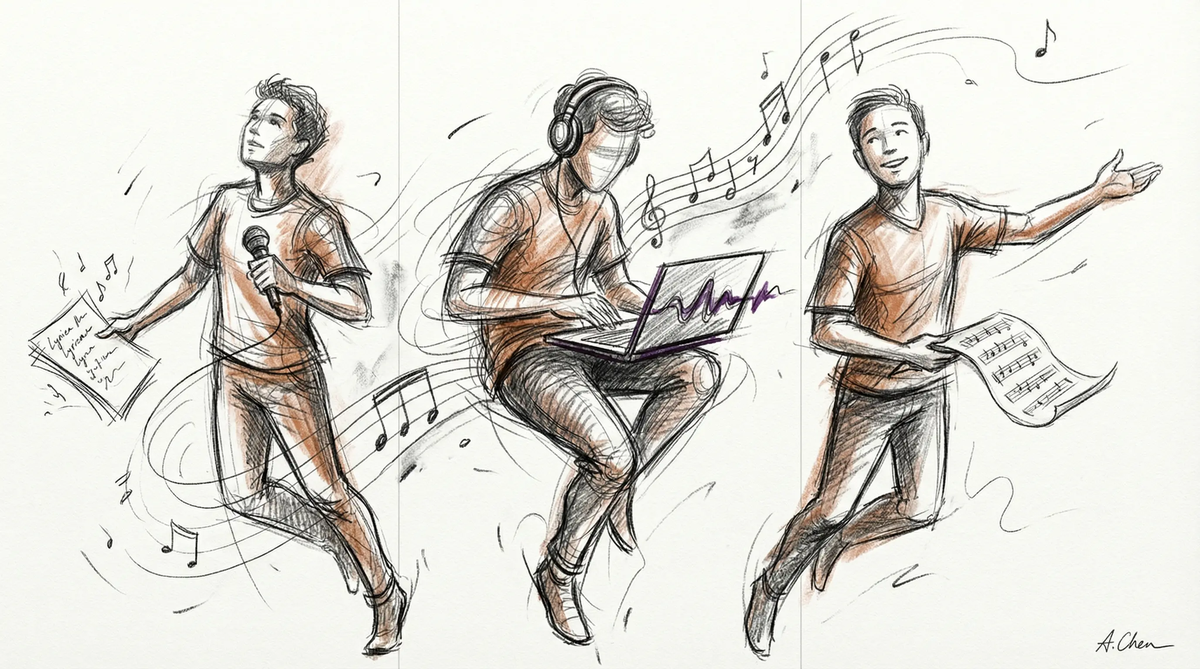
(Advertencia: contenido generado con inteligencia artificial)
This guide will show you:
- What educational paths are available in Aragón and Spain
- Real examples of three different music career directions
- Some surprising careers you might not have thought about
- Practical steps you can take RIGHT NOW
Let's dive in!
Part 1: The Basics - What Can You Study After ESO?
When you finish 4th ESO, you have several options if you want to keep music in your life:
Option A: Bachillerato de Artes (Music and Performing Arts)
What is it? Two years of general education with a focus on music, dance, and performing arts.
Where in Aragón?
- Zaragoza: IES Pedro de Luna, IES Andalán, IES Virgen del Pilar (Artes escénicas).
- Huesca: Escuela de Arte de Huesca, IES Ramón y Cajal
- Teruel: Escuela de Arte de Teruel
What you learn: Music history, musical analysis, performing arts, art fundamentals
Where it leads: University (any degree), Superior Conservatory
Option B: Professional Conservatory (Grado Profesional)
What is it? Six years of intensive instrumental training. You become a real expert at your instrument.
Where in Aragón?
- Zaragoza (main conservatory with 25+ specialties)
- Huesca, Teruel, Alcañiz, Monzón, Sabiñánigo, Tarazona
Instruments you can study: Piano, guitar, violin, trumpet, voice, drums, saxophone... and many more!
Important dates:
- Applications: May 12-23, 2025
- Entrance exam: May 30 - June 17, 2025
The exam has two parts:
- Instrument (50%): Play 3 pieces of different styles, one from memory
- Music theory (50%): Dictation, theory, rhythm, intonation
Pro tip: You can combine Bachillerato + Conservatory at the same time! It's called "simultaneidad" - you only take the common subjects of Bachillerato while doing your full conservatory studies.
Option C: FP (Vocational Training) - Sound and Audiovisual
What is it? Practical training for working in the music and media industry.
Where? CPIFP Los Enlaces in Zaragoza is the main center.
Grado Medio (2 years, after ESO):
- Video Disc-Jockey and Sound: Learn live sound, mixing, DJ work
Grado Superior (2 years, after Bachillerato):
- Sound for Audiovisual and Shows
- Audiovisual Production
- Lighting and Image
Option D: University / Superior Conservatory
After Bachillerato, you can:
- Study at CSMA (Conservatorio Superior de Música de Aragón) in Zaragoza - 4 years for a degree equivalent to university
- Study Musicology at universities in Madrid or Granada
- Study online at UNIR or VIU
Part 2: Three Students, Three Paths
🎹 PROFILE 1: The Beat Maker
"I spend hours on FL Studio making my own music"
You might become: Music producer, beatmaker, sound designer, film composer, DJ
Your path:
Right now (age 15-16):
- Keep learning FL Studio! But also try Ableton Live and GarageBand
- Watch YouTube tutorials on music theory - understanding chords and scales will make your beats better
- Start a SoundCloud account and upload your best tracks
After ESO (age 16-18):
- Option 1: FP Grado Medio "Video DJ y Sonido" at Los Enlaces - practical training
- Option 2: Bachillerato while building your portfolio online
After that (age 18+):
- SAE Institute (Barcelona/Madrid) - internationally recognized, practice-focused
- Microfusa (Barcelona/Madrid) - Spain's oldest music school, amazing studios
- Online certifications from Coursera, Berklee Online
- Or... keep self-learning and focus on building your online presence
The secret advantage: You're starting at 15. By the time you're 18, you could have 3 YEARS of music on your SoundCloud. That portfolio is more valuable than any diploma!
Real careers:
- Beat producer: Sell beats online or to artists
- Sound designer: Create sounds for movies, TV, ads
- Game audio: Make music and sounds for video games (learn Wwise software!)
- Mixing engineer: Help other artists make their tracks sound professional
🎤 PROFILE 2: The Singer-Songwriter
"I want to write my own songs and perform them"
You might become: Recording artist, songwriter, performer, musical theater actor
Your path:
Right now (age 15-16):
- Write EVERY DAY. Bad songs lead to good songs
- Learn an instrument (guitar or piano) if you haven't already - it helps with songwriting
- Record demos on your phone - quality doesn't matter, practice does
- Study your favorite artists: How do they structure songs? What makes their lyrics work?
After ESO (age 16-18):
- Option 1: Professional Conservatory - Voice specialty ("Canto")
- Option 2: Bachillerato de Artes at IES Pedro de Luna
- Private singing lessons are also valuable!
Publishing your music (you can start NOW!):
You might think you need to wait until you're 18 to release music. Not true!
- You own your copyright from the moment you create a song - your age doesn't matter
- Your parent just needs to co-sign the distribution agreement
- Royalty payments go through their bank account until you're 18
How to distribute:
PlatformCostYou KeepDistroKid~$24/year100% of royaltiesTuneCore~$15-50/year100% of royaltiesCD BabyOne-time fee91% of royalties
These services put your music on Spotify, Apple Music, Amazon, YouTube... - everywhere!
Building an audience:
¡Jesús cree que sois muy jóvenes para ésto! Las redes sociales tienen su lado oscuro y sus contraprestaciones pueden pesar más que sus bondades.
- TikTok is king right now - post clips of you singing, songwriting, or just being yourself
- Instagram for longer content and connecting with fans
- YouTube for full songs and vlogs
- Spotify for Artists lets you pitch songs to playlists
The 12-week rule: Set everything up at least 12 weeks before your first release!
👩🏫 PROFILE 3: The Future Teacher
"I want to help others discover music like I did"
You might become: Primary school music teacher, secondary school teacher, conservatory professor, private instructor
Your path depends on WHERE you want to teach:
Primary School Music Teacher (Maestro de Música):
- Need: University degree in Primary Education ("Magisterio") with music specialization
- Duration: 4 years
- Where: Any university with teaching program
Secondary School Music Teacher (ESO/Bachillerato):
- Need: Either:
- Superior Conservatory title, OR
- University degree in Musicology, or in any other subject you like.
- PLUS: Master's in Secondary Teaching ("Máster del Profesorado")
- To work in public schools: Pass "oposiciones" (competitive exams)
Conservatory Teacher:
- Need: Superior Conservatory title (4-5 years) + Master's degree
- Entry: Oposiciones for public conservatories
Private Music Teacher:
- No formal requirements!
- Can start teaching younger students even now
- Work at private academies or give home lessons
Your path:
Right now (age 15-16):
- Get as much musical training as you can
- Try tutoring younger students - even helping classmates counts!
- Pay attention to your teachers' methods - what works? What doesn't?
After ESO (age 16-18):
- Bachillerato + Conservatory Professional (simultaneidad) is ideal
- OR just Bachillerato de Artes
After that (age 18+):
- For primary: University (Magisterio with music mention)
- For secondary/conservatory: CSMA or university Musicology + Master's
The reality: Spain removed music from the mandatory curriculum in 2013 (LOMCE law). This means fewer public school music jobs. BUT private academies and music schools are growing. Teaching ability + business skills = your own music school someday?
Part 3: Jobs You Probably Haven't Thought About
Music skills open doors you might not expect:
🧠 Music Therapist
What: Using music to help people heal - in hospitals, with elderly patients, in mental health treatment, even in prisons.
Training: Postgraduate degree (after university), minimum 600 hours
Where to study: ESMUC Barcelona, Instituto MAP in Vitoria-Gasteiz
🎮 Game Audio Designer
What: Creating music and sounds for video games. Every explosion, footstep, and menu click!
Key skills:
- Learn Wwise (required in 60%+ of job postings)
- Basic programming knowledge
- Music production in any DAW
How to start: Create sounds for indie games, join game modding communities
💻 Music Tech Startups
What: Companies building apps for musicians - AI music generators, music learning apps, artist tools
Examples:
- DistroKid (music distribution)
- Suno (AI music generation - raised $125 million!)
- Moises (stem separation)
Your role: Product development, audio engineering, UX design, marketing
✍️ Music Journalist / Content Creator
What: Writing about music, interviewing artists, reviewing albums, hosting podcasts
No fixed path! Start your own blog, YouTube channel, or podcast NOW.
The modern approach: Bloggers and YouTubers have more influence than traditional magazines
⚖️ Music Lawyer
What: Protecting artists' rights, negotiating contracts, handling copyright issues
Path: University degree + law school (7+ years total)
Specialization areas: Contracts, copyright, trademark, intellectual property
🎬 Sync Licensing Specialist
What: Getting music placed in movies, TV shows, commercials, and video games
How it works: Artists who own their music can license it for significant fees ($10,000+ is common!)
Key requirements:
- Own your master recordings AND publishing rights
- Create instrumental versions of your songs
- Register with sync agencies (Musicbed, Songtradr)
🎸 Artist Manager
What: Guiding artists' careers - booking shows, negotiating deals, building strategy
Path: Internship at label or management company → assistant → manager
Salary range: $39,000 - $127,000/year (varies by artist success)
Part 4: What to Do RIGHT NOW
No matter which path interests you, here are steps you can take TODAY:
Everyone Should:
- Keep making music - whether it's practicing your instrument, producing beats, or writing songs
- Learn music theory - free resources on YouTube, Teoria.com, Musictheory.net
- Build an online presence - even a simple SoundCloud or Instagram
- Listen widely - explore genres outside your comfort zone
- Connect with other musicians - at school, online, at local events
If You're Interested in Production:
- Download GarageBand (free) or try the demo of other DAWs
- Complete at least one song per month
- Learn keyboard/piano basics for MIDI production
If You're Interested in Performing:
- Perform whenever you can - school events, open mics, family gatherings
- Record yourself and watch it back (uncomfortable but valuable!)
- Study your favorite performers
If You're Interested in Teaching:
- Offer to help younger students
- Observe how different teachers approach lessons
- Read about music education methods
Key Dates for Aragón (2025-2026)
WhatWhenConservatory Professional applicationsMay 12-23, 2025CSMA (Superior) applicationsMay 12-29, 2025Professional grade entrance examsMay 30 - June 17, 2025CSMA entrance examsJune 18-19, 2025
Final Thoughts
Here's the truth: the music industry has changed completely in the last 10 years. You don't NEED a record label to release music. You don't NEED a music degree to become a producer. You don't NEED to wait until you're older to start.
What you DO need:
- Consistent practice - talent is just a head start, practice is everything
- Curiosity - keep learning new skills, new software, new genres
- Resilience - you'll face rejection and failure, that's normal
- Patience - big careers take years to build
The best thing about starting at 15? You have time. Use it.
Resources
Conservatories:
Vocational Training:
Production Schools:
Music Distribution:
Learning: