Intervals & Chords - Song Reference Guide
A practical guide to recognizing musical intervals and chord types by ear, using well-known songs as memorable references.
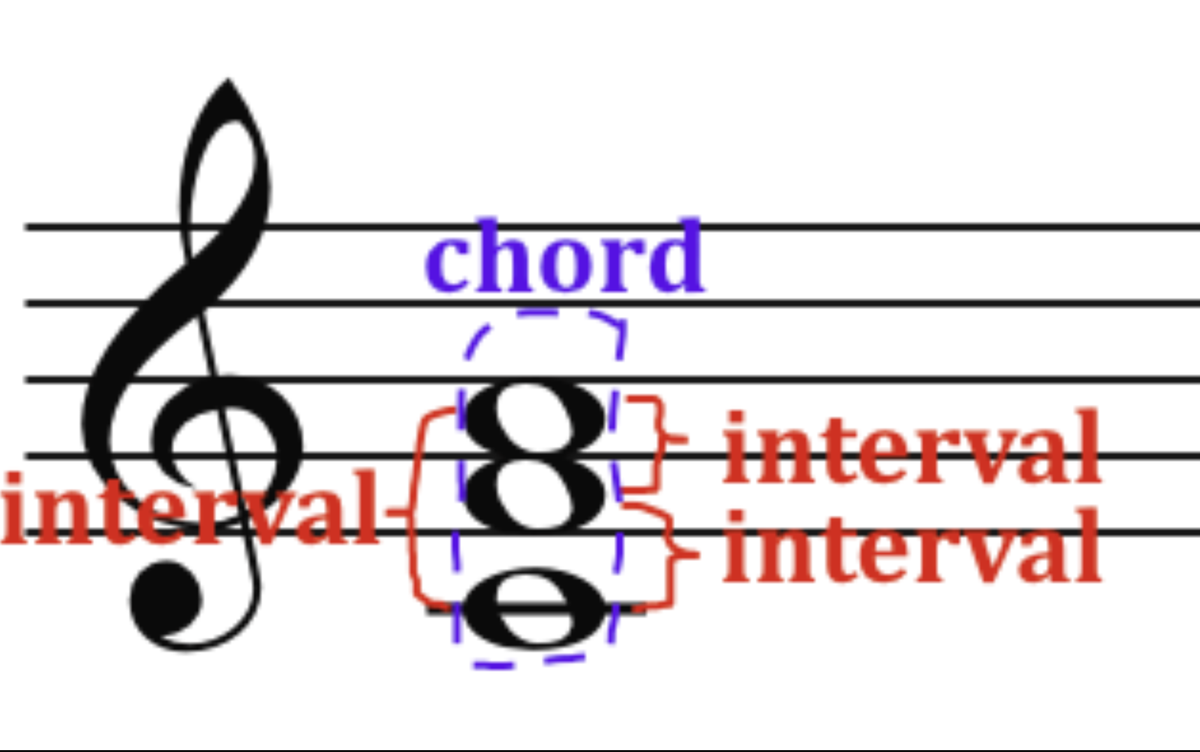
Why Use Songs to Learn Intervals and Chords?
One of the most effective and time-tested methods in ear training is associating musical intervals with the opening notes of familiar songs. This technique has been used by music educators for decades because it leverages your existing musical memory — turning abstract pitch distances into something you can instantly recall and sing.
The same principle applies to chord recognition: by linking each chord quality (major, minor, diminished, augmented) to a song that prominently features it, you build an intuitive sense of how each chord feels and sounds.
Interval Reference Songs
Each interval below is paired with a well-known song whose opening notes match that interval. Practice singing each song fragment, then try to hear the interval in isolation.
| Song | Interval | Tones & Semitones |
|---|---|---|
| Una ola (2nd part) | Minor 2nd | 1/2 tone |
| Una ola (1st part) | Major 2nd | 1 tone |
| Gigante | Minor 3rd | 1 tone and 1/2 tone |
| Doce cascabeles | Major 3rd | 2 tones |
| La pastora | Perfect 4th | 2 tones and 1/2 tone |
| Satla gira | Augmented 4th / Diminished 5th | 3 tones |
| Estrellita | Perfect 5th | 3 tones and 1/2 tone |
| Marina | Minor 6th | 3 tones and 2 x 1/2 tone |
| Es un muchacho excelente | Major 6th | 4 tones and 1/2 tone |
| La casa de mi abuela | Minor 7th | 4 tones and 2 x 1/2 tone |
| El frio | Major 7th | 5 tones and 1/2 tone |
| Ay, mi pescadito / Los mosqueperros | Perfect Octave | 5 tones and 2 x 1/2 tone |
Chord Type Reference Songs
Beyond intervals, recognizing chord qualities by ear is essential for any musician. Here are reference songs for each of the four basic chord types:
- Diminished chord — "Hola señor" (minor 3rd + diminished 5th)
- Minor chord — "La estrella" (minor 3rd + perfect 5th)
- Major chord — "La hormiguita" (major 3rd + perfect 5th)
- Augmented chord — "El gato" (major 3rd + augmented 5th)
How to Practice
Start by singing each reference song and focusing on the opening interval or chord. Then, try to hear those same sounds when they appear in other musical contexts. With consistent practice, you will develop the ability to instantly identify intervals and chords by ear — a skill that transforms your musicianship.